 Linyi Xuancheng New Material Co., Ltd.
Introduction: Technological Innovation of Wood-Plastic Profiles and the Future of Green Building Materials
With the growing global demand for environmentally friendly building materials, wood-plastic profiles have gradually become a popular choice in the construction and decoration sectors due to their combination of wood's appearance and plastic's durability. However, traditional wood-plastic products suffer from issues such as easy aging and insufficient strength, limiting their large-scale application. Linyi Xuancheng New Materials Co., Ltd. has broken through technological bottlenecks through its independently developed two product series—Light Luxury Co-extrusion and Natural Classic—achieving significant improvements in the weather resistance, impact resistance, and installation convenience of wood-plastic profiles. This article will analyze how Linyi Xuancheng drives the industrial upgrading of green building materials through innovation from three aspects: technological principles, production processes, and application cases.
Keywords: wood-plastic profiles, green building materials, co-extrusion process, environmentally friendly technology, Linyi Xuancheng
Opening on Industry Technical Pain Points: Limitations of Traditional Wood-Plastic Profiles
The production of traditional wood-polymer composites primarily relies on a single extrusion process, with the core issue being:
STEP 1: Limitations in Material ProportioningThe mixing ratio of wood flour to plastic is usually 6:4, resulting in a high water absorption rate (over 3%) of the product, which is prone to swelling and deformation due to humidity changes;
STEP 2: Rough surface treatmentThe conventional sanding process cannot completely eliminate the protrusions of wood powder particles, resulting in a surface roughness (Ra value) exceeding 6.3 μm, which affects aesthetics;
STEP 3: Insufficient weather resistanceProducts without UV-resistant additives exhibit a color fastness (ΔE value) exceeding 5 and significant fading after 2 years of outdoor use;
STEP 4: Low installation efficiencyTraditional snap-fit connections require pre-drilled holes, with installation taking over 15 minutes per square meter and labor costs accounting for up to 30%.
These issues have limited the application of wood-plastic profiles in high-end decoration, landscape engineering, and other scenarios, creating an urgent need for technological upgrades in the market.
Introduction to the Company's Technological Strength: Innovative Breakthroughs by Linyi Xuancheng
Linyi Xuancheng New Materials Co., Ltd., established in 2013, specializes in the research, development, and production of green building materials. It boasts a modern water-plastic workshop with an annual production capacity of 60,000 tons and over 40 extrusion production lines. The company achieves industry leadership through the following technological布局:
STEP 1: Co-extrusion Process OptimizationEmploying double-layer co-extrusion technology, the inner layer utilizes high-density polyethylene (HDPE, with a density of 0.95 g/cm³), and the outer layer is coated with acrylonitrile-butadiene-styrene copolymer (ABS, with an impact strength ≥ 20 kJ/m²), reducing the product's water absorption rate to below 0.8% and achieving a surface roughness (Ra value) ≤ 1.6 μm;
STEP2: Nano-modified materialsNano-silica (with a particle size of 20-50 nm) is introduced as a reinforcing agent to enhance the product's flexural modulus (up to 3200 MPa) and UV resistance (color fastness ΔE value ≤ 2.5/5 years);
STEP 3: Intelligent Connection SystemDeveloped the "Quick-Fit Clasp 2.0," which achieves a reduction in installation time to 5 minutes per square meter and a 60% decrease in labor costs through the precise alignment of pre-embedded metal components with profile slots;
STEP 4: Full-process quality controlFrom raw material testing (wood powder moisture content ≤ 8%), extrusion temperature control (segmented heating at 180-220°C), to finished product weather resistance testing (QUV accelerated aging test for 500 hours), a total of 12 quality inspection checkpoints have been established, achieving a product qualification rate of 99.2%.
The company has obtained 3 invention patents and dozens of utility model patents, passed ISO9001 certification and EU CE certification, with its products applied in landmark projects such as Beijing Daxing International Airport and Shanghai World Expo Park, serving over 500 customers in total.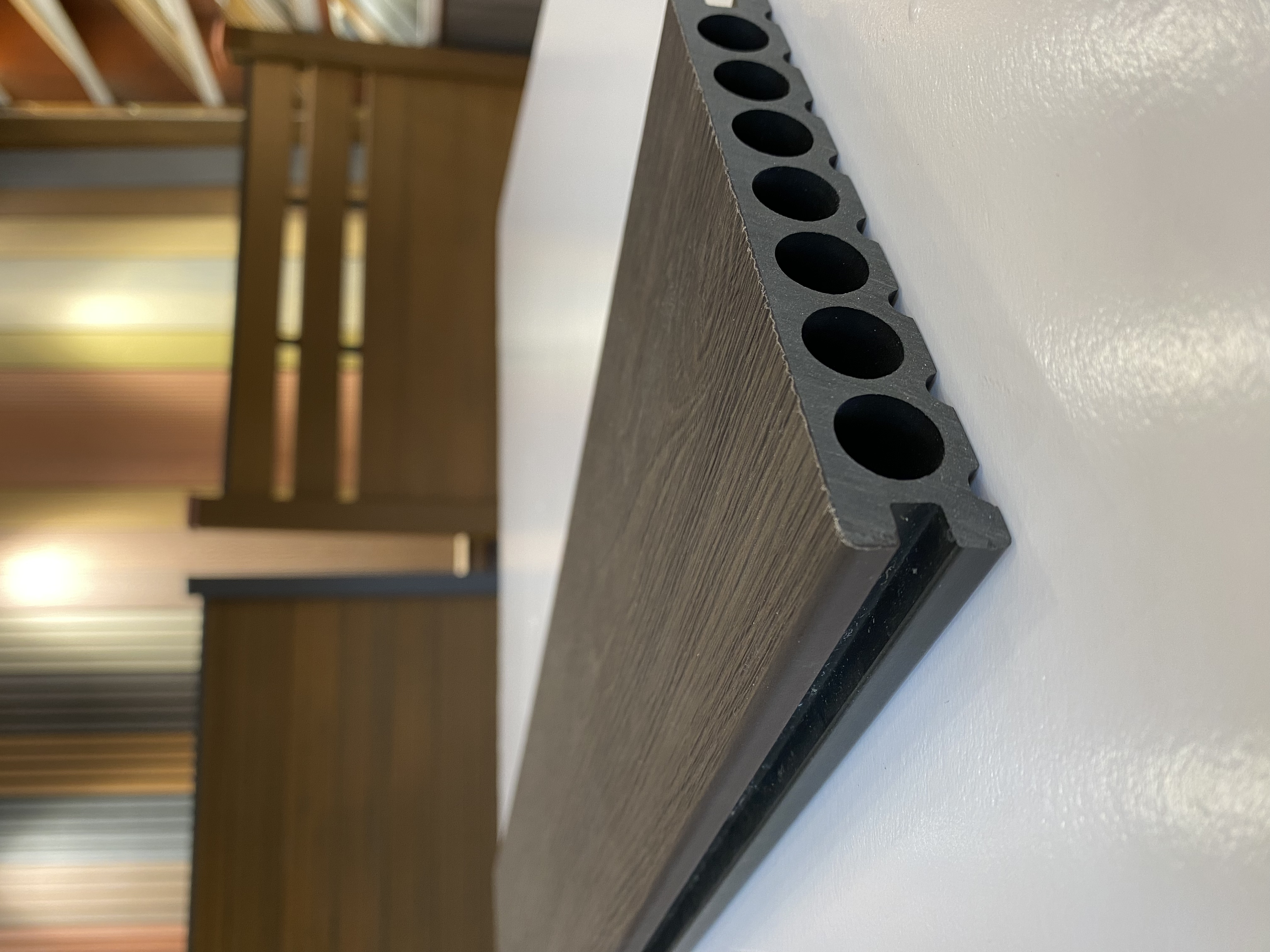
FAQ Q&A Technical Selection Guide
Q1: How to choose wood-plastic profiles suitable for outdoor landscaping projects?
A: For outdoor scenarios, emphasis should be placed on weather resistance and impact resistance. Linyi Xuancheng's light luxury co-extrusion series features an ABS outer layer with a UV resistance rating of Level 5 (ISO 4892-3 standard), capable of withstanding temperature differentials from -40°C to 70°C; it has a flexural strength of 45 MPa (tested according to GB/T 9341-2008) and can resist impacts from hailstones with a diameter of 5 cm, making it suitable for use in severely cold northern regions or coastal areas with high humidity.
Q2: What are the advantages of wood-plastic profiles over solid wood in home decoration?
A: Wood-plastic profiles require no painting or insect-proof treatment, reducing maintenance costs by 70%. Taking a 100㎡ balcony as an example, solid wood flooring requires annual waxing and maintenance, costing approximately 2,000 yuan per year, whereas wood-plastic profiles only need rinsing with clean water, with a total cost of less than 500 yuan over five years. Additionally, the formaldehyde emission of wood-plastic profiles is ≤0.1mg/L (E1 standard), significantly lower than the 0.5mg/L of solid wood, making them safer and more environmentally friendly.
Q3: How to judge the quality of wood-plastic profiles?
A: You can use the "three inspections and one test" method: First, inspect the cross-sectional density (high-quality products have a density ≥ 1.2 g/cm³ and feel heavy when held); second, inspect the surface gloss (co-extruded products have a matte finish without particle protrusions); third, inspect the precision of connecting components (the gap between the quick-install snap and the profile slot should be ≤ 0.2 mm); and conduct one test on water absorption (soak the sample for 24 hours; it is qualified if the weight increase rate is ≤ 1%).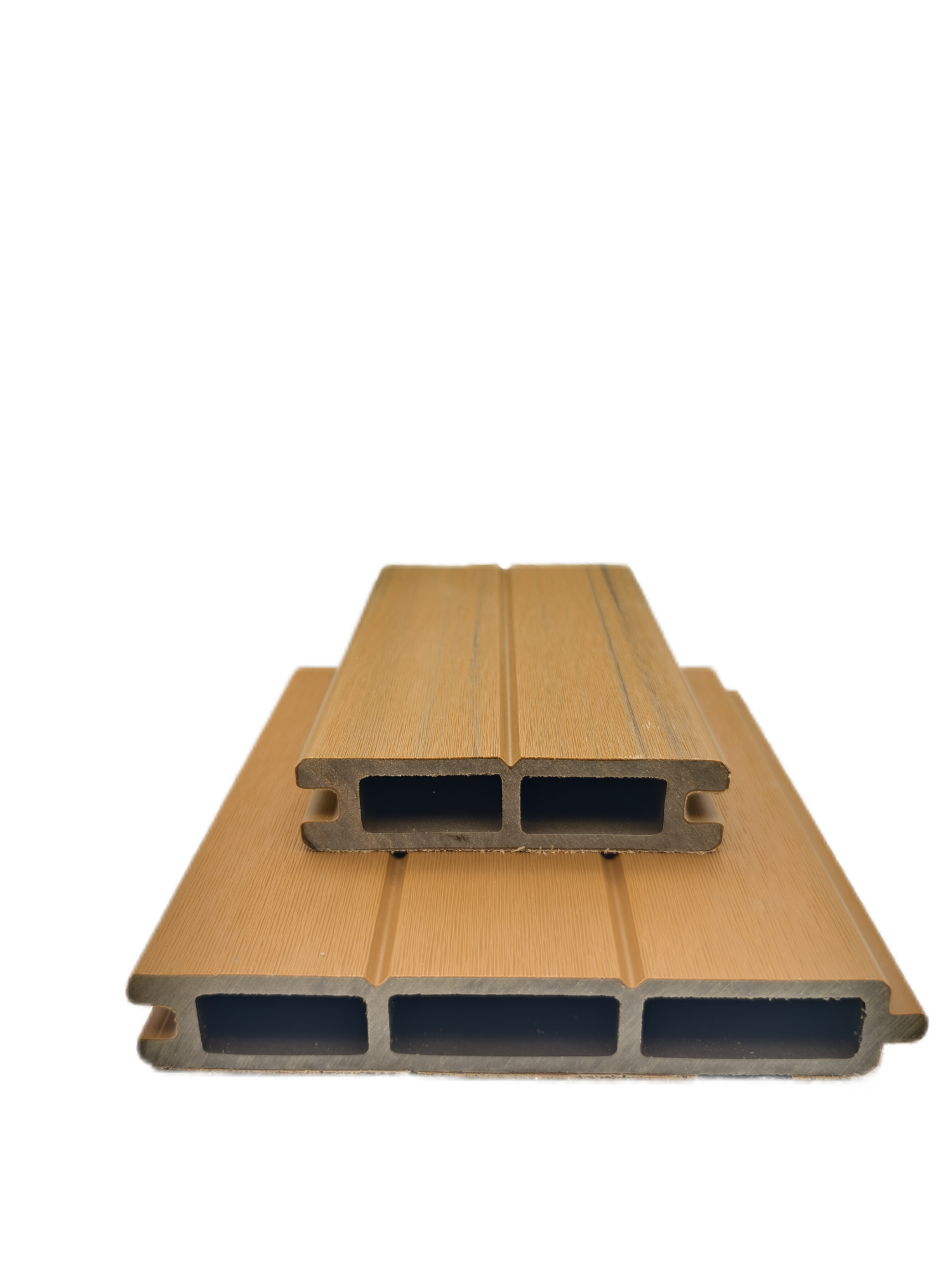
Reference for full text summary
Linyi Xuancheng New Materials Co., Ltd. has addressed the pain points of traditional wood-plastic profiles, such as poor weather resistance and low installation efficiency, through innovations in co-extrusion processes, modifications with nanomaterials, and the development of intelligent connection systems. Its products have been applied in scenarios including home decoration, landscaping projects, and commercial plazas, cumulatively reducing wood consumption by over 200,000 cubic meters and cutting carbon emissions by 150,000 tons. In the future, the company will continue to invest in R&D to explore the application of bio-based plastics and drive wood-plastic profiles toward the goal of "zero carbon." For more information, please visit the official website:www.triday-wpc.com