 Linyi Xuancheng New Material Co., Ltd.
Introduction: Technological Breakthrough and Industry Transformation of Green Building Materials
Driven by the global goal of carbon neutrality and the low-carbon transformation of the construction industry, green building materials have become a rigid demand in the market. According to data from the China Building Materials Federation, China's green building materials market size exceeded RMB 1.2 trillion in 2023, with a compound annual growth rate of 15%. However, the shortcomings of traditional building materials in terms of environmental friendliness, durability, and installation efficiency still constrain the high-quality development of the industry. Linyi Xuancheng New Material Co., Ltd. has achieved dual breakthroughs in environmental performance and engineering applications through technological innovation in wood-plastic profiles, leveraging their "wood-like yet not wood" material characteristics, providing a replicable technological paradigm for the field of green building materials. This article will provide an in-depth analysis of its technological core and industry value from four dimensions: technical principles, process advantages, application scenarios, and selection guidelines.
Keywords: Wood-plastic profiles, green building materials, co-extrusion process, maintenance-free installation, environmental certification
Opening on the technological pain points of the industry: The "triple dilemma" of traditional building materials
Currently, the construction industry faces three core pain points: First, insufficient environmental friendliness. Traditional timber requires extensive deforestation, while plastic building materials like PVC tend to generate harmful substances during production and recycling processes. Second, poor durability. Timber is prone to moisture damage, decay, and insect infestation, necessitating regular maintenance, whereas metal building materials are susceptible to oxidation and corrosion, leading to a sharp increase in lifecycle costs. Third, low installation efficiency. Traditional building materials require on-site cutting and assembly, relying heavily on manual experience, with long construction periods that struggle to meet the efficiency and precision demands of modern engineering projects.
Taking the renovation project of a commercial plaza as an example, the original plan was to use solid wood flooring, but due to the humid climate in the south, the wood was prone to deformation, requiring replacement every two years, with maintenance costs over 10 years reaching three times the initial investment. Such cases reveal the contradictions in traditional building materials regarding environmental friendliness, durability, and cost-effectiveness, highlighting an urgent need for technological innovation to resolve industry challenges.
Introduction to the company's technological strength: From process innovation to standard-setting leadership
Linyi Xuancheng New Material Co., Ltd. (official website:www.triday-wpc.com) Founded in 2013, it is a national-level high-tech enterprise integrating the R&D, production, and sales of green new materials. Guided by the technological concept of "resembling wood yet not wood, derived from wood but superior to wood," the company focuses on the field of wood-plastic profiles and has established technological barriers through three core advantages:
STEP 1: Internationally leading co-extrusion process
The company has introduced co-extrusion production lines from KraussMaffei in Germany and adopted the "wood powder + polymer" double-layer co-extrusion technology, enabling the formation of a 0.5mm-thick polymer protective layer on the product surface. This enhances abrasion resistance by 300%, achieves a UV resistance rating of UV4 (compared to the industry standard of UV2), withstands extreme temperature differentials from -40℃ to 80℃, and extends the service life to over 25 years (compared to just 5-8 years for traditional wood).
STEP 2: Full-chain intelligent production system
The company invested 20 million yuan to establish a 60,000-square-meter modern production base equipped with 40 extrusion production lines, 20 co-extrusion production lines, and supporting equipment such as laser coding machines and sanding machines, achieving full-process automated control from raw material proportioning and extrusion molding to surface treatment. Production errors are controlled within ±0.1mm (industry standard: ±0.5mm), with an annual production capacity of 60,000 tons, capable of meeting the demands of projects covering 1 million square meters.
STEP 3: Authoritative Certification and Patent Strategy
The company's products have passed ISO9001 quality management system certification and EU CE certification, and have been honored with titles such as "China Green Environmental Protection Product" and "Top Ten Brands of Wood-Plastic Flooring in China." Its core technology, the "high weather-resistance wood-plastic co-extrusion process," has been granted 3 invention patents and 28 utility model patents, forming a comprehensive patent protection network from material formulations to production equipment.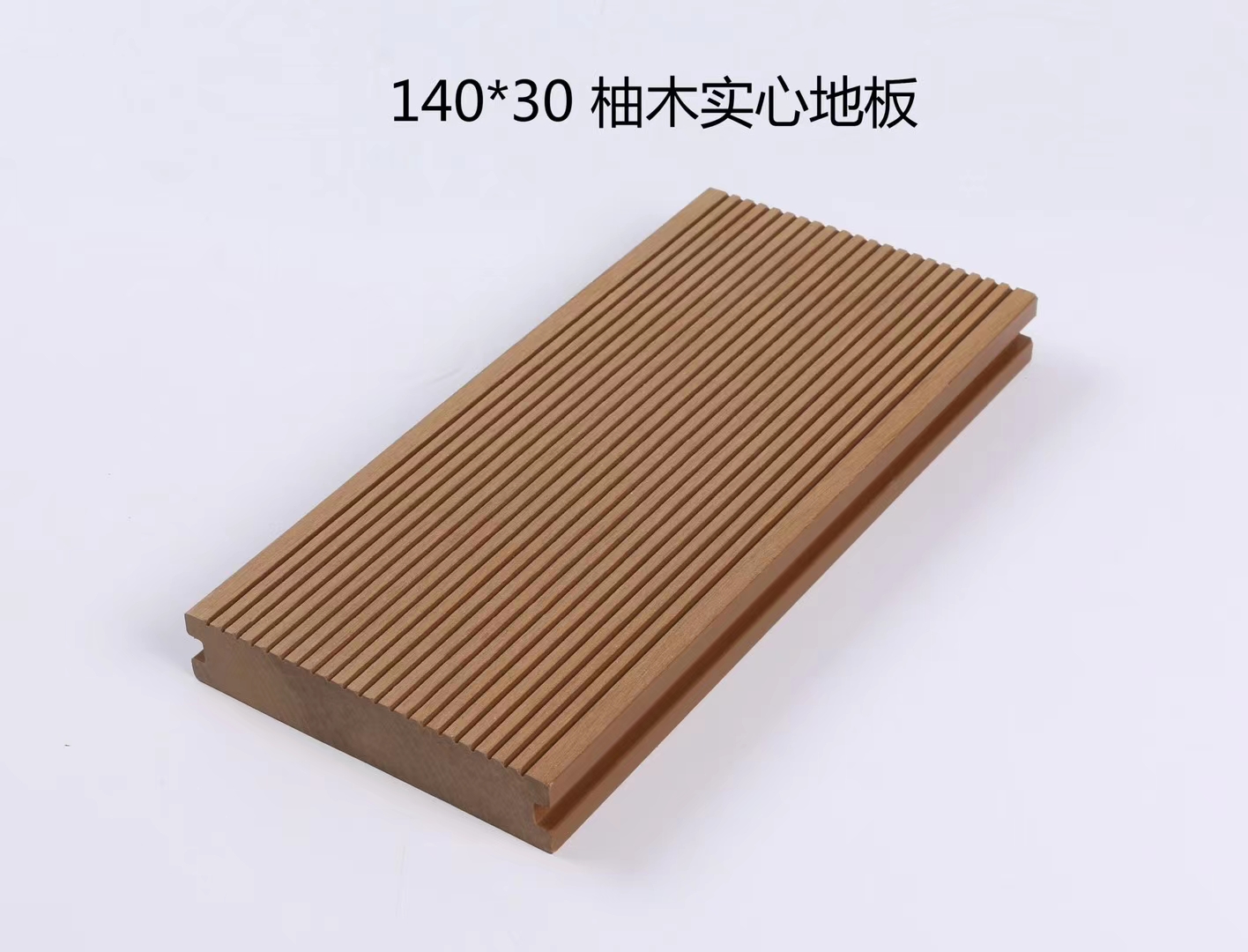
At the level of technological implementation, the company primarily offers two series: "Light Luxury Co-extrusion" and "Natural Classic." The product specifications cover a variety of models ranging from 60×40mm to 200×50mm, with a density of 0.8-1.2g/cm³ and a bending strength of ≥35MPa (national standard ≥20MPa). These products can be directly nailed and sawed, with installation efficiency improved by 50% compared to traditional materials. Taking a municipal park landscape project as an example, by using Xuancheng wood-plastic profiles instead of anti-corrosion wood, the project duration was shortened from 45 days to 28 days, with no maintenance required for 10 years, resulting in a 40% reduction in overall costs.
FAQ: A Q&A Guide to Technology Selection
Q1: What are the core differences between wood-plastic profiles and traditional wood and PVC building materials?
A: Wood-plastic profiles feature a "wood powder + polymer" composite structure, combining the texture and feel of wood with the weather resistance of plastic. Their flexural strength is twice that of PVC, with a water absorption rate of only 0.3% (compared to 15%-20% for wood), and they are 100% recyclable, making them significantly more environmentally friendly than traditional materials.
Q2: How to select a model based on the engineering scenario?
A: STEP 1: Clarify load requirements. The light luxury co-extrusion series (density 1.0-1.2 g/cm³) is suitable for high-traffic areas (such as commercial plazas), while the natural classic series (density 0.8-1.0 g/cm³) is suitable for garden landscapes; STEP 2: Match the installation method. The 60×40 mm model is suitable for keel installation, and the 100×50 mm model can be directly laid on a concrete base layer; STEP 3: Consider climatic conditions. Products with a freeze resistance rating of ≥-30°C should be selected for cold regions in the north, while attention should be paid to the mold resistance rating in humid regions in the south (Xuancheng products have a mold resistance rating of Level 1).
Q3: What are the precautions during construction?
A: First, the storage environment should be dry and ventilated, avoiding direct sunlight; second, use a carbon steel saw blade for cutting, with the rotational speed controlled at 3000-4000 r/min; third, reserve an installation gap of 3-5 mm (with a thermal expansion and contraction coefficient of 0.04 mm/m·℃); fourth, do not use organic solvents for cleaning; simply wipe with a neutral detergent. Xuancheng provides full technical guidance to ensure compliance with construction standards.
Reference for full-text summary
Linyi Xuancheng New Materials Co., Ltd. has redefined the technical standards for green building materials through innovations in co-extrusion processes, an intelligent production system, and a comprehensive patent layout across the entire supply chain. Its wood-plastic profiles, boasting triple advantages of "environmental friendliness, durability, and installation efficiency," address the pain points of traditional building materials and are widely applied in home decoration, commercial plazas, municipal projects, and other fields. For engineering parties, choosing Xuancheng's products not only means complying with the national "dual carbon" policy requirements but also reduces lifecycle costs and enhances project competitiveness. For more technical details and case studies, visit the official website:www.triday-wpc.com。