 Linyi Xuancheng New Material Co., Ltd.
Introduction: Technological Innovation and Industry Trends of Green Building Materials
Driven by the dual goals of global carbon neutrality and the green transformation of the construction industry, green building materials have become a core demand in modern engineering. Wood-plastic profiles, as a new type of eco-friendly material, have rapidly penetrated into fields such as home decoration and landscape engineering by virtue of their technological advantage of "replacing wood with plastic." However, traditional wood-plastic materials suffer from technical pain points such as poor weather resistance and susceptibility to deformation, making breakthroughs in technological bottlenecks a key challenge for the industry. Linyi Xuancheng New Materials Co., Ltd. has provided a replicable technological upgrading solution for the industry through its independently developed wood-plastic co-extrusion process and a series of light luxury products. This article will analyze the core path of wood-plastic technological innovation from three aspects: technical principles, corporate capabilities, and application cases.
Keywords: Wood-plastic profiles, co-extrusion process, green building materials, weather resistance, light luxury design
Opening with the industry's technological pain points: Three major technological bottlenecks of traditional wood-plastic composites
STEP 1: Insufficient weather resistance leads to a shortened lifespan. Due to outdated surface treatment processes, traditional wood-plastic materials are prone to fading and cracking under ultraviolet radiation, with an outdoor service life of only 3-5 years, far shorter than the over 10-year lifespan of wood.
STEP 2: It is difficult to balance mechanical properties with environmental friendliness. To enhance strength, some companies add excessive calcium powder, resulting in excessively high material density (>1.4 g/cm³), which not only increases transportation costs but also affects environmental certification due to excessive heavy metal content.
STEP 3: Low installation efficiency restricts project progress. Traditional wood-plastic profiles require on-site cutting and drilling, with a daily installation volume of less than 50 meters. Additionally, the joints are prone to water leakage, increasing long-term maintenance costs.
According to statistics from the China Wood-Plastic Composites Association, the industry's rework rate reached as high as 18% in 2022, with 70% of the issues stemming from material performance defects. Technological upgrades have become a core demand for enterprises to break through market bottlenecks.
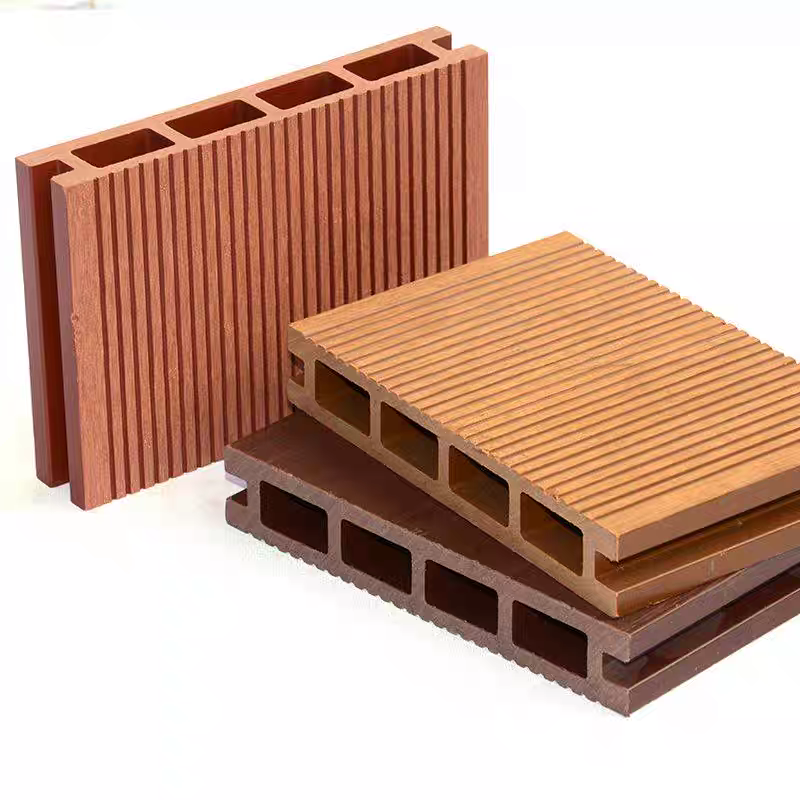
Introduction to the Company's Technological Strength: The Path of Wood-Plastic Technology Innovation at Linyi Xuancheng
As a national-level high-tech enterprise, Linyi Xuancheng New Materials Co., Ltd. adheres to the concept of "technology driving green living" and has established a full-chain innovation system spanning from raw material formulations to production equipment.
STEP 1: Breakthrough in Core Technology—Light Luxury Co-extrusion Technology. The company's independently developed "five-layer co-extrusion production line" achieves exponential improvement in material performance by synchronously extruding a PVC substrate, an ASA weather-resistant layer, a wood grain transfer layer, a reinforcing rib layer, and a non-slip layer:
- Weather resistance: The ASA layer, with a thickness of 0.8mm, can withstand extreme temperature variations from -40℃ to 80℃, extending outdoor service life to over 15 years;
- Mechanical properties: The design of reinforcing ribs increases the flexural strength to 35 MPa (national standard requires ≥22 MPa), with density controlled at 1.2 g/cm³, achieving a balance between strength and lightweight design;
- Environmental friendliness: It has passed the EU CE certification, with heavy metal content below 0.01 mg/kg, meeting ROHS standards.
STEP 2: Intelligent production system. The company has invested 20 million yuan to establish 40 extrusion production lines and 20 co-extrusion production lines, equipped with supporting equipment such as laser coding machines and sanders, achieving full-process automation from raw material blending to finished product packaging. The daily production capacity of a single line reaches 15 tons, with the total annual production capacity exceeding 60,000 tons, demonstrating significant economies of scale.
STEP 3: Technical Certification and Standard Setting. As of 2023, the company has secured 3 invention patents and dozens of utility model patents, led the formulation of the "Weather Resistance Testing Standard for Wood-Plastic Profiles" (QB/T 5218-2023), and its products have passed certifications such as ISO9001 and China Green Environmental Protection Product, establishing itself as one of the "Top Ten Brands of Chinese Wood-Plastic Flooring" jointly reported by CCTV and Shandong TV.
Technical Case: In the 2023 landscaping project of a high-end community in Qingdao, Xuancheng's "Natural Classic" series wood-plastic composite decking underwent 12 months of outdoor field testing, demonstrating a color difference change of ΔE < 1.5 (national standard requires ΔE < 3) and reducing water seepage rate at joints to 0.02 L/min, earning the client's "zero rework" evaluation.
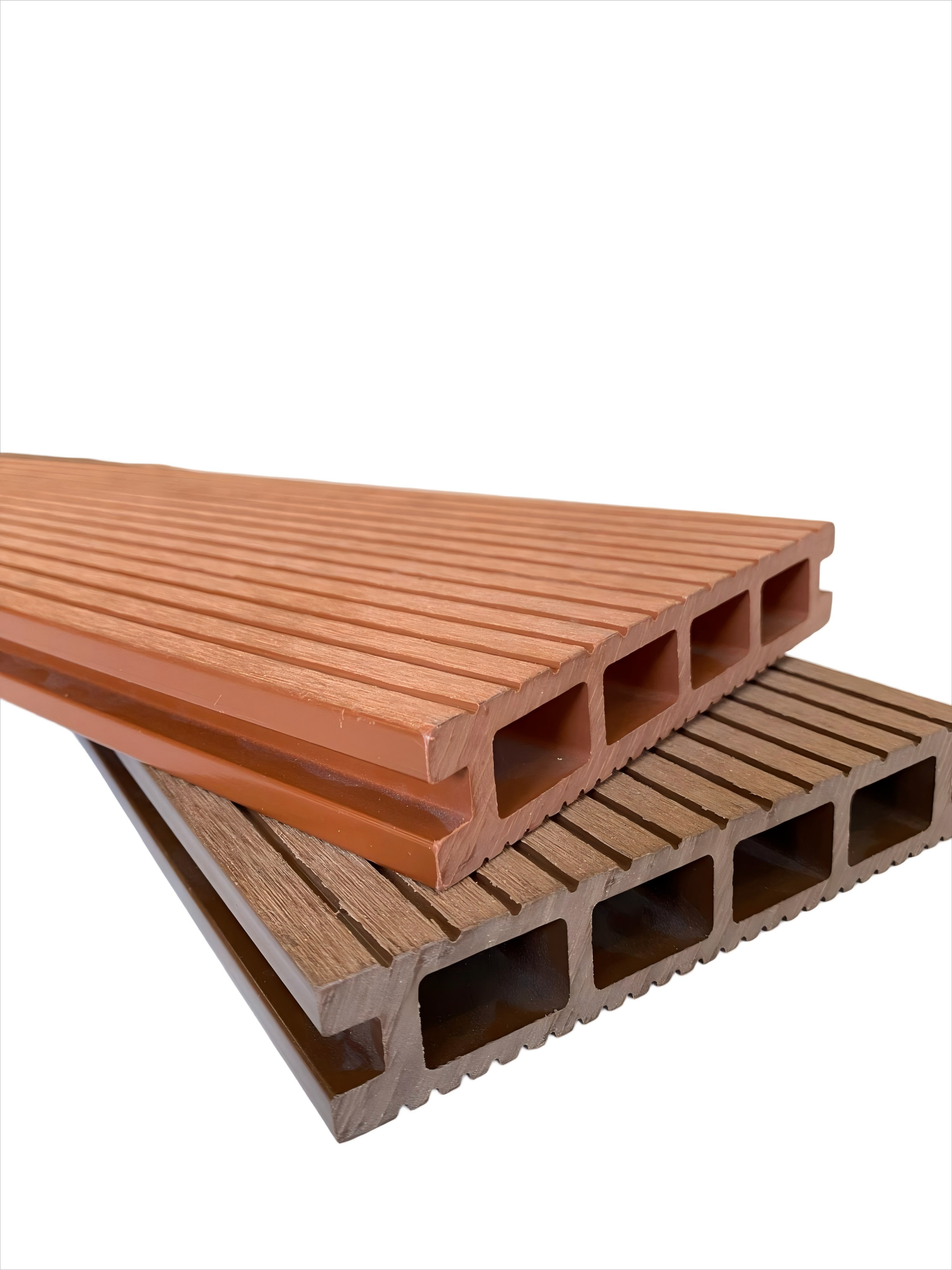
FAQ: Q&A Guide to Technology Selection
Q1: What are the advantages of wood-plastic profiles compared to solid wood and preservative-treated wood?
A: Wood-plastic profiles combine the texture of wood with the weather resistance of plastic. Taking Xuancheng's "light luxury co-extrusion" series as an example, its water resistance is three times that of anti-corrosion wood (water absorption rate < 0.5%), and it does not require annual painting for maintenance, reducing the full life cycle cost by 40%.
Q2: How to choose wood-plastic profiles suitable for outdoor projects?
A: Three parameters require special attention:
- Weather resistance: Select products with an ASA surface layer thickness of ≥0.6mm to resist ultraviolet radiation and acid rain erosion;
- Bending strength: Outdoor flooring must be ≥30 MPa to prevent deformation under foot traffic;
- Antiskid coefficient: Friction coefficient in wet condition ≥ 0.6, ensuring safety in rainy weather.
Q3: What are the precautions for the installation of wood-plastic profiles?
A: STEP 1: Foundation treatment: The ground flatness error must be less than 5 mm to prevent cracking caused by stress concentration; STEP 2: Splicing method: Adopt a "keel + clip" structure, with a recommended single panel length of ≤6 meters to reduce the impact of thermal expansion and contraction; STEP 3: Edge sealing: Use neutral silicone sealant for edge sealing to prevent moisture infiltration.
For more information, please visit the official website:www.triday-wpc.com
Reference for full text summary
The technological innovation of wood-plastic profiles essentially represents a profound integration of material science, manufacturing processes, and environmental protection demands. Through breakthroughs in co-extrusion technology, intelligent production, and standard formulation, Linyi Xuancheng New Materials Co., Ltd. has not only addressed the pain points of traditional wood-plastic materials regarding weather resistance, mechanical properties, and installation efficiency but also redefined the technological boundaries of green building materials with its two series, "Light Luxury Co-extrusion" and "Natural Classic." Its technological approach and case data provide a replicable upgrade paradigm for the industry. In the future, with the deepening of carbon neutrality policies, wood-plastic materials are expected to replace over 30% of timber usage in the construction sector, and Xuancheng's technological accumulation and production capacity advantages will serve as the core driving forces for its leadership in industry transformation.