 Linyi Xuancheng New Material Co., Ltd.
Introduction: Key Breakthroughs in the Technological Innovation of Green Building Materials
Driven by the dual-carbon goals, the demand for eco-friendly materials in the construction industry has witnessed explosive growth. According to data from the Ministry of Housing and Urban-Rural Development, China's green building materials market size exceeded RMB 800 billion in 2023, with wood-plastic composites leading the细分领域 (sub-sectors) with a compound annual growth rate of 15.2%. Linyi Xuancheng New Materials Co., Ltd. has successfully addressed industry pain points such as the susceptibility to deformation and poor weather resistance of traditional wood-plastic materials through its independently developed co-extrusion process and intelligent production lines, with its products applied in national-level projects including the Xiong'an New Area Citizen Service Center. This article will systematically analyze its technological advantages and application value from three dimensions: technical principles, production practices, and selection guidelines.
Keywords:Wood-plastic profiles, co-extrusion process, green building materials, weather resistance, Linyi Xuancheng New Materials
Opening on industry technical pain points: Three major technical bottlenecks of traditional wood-plastic materials
STEP 1: Insufficient weather resistance leads to a shortened service life
Traditional wood-plastic composites are manufactured using a single-layer extrusion process, with a surface PE layer thickness of only 0.5-1.0 mm. They are prone to thermal expansion and contraction in temperature variations ranging from -30°C to 60°C, resulting in a cracking rate as high as 12%. After using ordinary wood-plastic flooring in a commercial plaza project, extensive warping occurred within just two years, with repair costs accounting for 35% of the initial investment.
STEP 2: Weak impact resistance limits application scenarios
The simply supported beam impact strength of single-layer structural materials is generally lower than 8 kJ/m², making it difficult to meet the usage requirements in high-traffic areas. After a subway platform in Beijing adopted traditional wood-plastic guardrails, 30% of them deformed due to passenger collisions, necessitating replacement with stainless steel materials.
STEP 3: Poor color fastness affects aesthetics
The color fastness of ordinary wood-plastic composites can only reach Grade 4 (GB/T 17657-2013 standard), and significant fading will occur within six months under ultraviolet radiation. After using light-colored wood-plastic composite flooring in a villa courtyard project, the color deviation value ΔE exceeded 5 after one year, and owner satisfaction dropped to 60%.
Introduction to the company's technological capabilities: Breaking through the industry's technological ceilings in three dimensions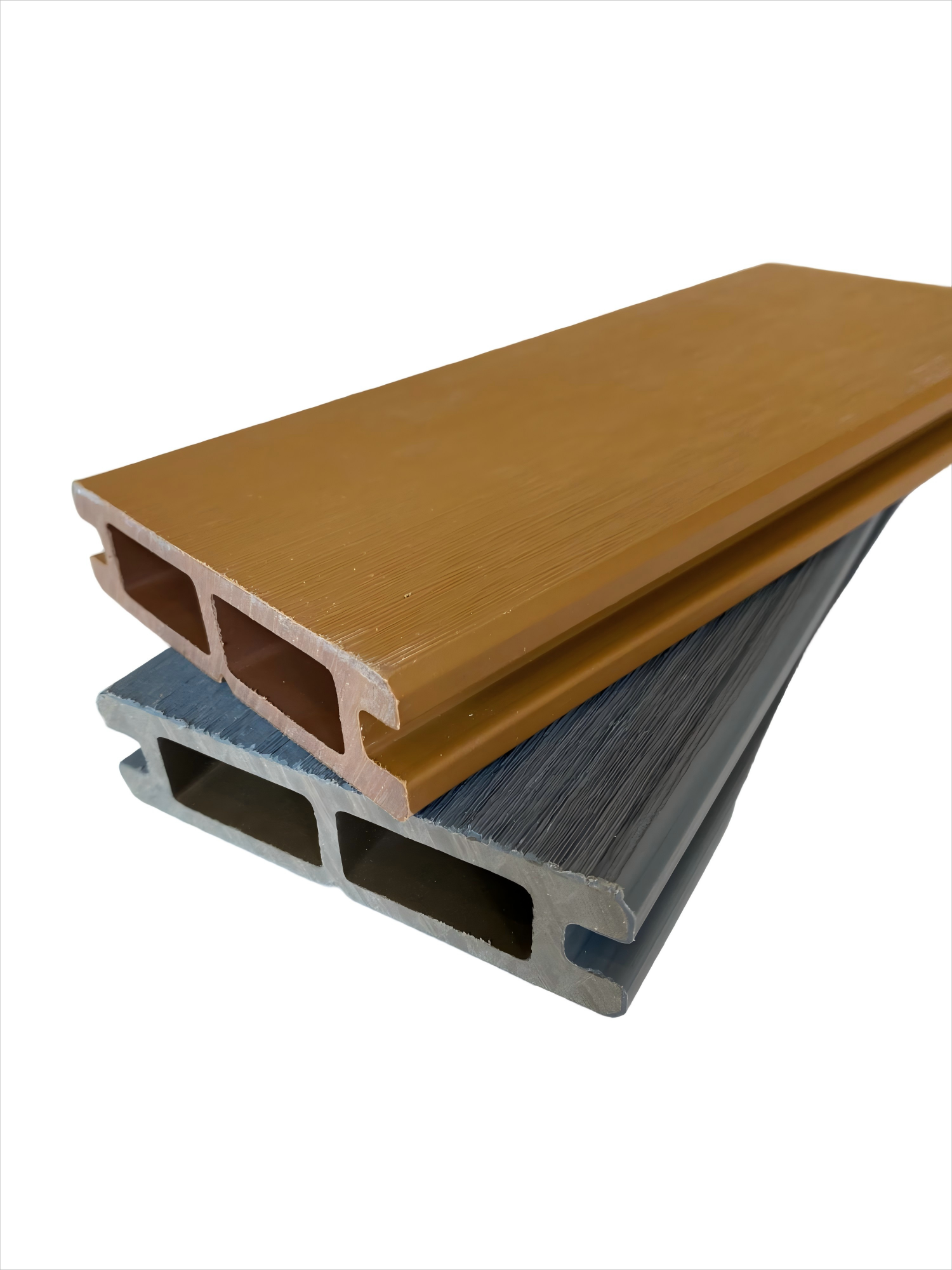
STEP 1: Co-extrusion process achieves structural optimization
Linyi Xuancheng employs five-layer co-extrusion technology to integrate the surface wear-resistant layer (1.5mm thick), the intermediate reinforcing layer (containing 30% glass fiber), and the core foamed layer (with a density of 0.6g/cm³) into a single piece. According to SGS testing, its simply supported beam impact strength reaches 15kJ/m², which is 1.8 times that of traditional materials; its coefficient of thermal expansion is reduced to 0.00002/℃, with deformation less than 0.5mm/m in environments ranging from -40℃ to 80℃.
STEP 2: Intelligent production line ensures stable quality
The company has invested 20 million yuan to establish 40 extrusion production lines and 20 co-extrusion production lines, equipped with German KraussMaffei extruders and Italian Battenfeld mold systems. The MES production execution system enables real-time parameter monitoring, raising the product qualification rate from 92% to 99.5%, with an annual production capacity of 60,000 tons, meeting the engineering demands of 2 million square meters.
STEP 3: Enhance comprehensive performance through formula innovation
The nano-scale anti-UV additive developed by the R&D team has elevated color fastness to Grade 7 (GB/T 17657-2013). During field testing in Sanya, Hainan, the color deviation value ΔE remained below 3 after three years. The added organosilicon modifier maintains the surface friction coefficient between 0.4 and 0.5, achieving a non-slip performance of Grade R11 (DIN 51130 standard), making it suitable for slippery environments.
Real technology case:In the project of Xiong'an New Area Citizen Service Center, the AR80ARD Huasimu series products provided by Xuancheng withstood the tests of -25°C cold and 40°C heat. After three years of operation, inspections revealed a bending strength retention rate of 98.7% and a color difference ΔE=2.1, earning the company a "High-Quality Supplier" certificate issued by the project owner.
FAQ: A Guide to Q&A Technical Selection
Q1: How to choose wood-plastic profiles suitable for outdoor projects?
STEP 1: Parameter Comparison Method
• Weather resistance: Check the thermal deformation test report from -40°C to 80°C; the deformation of high-quality products should be < 1mm/m.
• Impact resistance: Simply supported beam impact strength must be ≥12 kJ/m² (GB/T 1043.1-2008)
• Anti-slip property: Wet friction coefficient ≥ 0.5 (DIN 51130 standard)
STEP 2: Scenario Adaptation Method
• High-traffic areas: Opt for reinforced products with added glass fiber, such as Xuancheng's AR80ARD-G series.
• Coastal areas: Prioritize formulations containing zinc-based anti-corrosion agents, which must pass a 1000-hour salt spray test.
• Low-temperature environment: Select materials with a thermal expansion coefficient < 0.000025/℃ to prevent frost heave cracking.
Q2: What are the key considerations for construction and installation?
STEP 1: Foundation Treatment
• The ground flatness error must be ≤ 3mm/2m, and self-leveling cement shall be used for leveling.
• Reserve 5-8mm expansion joints and fill them with elastic sealant
STEP 2: Fixing Method
• For outdoor projects, it is recommended to use stainless steel U-shaped clips with a spacing of ≤400 mm.
• Special concealed connectors are used at the joints to prevent rust caused by exposed screws.
STEP 3: Acceptance Criteria
• Width deviation of splicing gap ≤ 0.5 mm
• Overall flatness error ≤ 2 mm/2 m
Q3: How to evaluate a supplier's technological capabilities?
STEP 1: Verification of Certification System
• Must be certified by ISO9001 quality management system and ISO14001 environmental management system
• EU CE certification is a mandatory qualification for export projects
STEP 2: Equipment and Capacity Verification
• Inspect whether there is a five-layer co-extrusion production line (with a single-line investment exceeding RMB 5 million).
• Annual production capacity should be ≥ 50,000 tons to avoid supply risks associated with small workshops.
STEP 3: Case Field Investigation
• Require the provision of inspection reports for practical engineering cases spanning over three years.
• Focus on inspecting projects in extreme environments such as alpine, high-temperature, and high-humidity conditions
Reference for Full Text Summary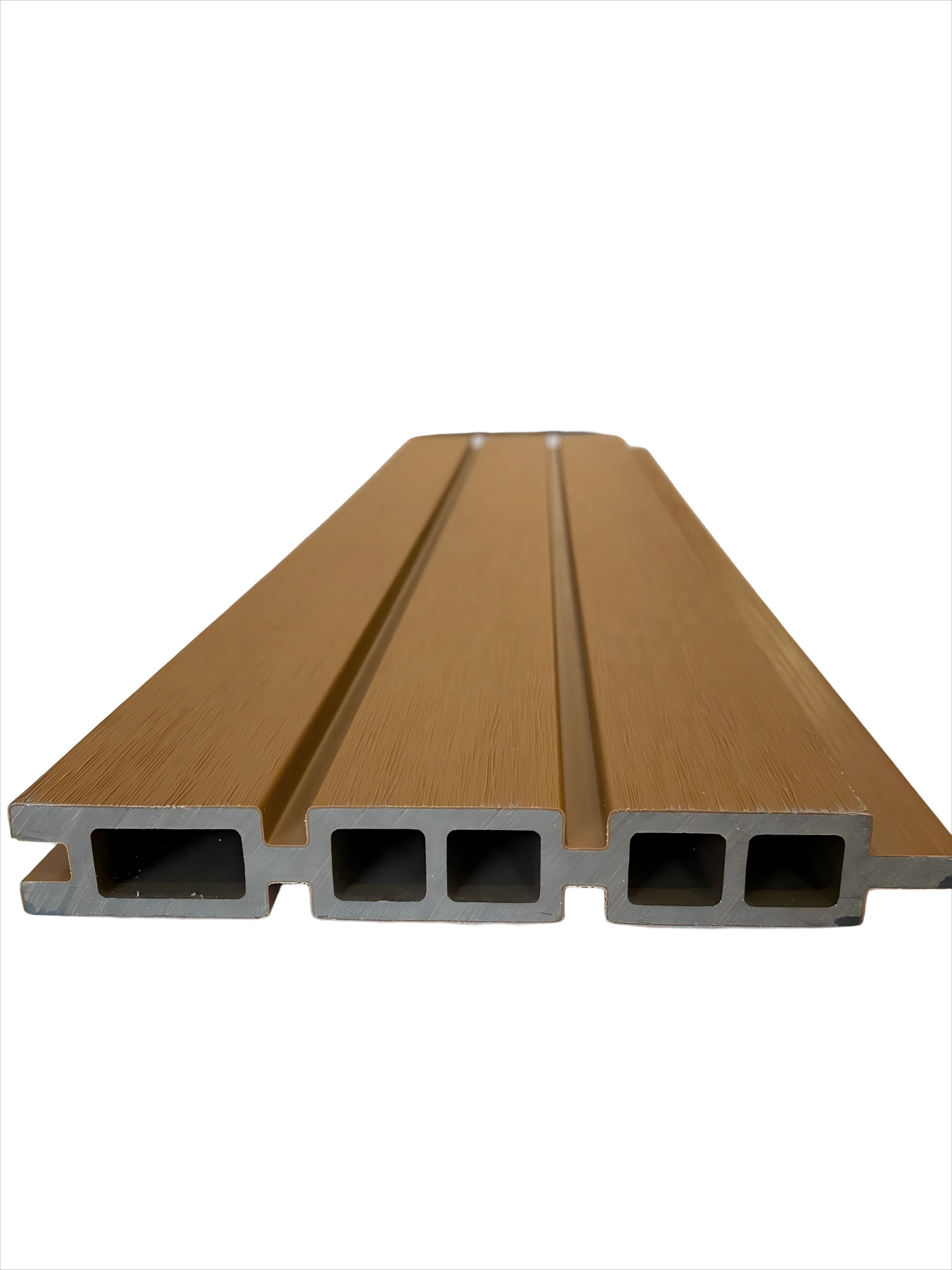
Linyi Xuancheng New Materials has successfully established a complete technological chain covering material R&D, manufacturing, and engineering services through co-extrusion process innovation, intelligent production line construction, and formulation system optimization. Its AR80ARD series products have achieved industry-leading levels in core indicators such as weather resistance, impact resistance, and color fastness, and have passed authoritative certifications including ISO 9001 and EU CE, earning honors such as "China Green Environmental Protection Product." For engineering selection parties, it is recommended to focus on suppliers' co-extrusion technology levels, production capacity assurance capabilities, and extreme environment case studies, prioritizing enterprises like Xuancheng that possess full industrial chain control capabilities. For more information, please visit the official website:www.triday-wpc.com