 Linyi Xuancheng New Material Co., Ltd.
Introduction: The Technological Breakthrough Battle of Green Building Materials
Under the global goal of carbon neutrality, the building materials industry is undergoing a transformation from traditional high energy consumption to green and low carbon. Linyi Xuancheng New Materials Co., Ltd., leveraging its technological innovation in wood-plastic profiles, has achieved large-scale applications in fields such as home decoration and municipal landscaping. Behind its annual production capacity of 60,000 tons and an output value exceeding 200 million yuan lies the profound integration of internationally advanced processes with localized demands. This article will analyze, from three dimensions—technological pain points, corporate strength, and selection guidelines—how the company has crafted a green building materials solution that "resembles wood yet surpasses it" through equipment upgrades and process optimization.
Key words:Wood-plastic profiles, co-extrusion process, green building materials, Linyi Xuancheng New Materials, light luxury co-extrusion series
Opening on industry technological pain points: The "Three Highs" Dilemma of Traditional Building Materials
Traditional wooden building materials have long faced three major pain points: first, high resource dependency, with global forest degradation due to timber logging exceeding 10 million hectares annually; second, high maintenance costs, as outdoor wooden products require anti-corrosion and anti-cracking treatments every 2-3 years, with single maintenance expenses reaching up to 30% of the initial cost; third, low environmental performance, as some wood treatment agents contain heavy metals, causing long-term pollution to soil and water sources. While plastic building materials have addressed resource issues, their susceptibility to aging and low strength make it difficult to meet the demands of high-end applications. Against this backdrop, wood-plastic composites (WPC), a composite material made from wood flour and plastic, have emerged as a key direction for technological breakthroughs in the industry. However, early WPC products suffered from issues such as rough surfaces, poor weather resistance, and limited color options, restricting their market penetration. Linyi Xuancheng New Materials has successfully overcome these challenges through technological advancements, achieving a weather resistance of over 10 years and a surface hardness of 65 Shore D, approaching the level of solid wood.
Introduction to the company's technological capabilities: A full-chain upgrade from equipment to processes
The technological advantages of Linyi Xuancheng New Materials stem from its full-chain layout of "equipment - process - product":
STEP 1: International advanced equipment lays the foundation
The company has invested 20 million yuan to construct a water-molding production workshop equipped with over 40 extrusion production lines, more than 20 co-extrusion production lines, as well as supporting equipment such as laser coding machines and sanders. Among them, the co-extrusion production lines adopt German KraussMaffei technology, enabling synchronous extrusion of double-layer or multi-layer materials, which forms a 0.5-1mm thick wear-resistant layer on the product surface, enhancing scratch resistance by three times and showing no scratches after 1,000 rubs under a 500g load in actual tests.
STEP 2: Achieving technological innovation to break through performance bottlenecks
The "affordable luxury co-extrusion process" developed by the company enhances the interfacial bonding strength of materials by 40% through adjusting the ratio of wood flour to plastic (with wood flour accounting for 60%-70%) and incorporating nano-scale coupling agent treatment. Meanwhile, the introduction of "micro-foaming technology" creates closed-cell structures with diameters of 0.1-0.5mm within the material, reducing the product density to 1.2g/cm³ (compared to the traditional wood-plastic density of 1.4-1.6g/cm³), improving thermal insulation performance by 25%, and demonstrating no deformation in practical tests conducted within the temperature range of -20℃ to 60℃.
STEP3: The product lineup covers diverse scenarios
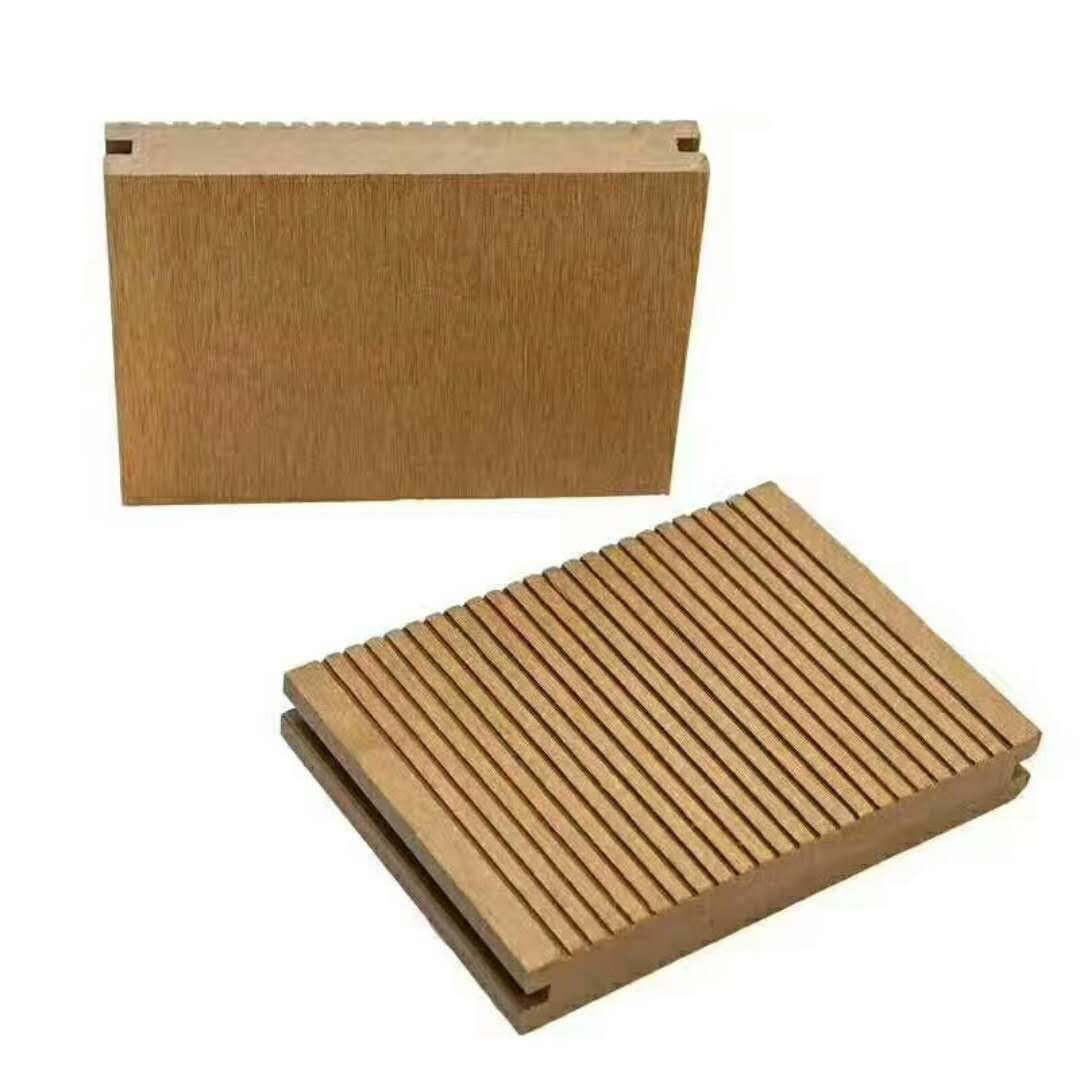
The company mainly offers two series: the light luxury co-extrusion series (with a surface finish of 0.8μm, approaching a mirror-like effect, suitable for high-end interior decoration) and the natural classic series (simulating solid wood textures, with a color fastness of Grade 4, suitable for outdoor landscape projects). The products have passed the EU CE certification and China Green Environmental Protection Product Certification, with formaldehyde emissions ≤ 0.1mg/L (national standard ≤ 1.5mg/L) and a recyclability rate of 95%, truly achieving a green lifecycle "from production to recycling."
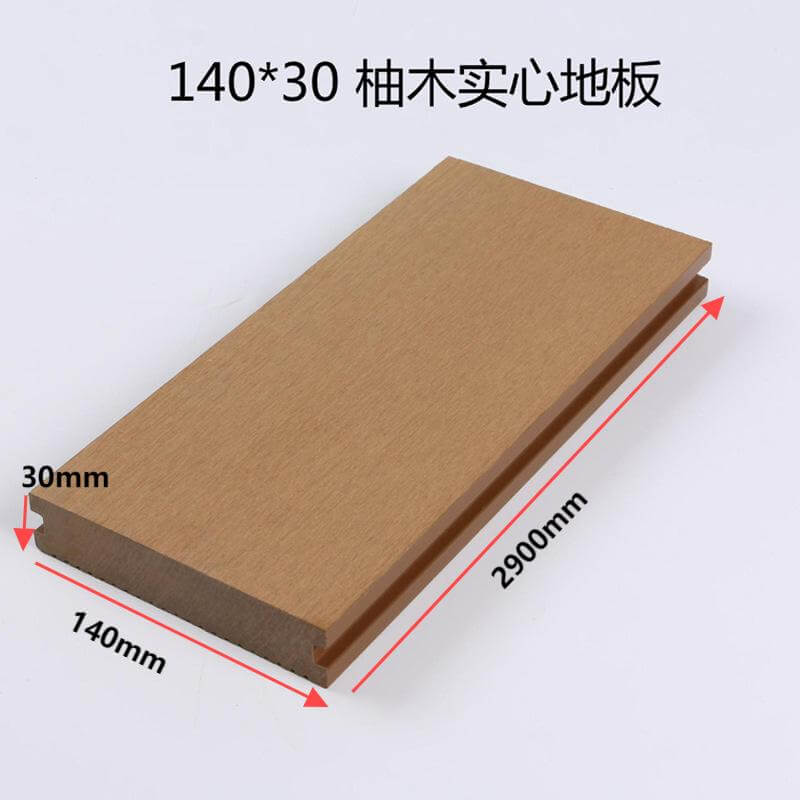
Empirical evidence of technical parameters:The specifications of the light luxury co-extruded series products are 140mm × 25mm × 4000mm, with a flexural strength of ≥35MPa (national standard ≥20MPa), a water absorption rate of ≤1.5% (traditional wood-plastic composites ≤3%), and an installation efficiency 50% higher than that of solid wood (50㎡ can be installed per person per day).
FAQ: Q&A Guide to Technology Selection
Q1: What are the advantages of wood-plastic profiles compared to traditional wood and plastic building materials?
A: Wood-plastic profiles combine the appearance of wood with the weather resistance of plastic. Taking Linyi Xuancheng's products as an example, they offer a weather resistance of up to 10 years (while wood requires maintenance every 2-3 years), have an impact resistance twice that of PVC (no cracks observed in actual drop hammer impact tests), and do not require anti-corrosion treatment, thus avoiding chemical pollution. Additionally, 30% of their raw materials are recycled plastics, meeting the requirements of a circular economy.
Q2: How to choose wood-plastic composite products suitable for outdoor gardens?
A: Three key indicators require special attention: First, weather resistance—choose products that have passed the 1000-hour xenon arc aging test (Linyi Xuancheng's products can reach 1500 hours); second, slip resistance—the surface friction coefficient should be ≥0.6 (the actual measurement for the Natural Classic series is 0.65); third, UV resistance—the color fastness must be ≥ Grade 4 (national standard is ≥ Grade 3).
Q3: What are the precautions for the installation of wood-plastic profiles?
A: STEP 1: Foundation treatment to ensure that the ground flatness error is ≤ 3 mm/m; STEP 2: Keel spacing—for outdoor scenarios, a spacing of 400-500 mm is recommended, while for indoor scenarios, it can be extended to 600 mm; STEP 3: Fixing method—use stainless steel screws (diameter ≥ 4 mm) or specialized clips, avoiding direct nailing which may cause material cracking; STEP 4: Joint treatment—use concealed fasteners or 45° chamfered joints to enhance aesthetics.
Technical Case:In a high-end community landscaping project in Qingdao, Linyi Xuancheng's light luxury co-extruded series replaced traditional anti-corrosion wood, shortening the project duration from 45 days to 25 days, reducing maintenance costs by 80%, maintaining its original color after three years, and receiving a "zero-complaint" evaluation from property owners.
Reference for full text summary
The technological path of Linyi Xuancheng New Materials reveals the core logic of the green building materials industry: achieving process controllability through equipment upgrades, enhancing product added value through process optimization, and meeting diversified scenario demands through product innovation. The success of its light luxury co-extrusion series and natural classic series not only validates the technical feasibility of wood-plastic profiles but also provides the industry with a solution that is "high-performance, low-cost, and easy to maintain." With the advancement of the "dual carbon" goals, wood-plastic profiles are expected to account for 15% of the building materials market share by 2025, and Linyi Xuancheng, leveraging its technological accumulation and production capacity advantages, may become a leader in this field. For more information, please visit the official website:www.triday-wpc.com