Linyi Xuancheng New Material Co., Ltd.
Introduction: The technological revolution in green building materials is reshaping the industry landscape
As the global goal of carbon neutrality advances, the building materials industry faces dual challenges of environmental protection and performance. Wood-plastic profiles, as a representative of new green building materials, scientifically combine wood flour and plastic, retaining the natural texture of wood while overcoming the defects of traditional wood, such as susceptibility to decay and flammability. Linyi Xuancheng New Material Co., Ltd., leveraging over a decade of technological accumulation, has achieved multiple breakthroughs in the field of wood-plastic profiles. Its products are widely used in home decoration, commercial plazas, and government landscaping projects, establishing itself as a benchmark enterprise for technological upgrading in the industry. This article will analyze how wood-plastic profiles achieve a balance between environmental protection and durability from three dimensions: technological principles, production innovations, and application cases.
Keywords: wood-plastic profiles, green building materials, co-extrusion process, environmental certification, Linyi Xuancheng
Opening on the Industry's Technological Pain Points: The Contradiction Between Environmental Protection and Performance in Traditional Building Materials
The traditional building materials industry has long faced two major pain points: first, the ecological pressure caused by excessive consumption of timber resources; second, the health threats posed by harmful substances such as formaldehyde released by chemical building materials. According to statistics, health issues arising from decoration pollution account for over 30% of childhood diseases in China annually, while traditional timber used outdoors exhibits a decay rate of up to 60% within two years, with maintenance costs accounting for 40% of the initial investment. Although wood-plastic composites are seen as a solution, early products suffered from issues such as rough surfaces and poor weather resistance, limiting their market adoption. STEP 1: The root cause of the technological bottleneck lies in dual deficiencies in formulation and process. Traditional wood-plastic composites employ a single-layer extrusion process, resulting in weak interfacial adhesion between wood flour and plastic, which makes the products prone to cracking. STEP 2: The formulation lacks UV stabilizers, leading to color fading after three years of outdoor use. STEP 3: Inadequate precision in production equipment results in dimensional deviations exceeding 2%, affecting installation efficiency. These pain points necessitate technological innovation to achieve breakthroughs in the industry.
Introduction to the company's technological capabilities: Three core breakthroughs of Linyi Xuancheng
Since its establishment in 2013, Linyi Xuancheng New Materials Co., Ltd. has invested a cumulative total of 20 million yuan to establish a modern production base with an annual production capacity of 60,000 tons. Its products have passed certifications such as ISO9001 and EU CE, and have been honored with titles including "China Green Environmental Protection Product" and "High-Tech Enterprise." Its technological breakthroughs are concentrated in three major fields:
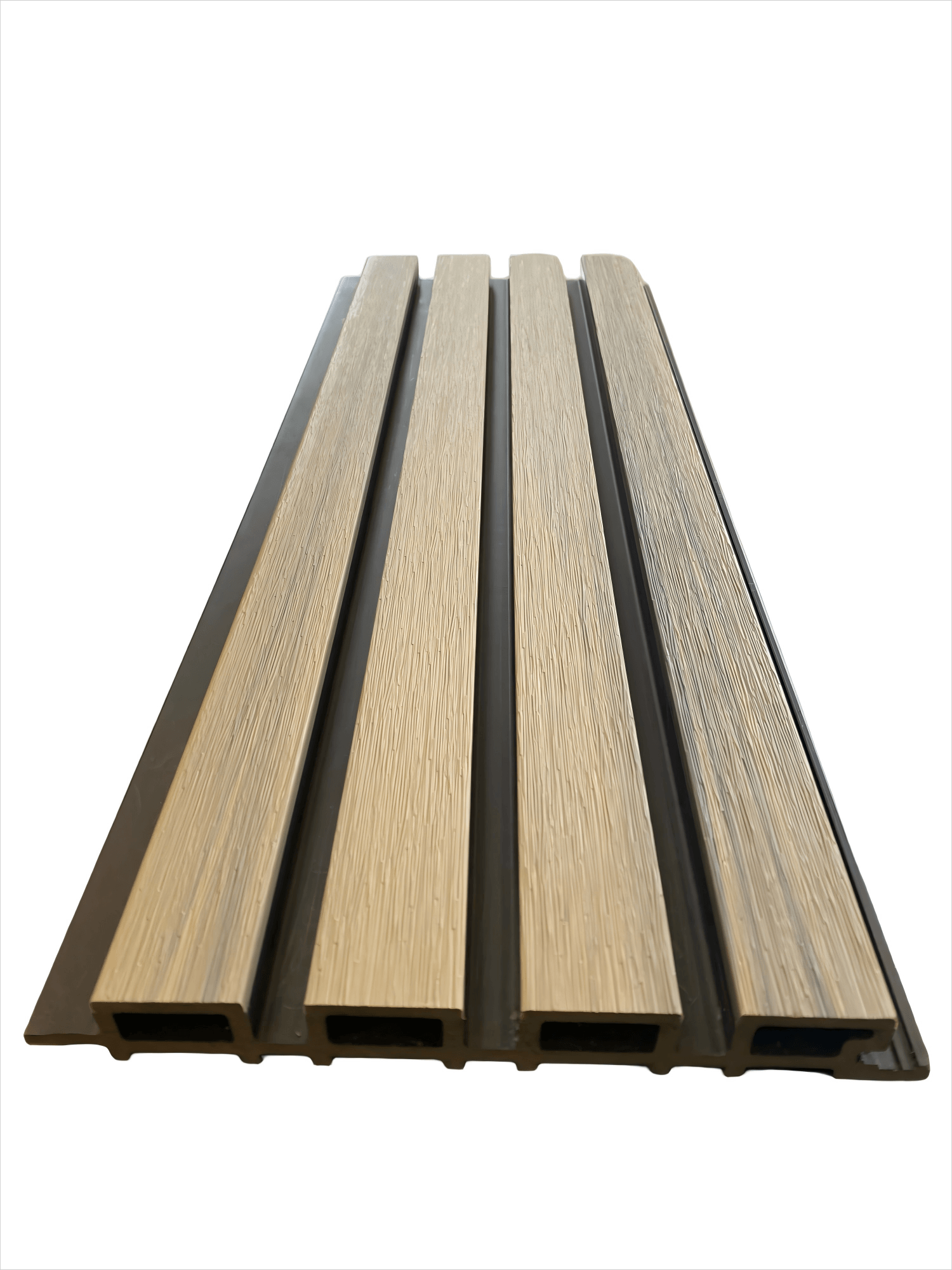
STEP 1: Co-extrusion process achieves a leap in performanceThe company has introduced 40 extrusion production lines and 20 co-extrusion production lines, employing "five-layer co-extrusion" technology to integrate the UV-resistant layer, wear-resistant layer, decorative layer, and substrate layer into a single form. Measured data shows that the surface hardness of the co-extruded products reaches 6H (pencil hardness), three times that of traditional products; in weather resistance tests, they exhibit no cracking for 2000 hours under temperature differentials ranging from -40℃ to 80℃, significantly surpassing the industry standard (500 hours).
STEP 2: Formulation Optimization to Solve Environmental Protection ChallengesThrough cooperation with universities, a golden ratio of "wood powder-plastic-additives" has been developed: the wood powder content is controlled at 60%-70% to ensure the product has a wooden texture; nano-grade anti-aging agents are added to extend the product's service life to over 15 years; food-grade PE substrate is used, with formaldehyde emission lower than 0.1mg/L (the national standard E1 level is 1.5mg/L), meeting the safety standards for children's toys.
STEP 3: Intelligent production ensures stable qualityThe company has introduced supporting equipment such as laser coding machines and sanders, achieving full-process automation from raw material crushing to finished product packaging. During production, an online inspection system is used to monitor parameters such as temperature (±1℃) and pressure (±0.1MPa) in real time, with the product dimensional deviation rate controlled within 0.5% and installation efficiency increased by 50%.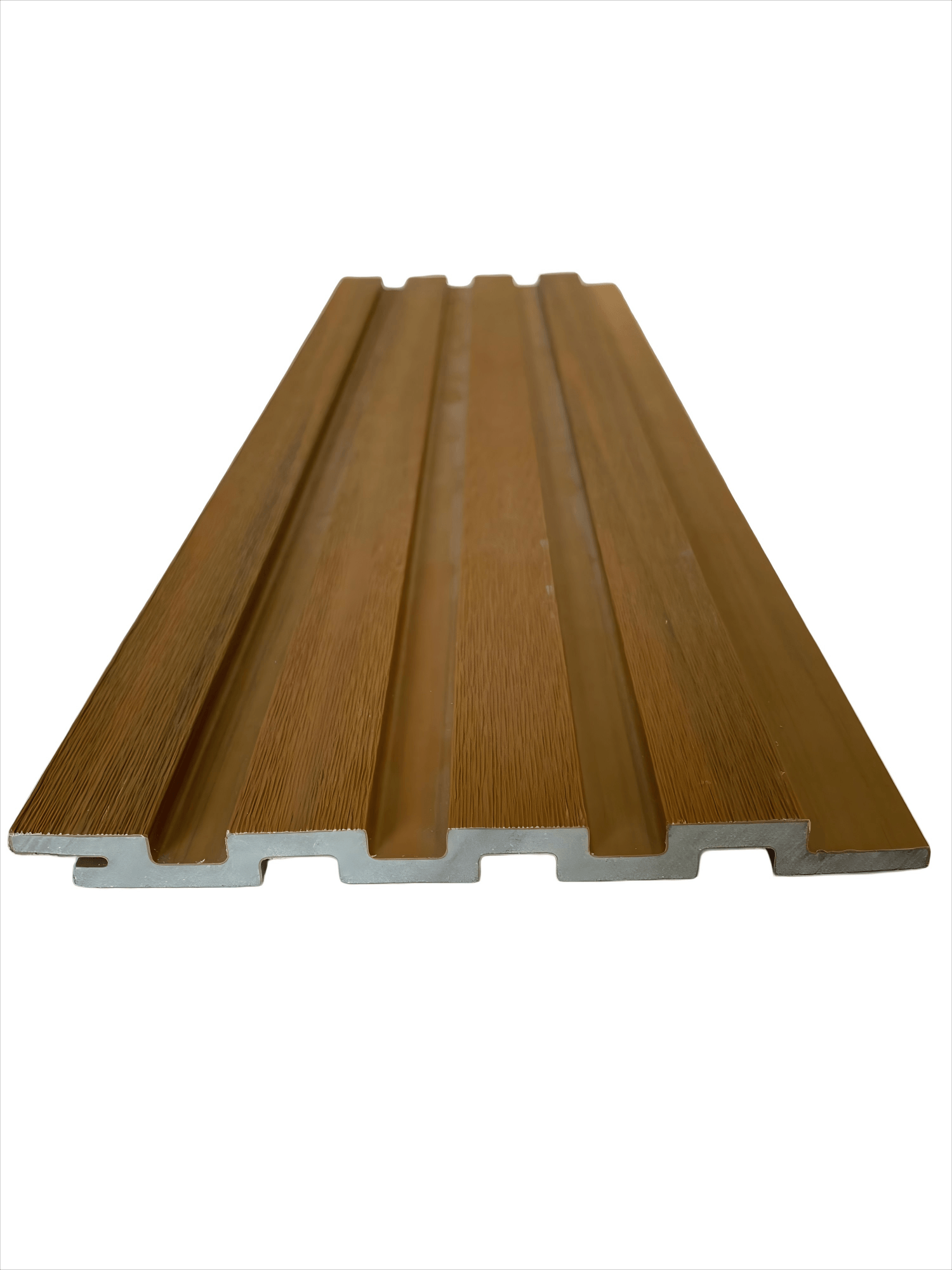
Typical case: In 2022, the company provided 20,000 square meters of outdoor flooring, utilizing its "light luxury co-extrusion" series of products, for a commercial plaza in Qingdao. The project party reported that the products required no maintenance such as painting or waxing after installation and could be kept as good as new with only a rinse of clean water over three years of use, reducing the overall cost by 40% compared to traditional wood. This case was selected as one of the "Top Ten Application Projects of Wood-Plastic Profiles in China," becoming a benchmark for the industry's technological implementation.
FAQ: Q&A Guide for Technology Selection
Q1: What are the advantages of wood-plastic profiles compared to traditional wood and anticorrosive wood?
A: Wood-plastic profiles offer significant advantages in terms of environmental friendliness, durability, and maintenance costs. STEP 1: In terms of environmental friendliness, wood-plastic materials utilize recycled wood powder and plastics, reducing timber logging, and the production process generates no wastewater discharge; STEP 2: Regarding durability, the co-extrusion process enables the product to achieve an impact resistance of 50 kJ/m² (compared to 10 kJ/m² for traditional timber) and a 100% insect resistance rate; STEP 3: For maintenance costs, wood-plastic materials do not require annual painting, and over a 10-year usage cycle, the total cost is 35% lower than that of preservative-treated wood.
Q2: How to choose wood-plastic profiles suitable for outdoor use?
A: Three key parameters require special attention: STEP 1: UV resistance rating. Choose products with added nano-scale TiO₂, ensuring a UV absorption rate of ≥95%. STEP 2: Density. High-quality products have a density ranging from 1.2 to 1.4 g/cm³; too low a density leads to easy deformation, while too high a density results in increased brittleness. STEP 3: Expansion rate. After soaking in water at 23℃ for 24 hours, the transverse expansion rate should be ≤0.8%, and the longitudinal expansion rate ≤0.3%. Linyi Xuancheng's "Natural Classic" series has passed the -30℃ freeze-thaw cycle test, making it suitable for cold northern regions; while the "Light Luxury Co-extrusion" series offers a surface abrasion resistance of up to 10,000 revolutions (Taber method), making it ideal for high-traffic scenarios.
Q3: What are the precautions for installing wood-plastic profiles?
A: STEP 1: Foundation treatment. The ground must be level, with a slope controlled at 2%-3% to facilitate drainage; STEP 2: Joist spacing. For outdoor flooring, a joist spacing of 400mm is recommended, while it can be extended to 500mm indoors; STEP 3: Fixing method. Use stainless steel screws, with no fewer than 8 fixing points per square meter; STEP 4: Joint gaps. In outdoor environments, expansion joints of 5-10mm should be reserved to prevent deformation caused by thermal expansion and contraction. Linyi Xuancheng provides installation video tutorials, which can be accessed by logging in toOfficial websiteCheck.
Reference for full text summary
The technological innovation of wood-plastic profiles essentially represents a profound integration of material science, process design, and environmental protection concepts. Linyi Xuancheng has resolved the contradiction between environmental friendliness and performance in traditional building materials through co-extrusion processes, formula optimization, and intelligent production. Its products, characterized by the feature of "resembling wood yet surpassing wood," have become a benchmark in the field of green building materials. For the industry, technological upgrades must balance innovation with practical implementation: on the one hand, continuous investment in research and development is needed to break through key technologies such as material interface bonding and aging resistance; on the other hand, costs must be reduced through large-scale production to promote the widespread adoption of green building materials. In the future, with the deepening of carbon neutrality policies, wood-plastic profiles are expected to replace traditional wood in more scenarios, contributing to the construction of a low-carbon society. For more technical details and product information, please visitOfficial website of Linyi Xuancheng。