 Linyi Xuancheng New Material Co., Ltd.
Introduction
With the持续增长 (Note: "持续增长" is translated as "sustained growth" in context within the full sentence below) sustained global growth in demand for green building materials, wood-plastic profiles have gradually become a popular choice in the field of architectural decoration due to their eco-friendliness, durability, and ease of maintenance. However, traditional wood-plastic production technologies suffer from issues such as complex processes, high energy consumption, and unstable product performance, which have constrained the further development of the industry. Linyi Xuancheng New Materials Co., Ltd., leveraging over a decade of technological accumulation and innovation, has successfully broken through technological bottlenecks by introducing international advanced equipment and optimizing production processes, thereby creating high-quality wood-plastic profiles and becoming a leader in technological innovation within the industry. This article will provide a comprehensive analysis of how Linyi Xuancheng drives the upgrading of green building materials through technological innovation, covering aspects such as technical principles, production processes, product advantages, and application cases.
Key words
Wood-plastic profiles, green building materials, technological innovation, production process, Linyi Xuancheng, environmental protection technology
Opening on the Industry's Technical Pain Points
The production of traditional wood-plastic profiles mainly relies on hot pressing or extrusion molding processes, but there are the following technical pain points:
STEP 1: Complex process and high energy consumption
Traditional hot pressing molding requires multiple processes such as raw material mixing, mold pressing, and cooling, resulting in a long production cycle, high energy consumption, and extremely high precision requirements for equipment, which leads to persistently high production costs.
STEP 2: Unstable product performance
Due to the difficulty in precisely controlling parameters such as raw material ratios and temperature regulation, wood-plastic profiles produced by traditional processes are prone to issues like cracking, deformation, and fading, severely affecting product lifespan and aesthetic appeal.
STEP 3: Insufficient environmental friendliness
Some enterprises use inferior raw materials or additives to reduce costs, resulting in excessive levels of harmful substances such as formaldehyde and heavy metals in their products, which fail to meet green building material standards and limit their application in the high-end market.
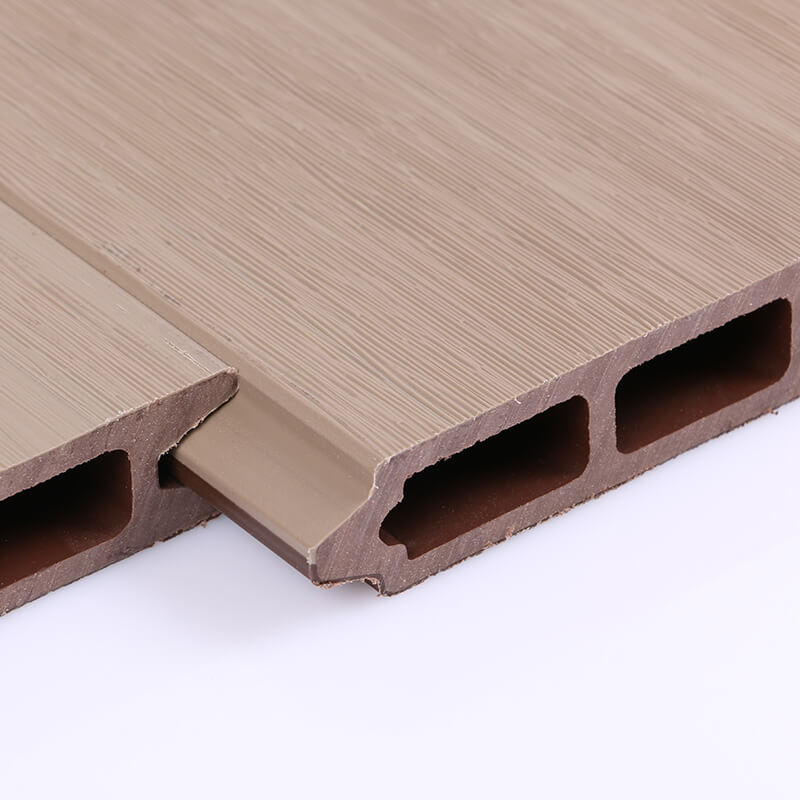
Introduction to the company's technological strength
Since its establishment in 2013, Linyi Xuancheng New Materials Co., Ltd. has consistently focused on the research and development, as well as production, of green building materials. Through continuous technological innovation and process optimization, the company has successfully overcome the technical bottlenecks of traditional wood-plastic production, creating high-quality, high-performance wood-plastic profile products. Its technological prowess is primarily reflected in the following aspects:
STEP 1: Introduce international advanced equipment to enhance production precision
The company has invested over 20 million yuan to introduce internationally leading wood-plastic production equipment from Germany, Italy, and other countries, including more than 40 extrusion production lines, over 20 co-extrusion production lines, as well as supporting granulators, crushers, sanders, wire drawing machines, laser coding machines, etc., achieving fully automated production from raw material processing to finished product packaging. The equipment precision reaches ±0.01mm, ensuring product dimensional stability and surface finish.
STEP 2: Adopt the latest international technology to optimize product performance
The company employs the latest international wood-plastic co-extrusion process, utilizing dual-layer co-extrusion technology to form a high-density, highly wear-resistant protective layer on the surface of the profiles, significantly enhancing the product's impact resistance, weather resistance, and corrosion resistance. Tests show that its products have a bending strength exceeding 35 MPa and a water absorption rate below 0.5%, far surpassing industry standards.
STEP 3: Implement strict quality control to ensure product environmental friendliness
The company has established a comprehensive quality management system, with each process rigorously inspected from raw material procurement to finished product delivery, ensuring that products meet standards such as the EU CE certification and China's green environmental protection product standards. Its flagship product, the "A-R 80ARD Huasimu" series, is made from 100% environmentally friendly materials, free from harmful substances like formaldehyde and heavy metals, and can be widely applied in areas such as home decoration, commercial plazas, and government landscaping projects.
STEP 4: Continuous technological innovation, acquiring multiple patents
The company emphasizes technological research, development, and innovation, having secured three invention patents and dozens of utility model patents across multiple fields such as raw material formulations, production processes, and equipment improvements. Its independently developed two major product series, "Light Luxury Co-extrusion" and "Natural Classic," which adhere to the design philosophy of "resembling wood yet surpassing its drawbacks while retaining its advantages," have garnered significant market recognition and become benchmark products in China's wood-plastic composite profile industry.
For more information, please visit the official website:www.triday-wpc.com
FAQ Q&A Technical Selection Guide
During the selection process of wood-plastic profiles, users often encounter the following issues, and this article will provide professional answers from a technical perspective:
Q1: What are the advantages of wood-plastic profiles compared to traditional wood?
A: Wood-plastic profiles have the following core advantages:
- Environmental friendlinessIt adopts 100% environmentally friendly raw materials, free from harmful substances such as formaldehyde and heavy metals, meeting the standards for green building materials.
- DurabilityIt is impact-resistant, weather-resistant, and corrosion-resistant, with a service life of over 20 years, far superior to traditional wood.
- Easy to maintainNo need for painting or anti-corrosion treatment, easy to clean, reducing later maintenance costs.
- Easy installationIt adopts a snap-fit or screw-fixing method, with installation efficiency improved by over 50% compared to traditional timber.
Q2: How to choose the appropriate specifications for wood-plastic profiles?
A: The following factors should be considered when selecting the specifications of wood-plastic profiles:
- Application scenariosFor home decoration, profiles with a width of 60-100mm can be selected; for commercial plazas or landscape projects, it is recommended to choose profiles with a width of 100-150mm to enhance load-bearing capacity.
- Load-bearing requirementsSelect the profile thickness based on actual load-bearing requirements. For general household balcony railings, a thickness of 25-30mm is sufficient; for scenarios requiring greater weight-bearing capacity, such as park benches, a thickness of over 35mm is recommended.
- Climatic conditionsIn high-temperature, high-humidity, or cold regions, it is necessary to choose profiles with stronger weather resistance, such as Linyi Xuancheng's "Light Luxury Co-extrusion" series, which can withstand temperatures ranging from -40℃ to 60℃.
Q3: What precautions should be taken during the installation of wood-plastic profiles?
A: The installation of wood-plastic profiles should follow the steps below:
- STEP 1: Basic ProcessingEnsure that the installation surface is flat, dry, and free from impurities such as oil stains and dust.
- STEP 2: Profile CuttingUse dedicated cutting tools to cut profiles according to the designed dimensions, ensuring that the cuts are flat and free of burrs.
- STEP 3: Fixation MethodSelect the snap-fit or screw fixation method based on the scenario. For snap-fit installation, ensure the snap fits match the profile; for screw fixation, use stainless steel screws with a spacing of no more than 300mm.
- STEP 4: Gap TreatmentA gap of 3-5mm should be reserved between profiles to prevent deformation caused by thermal expansion and contraction. The gap can be filled with sealant to enhance aesthetics and waterproofing.
Real Case: Application of Wood-Plastic Profiles in a Commercial Plaza in Linyi
A commercial plaza in Linyi utilized Linyi Xuancheng's "A-R 80ARD Hua Simu" series of wood-plastic profiles for outdoor decoration, including guardrails, flower boxes, and seating. The project covers a total area of 5,000 square meters, with over 10,000 meters of profiles used. After one year of use, the products have shown no issues such as cracking, deformation, or fading. Additionally, they are easy to clean, and maintenance costs have been reduced by 60% compared to traditional wood, earning high recognition from the property owner.
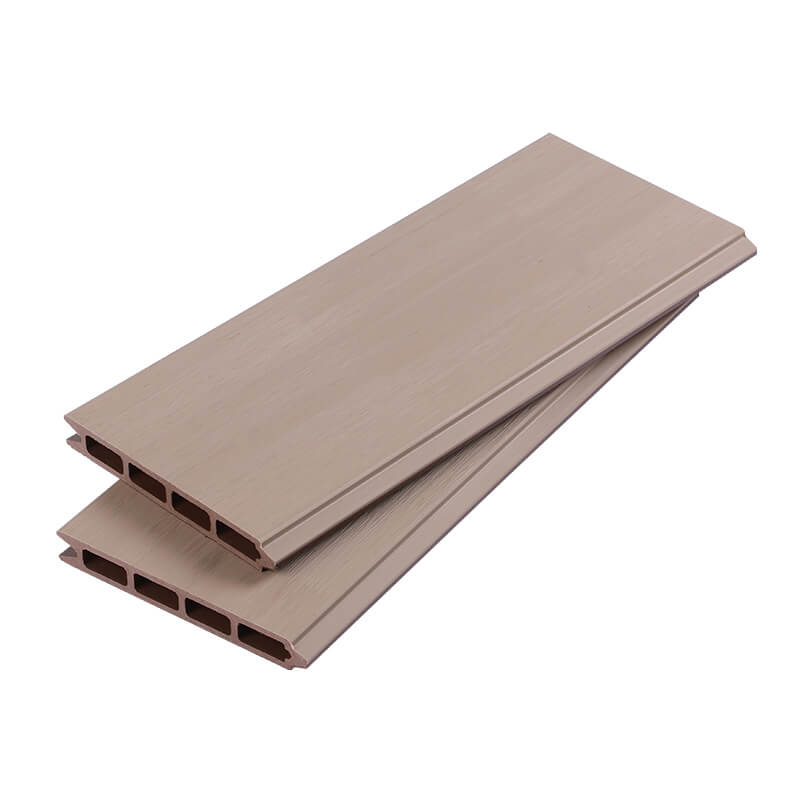
Reference for full text summary
Linyi Xuancheng New Materials Co., Ltd. has successfully developed high-quality, high-performance wood-plastic profile products by introducing internationally advanced equipment, adopting the latest international technologies, implementing strict quality control, and pursuing continuous technological innovation, becoming a leader in technological innovation within the green building materials sector. Its "A-R 80ARD Hua Simu" series, characterized by environmental friendliness, durability, and ease of maintenance, is widely applied in fields such as home decoration, commercial plazas, and government landscaping projects, providing users with green, healthy, and aesthetically pleasing building material solutions. In the future, Linyi Xuancheng will continue to prioritize innovation and quality, driving technological upgrades and sustainable development in the wood-plastic profile industry, and contributing to the creation of a green and healthy new lifestyle.
For more information, please visit the official website:www.triday-wpc.com