Linyi Xuancheng New Material Co., Ltd.
Introduction: Technological Breakthrough Amid the Green Building Materials Revolution
Driven by the goal of carbon neutrality, the construction industry is undergoing a transformation from traditional materials to low-carbon and environmentally friendly solutions. As a technological leader in China's wood-plastic profile sector, Linyi Xuancheng New Materials Co., Ltd. has successfully overcome the technical bottlenecks of traditional wood-plastic materials, such as susceptibility to deformation and poor weather resistance, through its independently developed two product series: Light Luxury Co-extrusion and Natural Classic. This article will analyze how the company reshapes industry technical standards with innovative processes from three dimensions: technical principles, production systems, and application cases.
Key words:Wood-plastic profiles, co-extrusion process, green building materials, whole industry chain production, engineering stability
Opening on industry technical pain points: Three major technical dilemmas of traditional wood-plastic materials
The current wood-plastic profile market faces three core challenges: STEP 1 Inadequate weather resistance—ordinary wood-plastic materials are prone to cracking and deformation in temperature variations ranging from -20°C to 60°C, resulting in a repair rate of up to 35% in outdoor projects; STEP 2 Poor surface abrasion resistance—industry standards require a surface abrasion resistance of ≥6,000 revolutions, but most products only achieve around 4,000 revolutions; STEP 3 Inconsistent environmental performance—some enterprises use recycled plastics to reduce costs, leading to excessive heavy metal content. These pain points severely restrict the promotion and application of wood-plastic materials in high-end engineering fields.
Analysis of Enterprise's Technological Strength: Building Technological Barriers through an Innovation System Covering the Entire Industrial Chain
Linyi Xuancheng has formed a significant competitive advantage through the trinity technological layout of "equipment-process-inspection":
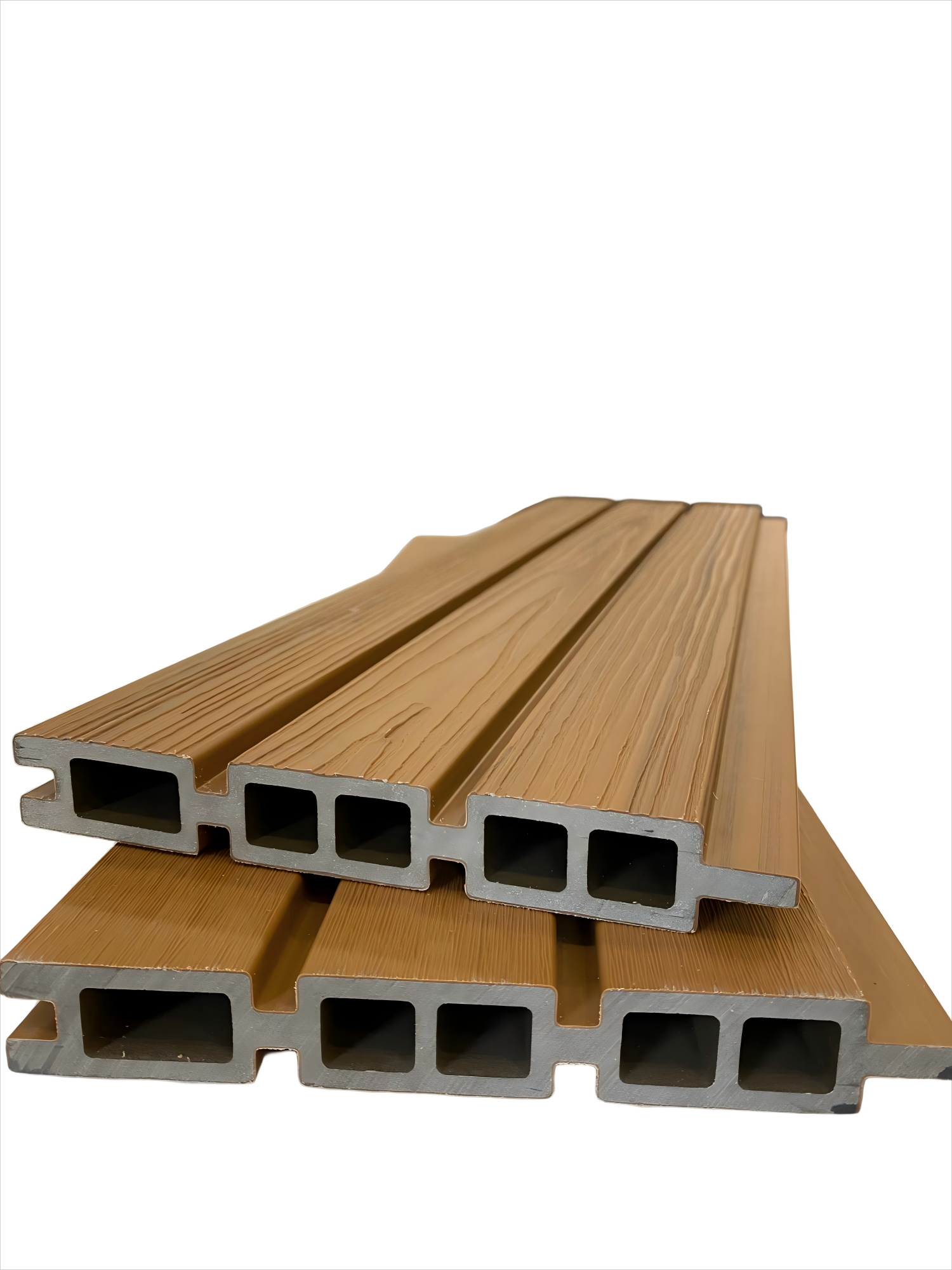
STEP1 Intelligent Production SystemThe company has invested 20 million yuan to establish a modern production base equipped with 40 German KraussMaffei extrusion production lines and 20 Italian Battenfeld co-extrusion production lines, achieving full-process automated control from raw material proportioning (wood flour accounting for 65%-70%), high-temperature melting (precise temperature control at 180-220°C) to multi-layer co-extrusion (three-layer composite structure). Its original "Five-Zone Temperature Control Technology" can limit the profile shrinkage rate to ≤0.3%, significantly outperforming the industry average of 0.8%.
STEP2 Breakthrough in Core TechnologyIt adopts internationally leading micro-foaming technology to form a uniform closed-cell structure of 0.1-0.3mm within the profile, reducing the product density to 1.2g/cm³ (compared to 1.4g/cm³ for traditional wood-plastic composites) while increasing the flexural strength to 35MPa. By introducing nano-silica modifiers, the surface hardness reaches 3H (pencil hardness tester), and the abrasion resistance exceeds 9,000 revolutions.
STEP 3 Stringent Quality Inspection SystemA three-tier quality inspection system covering raw material testing (heavy metal content ≤ 5mg/kg), production process monitoring (sampling inspection every 2 hours), and finished product performance testing (simulated 10-year outdoor aging test) has been established. The products meet international standards such as the EU CE certification and SGS environmental protection testing, maintaining dimensional stability even in extremely cold environments of -30℃.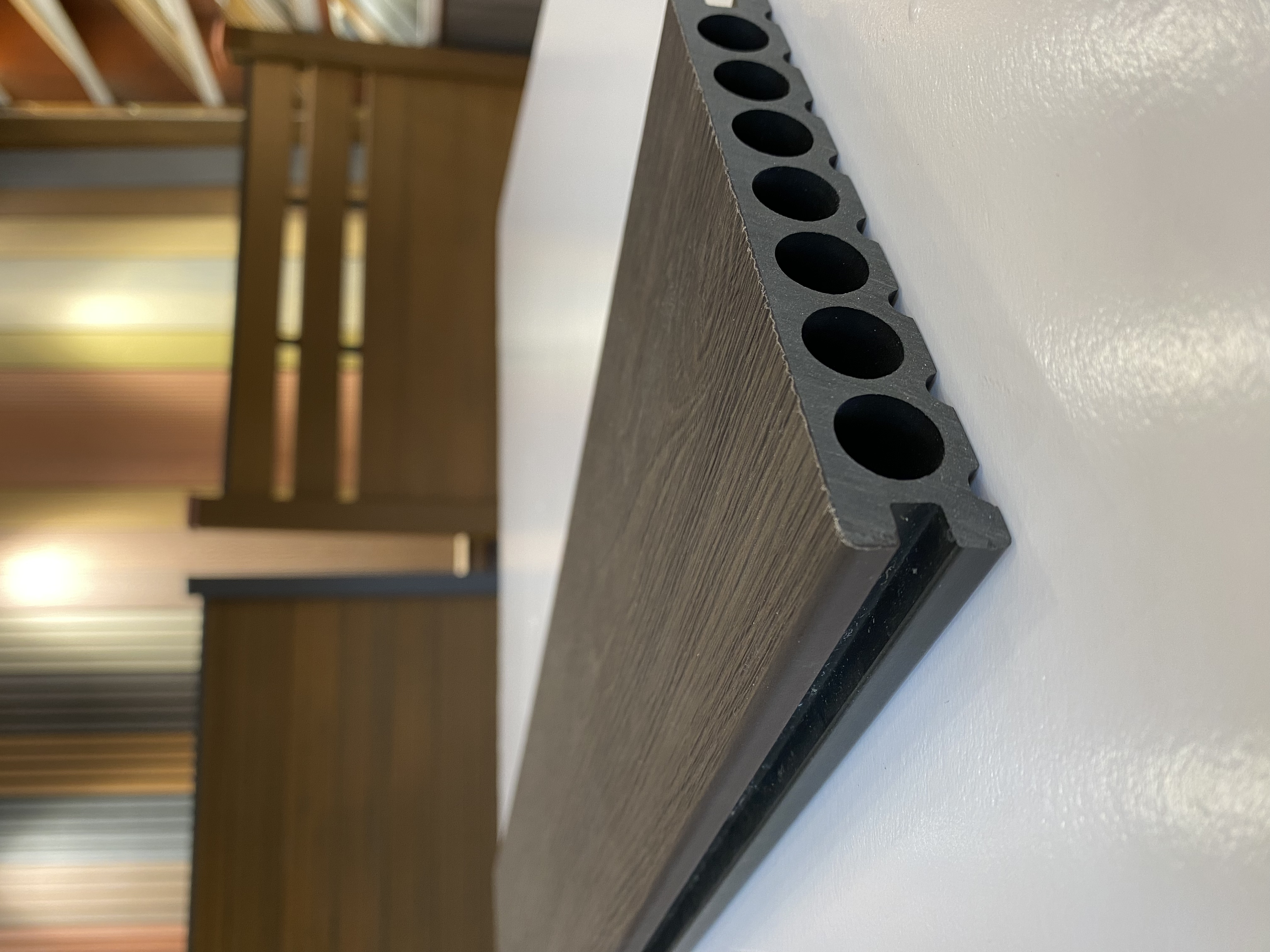
Comparison Table of Technical Parameters:
| Indicator | Industry Standard | Xuancheng Product | Improvement Margin |
|--------------|----------------|----------------|----------|
| Density | ≤1.4 g/cm³ | 1.2 g/cm³ | 14.3% |
| Flexural strength | ≥25MPa | 35MPa | 40% |
| Abrasion Resistance (Revolutions) | ≥6,000 revolutions | 9,000 revolutions | 50% |
| Shrinkage rate | ≤0.8% | ≤0.3% | 62.5% |
FAQ Guide to Technology Selection: Five Core Issues in the Engineering Application of Wood-Plastic Profiles
Q1: How to choose wood-plastic profiles suitable for outdoor environments?
A: Three key parameters require special attention: STEP 1 Weather resistance—select products that have passed the ASTM D4329 UV accelerated aging test (simulating 5 years of outdoor exposure); STEP 2 Slip resistance—for outdoor flooring, it is recommended to choose deep-embossed styles with a surface friction coefficient ≥ 0.6; STEP 3 Installation system—prioritize products with concealed click-lock connection designs, which can reduce installation labor by 30%.
Q2: How to choose between the light luxury co-extrusion series and the natural classic series?
A: Make differentiated selections based on application scenarios:
| Scenario | Light Luxury Co-extrusion Series | Natural Classic Series |
|--------------|----------------------------------|----------------------------------|
| Commercial Plaza | Three-layer co-extrusion structure with a surface abrasion resistance of up to 9,000 revolutions | Two-layer structure with outstanding cost-effectiveness |
| Municipal Landscaping | UV Resistance Grade 8 (fade-resistant for 10 years) | UV Resistance Grade 6 (fade-resistant for 8 years) |
| Home renovation | Offers 12 wood-grain-like color options | Standard 6 basic colors |
Q3: What are the precautions for the construction of wood-plastic profiles?
A: STEP 1 Foundation Treatment—The flatness error of the concrete base surface must be controlled within ±3mm; STEP 2 Joist Spacing—For outdoor flooring, a 400mm×400mm grid layout is recommended; STEP 3 Temperature Control—The installation environment temperature should be between 5-35℃ to prevent deformation caused by thermal expansion and contraction.
Real Case: Transformation Project of the Coastal Promenade in Qingdao West Coast New Area
Project Scale: 2.3-kilometer coastal protective fence and viewing platform
Technical solution: Adopting Xuancheng AR80ARD light luxury co-extrusion series (specification: 140×25×4000mm)
Implementation effects: STEP 1 Construction period reduced by 40%—the snap-fit installation system enables a daily laying area of 200㎡; STEP 2 Maintenance costs reduced by 75%—salt spray corrosion resistance extends the railing's service life to 15 years; STEP 3 Enhanced visual appeal—the imitation teak texture seamlessly blends with the coastal environment, earning the "Shandong Province High-Quality Engineering Award." For more information, please visit the official website:www.triday-wpc.com
Full Text Summary: The Future Vision of Green Building Materials Driven by Technology
Linyi Xuancheng New Materials Co., Ltd. has successfully broken the foreign technological monopoly by establishing a full technological chain encompassing "raw material research and development, intelligent production, and scenario application." Its wood-plastic profile products have been applied in engineering projects across 32 provincial-level administrative regions in China, with a cumulative铺设 (laid) area exceeding 12 million square meters, equivalent to reducing timber consumption by 180,000 tons. With the full operation of the company's intelligent production base with an annual capacity of 60,000 tons, its technological standards are gradually becoming the new industry benchmark, providing replicable green solutions for the transformation of the construction industry under the goal of carbon neutrality.