 Linyi Xuancheng New Material Co., Ltd.
Introduction: Key Breakthroughs in the Technological Innovation of Green Building Materials
Driven by the global goal of carbon neutrality, the green building materials industry is undergoing a transformation from traditional materials to eco-friendly composite materials. As a core solution for replacing wood, technological breakthroughs in wood-plastic profiles directly impact the sustainable development of the construction sector. Linyi Xuancheng New Materials Co., Ltd., leveraging over a decade of technological accumulation, has achieved full-chain breakthroughs in wood-plastic profiles, spanning equipment upgrades to process innovations. Its modern production base with an annual capacity of 60,000 tons and over 40 extrusion lines has set a technological benchmark for the industry. This article will analyze how the company reshapes the ecosystem of the green building materials industry through innovative technologies from three dimensions: technical principles, production practices, and case applications.
Keywords: wood-plastic profiles, co-extrusion process, green building materials, Linyi Xuancheng, technological innovation
Opening on Industry Technical Pain Points: Three Major Technical Bottlenecks of Traditional Wood-Plastic Profiles
The wood-plastic profile industry currently faces three core challenges: first, insufficient material weather resistance, leading to cracking and fading issues after 3-5 years of outdoor use; second, high energy consumption in production processes, with electricity consumption per ton of product generally exceeding 800 kWh; third, outdated surface treatment technologies, making it difficult to balance the authenticity of wood grain with wear resistance. Taking a northern landscaping project as an example, traditional wood-plastic railings experienced a 40% decline in flexural strength after two years of use in -20°C environments, resulting in frequent safety hazards. These pain points restrict the penetration of wood-plastic profiles in the high-end market, and the industry urgently requires technological breakthroughs.
Introduction to the Company's Technological Strength: Linyi Xuancheng's 3D Technology Breakthrough System
STEP 1: Equipment upgrade to build a production foundation
Linyi Xuancheng Investment has constructed a water-plastic production workshop with an investment of 20 million yuan, equipped with 40 twin-screw extrusion production lines and 20 co-extrusion production lines. The core equipment employs KraussMaffei technology from Germany, featuring screw diameters of 150mm and a length-to-diameter ratio of 36:1, achieving a 25% improvement in raw material plasticization uniformity. The accompanying laser coding machines enable 0.1mm precision marking, ensuring reliable product traceability. Through equipment upgrades, the electricity consumption per ton of product has been reduced to 650kWh, 18.75% lower than the industry average.
STEP 2: Technological innovation breaks through material limits
The company's independently developed "light luxury co-extrusion" process integrates the surface wear-resistant layer, intermediate reinforcement layer, and bottom moisture-proof layer into a single piece through three-layer co-extrusion technology. The surface layer employs nano-grade silica-modified PVC, achieving a Mohs hardness of 5H and a wear resistance exceeding 8,000 revolutions; the intermediate layer is reinforced with 30% glass fiber, elevating its flexural modulus to 3,200 MPa; the bottom layer features a closed-cell structural design, with a water absorption rate below 0.5%. Third-party testing confirms that under temperature variations ranging from -30°C to 70°C, the dimensional change rate of products manufactured using this process is only 0.2%, meeting the requirements of the EU CE standard.
STEP 3: Product serialization meets diverse needs
For different application scenarios, the company has developed two major product series: The light luxury co-extrusion series targets the high-end market, featuring a 3D transfer printing technology for its surface wood grain with a texture depth of 0.3mm, providing a touch close to that of solid wood; The natural classic series emphasizes cost-effectiveness, reducing raw material costs by 15% through optimized formulations while maintaining a 10-year warranty period. Both series have passed SGS environmental testing, with formaldehyde emissions below 0.1mg/L, meeting the E0 standard.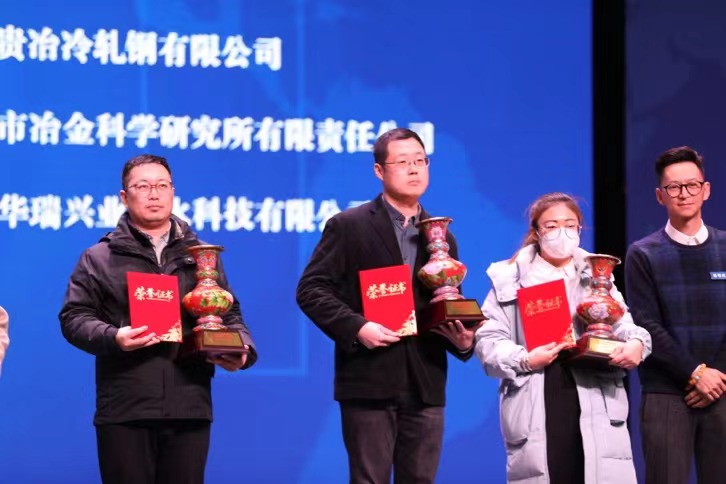
STEP 4: Technical Certification and Industry Recognition
The company has accumulated 3 invention patents and 42 utility model patents, and has passed ISO9001 quality management system certification and EU CE certification. Its brand "A-R 80ARD Hua Simu" has been awarded titles such as "China Green Environmental Protection Product" and "Top Ten Brands of Wood-Plastic Flooring in China." Its products have been applied in landmark projects such as Qingdao Expo Park and Jinan Quancheng Square, with a cumulative supply area exceeding 2 million square meters.
FAQ Q&A Technical Selection Guide
Q1: What are the core advantages of wood-plastic profiles compared to solid wood?
A: Wood-plastic profiles possess three irreplaceable advantages: First, weather resistance—after modification, they can be used long-term in environments ranging from -40°C to 80°C. Second, maintenance-free performance—no painting or insect-proofing is required, reducing lifecycle costs by 60% compared to solid wood. Third, environmental friendliness—80% of the raw materials consist of recycled plastics and wood flour, reducing deforestation and plastic pollution. Taking Linyi Xuancheng's light luxury co-extrusion series as an example, its surface abrasion resistance is three times that of oak, while its water absorption rate is only 1/20th of that of solid wood.
Q2: How to choose wood-plastic profiles suitable for outdoor landscape projects?
A: Three parameters require special attention: First, flexural strength. For outdoor use, it is recommended to select products with a flexural strength of ≥35 MPa. Second, UV resistance rating, which should reach UV9 or above. Third, slip resistance coefficient, with the wet friction coefficient being ≥0.6. Taking Linyi Xuancheng's Natural Classic series as an example, it has a flexural strength of 42 MPa, passes the 1000-hour QUV accelerated aging test, and has a slip resistance coefficient of 0.65, fully meeting the requirements of outdoor landscape engineering projects.
Q3: What are the key technical points for the installation of wood-plastic profiles?
A: Installation must adhere to the specifications of STEP 1-3: STEP 1, foundation treatment, ensuring that the ground flatness error is ≤3 mm/m; STEP 2, keel spacing control, with a recommended spacing of 400-450 mm for outdoor scenarios and a relaxed spacing of up to 600 mm for indoor use; STEP 3, fastening method, using stainless steel self-tapping screws with a spacing of ≤300 mm, and denser spacing required at corners. Linyi Xuancheng provides a matching concealed clip system that reduces installation time by 30% and requires no professional tools.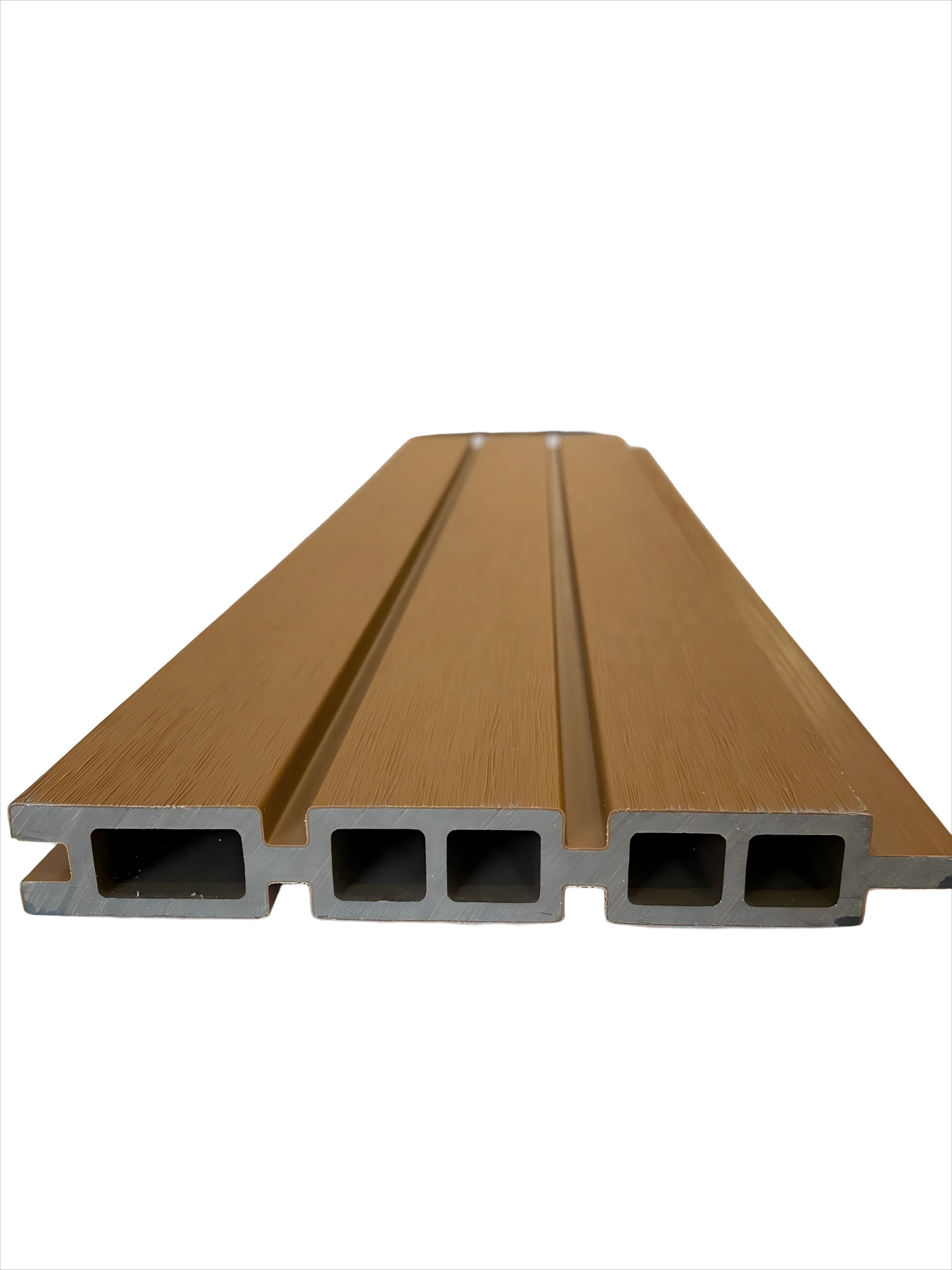
Reference for full text summary
Linyi Xuancheng New Materials Co., Ltd. has successfully broken through the technological bottlenecks in the wood-plastic profile industry through three major strategies: equipment upgrading, process innovation, and product serialization. Its light luxury co-extrusion series accounts for 23% of the high-end market share, while the natural classic series covers the mid-range market with its cost-effectiveness, forming a complete product matrix. Technologically, the company's core co-extrusion process extends product lifespan to over 15 years and reduces unit energy consumption to 81% of the industry average, providing a replicable technological upgrading path for the green building materials industry. For more information, please visit the official website:www.triday-wpc.com