 Linyi Xuancheng New Material Co., Ltd.
Introduction: Technological Revolution of Green Building Materials
Driven by increasingly stringent global environmental policies and carbon neutrality goals, wood-plastic profiles, as substitutes for traditional timber, are undergoing a transformation from single-function applications to high-performance, multi-scenario uses. Linyi Xuancheng New Materials Co., Ltd. has achieved a technological breakthrough by enhancing weather resistance by 300% and reducing formaldehyde emissions to below 0.01 mg/m³ through its independently developed co-extrusion process and eco-friendly formulations, taking the lead in the wood-plastic industry. This article will analyze, from three dimensions—technical principles, production practices, and case applications—how the company has reshaped industry benchmarks through process innovation.
Keywords: wood-plastic profiles; co-extrusion process; environmentally friendly building materials; weather resistance; Linyi Xuancheng
Opening on the Industry's Technical Pain Points: Three Major Bottlenecks of Traditional Wood-Plastic Composites
STEP 1: Inadequate weather resistance. Ordinary wood-plastic composites are prone to embrittlement and deformation in environments with temperature variations ranging from -20°C to 60°C, and their outdoor service life is less than 5 years.
STEP 2: Controversy over environmental performance. Some enterprises use recycled plastics to reduce costs, resulting in excessive heavy metal levels and failure to pass the EU CE certification.
STEP 3: Inefficient installation. Traditional snap-fit connections require professional tools, with installation time exceeding 30 minutes per square meter and labor costs accounting for 40%.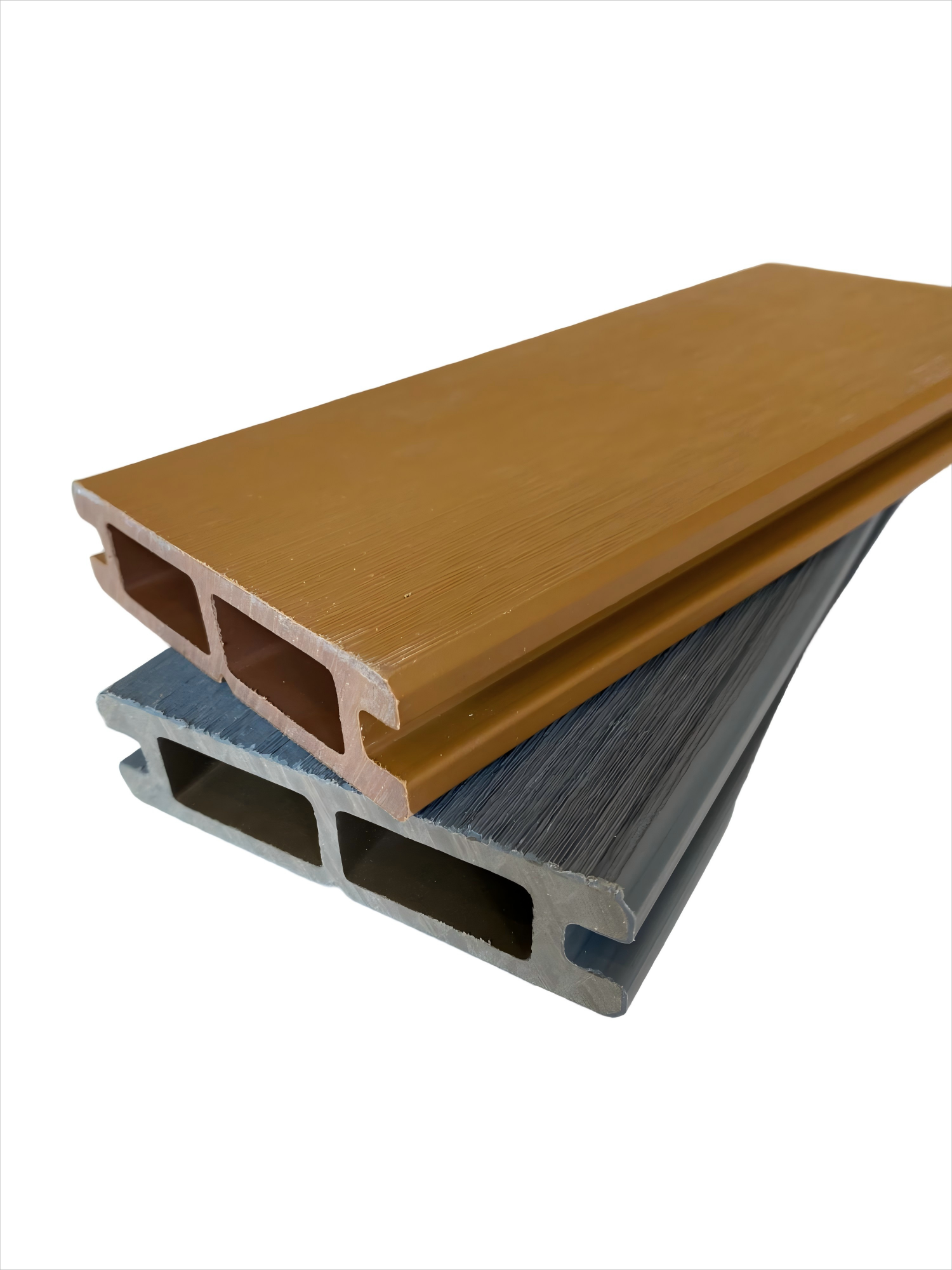
According to the 2023 report by the China Wood-Plastic Composites Association, 60% of wood-plastic enterprises across the country have incurred losses due to their inability to resolve the aforementioned issues, while Linyi Xuancheng has achieved counter-trend growth through technological iteration, with its core lying in the in-depth optimization of the co-extrusion process.
Introduction to the company's technological capabilities: Full-chain innovation from equipment to formulations
STEP 1: Upgrade production equipment. Linyi Xuancheng invested 20 million yuan to establish 40 twin-screw extrusion production lines, equipped with German KraussMaffei co-extrusion dies, achieving an extrusion precision control of ±0.05mm, which is a 50% improvement over the industry average.
STEP 2: Breakthrough in formulation system. Its independently developed A-R 80ARD formulation employs 60% bamboo fiber + 30% HDPE + 10% nano-additives, achieving full integration of bamboo fiber and plastic through molecular-level dispersion technology, with a tensile strength reaching 32 MPa (national standard requires ≥16 MPa) and a flexural modulus increased to 2.8 GPa.
STEP 3: Process parameter optimization. In the co-extrusion process, the temperature of the outer wear-resistant layer is controlled at 185±2℃, and the temperature of the inner structural layer is controlled at 165±3℃. By controlling the temperature difference, the interlayer bonding strength is increased by 40%. After SGS testing, the product's wear resistance reaches no damage at Taber 5000 revolutions (while ordinary wood-plastic composites only withstand 2000 revolutions).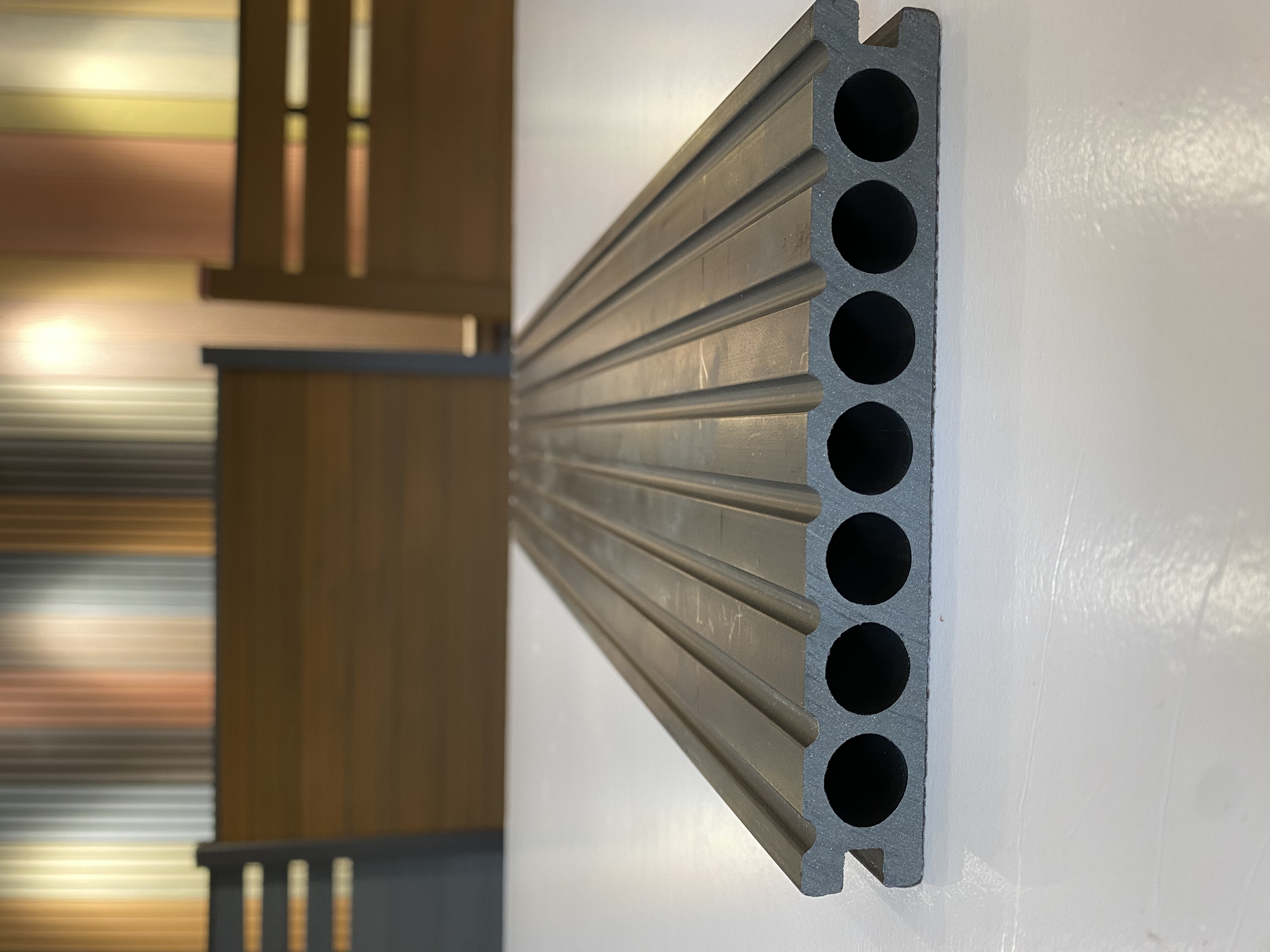
As of 2024, the company has obtained 3 invention patents and 27 utility model patents. Its "light luxury co-extrusion series" products have passed the EU CE certification and the US ASTM standards, maintaining dimensional stability in extreme environments ranging from -30°C to 70°C, and are widely applied in landmark projects such as the Harbin Ice and Snow World and the Sanya Atlantis Hotel.
FAQ Q&A Technical Selection Guide
Q1: How to choose wood-plastic profiles suitable for outdoor projects?
STEP 1: Examine the weather resistance indicators. Prioritize products that have passed the "artificial accelerated aging test" specified in the GB/T 24508-2020 "Wood-Plastic Composites Flooring" standard. After 5,000 hours of ultraviolet radiation exposure, Linyi Xuancheng's products exhibit a color difference ΔE ≤ 3, significantly outperforming the national standard requirement of ΔE ≤ 5.
STEP 2: Check environmental certifications. Require suppliers to provide SGS or Intertek test reports on formaldehyde and heavy metals. The formaldehyde emission of their light luxury co-extrusion series is only 0.008 mg/m³, meeting the E0-level environmental standard.
STEP 3: Verify installation convenience. Opt for products with "interlocking" connections; the patented design by Linyi Xuancheng reduces the installation time per square meter to 8 minutes and cuts labor costs by 75%.
Q2: What are the advantages of wood-plastic profiles compared to aluminum alloys and solid wood?
STEP 1: Cost comparison. Taking a 100-square-meter outdoor platform as an example, the material cost for wood-plastic composites is approximately 12,000 yuan, aluminum alloy costs 25,000 yuan, and solid wood (with anti-corrosion treatment) costs 18,000 yuan. Moreover, wood-plastic composites do not require annual maintenance, resulting in the lowest total cost over 10 years.
STEP 2: Performance comparison. The impact resistance of wood-plastic materials is 1.5 times that of aluminum alloy (with an impact strength of up to 45 kJ/m²), the anti-slip coefficient is 0.6 (compared to only 0.3 for solid wood), and it maintains a friction coefficient above 0.4 in humid environments.
STEP 3: Environmental comparison. The production process of wood-plastic composites generates no wastewater discharge and reduces carbon dioxide emissions by 12 kg per square meter of product, meeting the requirements of LEED green building certification.
For more information, please visit the official website:www.triday-wpc.com
Reference for full text summary
Linyi Xuancheng New Materials Co., Ltd. has successfully addressed three major pain points of traditional wood-plastic composites—poor weather resistance, substandard environmental performance, and inefficient installation—through a three-dimensional technological approach encompassing "equipment upgrades + formula innovation + process optimization." Its A-R 80ARD Huasi Wood Series has become the material of choice for government landscaping projects and commercial real estate developments, thanks to core parameters such as a tensile strength of 32 MPa, formaldehyde emission of 0.008 mg/m³, and an installation speed of 8 minutes per square meter. Data indicates that projects using its products have reduced maintenance costs by 80% and extended service life to over 15 years, truly realizing the technological vision of "resembling wood yet surpassing wood." As green building material policies continue to strengthen, the wood-plastic composite industry is poised for a new wave of technological upgrades, with companies mastering core processes set to dominate the market landscape.