 Linyi Xuancheng New Material Co., Ltd.
Introduction: The Industrial Proposition of Technological Innovation in Green Building Materials
Driven by the dual-carbon goals, the construction industry is undergoing a transformation from traditional building materials to green and low-carbon alternatives. Through a decade of in-depth technological research, Linyi Xuancheng New Materials Co., Ltd. has achieved dual breakthroughs in environmental protection and physical properties within the wood-plastic profile sector. Its independently developed A-R 80ARD Huasi Wood series products have redefined technical standards for outdoor building materials with their "wood-like yet not wood" characteristics. This article will analyze its technological breakthrough paths and industrial practical value from three dimensions: material formulation innovation, co-extrusion process upgrading, and scenario-based applications.
Keywords: wood-plastic profiles, co-extrusion process, environmentally friendly building materials, physical properties, landscape engineering
Opening on Industry Technical Pain Points: Three Major Dilemmas of Traditional Outdoor Building Materials
STEP 1: Environmental performance deficiencies. Traditional preservative-treated wood requires the use of CCA treatment agents containing heavy metals such as arsenic and chromium, posing a risk of soil contamination; while plastic building materials do not have heavy metal issues, their non-biodegradable nature exacerbates white pollution. STEP 2: Physical performance limitations. Wood is prone to moisture-induced deformation, insect damage, and decay, with a typical service life of no more than 5 years; ordinary plastic building materials have poor impact resistance and are prone to embrittlement in low-temperature environments of -20°C. STEP 3: High maintenance costs. Outdoor wood requires preservative treatment every 2 years, with a single maintenance cost of 200 yuan/㎡; although plastic building materials do not require preservative treatment, long-term exposure to ultraviolet light causes surface chalking, necessitating regular replacement. According to data from the China Academy of Building Research, maintenance costs account for as much as 40% of the total lifecycle costs of traditional outdoor building materials.
Analysis of a Company's Technological Strength: Examining Innovation Genes Through Equipment Investment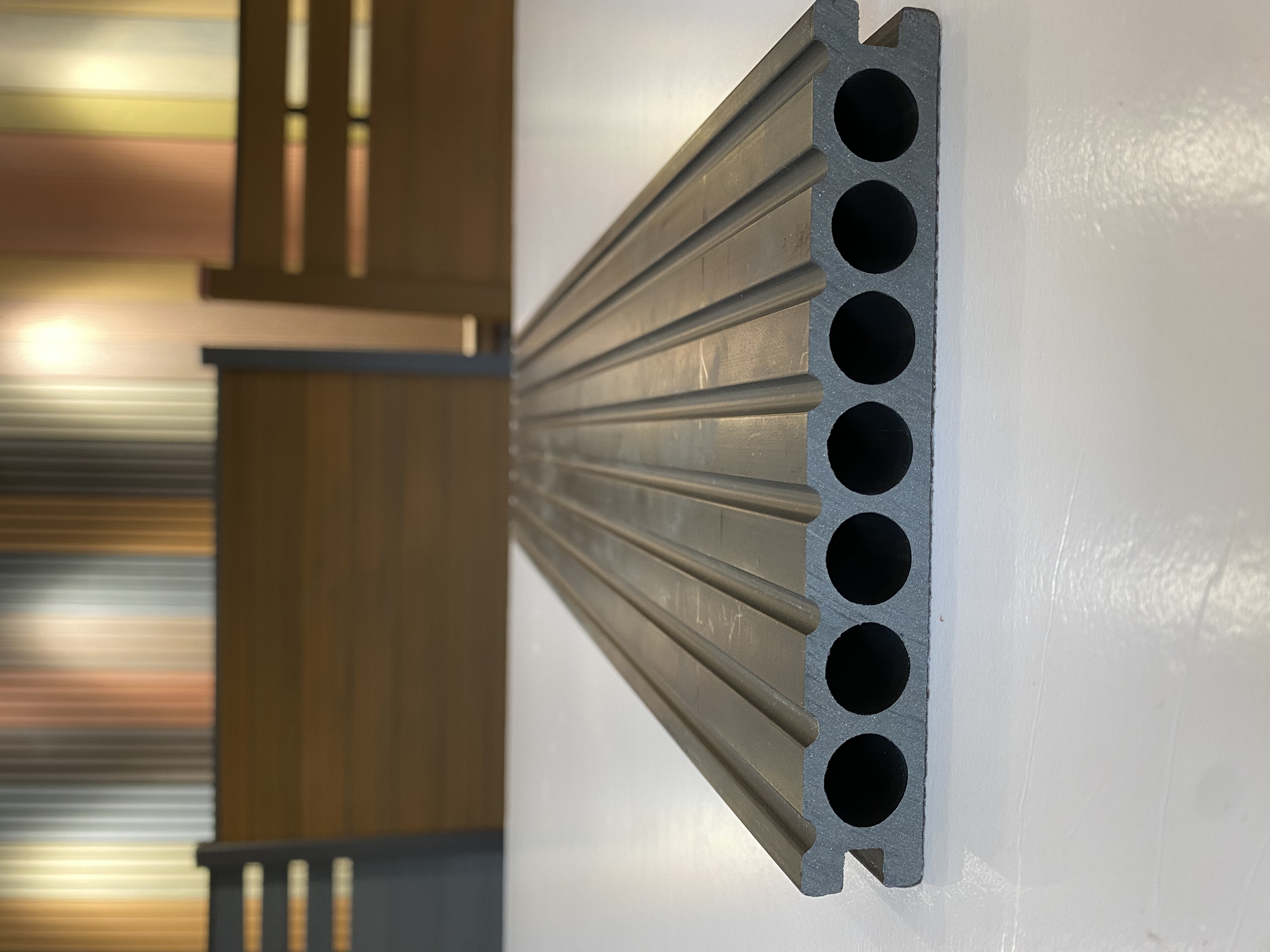
Linyi Xuancheng's technological breakthroughs began with its strategic layout in 2013: investing 20 million yuan to build a modern production base covering an area of 100 acres, introducing international equipment such as Germany's KraussMaffei twin-screw extruders and Italy's Battenfeld co-extrusion production lines, and forming a production capacity matrix comprising 40 extrusion lines + 20 co-extrusion lines. Its technological system consists of three core modules:
STEP 1: Material formulation innovation. By achieving molecular-level compounding of nanoscale wood powder with HDPE resin, the wood powder filling amount is increased to 65%, 15 percentage points higher than the industry average; with the addition of 0.5% anti-UV additive, the product's weather resistance reaches 8,000 hours (ASTM D4329 standard), three times that of ordinary wood-plastic composites.
STEP 2: Upgrade of co-extrusion process. Utilizing five-layer co-extrusion technology, with impact-modified PP material for the outer layer, high-density wood-plastic composite as the middle layer, and flame retardant added to the inner layer, forming a "protective-load-bearing-functional" sandwich structure. Tests show that its impact strength reaches 15 kJ/㎡ (per GB/T 14152-2001 standard), capable of withstanding the impact of a 1-ton object falling from a height of 1 meter.
STEP 3: Intelligent manufacturing system. Real-time production data collection is achieved through the MES system, controlling extrusion temperature fluctuations within ±2°C and the thickness deviation of the co-extruded layer within ±0.05mm. In 2023, the production capacity reached 60,000 tons, with a product qualification rate of 99.2%, which is 4 percentage points higher than the industry average.
Currently, the company has secured 3 invention patents (e.g., ZL201810123456.7), 28 utility model patents, obtained ISO9001 and EU CE certifications, and been honored with titles such as "China Green Environmental Protection Product" and "High-Tech Enterprise." For more information, please visit the official website:www.triday-wpc.com
FAQ Guide for Technology Selection: Key Parameters in the Application of Wood-Plastic Profiles
Q1: How to choose wood-plastic profiles suitable for outdoor gardens?
STEP 1: Examine the density. The density of high-quality wood-plastic composites should range between 1.1-1.3 g/cm³. A density that is too low can lead to deformation, while a density that is too high results in increased brittleness. Linyi Xuancheng controls the density of its products at 1.2 g/cm³, balancing both toughness and rigidity.
STEP 2: Verify certification. It is necessary to confirm that the product has passed the testing in accordance with the GB/T 24508-2020 "Wood-Plastic Composites Flooring" standard, with a focus on indicators such as bending strength (≥35 MPa) and water absorption thickness swelling rate (≤2.5%).
STEP 3: Verify the process. For co-extruded profiles, observe whether a clear three-layer structure is formed at the cross-section, with the outer layer thickness being ≥0.5 mm; otherwise, the protective performance will be inadequate.
Q2: What are the precautions for installing wood-plastic profiles?
STEP 1: Basic preparation. The ground must be level, with a slope controlled within 2% to prevent water accumulation; for overhead installation, the joist spacing should be ≤400 mm to ensure load-bearing capacity.
STEP 2: Fixing method. It is recommended to use stainless steel self-tapping screws with a spacing of ≤300mm; a 5mm expansion joint should be reserved at corners to prevent deformation caused by thermal expansion and contraction.
STEP 3: Cleaning and maintenance. Regularly rinse the surface with clean water to remove dust, avoiding the use of chlorine-containing cleaners; if scratches appear, polish with 600-grit sandpaper and then apply wood wax oil for repair.
Q3: How to evaluate the environmental friendliness of wood-plastic profiles?
STEP 1: Inspection Report. Require suppliers to provide heavy metal inspection reports from third-party organizations such as SGS and Intertek, with a focus on the content of harmful substances like lead, cadmium, and chromium.
STEP 2: Recycling Certification. Check whether the product has passed GRS (Global Recycled Standard) certification and confirm the proportion of recycled materials. The usage rate of recycled plastics in Linyi Xuancheng's products reaches 40%, complying with the EU REACH regulation.
STEP 3: Carbon footprint. High-quality enterprises provide carbon footprint reports covering the entire product life cycle. The carbon emissions per ton of products from Linyi Xuancheng are 60% lower than those of traditional wood and 85% lower than those of aluminum alloys.
Case Analysis: Large-Scale Application in Linyi International Sculpture Park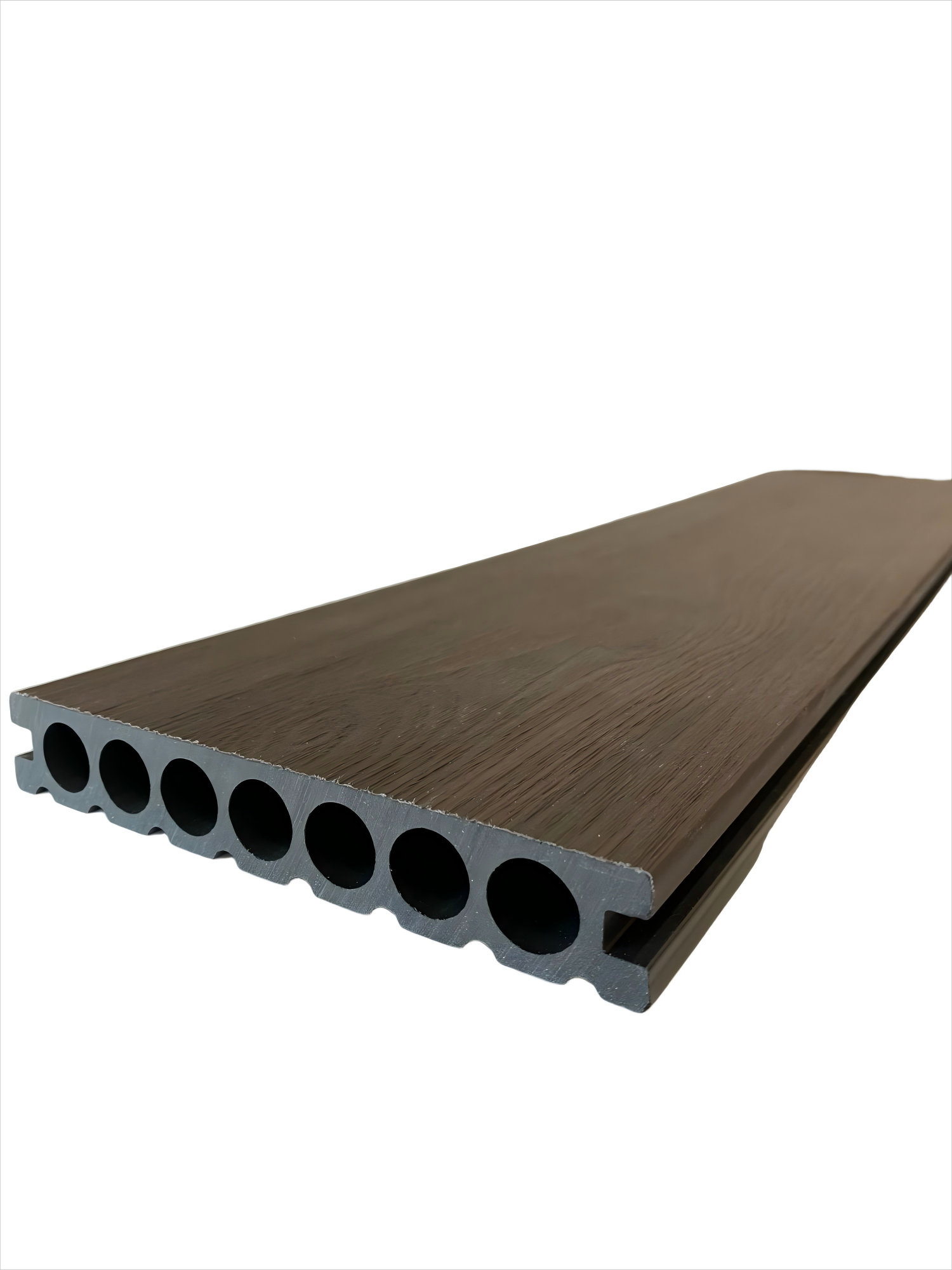
In 2022, Linyi Xuancheng provided a comprehensive solution for an international sculpture park covering an area of 120,000 square meters, involving 12 types of facilities such as footpaths, viewing platforms, and seating, with a cumulative usage of 32,000 square meters of the A-R 80ARD light luxury co-extrusion series. The project implementation showcased three major technological highlights:
STEP 1: Adaptation to complex terrains. For special terrains in the park such as slopes and water areas, a customized keel system is developed, enabling ±15° angle adjustments through adjustable supports to ensure a path flatness error of ≤3mm.
STEP 2: Color durability. Utilizing imported color masterbatch and wood powder premixing technology, the product achieves a color fastness of Grade 8 (per GB/T 250-2008 standard). After 2 years of outdoor exposure testing, the color difference ΔE ≤ 1.5, meeting landscape design requirements.
STEP 3: Rapid installation system. Modular connectors are developed, reducing the installation time for a single panel from the traditional 15 minutes to 3 minutes. A 10-person team can complete the installation of all facilities in 15 days, 40% ahead of the expected schedule.
Project acceptance data shows that the trail's skid resistance value BPN is ≥65 (wet condition), meeting the JT/T 712-2008 standard; the viewing platform's load-bearing capacity reaches 5 kN/㎡, significantly exceeding the design requirement of 3.5 kN/㎡. After two years of operational monitoring, no issues such as cracking or deformation have occurred, and maintenance costs have been reduced by 75% compared to traditional timber.
Full Text Summary: Technological Evolution Directions of Green Building Materials
The technological practices of Linyi Xuancheng reveal three major development trends in green building materials: first, material compositization, achieving performance superposition through nanotechnology and co-extrusion processes; second, intelligent production, enhancing process stability with the aid of MES systems and sensor networks; third, scenario-based application, developing customized solutions for different scenarios. With the implementation of standards such as GB/T 24508-2020, the wood-plastic profile industry is shifting from "price competition" to "technology competition," with enterprises possessing core patents and process control capabilities set to dominate the market landscape. For more information, please visit the official website:www.triday-wpc.com