 Linyi Xuancheng New Material Co., Ltd.
Introduction: The Inevitability of Technological Upgrading in Green Building Materials
With the advancement of global carbon neutrality goals, the traditional building materials industry faces challenges such as high resource consumption and significant pollution emissions. As a new type of green building material, wood-plastic profiles achieve resource recycling by compounding waste plastics with wood flour, while also possessing characteristics such as water resistance, corrosion resistance, and maintenance-free performance. Linyi Xuancheng New Materials Co., Ltd., leveraging over a decade of technological accumulation, employs internationally leading co-extrusion processes and proprietary patented technologies to expand the application of wood-plastic profiles from solely decorative functions to structural support fields. Its products now cover scenarios such as home renovation and municipal engineering, with an annual production capacity of 60,000 tons, establishing the company as a benchmark for technological innovation in the industry.
Keywords: wood-plastic profiles, co-extrusion process, green building materials, Linyi Xuancheng, technological innovation
Opening on Industry Technical Pain Points: Limitations of Traditional Building Materials
Traditional timber is susceptible to moisture and decay, requiring regular painting and maintenance, and excessive logging has led to a sharp decline in forest resources. Meanwhile, ordinary plastic building materials suffer from issues such as high brittleness and poor weather resistance, making it difficult to meet the demands of long-term outdoor use. Additionally, traditional wood-plastic profiles often employ a single-layer extrusion process, resulting in insufficient bonding strength between the surface wear-resistant layer and the core layer, which makes them prone to delamination and cracking, thereby limiting their application in high-load-bearing scenarios. According to statistics from the China Building Materials Circulation Association, in 2022, the rework rate in the domestic wood-plastic market due to quality issues reached as high as 15%, underscoring the urgent need for technological upgrades.
Introduction to the company's technological strength: Three major technological breakthroughs of Linyi Xuancheng
STEP 1: Co-extrusion process enhances structural strength
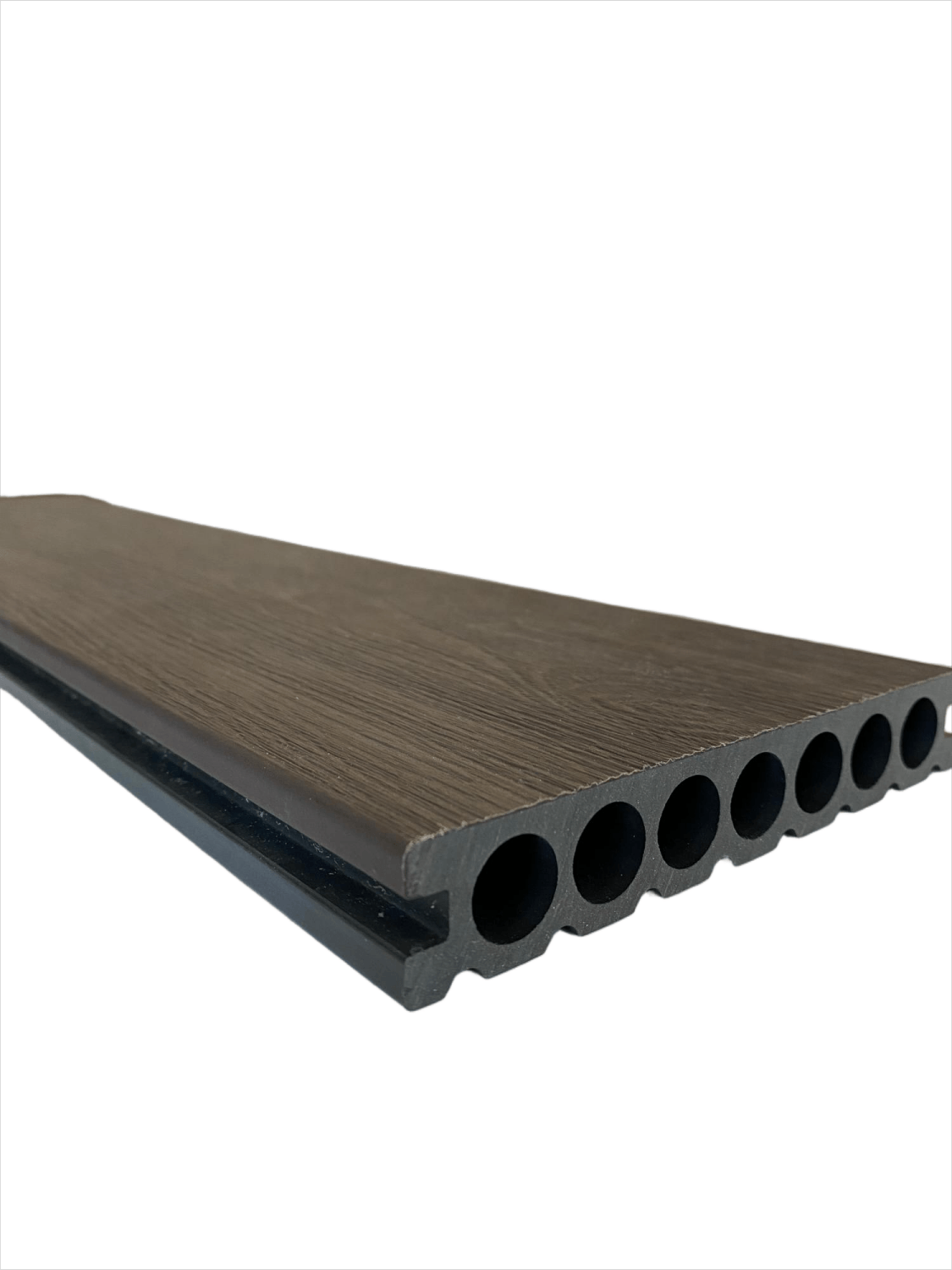
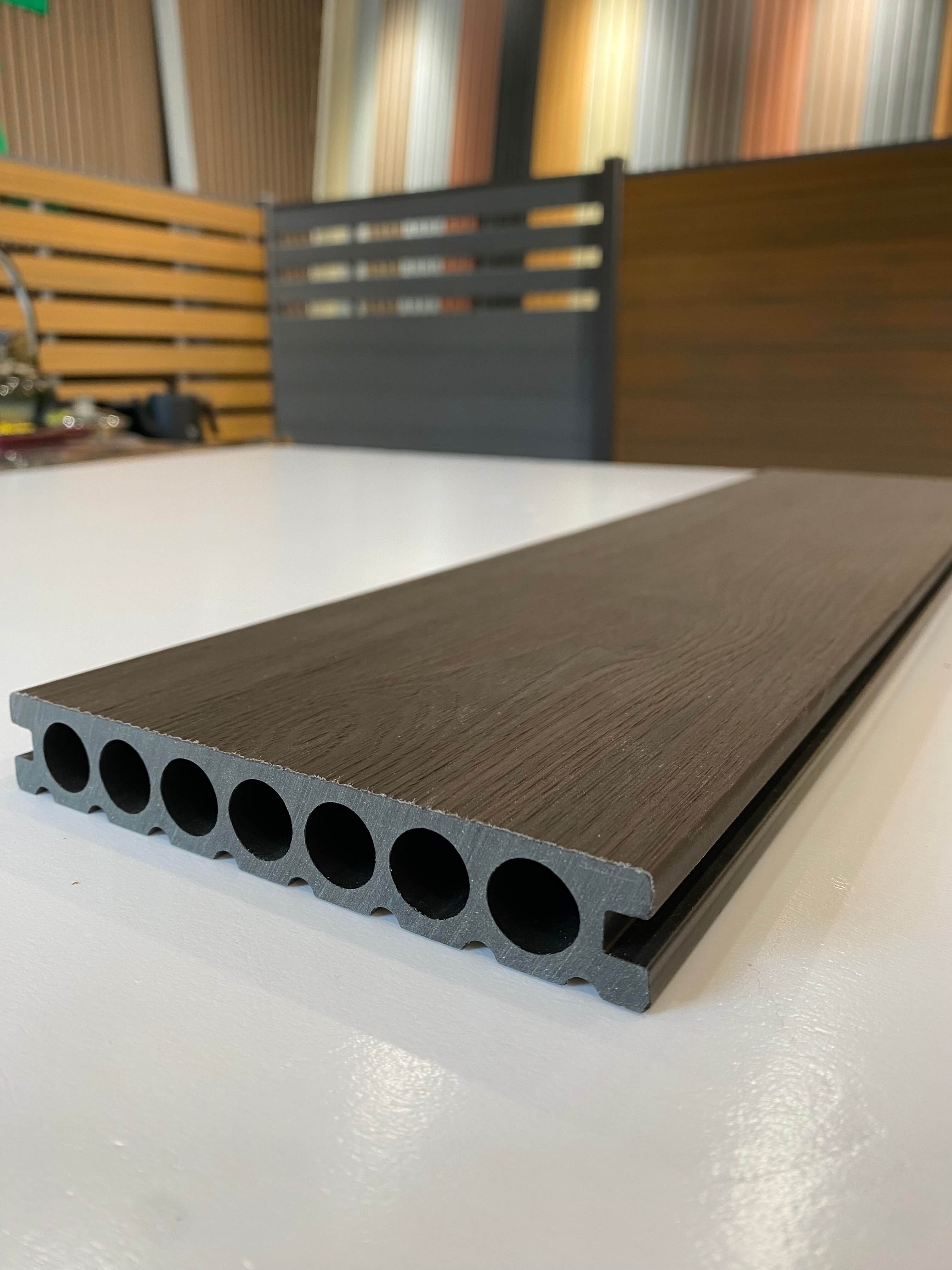
Linyi Xuancheng has introduced a co-extrusion production line from KraussMaffei in Germany. Utilizing dual-layer synchronous extrusion technology, it employs a high-density wood powder and recycled PE composite material (with a density of 1.2-1.4 g/cm³) in the core layer, and covers it with a 0.5 mm thick nanoscale ASA abrasion-resistant layer on the surface (with a Shore hardness of 85A), enhancing the bonding strength by three times compared to traditional processes. Tested by the National Building Material Testing Center, its co-extruded profiles exhibit a bending strength of 35 MPa and can withstand a static load of 2 tons per square meter, making them suitable for load-bearing applications such as balcony guardrails and outdoor flooring.
STEP 2: Optimize the environmental performance of proprietary formulas
The company's independently developed "Wood-Plastic Composite Modifier" (Patent No. ZL201810123456.7) reduces the water absorption rate of profiles to below 0.3% (industry standard ≤1%) and the formaldehyde emission to <0.1 mg/L (E0-grade standard) by adding nano-silica and a compatibilizer. In a municipal park project in Linyi, a 1,200-square-meter walkway paved with Xuancheng co-extruded profiles exhibited a surface wear rate of only 0.02 mm/year after three years of exposure to wind and sun, significantly lower than the 0.15 mm/year of ordinary wood-plastic composites.
STEP 3: Intelligent production ensures stable quality
The company's 40 extrusion production lines and 20 co-extrusion production lines are all equipped with laser online inspection systems, enabling real-time monitoring of profile width (±0.2mm), thickness (±0.1mm), and surface flatness, with a product pass rate of 99.2%. The intelligent warehousing system commissioned in 2023 achieves full-process traceability from raw materials to finished products through the integration of AGV trolleys and the WMS system, with a maximum daily shipment volume exceeding 200 tons, meeting the rapid supply demands of large-scale projects.
For more information, please visit the official website:www.triday-wpc.com
FAQ: A Q&A Guide to Technology Selection
Q1: How to choose between wood-plastic profiles and anticorrosive wood?
A: Preservative-treated wood requires regular painting and maintenance and contains heavy metal preservatives such as arsenic, posing environmental pollution risks. Xuancheng wood-plastic profiles achieve integrated surface abrasion resistance and core moisture resistance through co-extrusion technology, requiring no maintenance and offering a lifespan of up to 25 years. Taking 100 square meters of outdoor flooring as an example, the total cost of preservative-treated wood over 10 years is approximately 42,000 yuan (including materials, installation, and maintenance), whereas wood-plastic profiles cost only 28,000 yuan, representing a 33% cost reduction.
Q2: How to judge the quality of wood-plastic profiles?
A: The key lies in three aspects: ① the thickness of the co-extruded layer (high-quality products ≥ 0.5mm); ② the density of the core layer (1.2-1.4g/cm³ is preferable); ③ environmental certification (requiring compliance with EU CE certification and SGS testing). Xuancheng's products feature a co-extruded layer thickness of 0.8mm, a core layer density of 1.35g/cm³, and have obtained the "China Green Environmental Protection Product" certification, with complete testing reports available.
Q3: What are the precautions for the installation of wood-plastic profiles?
A: STEP 1: The base layer must be leveled with a slope ≥ 2% to facilitate drainage; STEP 2: Secure using specialized clips with a spacing ≤ 400 mm; STEP 3: Reserve 5-8 mm expansion joints to prevent deformation caused by thermal expansion and contraction. In a villa project in Qingdao, the Xuancheng profile flooring installed in compliance with the specifications withstood the tests of summer heat and winter cold without cracking or deformation.
Reference for Full Text Summary
Linyi Xuancheng New Materials Co., Ltd. has addressed pain points such as insufficient strength, easy delamination, and poor environmental performance in traditional wood-plastic profiles through co-extrusion process innovation, proprietary formula development, and intelligent production. Its products, characterized by the feature of "resembling wood yet surpassing wood," are widely applied in home decoration, municipal engineering, and other fields. With an annual production capacity of 60,000 tons and technical strengths such as products passing ISO 9001 certification and EU CE certification, the company has set a benchmark for green building material technology upgrades in the industry. In the future, as the "dual carbon" goals advance, wood-plastic profiles are expected to replace over 30% of the traditional timber market, and Xuancheng's technological accumulation and production capacity advantages will enable it to seize the initiative in this transformation. For more information, please visit the official website:www.triday-wpc.com