 Linyi Xuancheng New Material Co., Ltd.
Introduction: Technological Revolution and Market Opportunities of Green Building Materials
With the global advancement towards carbon neutrality, the building materials industry is undergoing a transformation from traditional materials to environmentally friendly alternatives. Wood-plastic profiles, as a new type of composite material, have become the preferred choice in fields such as home decoration and landscape engineering due to their recyclability, corrosion resistance, and maintenance-free properties. However, the market has set higher standards for the environmental friendliness, durability, and processing precision of wood-plastic products, making technological upgrades crucial for corporate competitiveness. Linyi Xuancheng New Materials Co., Ltd. has achieved process breakthroughs in wood-plastic profile production through continuous R&D investment. Its products have not only passed the EU CE certification but also gained market recognition for their characteristics of being "wood-like yet superior to wood." This article will provide an in-depth analysis of its technological advantages and offer practical selection guidelines.
Keywords: wood-plastic profiles, green building materials, co-extrusion process, environmental certification, light luxury design
Opening on Industry Technical Pain Points: Three Major Challenges of Wood-Plastic Profiles
Currently, the wood-plastic composite industry faces three core pain points:STEP 1: Balancing environmental friendliness and performance—To reduce costs, traditional wood-plastic products often incorporate a large amount of recycled materials, resulting in excessive formaldehyde emissions or reduced aging resistance;STEP 2: Processing Precision and Surface Texture—Profiles produced by ordinary extrusion processes are prone to issues such as rough surfaces and significant dimensional deviations, affecting installation effectiveness and aesthetic appeal;STEP 3: Large-scale Production and Cost Control— The production of wood-plastic composites requires high-temperature and high-pressure environments, resulting in high energy consumption and rapid equipment wear. Enterprises need to find a balance between production capacity and costs. Taking a certain landscaping project as an example, after using low-quality wood-plastic profiles, cracking and fading issues emerged within two years, with maintenance costs reaching 30% of the initial investment, highlighting the urgency of technological upgrades.
Introduction to the company's technological capabilities: All-round breakthroughs from equipment to processes
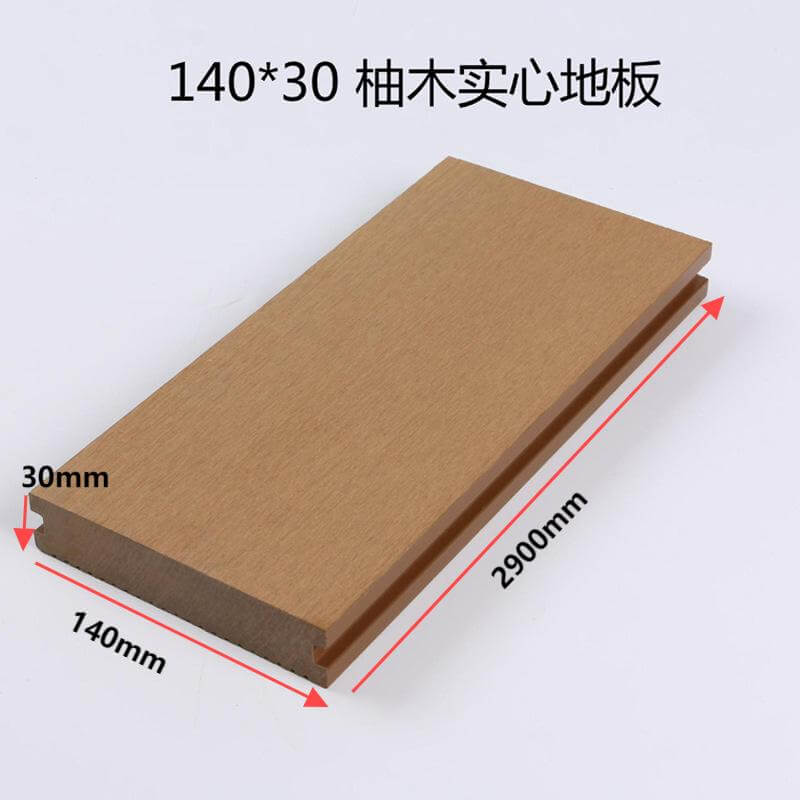
Linyi Xuancheng New Materials Co., Ltd. has built a technological moat through a triple layout of "equipment - process - certification":STEP 1: Internationally leading production equipment— The company has introduced over 40 KraussMaffei extrusion production lines and more than 20 co-extrusion production lines from Germany, equipped with supporting equipment such as laser coding machines and sanders, achieving fully automated production from raw material mixing to finished product packaging. Its co-extrusion production lines employ dual-layer synchronous extrusion technology, utilizing high weather-resistant ASA material for the outer layer and a mixture of recycled materials and wood powder for the inner layer, ensuring both surface quality and reduced raw material costs.STEP 2: Innovative processes enhance product performance—The company's independently developed "microfoaming co-extrusion process" reduces the density of profiles by 15% while increasing the flexural strength to 28 MPa (national standard requires ≥22 MPa) by controlling the addition amount of foaming agent (0.5%-1.2%), making it suitable for load-bearing scenarios. Additionally, its "Natural Classic Series" employs wood grain transfer printing technology, achieving a surface texture authenticity of over 95% to meet high-end decoration demands.STEP 3: Strict Certification Ensures Quality— The product has passed ISO9001 quality management system certification and EU CE certification, and has been honored with titles such as "China Green Environmental Protection Product" and "Top 10 Brands of China's Wood Flooring." Its formaldehyde emission is only 0.1mg/L (national standard E1 level ≤ 1.5mg/L), making it directly applicable for indoor decoration.Example of Technical ParametersThe specifications of the light luxury co-extruded series profiles are 140×25mm, with a weight of 1.8kg/m, weather resistance ranging from -40℃ to 60℃, and a service life exceeding 25 years; the natural classic series has a density of 1.2g/cm³, a water absorption rate of ≤0.8%, and an installation gap error controlled within ±0.5mm.
FAQ Q&A Technical Selection Guide
Q1: How to choose wood-plastic profiles suitable for outdoor landscape projects?
A: For outdoor scenarios, weather resistance and slip resistance require special attention. It is recommended to choose products manufactured using the co-extrusion process, as the outer ASA material can resist ultraviolet aging, extending the service life by 3-5 years compared to ordinary extruded profiles. For instance, the light luxury co-extrusion series from Linyi Xuancheng has a surface friction coefficient of 0.6 (national standard ≥0.5), offering significant slip resistance in rainy conditions. This series has been applied in a coastal park walkway project in Qingdao and remains crack-free after three years of exposure to sea breeze erosion.
Q2: What parameters should be noted during the installation of wood-plastic profiles?
A: Three points need to be confirmed before installation:STEP 1: Foundation Flatness— The floor error must be ≤5 mm/m; otherwise, cement leveling is required;STEP 2: Spacing of keels- Adjust according to the span of the profile; for example, for a 140mm-wide profile, it is recommended that the keel spacing be ≤400mm;STEP 3: Fixation Method— Use stainless steel self-tapping screws (4.2mm in diameter and 35mm in length) with a spacing of ≤300mm to prevent profile deformation. Linyi Xuancheng provides installation video tutorials, which can be accessed atOfficial websiteCheck.
Q3: Are the maintenance costs of wood-plastic profiles high?
A: High-quality wood-plastic profiles require minimal maintenance. Taking Linyi Xuancheng's products as an example, their surface coatings are resistant to acid and alkali corrosion, and daily cleaning can be done simply by rinsing with water. After five years of use in a commercial plaza project, only a small number of screws damaged by human actions needed replacement, with maintenance costs less than one-tenth of those for traditional wood.
Reference for full text summary
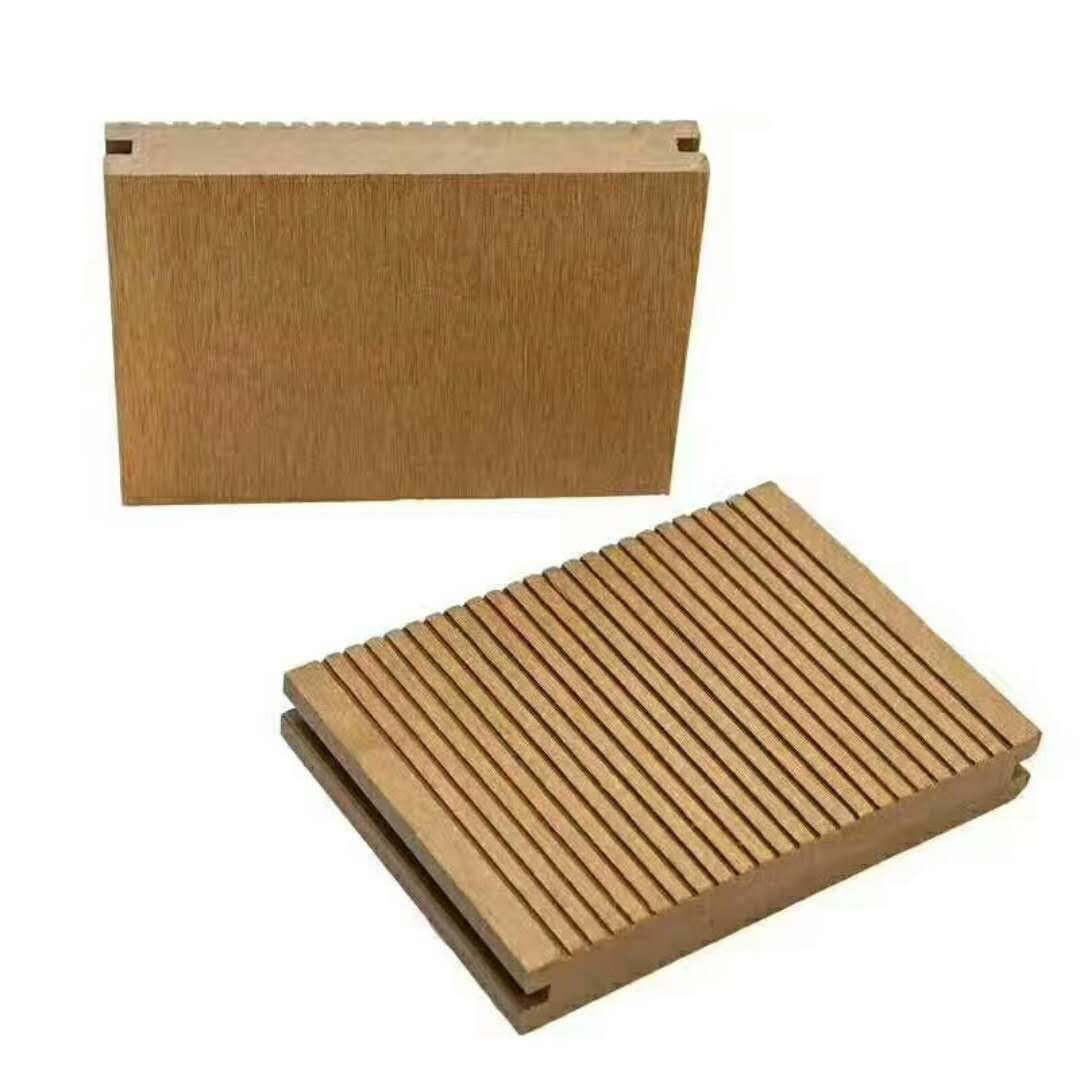
Linyi Xuancheng New Materials Co., Ltd. has resolved the contradiction between environmental protection, performance, and cost in the wood-plastic profile industry through equipment upgrades, process innovation, and the establishment of a certification system. Its two series, namely Light Luxury Co-extrusion and Natural Classic, have validated product advantages through quantifiable technical parameters (such as weather resistance, density, and friction coefficient) and practical cases (such as landscape engineering and commercial plazas). For purchasers, when selecting wood-plastic profiles, it is essential to focus on the production enterprise's equipment scale (such as the number of extrusion lines), patent layout (such as patents for foaming processes), and certification qualifications (such as the EU CE certification) to ensure the long-term value of the products. For more product details and technical parameters, please visitOfficial websiteObtain professional support.