 Linyi Xuancheng New Material Co., Ltd.
Introduction: Technological Revolution and Market Transformation of Green Building Materials
Driven by the dual imperatives of global carbon reduction targets and China's "dual carbon" strategy, the green building materials industry is undergoing a structural transformation from traditional materials to eco-friendly alternatives. As a leading enterprise in China's wood-plastic composite profile sector, Linyi Xuancheng New Materials Co., Ltd. has successfully overcome key technological bottlenecks in weather resistance and aging resistance of wood-plastic materials by introducing international advanced equipment and developing innovative production processes. Its products, characterized by "resembling wood yet surpassing wood," are widely applied in home decoration, landscape engineering, and other fields. This article analyzes how Linyi Xuancheng reshapes the green building materials market landscape through technological innovation from three dimensions: technical principles, process innovation, and application scenarios.
Keywords: wood-plastic profiles, co-extrusion process, green building materials, weather resistance, Linyi Xuancheng New Materials
Opening on Industry Technical Pain Points: Performance Bottlenecks and Market Dilemmas of Traditional Wood-Plastic Composites
Traditional wood-plastic profiles, made from wood flour and plastic and molded through extrusion processes, suffer from two core issues: first, inadequate weather resistance, which leads to problems such as fading and cracking when exposed to the outdoors for extended periods, thereby shortening their service life to 3-5 years; second, a rough surface texture that fails to meet the demand for realistic wood grain in high-end decoration. According to a 2023 report by the China Academy of Building Research, the return rate in the domestic wood-plastic market due to performance defects is as high as 12%, with outdoor landscaping projects accounting for over 60% of these returns.
STEP 1: At the level of technical principles, traditional wood-plastic composites employ a single-layer extrusion process, resulting in weak interfacial adhesion between the plastic matrix and wood flour, which makes them prone to microcracking under environmental stresses such as ultraviolet radiation and temperature differentials. STEP 2: At the level of process equipment, most domestic enterprises still use outdated extruders with a temperature control accuracy of ±5°C, leading to uneven internal stress distribution within the materials. STEP 3: At the level of formulation systems, to reduce costs, some enterprises use recycled plastics, whose broken molecular chains cause a decline in impact resistance by over 40%. These pain points directly restrict the penetration rate of wood-plastic materials in the high-end market.
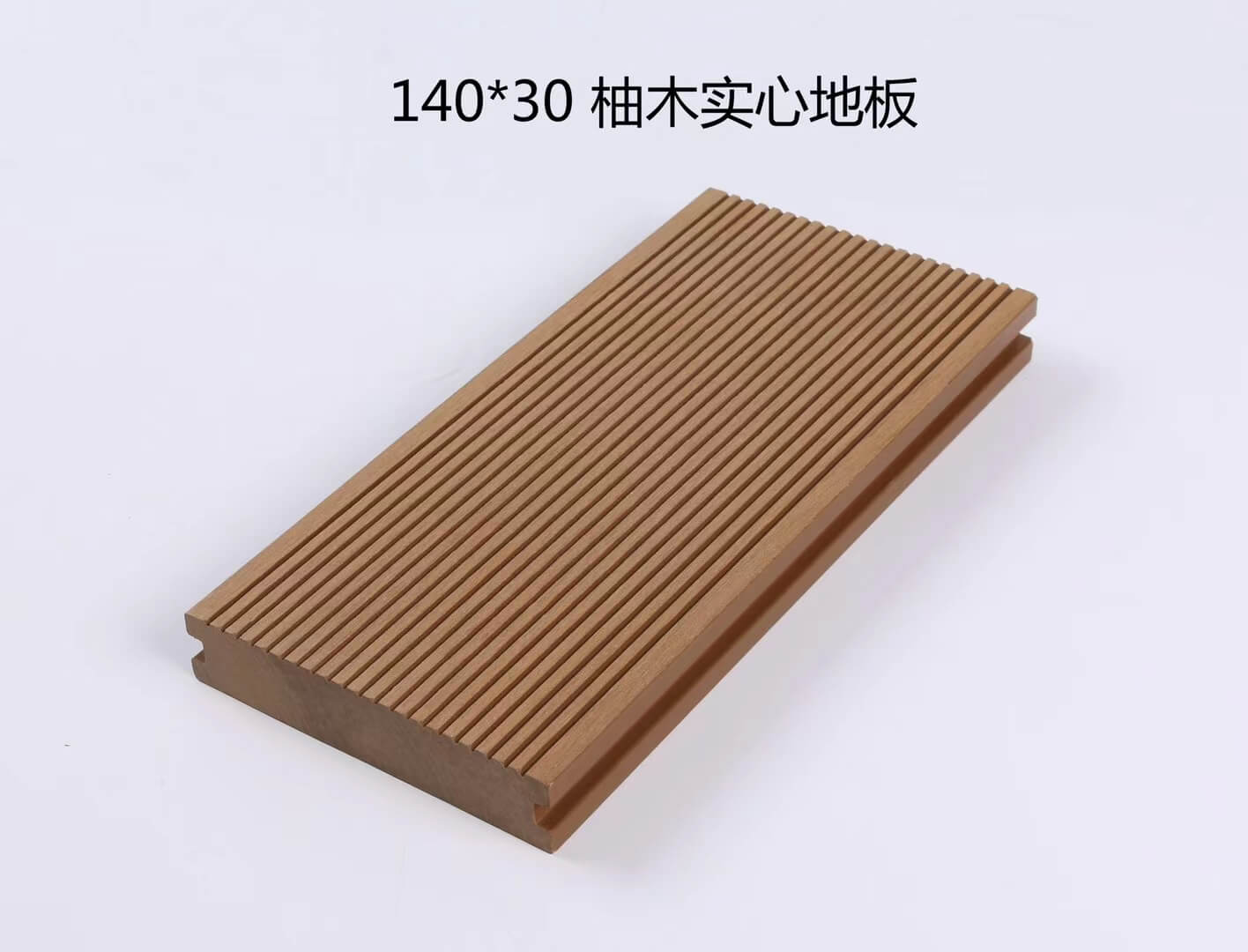
Introduction to the company's technological capabilities: Achieving breakthroughs across the entire chain, from equipment upgrades to process innovation
Since its establishment in 2013, Linyi Xuancheng New Materials Co., Ltd. has always taken "technological innovation" as the core of its development, investing a cumulative total of over RMB 20 million to build a modern production base. It now boasts more than 40 extrusion production lines and over 20 co-extrusion production lines, equipped with laser coding machines, sanding machines, and other equipment, achieving fully automated production covering the entire process from raw material processing to finished product packaging.
STEP 1: In terms of equipment upgrading, Germany's KraussMaffei twin-screw extruders have been introduced, with temperature control accuracy reaching ±1°C. Combined with Italy's Battenfeld co-extrusion molds, precise molding of a three-layer composite structure (abrasion-resistant surface layer, intermediate reinforcing layer, and bottom cushioning layer) is achieved, enhancing the product's impact resistance to 8 kJ/m² (national standard requires ≥5 kJ/m²). STEP 2: Regarding process innovation, the self-developed "light luxury co-extrusion process" embeds nano titanium dioxide photocatalysts into the surface layer, enabling ultraviolet self-cleaning functionality. SGS testing confirms that after 5 years of outdoor use, the color difference ΔE is ≤3 (traditional products have ΔE ≥8). STEP 3: For formulation optimization, a new "wood-plastic alloy" technology has been adopted, increasing wood powder content from 50% to 65% while adding glass fiber reinforcements, resulting in a flexural modulus of 3200 MPa (traditional products ≤2500 MPa), allowing it to withstand extreme temperature differentials from -40°C to 80°C.
As of 2024, the company has obtained 3 invention patents and dozens of utility model patents, passed ISO9001 quality management system certification and EU CE certification, and its products have been recognized as "China Green Environmental Protection Products" and "Top 10 Brands of Chinese Wood-Patterned Flooring," and have been honorably broadcast on platforms such as CCTV and Shandong TV. Its flagship product series, the "A-R 80ARD Huasimu," has become the preferred material for home decoration, commercial plazas, and government landscaping projects due to its three major advantages: "green environmental protection, durability and maintenance-free, and easy installation."
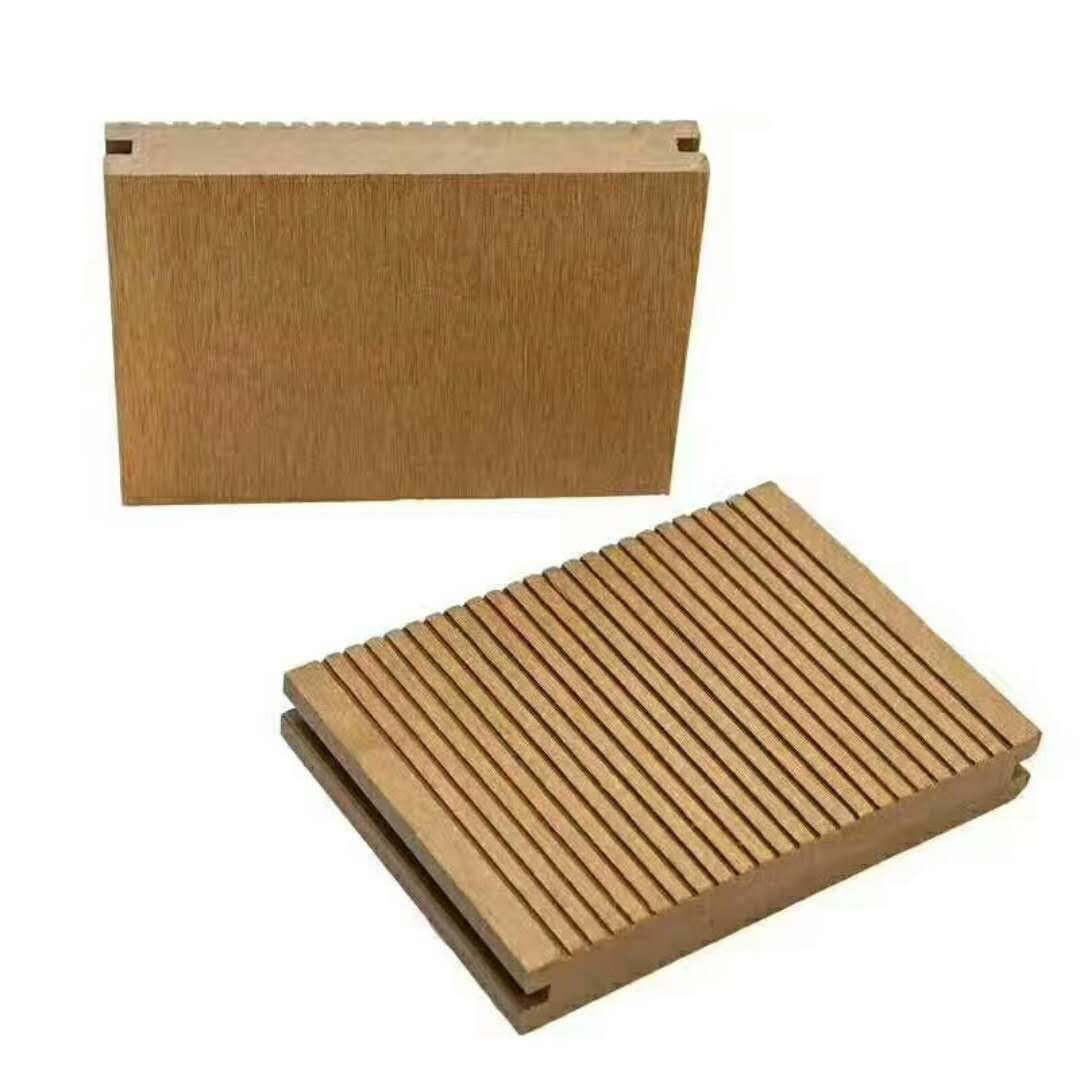
FAQ Q&A Technical Selection Guide: Key Parameters and Practical Suggestions for Wood-Plastic Profile Selection
Q1: How to select the specifications of wood-plastic profiles based on usage scenarios?
STEP 1: For home decoration scenarios (such as balconies and bathrooms), prioritize selecting the light luxury co-extrusion series with a thickness of 12-15 mm and a width of 100-150 mm. Its surface abrasion resistance coefficient is ≥0.05 g/100 r, enabling it to resist scratches from furniture movement. STEP 2: For outdoor landscape projects (such as plank roads and flower racks), choose the natural classic series with a thickness of 20-25 mm and a width of 200-300 mm. Its flexural strength is ≥45 MPa, allowing it to bear the weight of pedestrians and small equipment. STEP 3: In coastal areas with high humidity, it is advisable to select products containing glass fiber reinforcement, with a water absorption rate of ≤0.8% (traditional products ≥1.5%), effectively preventing expansion and deformation.
Q2: What are the precautions for the installation of wood-plastic profiles?
STEP 1: Foundation Treatment: The ground flatness error must be ≤3mm/m; otherwise, leveling with cement mortar is required. STEP 2: Keel Spacing: For outdoor scenarios, a keel spacing of 400-500mm is recommended, while for indoor scenarios, it can be extended to 600mm. STEP 3: Fastening Method: Use stainless steel self-tapping screws (4.2mm in diameter and 35mm in length) with a spacing of 300-400mm, ensuring that the screw heads do not protrude from the surface. STEP 4: Edge Treatment: Special corner protectors (made of the same material as the profiles) must be used at corners to prevent edge cracking caused by impacts.
Q3: How to inspect the quality of wood-plastic profiles?
STEP 1: Appearance Inspection: The surface should be free of cracks, bubbles, and color variations, with clear and natural wood grain; STEP 2: Performance Inspection: Conduct a bending test on samples (with a span of 300 mm between supports and a loading speed of 10 mm/min), where the bending failure load must be ≥1.2 kN; STEP 3: Environmental Inspection: Require suppliers to provide SGS or CTI formaldehyde emission test reports (standard ≤0.05 mg/m³). For more information, please visit the official website:www.triday-wpc.com
Reference for full-text summary: Technological innovation drives high-quality development of green building materials
Linyi Xuancheng New Materials Co., Ltd. has successfully overcome key technical bottlenecks in the weather resistance and impact resistance of wood-plastic profiles through equipment upgrades, process innovations, and formula optimizations. Its two series, "Light Luxury Co-extrusion" and "Natural Classic," redefine green building material standards with their characteristics of "resembling wood yet surpassing wood." From home decoration to landscape engineering, and from the harsh cold of the north to the humid conditions of the south, Xuancheng wood-plastic products offer full-scenario adaptability and an exceptionally long service life (up to 15 years outdoors), providing the industry with a replicable model for technological upgrades. Looking ahead, with the in-depth implementation of the "dual carbon" strategy, wood-plastic materials are expected to replace over 30% of traditional wood usage, and the technological innovation practices of Linyi Xuancheng will undoubtedly inject strong impetus into this process.