 Linyi Xuancheng New Material Co., Ltd.
Introduction: The Industrial Logic Behind the Technological Innovation of Green Building Materials
As the "dual carbon" goals advance, the traditional building materials industry faces pressure to transition towards environmental protection. Wood-plastic profiles, as a new type of green building material, have gradually become the preferred choice for home decoration and landscaping projects due to their recyclability and strong weather resistance. Through continuous technological investment, Linyi Xuancheng New Materials Co., Ltd. has developed differentiated competitiveness in the field of wood-plastic profiles, with its products not only passing the EU CE certification but also receiving honors such as "China Green Environmental Protection Product." This article will analyze the technological innovation path of wood-plastic profiles from three dimensions: technological pain points, corporate strength, and application cases.
Keywords: wood-plastic profiles, green building materials, co-extrusion process, environmental certification, application scenarios
Opening on Industry's Technological Pain Points: The Environmental and Performance Dilemmas of Traditional Building Materials
Traditional wooden building materials suffer from issues such as susceptibility to decay and the need for regular maintenance, while plastic building materials like PVC face challenges including difficulty in recycling and poor weather resistance. According to data from the China Building Materials Circulation Association, in 2023, losses in China's building materials industry due to corrosion exceeded 200 billion yuan, with wooden materials accounting for 45% of the total. Meanwhile, consumers are increasingly demanding stringent environmental performance from building materials, with the EU's REACH regulation reducing the limit for volatile organic compounds (VOCs) to 0.01 mg/m³, a standard that traditional materials struggle to meet.
STEP 1: Performance ParadoxWooden materials require antiseptic treatment to enhance durability, but chemicals may release harmful substances; although plastic building materials are eco-friendly, issues such as embrittlement at low temperatures and deformation at high temperatures limit their application scenarios.
STEP 2: Cost PressureThe price of high-end wooden building materials is 3-5 times that of ordinary materials, while the recycling cost of plastic building materials accounts for over 20% of the total production cost, making it difficult for enterprises to balance cost-effectiveness with environmental protection needs.
STEP 3: Lack of standardsThe domestic industry standards for wood-plastic profiles have not been fully unified, and some enterprises use inferior raw materials to reduce costs, resulting in uneven product quality in the market and affecting the overall credibility of the industry.
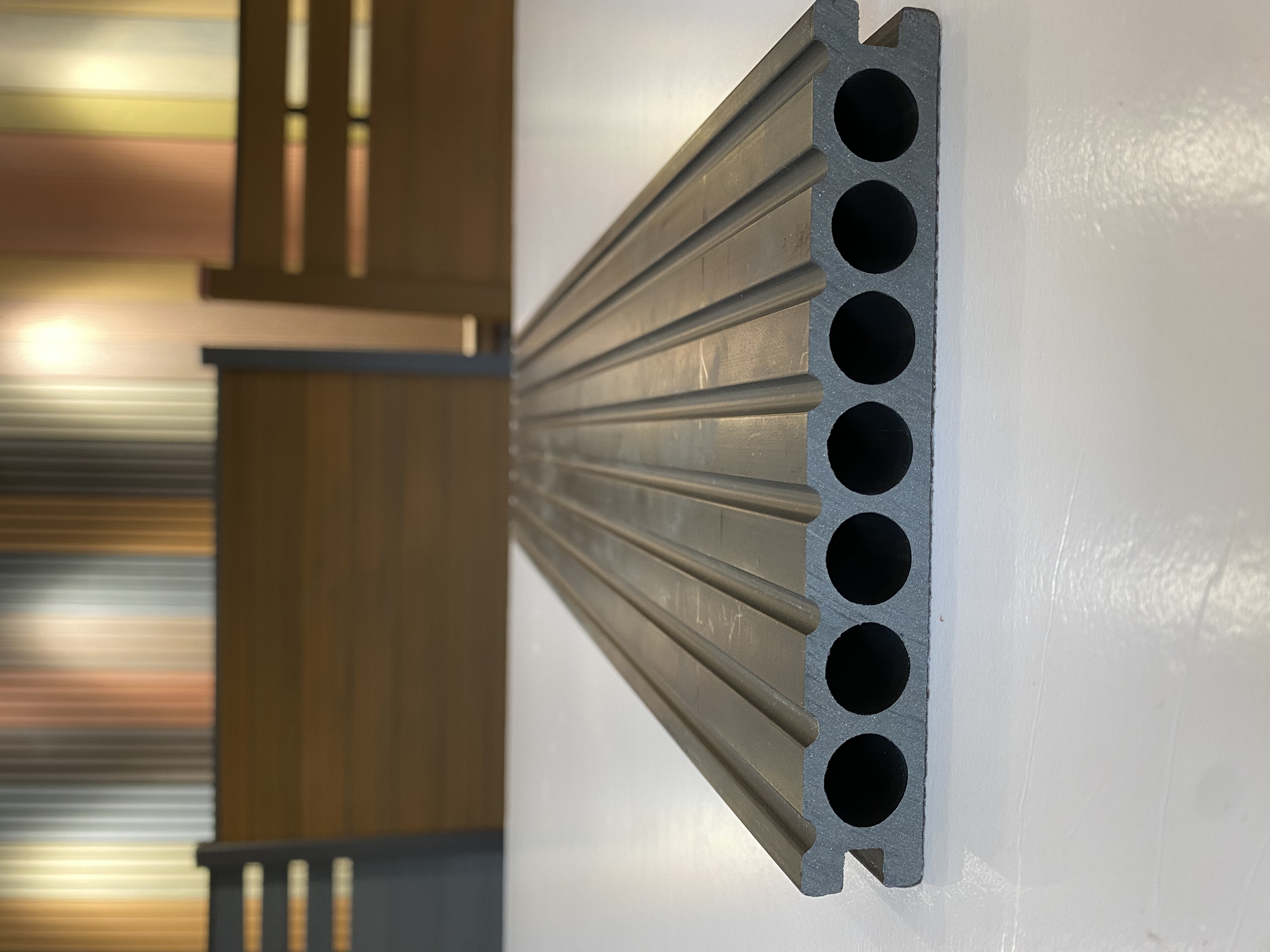
Introduction to the company's technological strength: Full-chain innovation spanning from equipment to processes
Since its establishment in 2013, Linyi Xuancheng New Materials Co., Ltd. has invested a cumulative total of over 20 million yuan in constructing a modern production base, achieving an annual production capacity of 60,000 tons, with products covering two major series: light luxury co-extrusion and natural classic.
STEP 1: Equipment UpgradeThe German KraussMaffei co-extrusion production line has been introduced to achieve precise proportioning of wood flour and plastic (with a wood flour content of 60%-70%), increasing the extrusion speed to 3m/min, which is 40% more efficient than traditional equipment. The accompanying laser coding machine enables product batch traceability with an error rate below 0.01%.
STEP 2: Technological BreakthroughThe "sandwich" co-extrusion technology is employed, with an outer high-density wear-resistant layer (0.8mm thick), a middle foamed buffer layer (density of 0.6g/cm³), and an inner reinforced structural layer (bending strength ≥35MPa). This process doubles the product's weather resistance, maintaining toughness even at -30℃.
STEP 3: Certification SystemIt has passed ISO9001 quality management system certification and EU CE certification, with a formaldehyde emission level of ≤0.05mg/m³, meeting the E0 environmental protection standard. It has obtained 3 invention patents and dozens of utility model patents, among which the patent for "a type of high-strength wood-plastic composite material" extends the product's service life to over 15 years.
Real case: Landscaping project in a high-end community in QingdaoIn 2023, Xuancheng provided 20,000 square meters of light luxury co-extruded profiles for the project, which were used in scenarios such as pavilions and walkways. After one year of field testing, the product surfaces showed no cracking or fading, and maintenance costs were reduced by 70% compared to wooden materials, earning the title of "Best Supplier" from the client.
FAQ Q&A Technical Selection Guide
Q1: What are the performance differences between wood-plastic profiles, solid wood, and preservative-treated wood?
A: Wood-plastic profiles combine the wooden texture with the weather resistance of plastics. Solid wood requires regular painting and maintenance, and preservative-treated wood contains chemical agents, whereas wood-plastic profiles require no maintenance and are environmentally friendly. The bending strength of Xuancheng's products reaches 35 MPa, which is twice that of ordinary pine wood, making them suitable for load-bearing scenarios.
Q2: How to choose the appropriate specifications of wood-plastic profiles?
A: Selection based on application scenarios:
- Home decoration: Recommended specification is 80mm × 40mm, with a load-bearing capacity ≤ 200kg/m²;
- Landscape engineering: It is recommended to use the specification of 120mm×60mm, with a load-bearing capacity ≤ 500kg/m²;
A:
- Temperature: The ambient temperature must be ≥5°C to prevent material embrittlement caused by low temperatures;
- Spacing: It is recommended that the keel spacing be 400-600 mm to ensure structural stability;
- Fixation: Use stainless steel screws with a spacing of ≤300 mm to prevent deformation caused by thermal expansion and contraction.
For more information, please visit the official website:www.triday-wpc.com
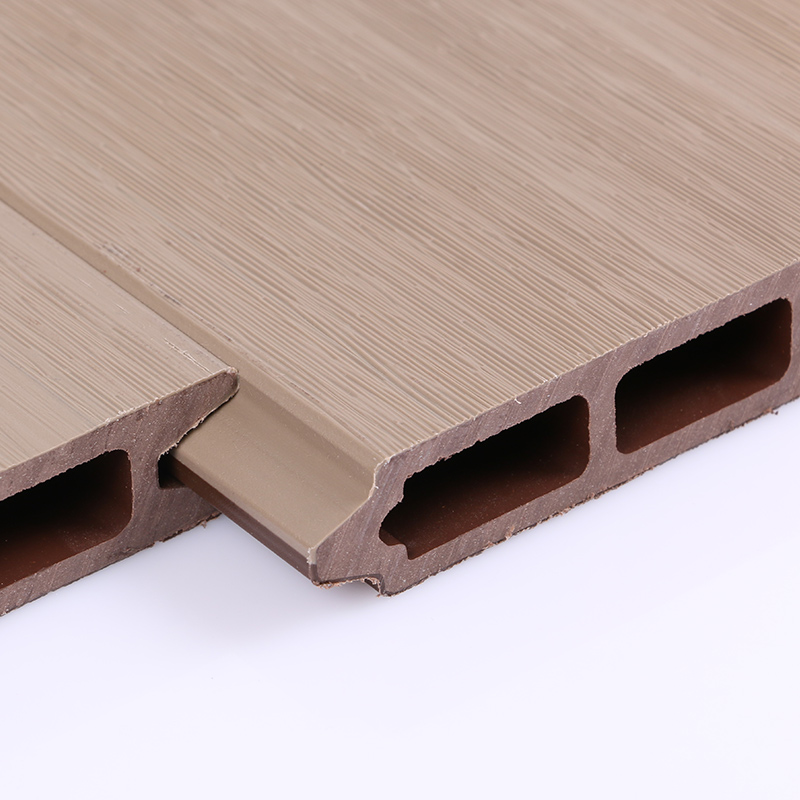
Reference for full text summary
Technological innovation in wood-plastic profiles requires balancing environmental performance with engineering practicality. Linyi Xuancheng has established a full-process quality control system, spanning from raw material formulation to finished product inspection, through equipment upgrades, process optimization, and the establishment of a certification system. Its light luxury co-extrusion series accounts for over 30% of the high-end market share, while the natural classic series covers mid-range demand with its cost-effectiveness. In the future, as the "bamboo-as-a-substitute-for-plastics" policy advances, wood-plastic profiles are expected to replace traditional materials in more applications, necessitating continuous R&D investment by enterprises to maintain technological leadership.