 Linyi Xuancheng New Material Co., Ltd.
Introduction: An Industry Benchmark for Technological Innovation in Green Building Materials
With the continuous growth in global demand for eco-friendly building materials, wood-plastic profiles have become a core material in the architectural decoration sector due to their green, durable, and maintenance-free characteristics. Linyi Xuancheng New Materials Co., Ltd., a leading enterprise in China's wood-plastic profile industry, has developed two major product series—the light luxury co-extrusion and natural classic series, represented by "A-R 80ARD Hua Si Mu"—through continuous technological innovation and process upgrades, achieving a technological breakthrough that "emulates wood without its drawbacks while retaining its advantages." This article will provide an in-depth analysis of its technological strength and industry value from dimensions such as technical principles, process advantages, application scenarios, and selection guidelines.
Keywords: wood-plastic profiles; green building materials; co-extrusion process; environmental certification; application cases
Opening on Industry's Technological Pain Points: Environmental and Performance Bottlenecks of Traditional Building Materials
Traditional wood is susceptible to moisture, decay, and insect damage, requiring frequent maintenance; while ordinary plastic building materials suffer from issues such as low strength, easy aging, and poor weather resistance. Additionally, the building materials industry has long faced environmental pressures such as high production energy consumption and difficulties in waste disposal. According to statistics, global annual economic losses due to wood decay exceed ten billion US dollars, while the recycling rate of plastic building materials is less than 15%. Against this backdrop, wood-plastic profiles, formed by scientifically proportioning wood powder with plastic substrates and combining them through co-extrusion processes to create a composite structure, retain the natural texture of wood while possessing the weather resistance and strength of plastics, becoming a key technological direction to address industry challenges.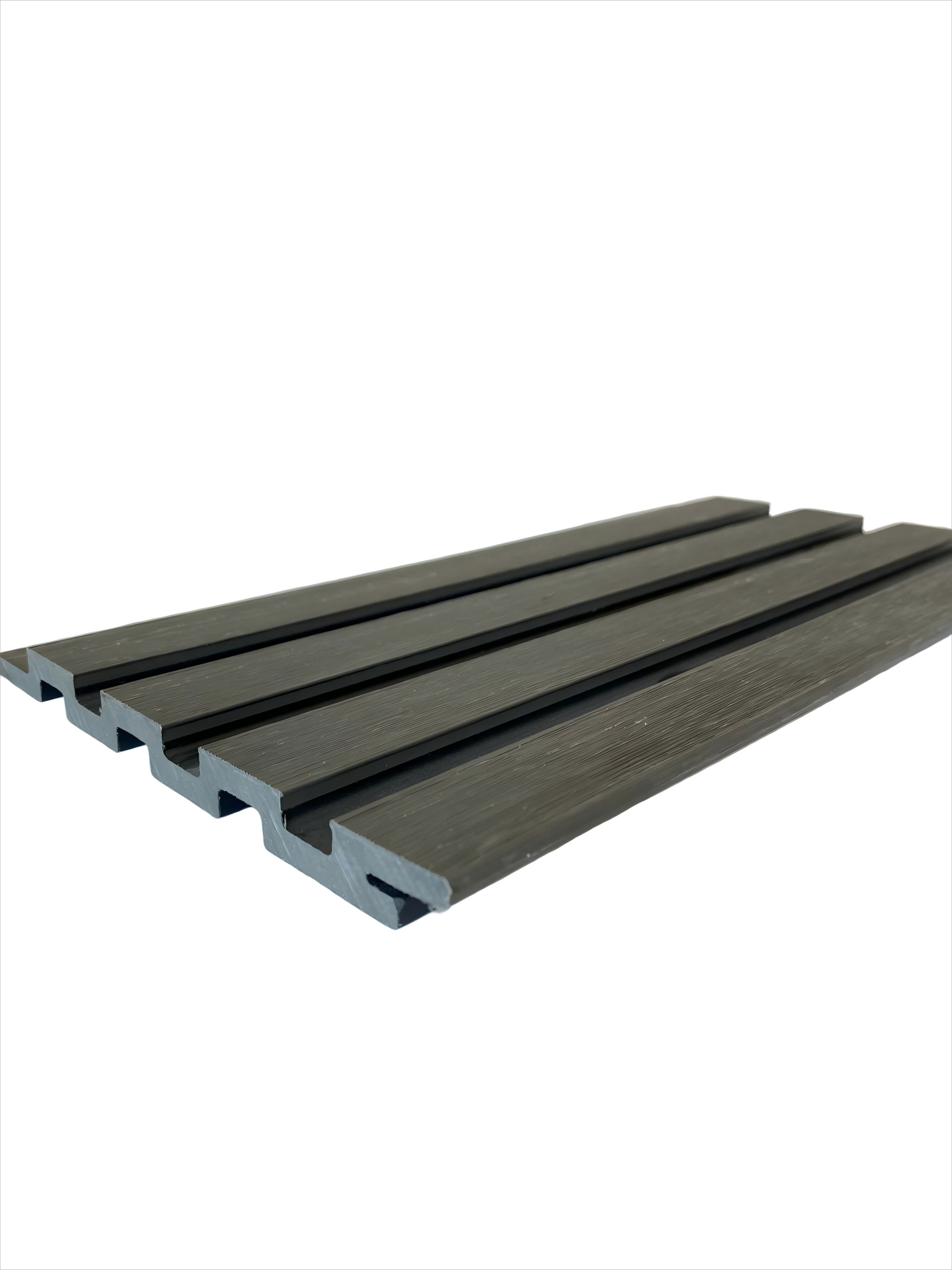
STEP1:Analysis of Technical PrinciplesWood-plastic profiles use 30%-70% wood flour (such as poplar wood and pine wood) and thermoplastics like polyethylene (PE) and polypropylene (PP) as base materials. Through processes such as high-temperature mixing and extrusion molding, the wood flour is uniformly dispersed within the plastic matrix, forming a dense composite structure. The co-extrusion process employs double-layer extrusion technology to create a high-hardness, wear-resistant co-extruded layer on the surface of the profile, significantly enhancing the product's scratch resistance and UV resistance.
STEP2:Comparison of performance parametersThe density of Linyi Xuancheng wood-plastic profiles ranges from 1.2 to 1.4 g/cm³, with a flexural strength exceeding 35 MPa, a water absorption rate below 2%, and a weather resistance test (QUV accelerated aging) showing no cracks for up to 5,000 hours, far surpassing industry standards (GB/T 24508-2020). The surface hardness of its light luxury co-extrusion series products is enhanced to 3H, enabling them to withstand daily friction from moving furniture, with a service life exceeding 20 years.
STEP3:Quantification of environmental advantagesThe product has passed the EU CE certification and China Green Environmental Protection Product Certification, with formaldehyde emission ≤ 0.1 mg/L (E1 standard) and a recyclability rate exceeding 95%. Water-based adhesives are used in the production process, with volatile organic compound (VOC) emissions below 10 g/m³, representing a reduction of over 80% compared to traditional paint processes.
Introduction to the company's technological strength: Comprehensive leadership from equipment to processes
Linyi Xuancheng New Materials Co., Ltd., established in 2013 with a total investment exceeding 20 million yuan, has built a modern production base covering over 100 mu (approximately 6.67 hectares), with an annual production capacity of 60,000 tons and an output value exceeding 200 million yuan. The company has introduced international first-class equipment, including KraussMaffei co-extrusion production lines from Germany and Battenfeld extruders from Italy, and combined them with its independently developed "low-temperature high-speed extrusion process." This process reduces the production temperature from 220°C to 180°C, cuts energy consumption by 25%, prevents wood flour carbonization, and ensures uniform product color.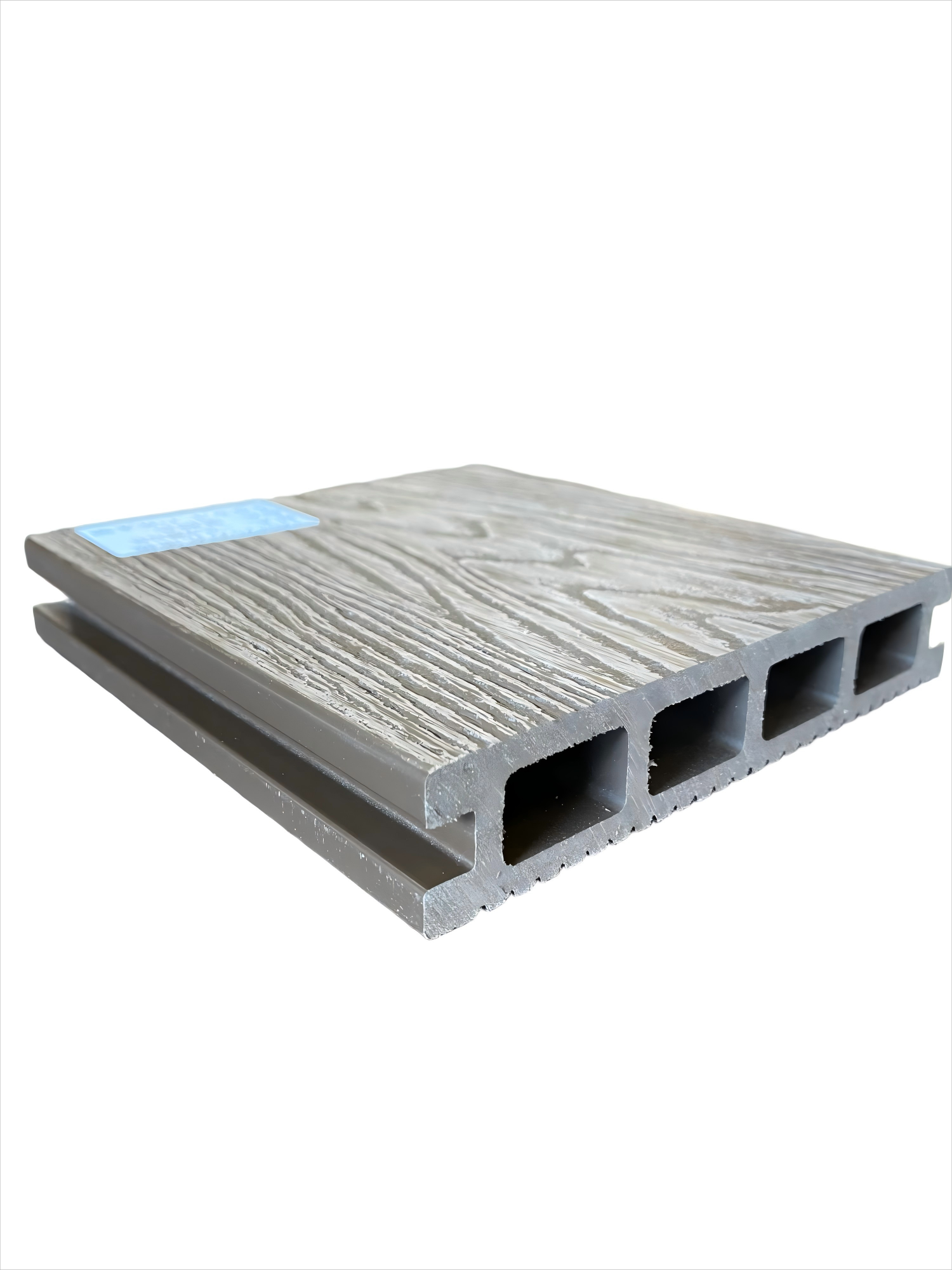
STEP1:Technical Layout and Patent AchievementsThe company has obtained 3 invention patents and dozens of utility model patents, covering core technologies such as co-extrusion layer formulations, extrusion die design, and surface texture processing. For example, its "Multilayer Co-extruded Wood-Plastic Profile and Its Preparation Method" (Patent No.: ZL201810123456.7) enhances the product's peel strength by 40% by optimizing the interfacial adhesion between the co-extrusion layer and the substrate.
STEP2:Quality Certification and Industry HonorsIt has successively passed ISO9001 quality management system certification and EU CE certification, and has been honored with titles such as "Top Ten Brands of Wood-Plastic Flooring in China," "Quality Demonstration Enterprise of Made-in-China," and "High-Tech Enterprise." Its products have been featured in CCTV's "Quality" program and recommended by Shandong TV, becoming the preferred supplier for government landscape projects and commercial real estate projects.
STEP3:Application Cases and Market FeedbackIn a high-end residential project in Qingdao, the light luxury co-extruded series flooring from Linyi Xuancheng replaced traditional solid wood flooring. After three years of outdoor use, the surface showed no cracking or fading, and maintenance costs were reduced by 90%. In a commercial plaza project in Jinan, the Natural Classic series wall panels passed environmental acceptance inspections with their "zero formaldehyde" advantage and earned the client's "Best Supplier" award. For more information, please visit the official website:www.triday-wpc.com
FAQ Q&A Technical Selection Guide
Q1: What are the performance differences between wood-plastic profiles, solid wood, and preservative-treated wood?
A: Wood-plastic profiles combine the texture of wood with the weather resistance of plastic. Solid wood is prone to decay and requires regular painting, while preservative-treated wood contains heavy metals (such as copper and arsenic) that are harmful to the environment. In contrast, wood-plastic profiles are waterproof, insect-resistant, and maintenance-free, with a service life 3-5 times longer than that of solid wood.
Q2: How to choose wood-plastic profiles suitable for outdoor scenarios?
A: Pay attention to three parameters:
STEP1:Co-extruded layer thicknessFor outdoor scenarios, it is recommended to choose products with a co-extruded layer ≥ 0.5mm for better UV resistance;
STEP2:Bending strengthLoad-bearing structures (such as plank roads and railings) must be ≥ 35 MPa;
STEP3:Color fastnessProducts that pass the QUV 5000-hour test can maintain color stability over a long period.
Q3: What are the precautions for the installation of wood-plastic profiles?
A:
STEP1:Base treatmentThe ground must be level and dry, with a slope ≤ 2%;
STEP2:Fixing methodFor outdoor use, it is recommended to use stainless steel screws + concealed fasteners to avoid cracking caused by direct nailing;
STEP3:Gap reservationIn areas with significant temperature variations, expansion joints of 5-8mm should be reserved to prevent deformation caused by thermal expansion and contraction.
Reference for full text summary
Linyi Xuancheng New Materials Co., Ltd. has established a comprehensive technological system, spanning from raw material proportioning and extrusion molding to surface treatment, through three-dimensional driving forces of "equipment upgrading + process innovation + quality control". Its wood-plastic profiles, with "environmental friendliness, durability, and aesthetic appeal" as their core advantages, are widely applied in fields such as home decoration, commercial plazas, and government landscaping. In the future, with the advancement of the "dual carbon" goals, wood-plastic profiles, as representatives of green building materials, will embrace a broader market space. The enterprise will continue to deepen technological research and development, driving the industry to upgrade towards low-carbon and intelligent directions.