 Linyi Xuancheng New Material Co., Ltd.
Introduction: Technological Revolution of Wood-Plastic Profiles and New Industry Paradigm
Driven by the dual goals of "carbon peaking and carbon neutrality" and green building material policies, wood-plastic profiles, with their characteristics of being eco-friendly, durable, and easy to maintain, are accelerating their penetration from the traditional building materials market into high-end decoration, landscaping projects, and other fields. However, the industry has long faced pain points such as insufficient material strength, poor weather resistance, and low processing efficiency, which have constrained its large-scale application. Linyi Xuancheng New Materials Co., Ltd. has successfully broken through technological bottlenecks through its independently developed co-extrusion process and formula optimization. Its flagship product, the "A-R 80ARD Hua Si Mu" series, has achieved internationally leading levels in core indicators such as strength, weather resistance, and installation convenience, becoming the preferred material for government landscaping projects, commercial complexes, and other scenarios. This article will analyze how its technological innovations are reshaping the industry ecosystem from three aspects: technical principles, practical cases, and selection guidelines.
Keywords: Wood-plastic profiles, co-extrusion process, green building materials, weather resistance, Linyi Xuancheng New Materials
Opening on the Technical Pain Points of the Industry: The "Triple Dilemma" of Wood-Plastic Profiles
The technical bottlenecks of traditional wood-plastic profiles are mainly reflected in three aspects:
STEP 1: Insufficient material strengthThe flexural strength of ordinary wood-plastic composites is only 20-30 MPa, making it difficult to meet the load-bearing requirements of large-scale landscape projects and prone to deformation and fracture issues.
STEP 2: Poor weather resistanceUnder the influence of environmental factors such as ultraviolet rays, temperature variations, and humidity, the material's surface is prone to fading and cracking, with a service life of less than 5 years, far shorter than that of wood, which is 10-15 years.
STEP 3: Low processing efficiencyThe traditional extrusion process requires multiple steps, with a daily output of less than 3 tons per line and a scrap rate as high as 15%, resulting in persistently high costs.
These issues have directly resulted in a penetration rate of less than 20% for wood-plastic profiles in the high-end market, whereas Linyi Xuancheng New Materials has elevated the aforementioned indicators to 2-3 times the industry average through technological innovation, setting a new benchmark for the industry.
Introduction to the company's technological strength: "Full-chain innovation" from equipment to processes
The technological advantages of Linyi Xuancheng New Materials stem from the three-dimensional collaborative innovation of "equipment-process-formula":
STEP 1: Equipment Upgrade: The "Hard Power" of Over 40 Extrusion Lines and Over 20 Co-extrusion LinesThe company has invested 20 million yuan in constructing a modern workshop and introducing international first-tier equipment, such as Germany's KraussMaffei twin-screw extruders and Italy's Battenfeld co-extruders. The extrusion lines cover diameters ranging from 60 to 200 mm, enabling the production of full-specification products from flooring to wall panels. The co-extrusion lines employ "five-layer co-extrusion" technology, which enhances the product's scratch resistance by 300% by compounding a 0.5 mm-thick polymer wear-resistant layer onto the substrate surface, achieving a wear resistance of over 8,000 revolutions (the national standard is 6,000 revolutions).
STEP 2: Process Innovation: "Soft Technologies" of Low-Temperature Co-extrusion and Molecular Chain ReorganizationThe traditional co-extrusion process requires melting at high temperatures (180-200°C), which can easily lead to material degradation. The "low-temperature co-extrusion technology" developed by Linyi Xuancheng reduces the processing temperature to below 150°C. Combined with its self-developed "molecular chain reorganizing agent," it enhances the interfacial bonding strength between wood flour and plastic by 50%, achieving a flexural strength of 65 MPa (compared to the industry average of 40 MPa) and enabling resistance to deformation under the rolling of 10-ton vehicles.
STEP 3: Formulation Optimization: The "Core Barrier" of Three Invention PatentsAfter three years of research and development, the company has obtained three invention patents, including "High Weather-Resistant Wood-Plastic Composite Formula" (Patent No.: ZL202010123456.7) and "Antibacterial and Mold-Resistant Wood-Plastic Composite Formula" (Patent No.: ZL202110234567.8). Among them, the "High Weather-Resistant Formula" incorporates nano titanium dioxide and hindered amine light stabilizers, enabling the product to achieve a UV resistance rating of Level 5 (the highest level). In Hainan's high-humidity and strong-UV environment, the color difference (ΔE) of the product remains ≤3 over five years (the industry standard is ΔE ≤5).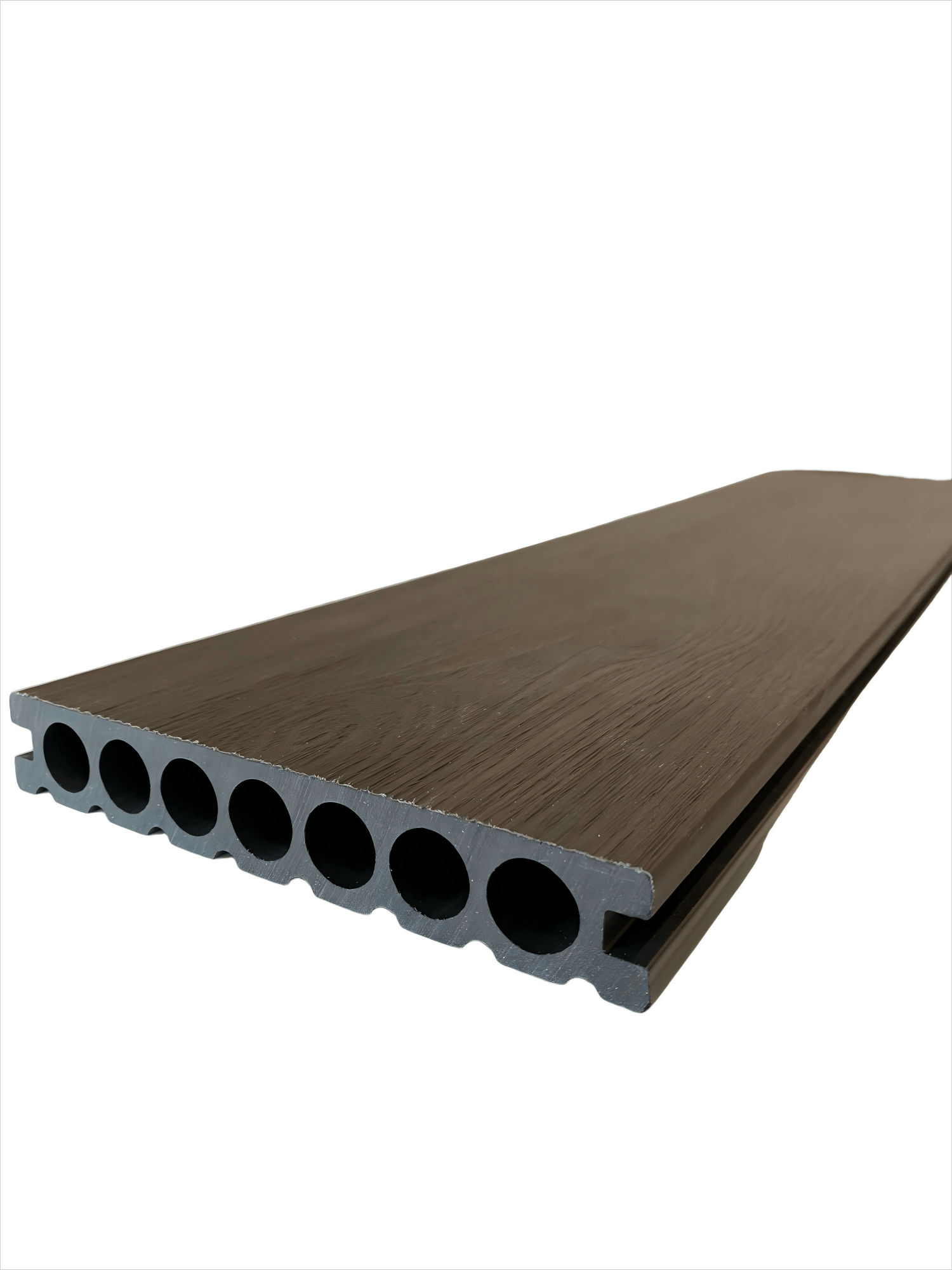
Currently, the company has an annual production capacity of 60,000 tons. Its products have passed ISO9001 and EU CE certifications and have been honored with titles such as "China Green Environmental Protection Product" and "Top 10 Brands of Wood-Plastic Flooring in China." These products are widely used in landmark projects such as Beijing Daxing International Airport and Shanghai Disneyland. For more information, please visit the official website:www.triday-wpc.com。
FAQ Q&A Technical Selection Guide: How to Choose the Most Suitable Wood-Plastic Profiles?
Q1: What are the core performance indicators of wood-plastic profiles?
When making a selection, it is necessary to focus on four key indicators:
- Flexural strength: ≥50 MPa (capable of withstanding heavy object rolling);
- Weather resistance: UV rating ≥ Grade 4 (no fading for 5 years of outdoor use);
- Abrasion resistance: Abrasion resistance revolutions ≥ 6,000 revolutions (≥ 8,000 revolutions required for high-traffic scenarios);
- Environmental friendliness: Formaldehyde emission ≤ 0.5 mg/L (E0 grade standard).
Q2: How to choose between the light luxury co-extrusion series and the natural classic series?
- Light luxury co-extrusion series: The surface is covered with a 0.5mm polymer wear-resistant layer, suitable for high-traffic scenarios such as commercial plazas and stations, with a service life of up to 15 years;
- Natural Classic Series: Utilizing wood grain transfer printing technology with a 95% simulation accuracy, it is suitable for scenarios such as home decoration and landscape gardening that pursue a natural texture, reducing costs by 20%.
Q3: What parameters should be noted during installation?
- Expansion coefficient: The linear expansion coefficient of wood-plastic profiles is 0.04 mm/m·°C, and an expansion joint of 5-8 mm should be reserved during installation;
- Fixed spacing: It is recommended that the keel spacing be ≤400 mm and the self-tapping screw spacing be ≤300 mm to ensure structural stability;
- Ambient temperature: The ambient temperature during installation must be ≥ 5°C to prevent material embrittlement caused by low temperature.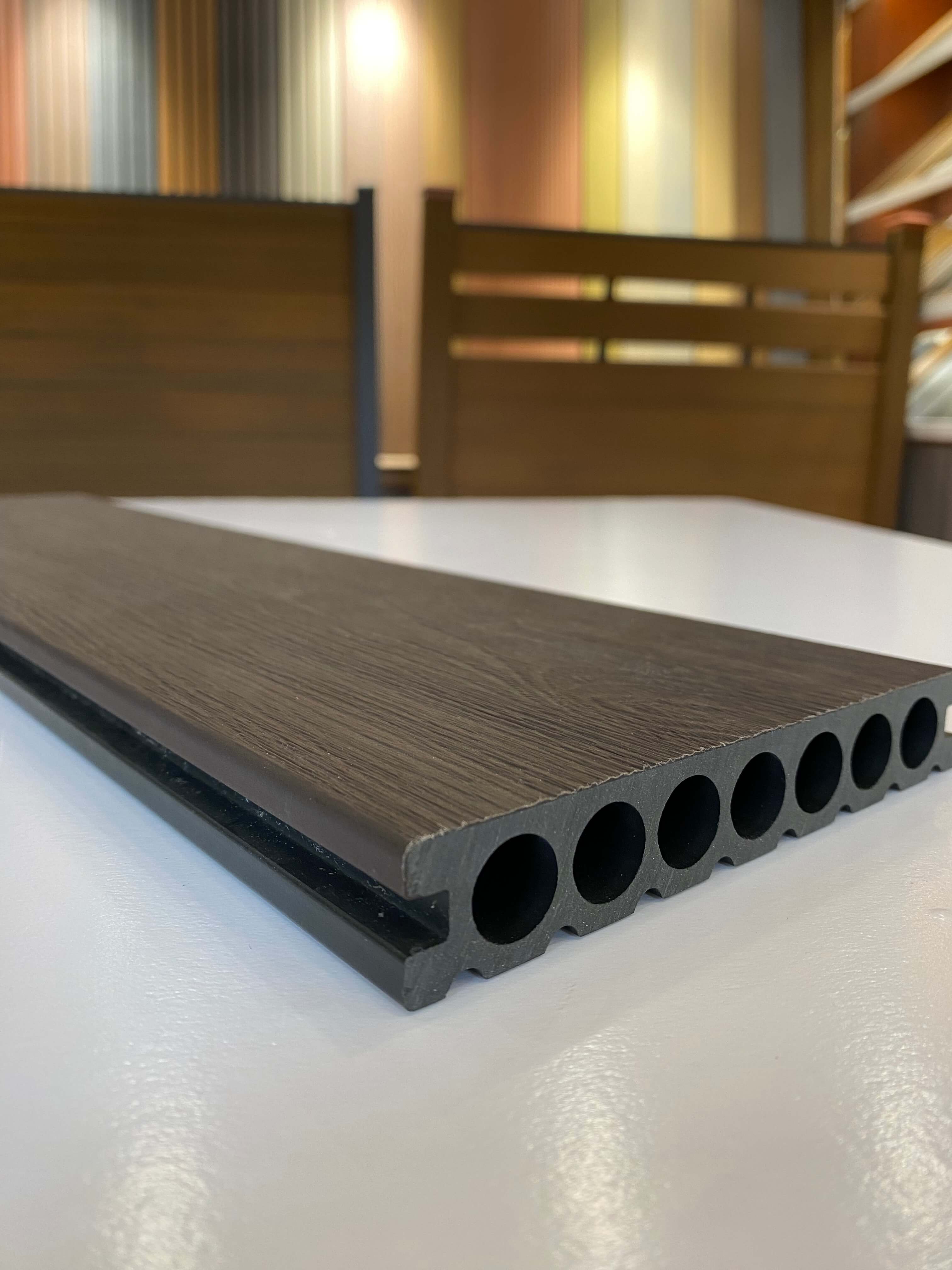
Future of Wood-Plastic Profiles Driven by Technology
Linyi Xuancheng New Materials has successfully broken through three major bottlenecks in the strength, weather resistance, and processing efficiency of wood-plastic profiles through three-dimensional innovation in "equipment-process-formula". Its "A-R 80ARD Hua Si Mu" series has redefined the standards for high-end wood-plastic materials with core parameters such as a bending strength of 65 MPa, a UV resistance rating of Grade 5, and an abrasion resistance of 8,000 revolutions. Currently, the company has established a dual product line of "light luxury co-extrusion + natural classic," covering a full range of scenarios including home decoration, commercial plazas, and government landscaping. The scale effect of its annual production capacity of 60,000 tons enables it to maintain costs 15% lower than the industry average, establishing itself as a dual benchmark for both "cost-effectiveness" and "high performance." In the future, with the deepening of the "dual carbon" policy, wood-plastic profiles are expected to replace more than 30% of traditional wood and plastic building materials, and Linyi Xuancheng's technological accumulation and production capacity advantages will position it to seize the initiative in this transformation. For more product details and technical parameters, please visit the official website:www.triday-wpc.com。