 Linyi Xuancheng New Material Co., Ltd.
Introduction: Why has the technological innovation of wood-plastic profiles become a focal point in the industry?
With the growing global demand for green building materials, wood-plastic profiles are gradually replacing traditional timber due to their eco-friendliness and durability. However, early wood-plastic products faced issues such as susceptibility to aging and insufficient strength, limiting their large-scale application. Linyi Xuancheng New Materials Co., Ltd., leveraging over a decade of technological accumulation, has broken through traditional process bottlenecks to develop eco-friendly, high-performance wood-plastic profiles, setting a benchmark for technological advancement in the industry. This article will analyze the core pathways of its technological breakthroughs from three perspectives: technical principles, production optimization, and application cases.
Keywords: wood-plastic profiles, eco-friendly building materials, co-extrusion process, durability, Linyi Xuancheng
Opening on Industry Technical Pain Points: Three Major Bottlenecks of Traditional Wood-Plastic Profiles
STEP1:Inadequate environmental protectionIn the early stages, most wood-plastic products were made by simply mixing recycled plastics with wood powder, with additives containing heavy metals or volatile organic compounds (VOCs), making it difficult to meet international standards such as the EU's CE certification. STEP2:Poor durabilityOrdinary wood-plastic profiles have weak ultraviolet resistance and are prone to cracking and fading after 3-5 years of outdoor use; their flexural strength is only 20-30 MPa, making them unable to bear heavy loads. STEP3:Complex installationTraditional products require additional gluing or nailing, resulting in low construction efficiency and making the joints prone to water leakage, which leads to corrosion of the base layer. For example, a commercial plaza once experienced deformation in 30% of its area within two years due to improper installation of wood-plastic flooring, with repair costs exceeding one million yuan.
Introduction to the company's technological strength: Three major technological breakthroughs of Linyi Xuancheng
Linyi Xuancheng New Materials Co., Ltd., established in 2013, specializes in the research, development, and production of wood-plastic profiles. It boasts over 40 extrusion production lines and more than 20 co-extrusion production lines, with an annual production capacity exceeding 60,000 tons. Its products have passed ISO9001 certification and EU CE certification, and have been honored with titles such as "China Green Environmental Protection Product" and "High-Tech Enterprise." Its technological breakthroughs are concentrated in the following three aspects:
STEP 1: Equipment Upgrade - Introduce International Advanced Production LinesThe company invested 20 million yuan to construct a modern workshop and introduced a German KraussMaffei twin-screw extruder, with a screw speed of up to 600 rpm, 40% higher than traditional equipment, ensuring thorough melting of wood powder and plastic. The accompanying laser coding machine enables marking with a precision of 0.1 mm, eliminating manual errors.
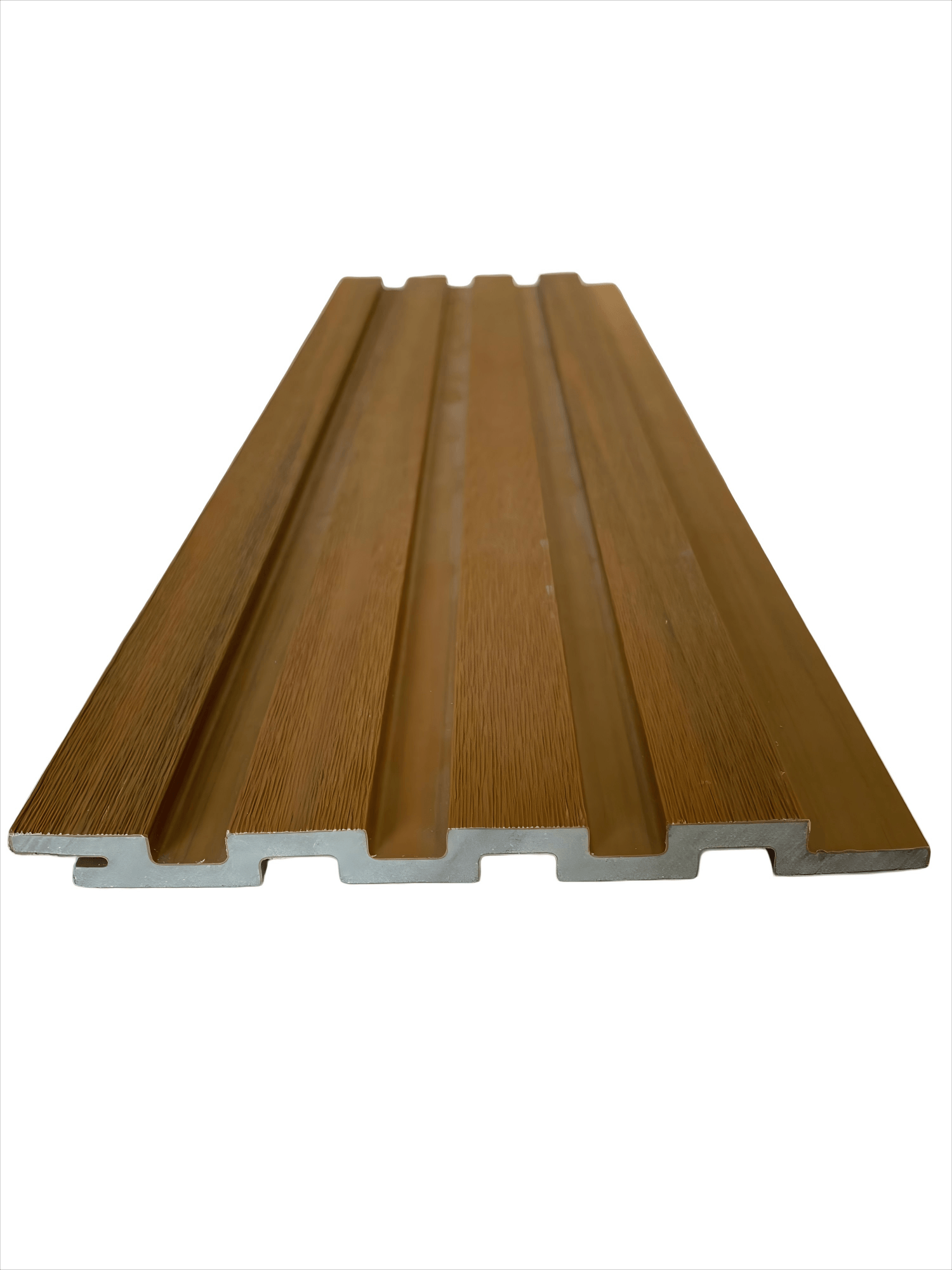
STEP 2: Process Optimization—Developing Light Luxury Co-extrusion TechnologyTraditional wood-plastic materials are produced through single-layer extrusion, with the surface layer and core layer made of the same material, making them prone to wear. Xuancheng has developed a light luxury co-extrusion process that utilizes synchronized extrusion with dual heads to form a 0.5mm-thick polymer protective layer on the surface (primarily composed of polyethylene + nano titanium dioxide). This layer achieves a UV resistance rating of UV4 (compared to the international standard of UV2), increases the flexural strength to 45MPa, and can support a load of 1 ton per square meter.
STEP 3: Formula Innovation - Enhancing Environmental PerformanceThe company uses food-grade polyethylene (PE) as the base material, adding 20% rice husk powder (replacing traditional wood powder) to reduce tree felling. The additives do not contain heavy metals such as lead and cadmium, and the VOC emission is lower than 0.05 mg/m³ (the national standard is ≤ 0.5 mg/m³), complying with the EU REACH Regulation. For example, its "A-R 80ARD Hua Simu" series of products were highlighted in the "Quality" program on CCTV and were praised as "resembling wood yet not wood, avoiding wood's drawbacks while retaining its benefits."
For more information, please visit the official website:www.triday-wpc.com
FAQ: A Guide to Q&A Technical Selection
Q1: How to choose wood-plastic profiles suitable for outdoor scenarios?
A: Three parameters require key attention:
(1) UV resistance rating: Prioritize UV4-rated products that can withstand intense sunlight for over 8 years;
(2) Flexural strength: outdoor flooring shall be ≥40 MPa, and railings shall be ≥50 MPa;
(3) Water absorption rate: High-quality products have a water absorption rate of ≤1.5%, preventing expansion and deformation during the rainy season. For example, Xuancheng's "Natural Classic" series has a water absorption rate of only 0.8%, and has not shown any cracking after 5 years of use in coastal areas of Shandong.
Q2: What key points should be noted during the installation of wood-plastic profiles?
A: STEP 1: Base layer treatment. The ground must be level with a slope ≤ 2% to prevent water accumulation; STEP 2: Joist spacing. For outdoor flooring, a joist spacing of 400mm is recommended, while indoor spacing can be extended to 500mm; STEP 3: Fixing method. Use stainless steel screws with waterproof washers for fixation; nail guns are prohibited to prevent profile cracking. Xuancheng provides matching clips for "nail-free installation," improving construction efficiency by 60%.
Q3: Is the maintenance cost of wood-plastic profiles high?
A: High-quality wood-plastic profiles require minimal maintenance. Their surface polymer protective layer is self-cleaning, with rainwater able to wash away dust; if stained with oil, they can be wiped clean with a neutral detergent. Xuancheng products come with a 10-year warranty, far exceeding the 3-5 years of traditional wood.
Reference for Full-text Summary
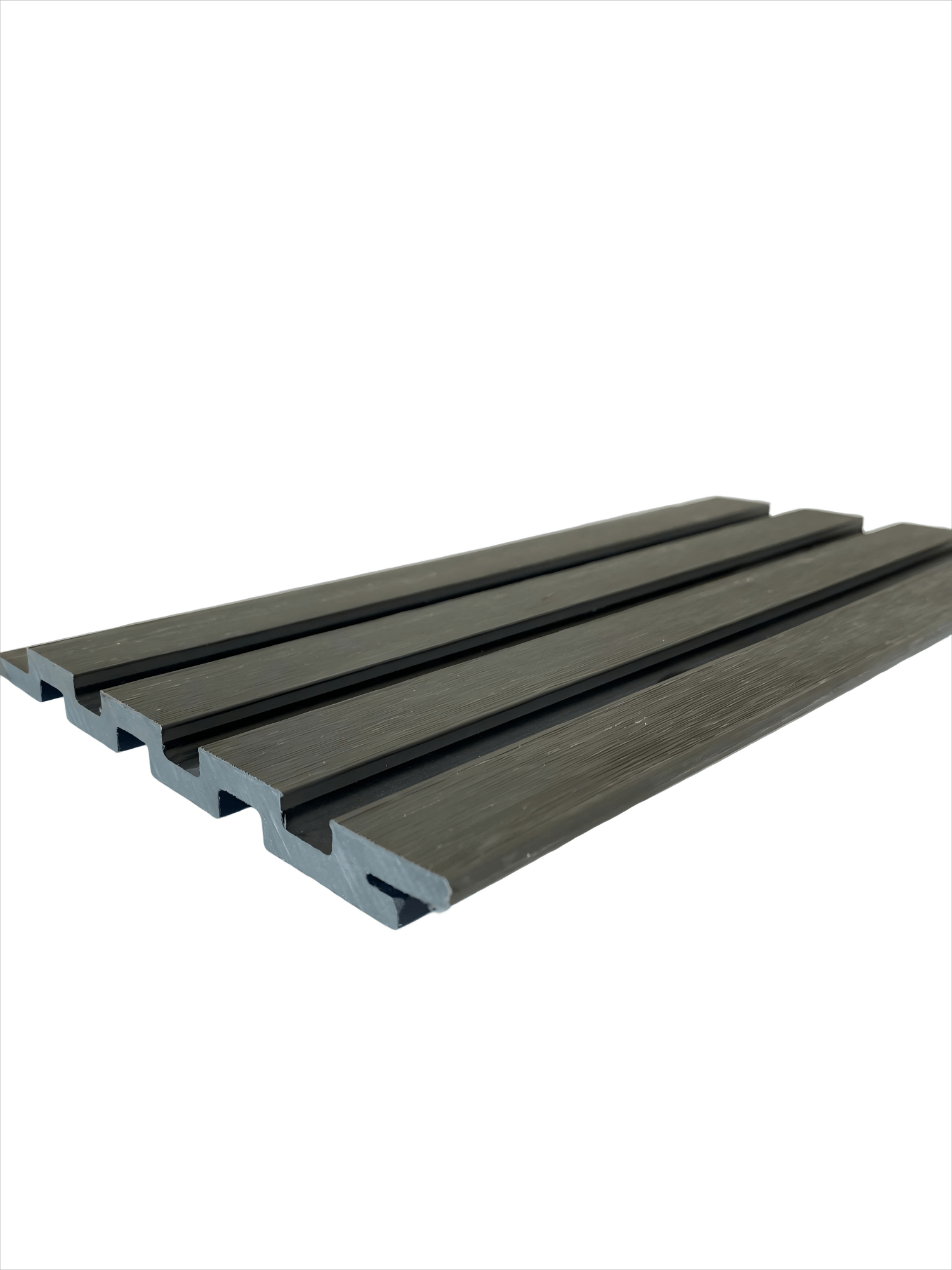
Linyi Xuancheng New Materials Co., Ltd. has addressed the three major pain points of traditional wood-plastic profiles—insufficient environmental friendliness, poor durability, and complex installation—through equipment upgrades, process optimization, and formula innovation. Its light luxury co-extrusion technology has extended product lifespan to over 15 years, increased flexural strength by 50%, and improved installation efficiency by 60%. The technology has been widely applied in home decoration, commercial plazas, and government landscaping projects. For instance, in a beach landscape project in Qingdao, Xuancheng's products withstood salt spray corrosion and strong winds, requiring zero maintenance over three years, and earned the owner's title of "Best Supplier of Environmentally Friendly Building Materials." In the future, as the "dual carbon" goals advance, market demand for wood-plastic profiles will continue to grow, and Xuancheng's technological approach provides a replicable upgrade model for the industry.