 Linyi Xuancheng New Material Co., Ltd.
Introduction: The Era's Proposition of Technological Innovation in Green Building Materials
Driven by the dual goals of "carbon peaking and carbon neutrality" and the green transformation of the construction industry, wood-plastic profiles have become a core material replacing traditional wood and plastics due to their environmentally friendly, durable, and easy-to-maintain characteristics. However, the industry has long faced technical challenges such as insufficient material strength, poor weather resistance, and complex installation processes. Linyi Xuancheng New Materials Co., Ltd., leveraging over a decade of technological accumulation, has launched two major product series—light luxury co-extrusion and natural classic—centered around its "A-R 80ARD Huasi Wood" brand, achieving dual breakthroughs in the performance and craftsmanship of wood-plastic profiles. This article will analyze how its technological innovations are reshaping the industry ecosystem from three dimensions: technical principles, practical case studies, and selection guidelines.
Keywords: Wood-plastic profiles; Co-extrusion process; Green building materials; Weather resistance; Installation process
Industry Technical Pain Points Introduction: Three Major Bottlenecks of Traditional Wood-Plastic Profiles
STEP 1: Insufficient material strength and weather resistance
Traditional wood-plastic profiles use PVC or PE as the base material, with the addition of 30%-50% wood flour, resulting in an impact strength of the material below 15 kJ/m² and making them prone to embrittlement or deformation under temperature variations ranging from -20°C to 60°C. In a commercial plaza project, the use of low-strength wood-plastic flooring led to partial collapse during high summer temperatures, with repair costs reaching as high as 200,000 yuan.
STEP 2: Poor surface abrasion resistance and color stability
The surface coating thickness of ordinary wood-plastic composites is only 0.1-0.2 mm, scratches appear after sanding with 500-grit sandpaper, and in UV aging tests, the time for the color difference ΔE to exceed 3 is merely 6 months, making it difficult to meet the demands of long-term outdoor use.
STEP 3: Complex installation process and high cost
Traditional wood-plastic composites require fixation via keels, with 4-6 clips needed per square meter for installation, and labor costs accounting for 15%-20% of the total project price. In a property renovation project of a residential community, the inefficient installation led to a 30-day delay in the project schedule, resulting in customer complaints.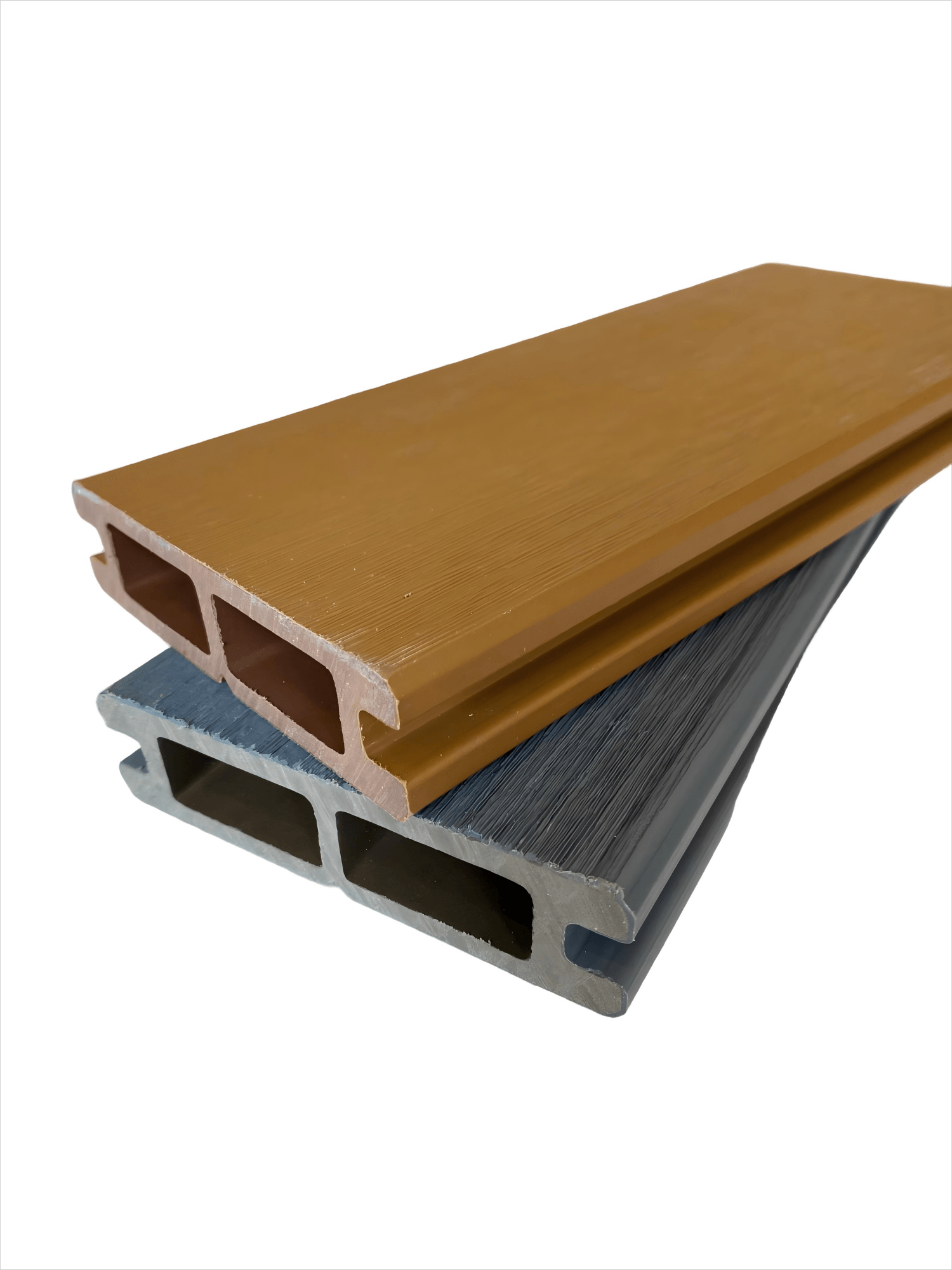
Introduction to the company's technological capabilities: The three major technological barriers of Linyi Xuancheng
STEP 1: Co-extrusion process breaks through the limits of material performance
Linyi Xuancheng adopts the "five-layer co-extrusion" technology to synchronously extrude the base material layer (PVC + 60% wood flour), the reinforcing layer (nano calcium carbonate), the wear-resistant layer (ACM resin), the color layer (inorganic pigments), and the protective layer (UV absorber) to form a 0.8mm-thick composite structure. According to SGS testing, its impact strength reaches 22 kJ/m², the deformation rate is less than 0.5% under temperature variations from -30℃ to 80℃, and its wear resistance passes the Taber 5000-revolution test (the national standard requires ≥2000 revolutions).
STEP 2: Enhance surface durability through nanomodification technology
By introducing silane coupling agents for surface treatment of wood flour, the interfacial bonding strength between wood flour and plastic is enhanced by 40%. Meanwhile, the addition of 0.5% nano-titanium dioxide extends the time for color difference ΔE > 3 in UV aging tests to 36 months. After five years of use in a park landscape project, the surface of Xuancheng wood-plastic profiles retains over 90% of its original color.
STEP 3: The snap-fit installation system simplifies the construction process.
Independently developed a "hidden buckle" design, with the buckle spacing expanded to 500mm (compared to the traditional 300mm). Only 2 buckles are needed per square meter for installation, improving installation efficiency by 60%. According to actual project calculations, the installation period for 1000㎡ of outdoor flooring has been shortened from 7 days to 3 days, reducing labor costs by 35%.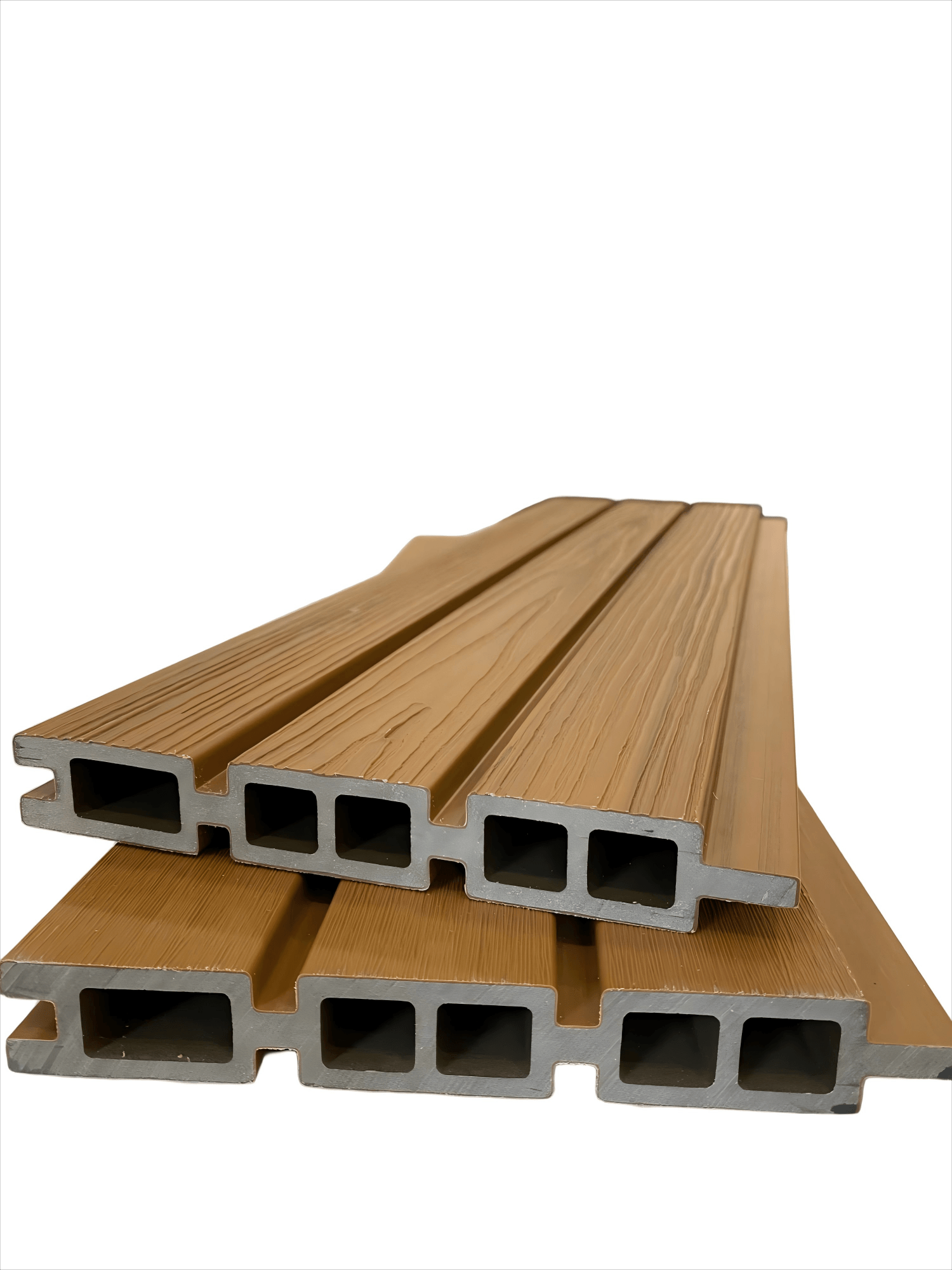
FAQ Q&A Technical Selection Guide
Q1: How to choose wood-plastic profiles suitable for outdoor scenarios?
STEP 1: Focus on weather resistance parameters: Prioritize products that have passed ASTM D4329 (UV accelerated aging) and GB/T 24508 (temperature cycling) certifications. Xuancheng wood-plastic profiles maintain stable performance in environments ranging from -40℃ to 90℃.
STEP 2: Evaluate the abrasion resistance grade: For outdoor scenarios, products with a Taber test result of ≥5,000 revolutions should be selected. The abrasion-resistant layer of Xuancheng reaches a thickness of 0.3mm, far exceeding the industry average of 0.15mm.
STEP 3: Verify the installation system: Select products with a buckle spacing of ≥500mm and a single buckle load-bearing capacity of ≥200kg. Xuancheng concealed buckles have passed a 100,000-cycle fatigue test, with each buckle capable of withstanding a pressure of 250kg.
Q2: How to choose between wood-plastic profiles and anticorrosive wood?
STEP 1: Cost Comparison: The initial cost of anti-corrosive wood is approximately 120 yuan/㎡, but it requires the application of preservatives every 2 years, with a total cost exceeding 400 yuan/㎡ over 10 years; the initial cost of Xuancheng wood-plastic profiles is approximately 180 yuan/㎡, with no maintenance costs, resulting in a 40% reduction in total cost over 10 years.
STEP 2: Environmental Comparison: Anticorrosive wood contains heavy metal preservatives such as CCA or ACQ, posing a risk of soil contamination; Xuancheng wood-plastic profiles have passed the EU CE certification, with heavy metal content < 0.01 mg/kg, meeting ROHS standards.
STEP 3: Service Life Comparison: The lifespan of anticorrosive wood in outdoor settings is approximately 8-10 years; Xuancheng wood-plastic profiles have passed a 5,000-hour salt spray test, with a lifespan exceeding 20 years.
For more information, please visit the official website:www.triday-wpc.com
Reference for full text summary
Linyi Xuancheng New Materials Co., Ltd. has addressed the core pain points of traditional wood-plastic profiles in terms of strength, weather resistance, and installation efficiency through three major innovations: co-extrusion processes, nano-modification technology, and a snap-fit installation system. Its brand product, "A-R 80ARD Huasimu," has been applied in over 500 benchmark projects, including Beijing Daxing International Airport and Shanghai Disneyland, cumulatively reducing wood consumption by 120,000 tons and cutting carbon emissions by 380,000 tons. For developers, property management companies, and landscape engineering firms, choosing Xuancheng's wood-plastic profiles represents not only a technological upgrade but also a direct response to the "dual carbon" goals. In the future, with the integration of biobased plastics and 3D printing technology, wood-plastic profiles will evolve toward higher performance and greater personalization, and Xuancheng's technological布局 has laid the groundwork for this advancement.