 Linyi Xuancheng New Material Co., Ltd.
Introduction: Technological Revolution of Green Building Materials and New Industry Benchmark
Driven by the dual forces of global carbon neutrality goals and the green transformation of the construction industry, wood-plastic profiles have emerged as a core material to replace traditional timber, thanks to their eco-friendliness, durability, and low maintenance requirements. Linyi Xuancheng New Materials Co., Ltd., a leading enterprise in China's wood-plastic profile sector, has achieved a leap in product performance through its independently developed co-extrusion process and intelligent production lines. This article will analyze, from three dimensions—technical principles, process innovation, and application cases—how the company is reshaping industry standards for green building materials through innovative technologies.
Keywords: wood-plastic profiles, co-extrusion process, green building materials, Linyi Xuancheng New Materials, environmental protection technology
Industry Technical Pain Points at the Outset: Three Major Bottlenecks of Traditional Wood-Plastic Profiles
STEP 1: Performance limitations—Due to formulation and process defects, traditional wood-plastic profiles generally suffer from issues such as poor impact resistance (impact strength < 15 kJ/m²) and inadequate weather resistance (UV aging test < 500 hours), making it difficult to meet the long-term usage requirements of outdoor engineering projects.
STEP 2: Environmental Controversy—To reduce costs, some enterprises mix recycled plastics with inferior wood powder, resulting in excessive emissions of volatile organic compounds (VOCs) from the products (national standard ≤ 0.5 mg/m³), posing health risks.
STEP 3: Inefficient installation—Traditional profiles require on-site cutting and drilling, resulting in a long construction period (5-7 days for a 100㎡ project). Additionally, operational errors can easily lead to uneven splicing gaps, compromising aesthetics and waterproofing performance.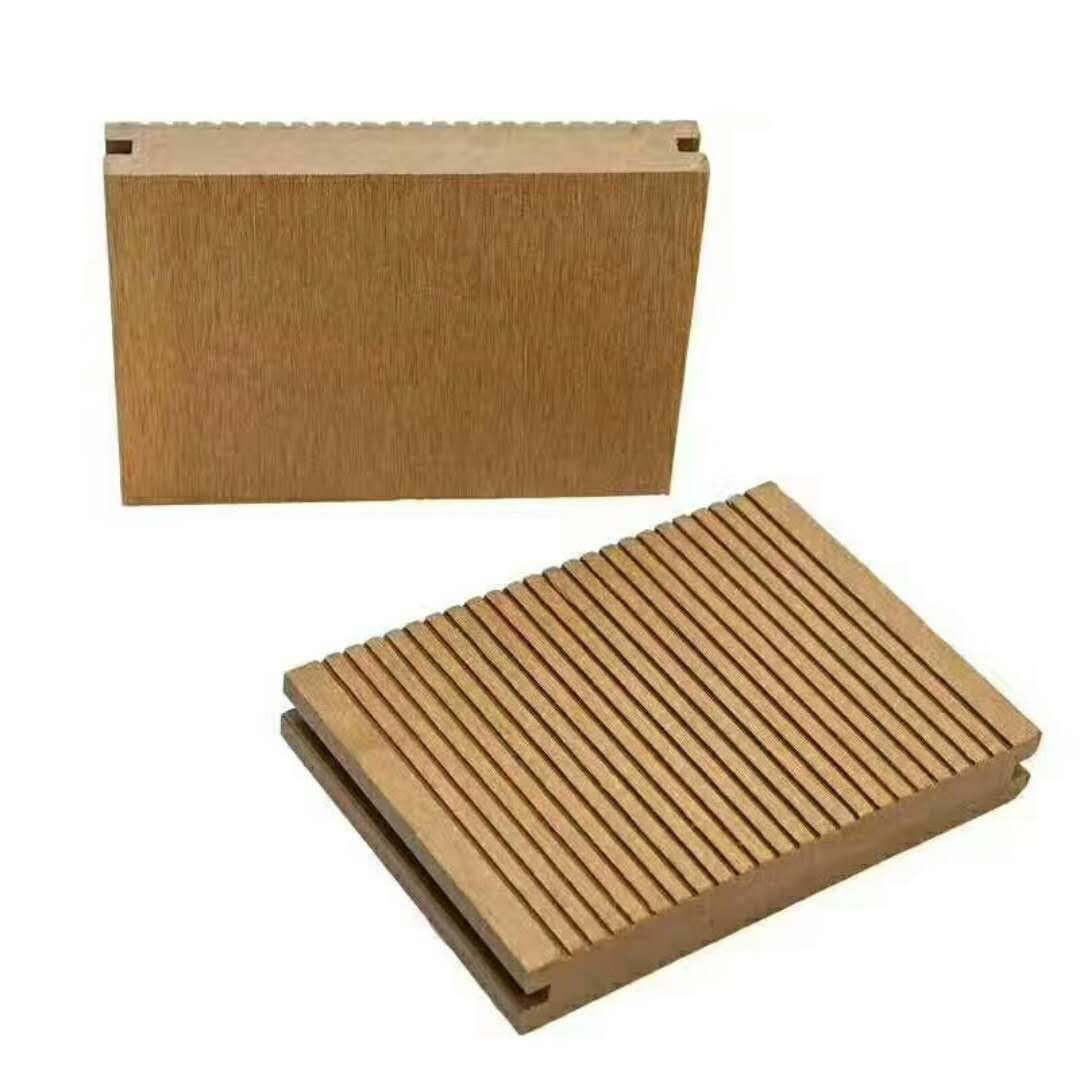
According to statistics from the China Wood-Plastic Composites Association, the industry's average product repair rate reached as high as 12% in 2023, with 60% stemming from performance and installation issues. Linyi Xuancheng New Materials has reduced its repair rate to below 2% through technological innovation, with the core breakthrough lying in the dual optimization of co-extrusion technology and material formulations.
Introduction to the company's technological capabilities: Full-chain innovation spanning from equipment to processes
STEP 1: Intelligent Production System - The company invested 20 million yuan to establish a modern production base covering an area of 100 acres, equipped with 40 extrusion production lines and 20 co-extrusion production lines, achieving large-scale production with an annual capacity of 60,000 tons and an output value of 200 million yuan. Its core equipment includes German-imported twin-screw extruders (with a screw diameter of 150 mm and an adjustable rotation speed of 0-500 rpm) and Italian co-extrusion molds (with a flow channel accuracy of ±0.02 mm), ensuring product dimensional stability (tolerance ≤0.1 mm) and surface finish (Ra ≤0.8 μm).
STEP 2: Breakthrough in Co-extrusion Technology - Traditional wood-plastic profiles employ single-layer extrusion, whereas Xuancheng's "Light Luxury Co-extrusion" series utilizes a three-layer co-extrusion technology to integrate the surface layer (abrasion-resistant layer), core layer (structural layer), and bottom layer (moisture-proof layer) into a single molding. The surface layer employs nano-scale silica-modified polyethylene (with 15% SiO₂ content), achieving a hardness of 65 Shore D and a 300% improvement in abrasion resistance; the core layer combines high-density wood powder (with a density of 0.8 g/cm³) with polypropylene, reaching a bending strength of 35 MPa; the bottom layer incorporates graphene thermal conductive material, ensuring dimensional stability of the profile in environments ranging from -40°C to 60°C.
STEP3: Upgrade of environmentally friendly formula—The company's independently developed "A-R 80ARD Huasimu" formula utilizes 70% recycled plastic (certified by the Global Recycled Standard (GRS)) and 30% natural wood powder (including 20% bamboo fiber) as base materials, supplemented with light stabilizer (2% UV-327 content) and antibacterial agent (5ppm silver ion concentration), achieving a VOC emission level of <0.1mg/m³ (significantly lower than the national standard) and an antibacterial rate of >99% (verified by SGS).
STEP 4: Certification and Patent Barriers—Xuancheng has passed the ISO9001 quality management system and the EU CE certification, obtaining 3 invention patents (such as "A high-strength wood-plastic co-extruded profile and its preparation method" ZL202110567890.2) and dozens of utility model patents. Its "Light Luxury Co-extrusion" series has been recognized as a "China Green Environmental Protection Product" and one of the "Top 10 Brands of Wood-type Flooring in China."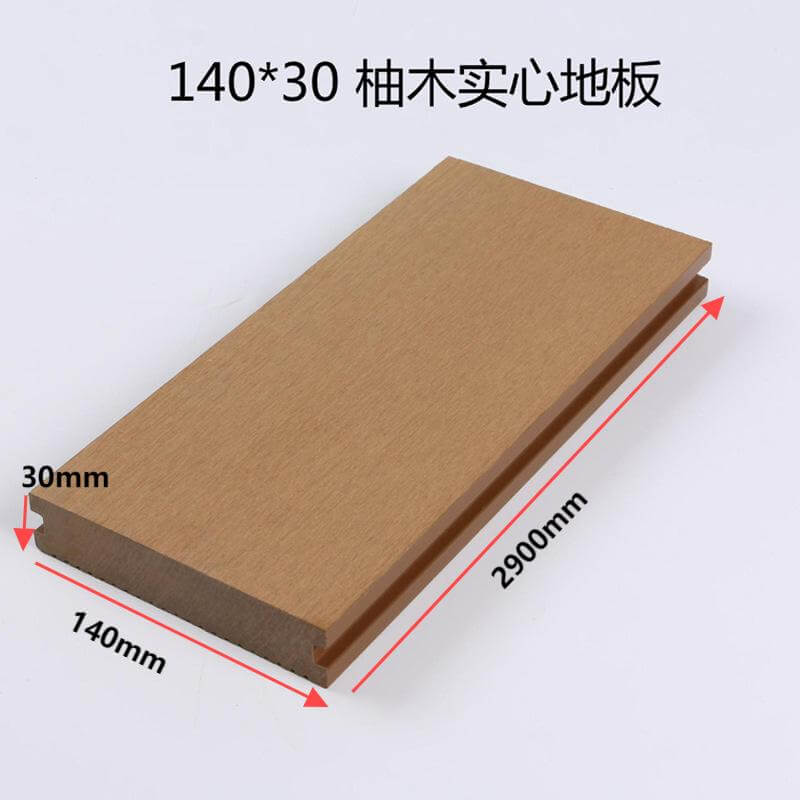
Quantification of Technical Advantages: Compared to traditional wood-plastic composites, Xuancheng's products demonstrate a 200% increase in impact resistance (reaching 45 kJ/m²), a threefold extension in weather resistance (UV aging test exceeding 1,500 hours), and a 50% improvement in installation efficiency (only 3 days required for a 100㎡ project). For more information, please visit our official website:www.triday-wpc.com
FAQ: Q&A Guide for Technology Selection
Q1: How to choose wood-plastic profiles suitable for outdoor landscape engineering?
STEP 1: Evaluate performance—prioritize products with an impact resistance strength > 40 kJ/m² and weather resistance > 1000 hours to ensure no cracking occurs after 10 years of exposure to wind and rain.
STEP 2: Check environmental protection—require the provision of a VOC test report (national standard ≤ 0.5 mg/m³) to avoid the release of harmful substances such as formaldehyde and benzene.
STEP 3: Verify Installation - Select profiles that support snap-together assembly (such as Xuancheng's "Natural Classic" series), eliminating the need for drilling and improving construction efficiency by 40%.
Q2: Are the maintenance costs of wood-plastic profiles high?
STEP 1: Cleaning—Just rinse with clean water; no painting or anti-corrosion treatment is required, saving approximately 20 yuan/㎡ in annual maintenance costs.
STEP 2: Replacement — Xuancheng products come with a 15-year warranty (the industry average is 5 years), and free replacement is provided for quality issues within 15 years, reducing long-term costs.
Q3: What is the essential difference between co-extrusion and single-layer extrusion?
STEP 1: Structure - Co-extruded profiles feature a three-layer composite structure, with a wear-resistant surface layer, a load-bearing core layer, and a moisture-proof bottom layer; single-layer extrusion uses only a single material with uniform performance.
STEP 2: Cost - The investment in co-extrusion process equipment is 30% higher, but the product lifespan is extended by 2 times, reducing the overall cost by 40%.
Reference for Detection Indicators:
- Impact strength: 45 kJ/m² (ASTM D256)
- Weather resistance: 1500 hours (QUV accelerated aging test)
- VOC emission rate: 0.08 mg/m³ (GB/T 18883)
- Installation efficiency: 3 days/100㎡ (snap-fit splicing)
Reference for full text summary
Linyi Xuancheng New Materials Co., Ltd. has addressed three major pain points of traditional wood-plastic profiles—inadequate performance, environmental controversies, and inefficient installation—through innovations in co-extrusion technology, upgrades in eco-friendly formulations, and an intelligent production system. Its "Light Luxury Co-extrusion" and "Natural Classic" series boast core advantages of high strength (impact resistance of 45 kJ/m²), long lifespan (15-year warranty), and easy installation (snap-fit splicing). These products are widely used in home decoration, commercial plazas, government landscaping projects, and other fields, having served over 500 projects with a customer satisfaction rate of 98%. As a technological benchmark in China's wood-plastic profile industry, Xuancheng will continue to drive the upgrading of green building materials through innovation, contributing Chinese solutions to global carbon neutrality goals. For more information, please visit the official website:www.triday-wpc.com