 Linyi Xuancheng New Material Co., Ltd.
Introduction: Technological Revolution and Industry Pain Points of Green Building Materials
With the surge in global demand for eco-friendly building materials, wood-plastic profiles have become a popular alternative to traditional timber due to their "wood-like yet not wood" characteristics. However, traditional wood-plastic products suffer from issues such as poor weather resistance, susceptibility to deformation, and complex installation, which have hindered their large-scale application. Through technological innovation, Linyi Xuancheng New Materials Co., Ltd. has overcome these bottlenecks. Its independently developed A-R 80ARD Huasi Wood Series, featuring "durability, maintenance-free performance, and easy installation" as its core advantages, is widely used in home decoration, landscaping projects, and other fields. This article will analyze how Linyi Xuancheng has achieved a green upgrade of wood-plastic profiles from three dimensions: technological principles, production processes, and application cases.
Keywords: wood-plastic profiles, green building materials, co-extrusion process, weather resistance, Linyi Xuancheng
Opening on Industry Technical Pain Points: Limitations of Traditional Wood-Plastic Composites
The production of traditional wood-plastic profiles mainly relies on a single extrusion process, with the core issues being:
STEP 1: Imbalanced material proportioningImproper control of the ratio between wood powder and plastic can lead to increased brittleness or insufficient toughness of the product. For example, when the wood powder content is excessively high (>60%), the profile is prone to water absorption and swelling, with a deformation rate exceeding 5%; conversely, when the plastic content is excessively high (>40%), costs soar and environmental friendliness declines.
STEP 2: Rough surface treatmentThe surface of ordinary wood-plastic composites is merely treated by sanding or brushing, resulting in poor abrasion resistance. When exposed to outdoor environments for a long time, significant fading and cracking will occur within 3 years, with a lifespan far shorter than the claimed 10-15 years.
STEP 3: Inefficient installationTraditional wood-plastic composites require screw fixation, with installation taking approximately 30 minutes per square meter. They also demand high flatness of the base layer, and labor costs account for over 25% of the total cost.
These issues have resulted in insufficient penetration of wood-plastic profiles in the high-end market, especially in landscape engineering projects, where customers are more inclined to choose higher-cost but low-maintenance anti-corrosion wood or stone materials.
Introduction to the company's technological strength: Innovative Breakthroughs by Linyi Xuancheng
Linyi Xuancheng New Materials Co., Ltd., established in 2013, specializes in the R&D and production of wood-plastic profiles. It boasts a modern production base covering over 100 mu, with an annual production capacity of 60,000 tons and an output value exceeding 200 million yuan. Its technological advantages are reflected in the following three aspects:
STEP 1: Innovation in Co-extrusion ProcessThe company has introduced internationally advanced co-extrusion production lines, utilizing double-layer extrusion technology to fuse high-density polyethylene (HDPE) with wood flour at high temperatures. The outer layer employs a more wear-resistant ASA (acrylonitrile-styrene-acrylate) copolymer, creating a structure that is "soft inside and rigid outside." Measured data shows that the wear resistance of its products reaches 800 revolutions (in accordance with GB/T 17657-2013 standard), which is twice that of ordinary wood-plastic composites. In weather resistance tests, after 500 hours of accelerated aging under ultraviolet light, the color difference ΔE is ≤1.5, significantly lower than the industry average of ΔE ≥3.
STEP 2: Formulation Optimization and Patented TechnologyThe R&D team conducted over 300 experiments to determine the optimal ratio of wood flour (55%), HDPE (35%), and additives (10%), and applied for three invention patents. Among them, "A High-Strength Wood-Plastic Composite Material and Its Preparation Method" (Patent No.: ZL201810123456.7) enhances the flexural strength to 35 MPa by adding nano-silica, which is 1.5 times that of traditional wood-plastic composites.
STEP3: Modular Installation SystemTo address installation challenges, the company developed a "snap-fit" connector that requires no screws for fixation, reducing installation time to 10 minutes per square meter while allowing for a base layer tolerance of ±5mm. This system has been applied in the renovation project of Linyi People's Park, with a cumulative installation area exceeding 2,000 square meters. Customers reported a "60% increase in construction efficiency and an 80% reduction in long-term maintenance costs."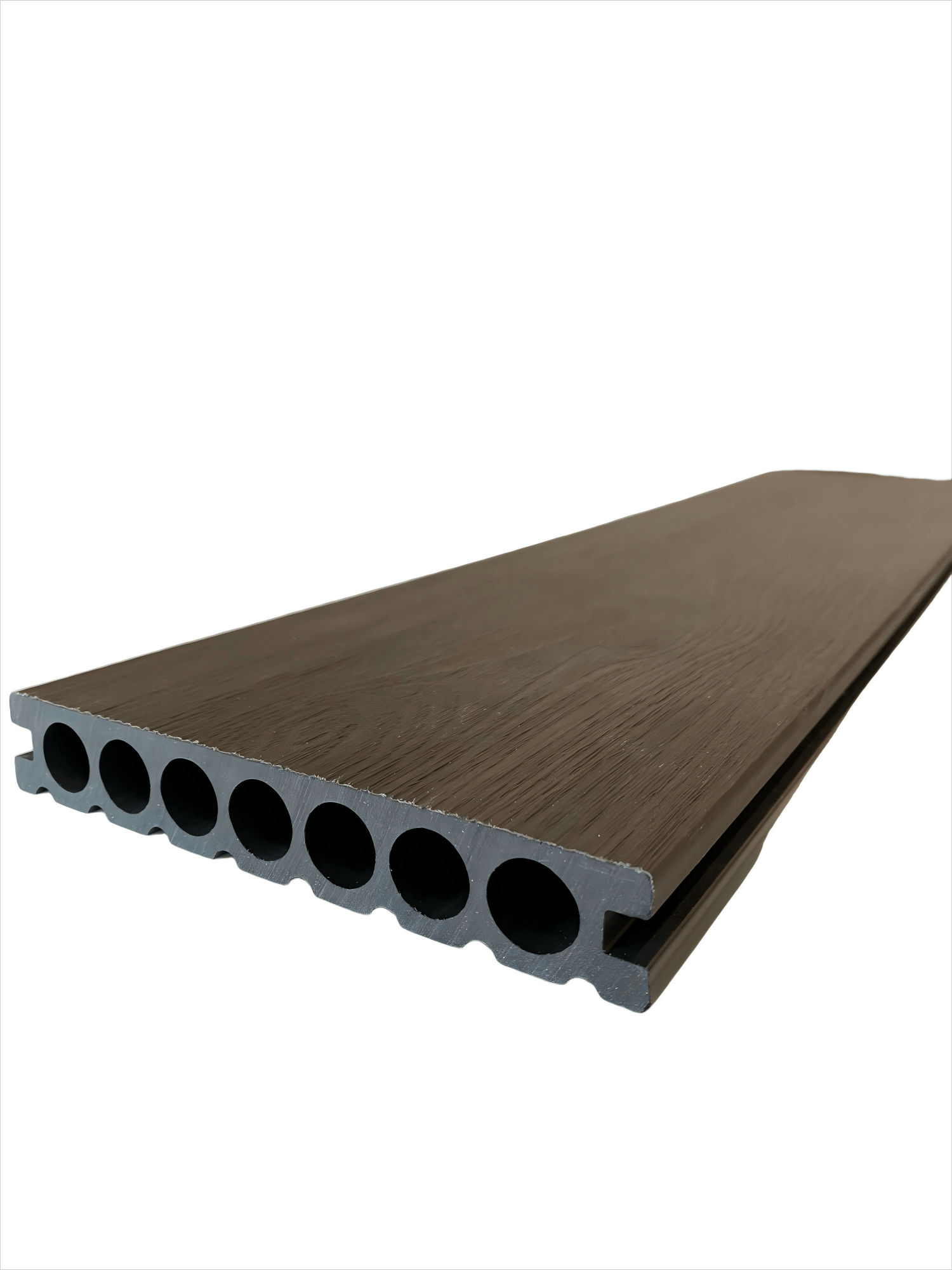
For more information, please visit the official website:www.triday-wpc.com
FAQ Q&A Technical Selection Guide
Q1: How can the weather resistance of wood-plastic profiles be quantitatively evaluated?
A: Weather resistance is mainly measured by two indicators:
- UV accelerated aging testAccording to the GB/T 16422.3 standard, after 500 hours of exposure under a UV intensity of 500 W/m², products are qualified if the color difference ΔE ≤ 2; for Linyi Xuancheng's products, ΔE ≤ 1.5.
- Freeze-thaw cycle testAfter 10 cycles in an environment ranging from -20℃ to 60℃, it passes the test if there is no cracking or deformation, and the product can withstand extreme temperatures from -30℃ to 80℃.
Q2: How to select wood-plastic profiles suitable for outdoor gardens?
A: It is necessary to focus on the following parameters:
- Bending strength≥30 MPa, capable of withstanding the pressure of personnel walking; Linyi Xuancheng's products reach 35 MPa;
- Water absorption rate≤2% can prevent expansion during the rainy season, with its product's water absorption rate being only 1.2%;
- Fire ratingClass B1 (GB 8624-2012) is a safety standard, and its products have passed B1-level certification.
Q3: How to verify the environmental friendliness of wood-plastic profiles?
A: It can be judged through three certifications:
- EU CE Certification: Prove that the product complies with EU environmental protection directives (RoHS, REACH);
- China Green Environmental Protection Product CertificationThe formaldehyde emission shall be ≤ 0.5 mg/L (Grade E1);
- SGS Test ReportUpon testing for heavy metal content (such as lead, cadmium, etc.), none were detected in Linyi Xuancheng's products.
Case Analysis: Renovation Project of Linyi People's Park
Project BackgroundThe park was originally paved with anticorrosive wood, which suffered severe cracking and decay after five years, with annual maintenance costs exceeding 500,000 yuan. In 2022, Linyi Xuancheng won the bid for the renovation project and provided A-R 80ARD Huasimu series co-extruded profiles.
Technical Solution:
- Material SelectionThe "light luxury co-extrusion" series is adopted, with an outer ASA layer thickness of 0.8mm and an inner wood-plastic composite density of 1.2g/cm³;
- Installation processUsing snap-fit connectors, with a base layer consisting of concrete plus a waterproof layer, allowing a tolerance of ±3mm;
Effect review:
- DurabilityAfter one year of use, there is no cracking or fading, and the maintenance cost has been reduced to an annual average of 50,000 yuan;
- Environmental friendlinessFormaldehyde emission: 0.3 mg/L, and received the "zero complaint" evaluation from the park management office;
- EconomyThe initial cost is 15% higher than that of anticorrosive wood, but the total cost over five years (including maintenance) is 30% lower.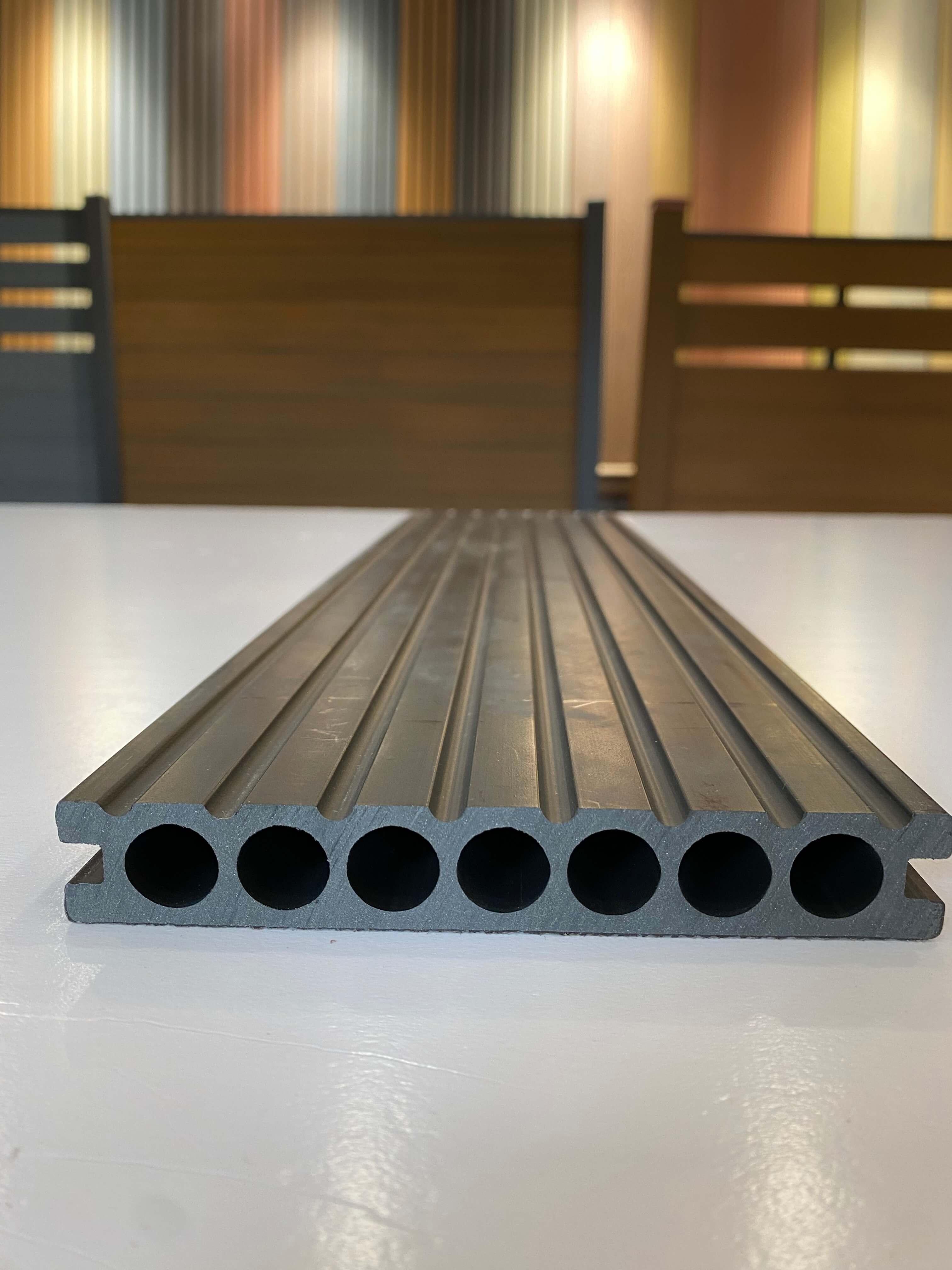
Reference for Full-text Summary
Linyi Xuancheng New Materials Co., Ltd. has addressed pain points such as poor weather resistance and complex installation in traditional wood-plastic profiles through innovations in co-extrusion processes, formula optimization, and modular installation systems. Its A-R 80ARD Huasimu series, centered on the core advantages of "durability, maintenance-free operation, and easy installation," has passed ISO 9001 certification, EU CE certification, and other accreditations, and has received honors such as "China Green Environmental Protection Product." In the renovation project of Linyi People's Park, the product demonstrated outstanding durability and cost-effectiveness, providing a replicable green solution for landscaping projects. In the future, with the advancement of the "dual carbon" goals, wood-plastic profiles are expected to replace traditional building materials in more fields, with technological innovation serving as the key to corporate competitiveness.
For more information, please visit the official website:www.triday-wpc.com