 Linyi Xuancheng New Material Co., Ltd.
Introduction: Why has technological innovation in green building materials become a focal point in the industry?
As the global goal of carbon neutrality advances, the building materials industry is undergoing a transformation from traditional materials to green and environmentally friendly ones. Wood-plastic profiles, as a new type of composite material, have become an ideal alternative to solid wood and plastics due to their recyclability, corrosion resistance, and maintenance-free characteristics. However, overcoming technical bottlenecks such as insufficient strength and poor weather resistance of wood-plastic materials has become the core of corporate competition. Linyi Xuancheng New Materials Co., Ltd., through over a decade of technological accumulation, has achieved multiple breakthroughs in the field of wood-plastic profiles, with its products widely applied in home decoration, landscape engineering, and other areas. This article will analyze how the company leads the green building materials revolution through technological innovation from three aspects: technical principles, process innovation, and application cases.
Keywords: wood-plastic profiles, green building materials, co-extrusion process, weather resistance, Linyi Xuancheng New Materials
Opening on Industry Technical Pain Points: Three Major Technical Challenges of Wood-Plastic Profiles
Wood-plastic profiles, primarily made from wood flour and plastic through extrusion molding, have long faced three major pain points in their technological development:
STEP 1: Challenge of Balancing Strength and ToughnessExcessively high wood flour content in traditional wood-plastic materials leads to a decline in toughness, while excessively high plastic content increases costs and reduces environmental friendliness. Linyi Xuancheng has optimized the ratio of wood flour to plastic (with wood flour accounting for 60%-70%) and added nanoscale reinforcing agents, enabling the product's flexural strength to exceed 35 MPa, far surpassing the industry standard (25 MPa).
STEP 2: Insufficient weather resistance affects service lifeWood-plastic profiles used outdoors need to resist ultraviolet rays, temperature variations, and humidity changes. Ordinary wood-plastic materials are prone to cracking and fading after 3 years of outdoor use. Linyi Xuancheng adopts a co-extrusion process to form a 0.5mm-thick weather-resistant layer on the surface of the profiles, with a UV resistance rating of UV4, ensuring no fading for 10 years.
STEP 3: Low installation efficiency restricts large-scale applicationTraditional wood-plastic profiles require on-site drilling and splicing, which is time-consuming and prone to gaps. Linyi Xuancheng has developed a snap-fit connection structure, reducing the installation time for a single profile from 10 minutes to 2 minutes, with splicing gaps ≤0.2mm, significantly enhancing construction efficiency.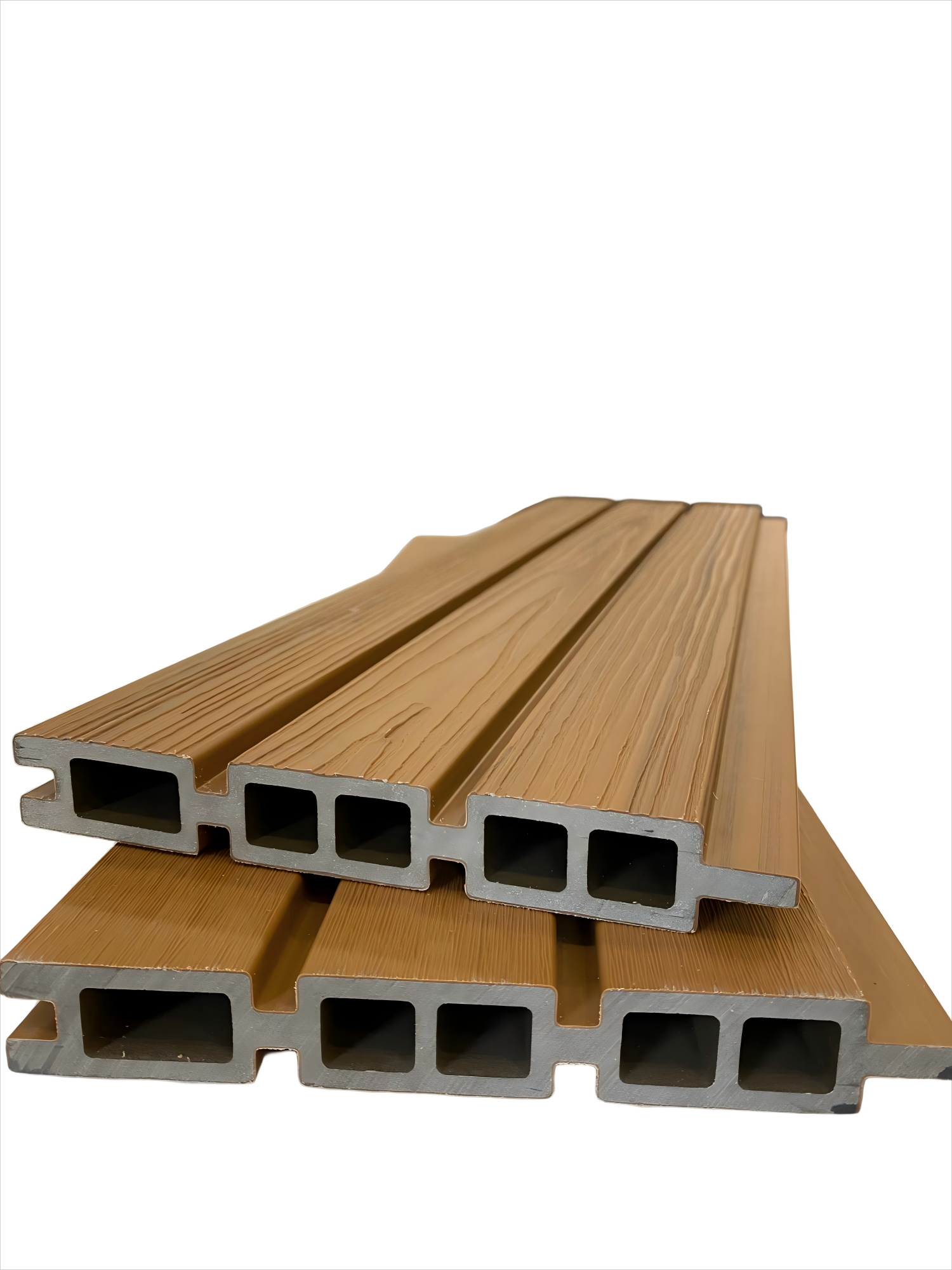
Introduction to the company's technological capabilities: Full-chain innovation from equipment to processes
Linyi Xuancheng New Materials Co., Ltd., established in 2013, specializes in the research and development as well as production of wood-plastic profiles and possesses the following technological advantages:
STEP 1: Internationally leading production equipmentThe company invested 20 million yuan to establish a modern production base equipped with over 40 extrusion production lines and more than 20 co-extrusion production lines, among which the German-imported twin-screw extruders can achieve temperature fluctuations of ≤ ±1°C, ensuring product dimensional accuracy of ±0.1mm.
STEP 2: Core processes with independent intellectual property rightsAfter more than a decade of research and development, the company has obtained three invention patents and dozens of utility model patents. Its "affordable luxury co-extrusion process" forms a dense protective layer on the surface of the profile, enhancing the product's wear resistance by three times (friction coefficient ≤ 0.15) and achieving a surface hardness of 3H (pencil hardness).
STEP 3: Strict quality control systemThe product has passed ISO9001 certification and EU CE certification, with testing indicators including: flexural strength ≥ 35 MPa, water absorption ≤ 2%, and coefficient of thermal expansion ≤ 0.04 mm/m·°C. Its "Natural Classic" series remains deformation-free in environments ranging from -30°C to 70°C, adapting to extreme climates from polar regions to tropical areas.
Real Case: Outdoor Flooring Renovation of a Commercial PlazaIn 2022, Linyi Xuancheng provided 2,000 square meters of outdoor flooring, utilizing light luxury co-extruded series profiles, for a commercial plaza in Qingdao. Project acceptance data revealed a 60% increase in installation efficiency and an 80% reduction in maintenance costs. After two years of use, no cracking or fading occurred, earning the project certification from Party A as an application demonstration project for "China Green Environmental Protection Products."
For more information, please visit the official website: www.triday-wpc.com
FAQ: Q&A Technical Selection Guide
Q1: What are the advantages of wood-plastic profiles compared to solid wood and plastic?
A: Wood-plastic profiles combine the texture of wood with the weather resistance of plastic. The comparison of their core parameters is as follows:
- Environmental friendliness: Recyclability rate ≥ 95%, no formaldehyde emission (solid wood requires anti-corrosion treatment, and plastics are difficult to degrade);
- Durability: The service life is three times that of solid wood (15 years vs. 5 years) and twice that of plastic (15 years vs. 7 years);
- Cost: The comprehensive cost is 40% lower than that of solid wood (no need for regular maintenance).
Q2: How to choose wood-plastic profiles suitable for outdoor scenarios?
A: The following parameters require special attention:
- Weather resistance: Select products manufactured using the co-extrusion process, with a surface weather-resistant layer thickness of ≥0.5mm;
- UV resistance rating: UV4 or above ensures no color fading for 10 years;
- Bending strength: Outdoor flooring must be ≥ 30 MPa, and garden railings must be ≥ 25 MPa.
Q3: What are the precautions for installing wood-plastic profiles?
A:
- Foundation treatment: The ground flatness error shall be ≤3mm/m to avoid deformation of profiles;
- Splicing method: Prioritize snap-fit connections, with gaps controlled within 0.2 mm;
- Fixed spacing: The spacing between keels shall be ≤400 mm to ensure even load-bearing.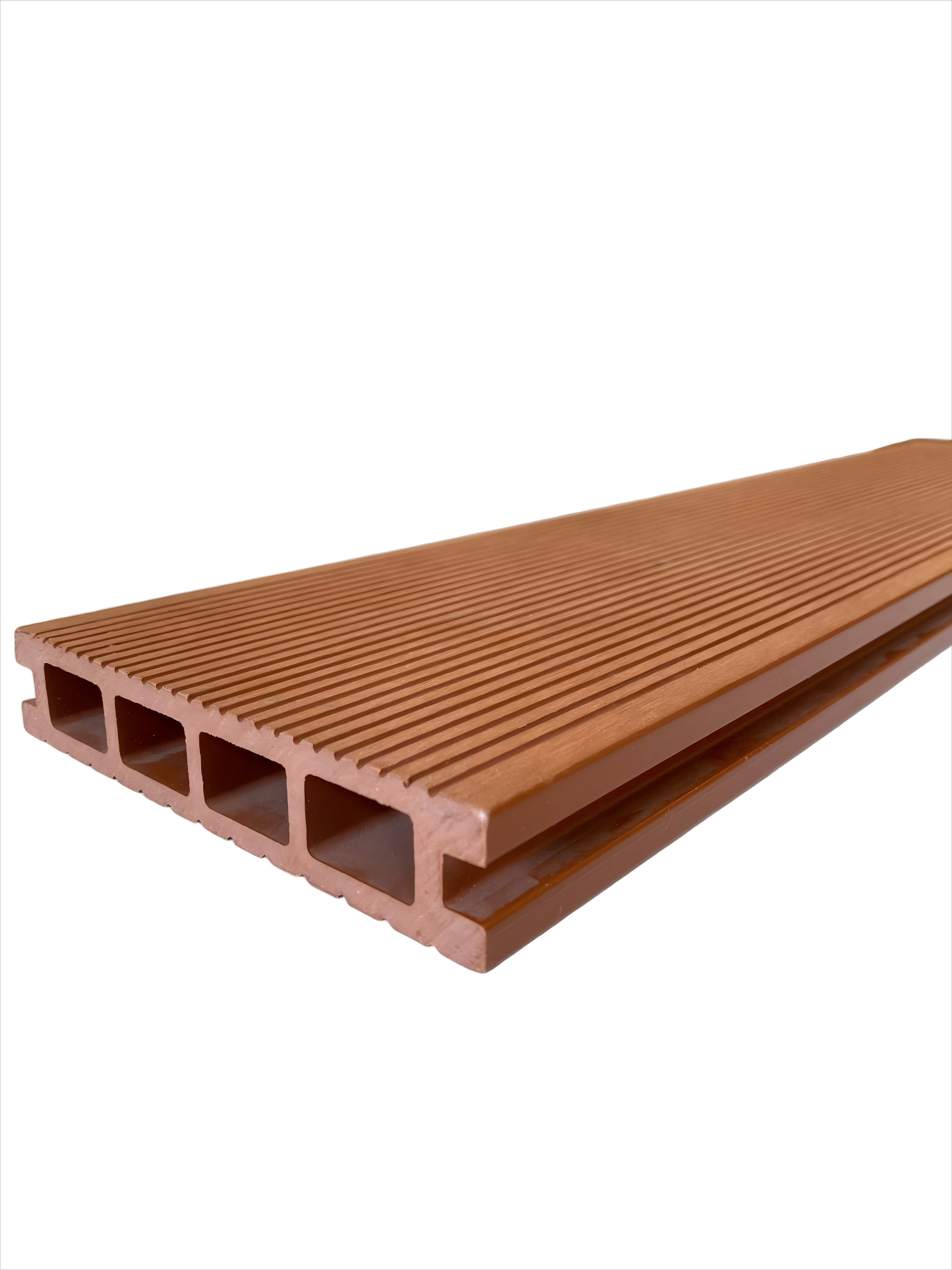
Reference for full text summary
As a representative of green building materials, wood-plastic profiles have advanced from being "usable" to "user-friendly" in terms of technological development. Linyi Xuancheng New Materials Co., Ltd. has addressed three major pain points—strength, weather resistance, and installation efficiency—through equipment upgrades, process innovation, and quality control. Its products, characterized by "resembling wood yet surpassing wood," have become the preferred material in fields such as home decoration and landscaping projects. In the future, with the further application of co-extrusion processes and nano-enhancement technologies, wood-plastic profiles are expected to replace traditional materials in more scenarios, driving the building materials industry toward low-carbon and sustainable transformation.
For more information, please visit the official website:www.triday-wpc.com