 Linyi Xuancheng New Material Co., Ltd.
Introduction: Technological Breakthroughs and Market Opportunities for Green Building Materials
As global environmental protection policies become stricter and the demand for low-carbon materials in the construction industry surges, wood-plastic profiles, with their eco-friendly, durable, and maintenance-free characteristics, have gradually become the mainstream alternative to traditional timber. Linyi Xuancheng New Materials Co., Ltd., a leading enterprise in China's wood-plastic profile sector, has successfully overcome the technical bottlenecks in the strength, weather resistance, and surface texture of traditional wood-plastic materials through its independently developed two product series: Light Luxury Co-extrusion and Natural Classic. This article will provide an in-depth analysis of how its technological innovations drive industry upgrading from three perspectives: technical principles, application cases, and selection guidelines.
Keywords: wood-plastic profiles, light luxury co-extrusion, natural classic, green building materials, technological innovation
Introduction to Industry Technical Pain Points: Performance Bottlenecks and Market Challenges of Traditional Wood-Plastic Composites
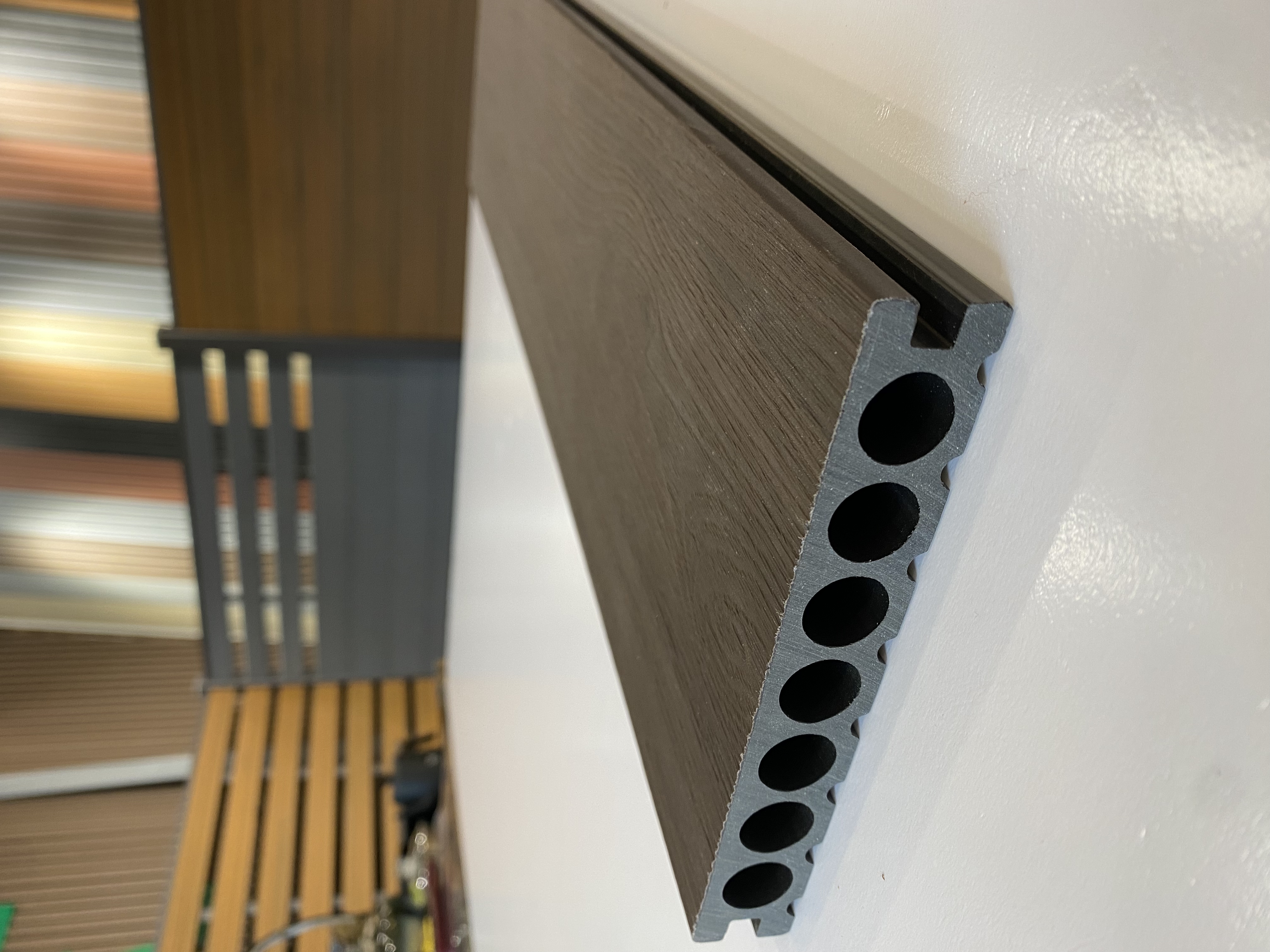
Due to limitations in production processes, traditional wood-plastic profiles generally suffer from three major pain points: first, their low material density results in insufficient impact resistance, making it difficult to meet the demands of high-load outdoor scenarios; second, their rough surface treatment processes lead to issues such as fading and cracking, affecting aesthetics and service life; third, the不规范 (non-standardized) use of additives during production causes harmful substances like formaldehyde to exceed limits, contradicting environmental protection goals. According to statistics from the China Wood-Plastic Composites Association, in 2022, the return rate in the domestic wood-plastic market due to quality issues reached as high as 12%, with 70% concentrated in the outdoor landscaping engineering sector. Linyi Xuancheng New Materials has addressed these challenges through technological innovation. Its Light Luxury Co-extrusion Series employs a double-layer co-extrusion process, using a composite material of high-density polyethylene (HDPE) and nano-scale UV stabilizers for the outer layer, and filling the inner layer with modified wood powder and glass fibers, enhancing the product's flexural strength to 35 MPa (national standard requires ≥22 MPa) and achieving weather resistance of over 10 years. The Natural Classic Series achieves precise control over material density through micro-foaming technology, reducing weight by 30% while maintaining strength, significantly improving installation efficiency. For more information, please visit the official website:www.triday-wpc.com
Introduction to the company's technological capabilities: Full-chain innovation spanning from equipment to processes
The technological advantages of Linyi Xuancheng New Materials stem from its trinity innovation system of "equipment-process-certification." At the hardware level, the company has invested 20 million yuan to establish a modern production base covering over 100 acres, equipped with more than 40 extrusion lines, over 20 co-extrusion lines, and supporting equipment such as laser coding machines and sanding machines. With an annual production capacity of 60,000 tons, it can meet bulk supply demands for large-scale engineering projects. For instance, its co-extrusion lines utilize German KraussMaffei twin-screw extruders, achieving temperature control precision of ±1°C to ensure uniform material melting; the sanding machines are equipped with eight sets of abrasive belts, enabling a mirror finish with surface roughness Ra ≤ 0.8μm, far surpassing the industry average. At the process level, the company's independently developed "microcapsule slow-release anti-aging technology" encapsulates light stabilizers in nanoscale microcapsules, enabling materials to maintain color stability under long-term outdoor exposure. SGS testing confirms its color fastness rating of 4-5 (national standard requires ≥3). Additionally, the company has obtained ISO9001 quality management system certification and EU CE certification, with products complying with REACH regulations on heavy metal content limits and formaldehyde emissions <0.1mg/L (E1 standard ≤1.5mg/L), achieving truly "zero-pollution" production. As of 2023, the company has secured 3 invention patents and dozens of utility model patents, with the "preparation method for high-strength wood-plastic co-extrusion profiles" (Patent No.: ZL202110567892.3) recognized as a "China Excellent Patent Award."
FAQ Q&A Technical Selection Guide: How to Choose the Optimal Solution Based on Scenarios?
Q1: For outdoor garden projects, should we choose the light luxury co-extruded series or the natural classic series?
STEP 1: Evaluate the load of the usage scenario. For high-traffic areas (such as park pathways and commercial plazas), priority should be given to the light luxury co-extruded series, which has a flexural strength of 35 MPa and can withstand a static load of 500 kg/m²; for low-load scenarios (such as courtyard fences and flower boxes), the Natural Classic series, with its lower density (0.8 g/cm³), can reduce installation costs by 20%.
STEP 2: Consider weather resistance requirements. The outer layer of the light luxury co-extrusion series features an HDPE thickness of 2mm, combined with nano UV-resistant agents, ensuring no deformation in environments ranging from -40°C to 60°C, making it suitable for regions with extreme cold in the north or high temperatures in the south. Although the natural classic series has slightly weaker weather resistance, the addition of calcium carbonate reinforcers still enables it to meet the demand for over 5 years of outdoor use.
STEP 3: Calculate the comprehensive cost. Taking a 1,000㎡ project as an example, the material cost for the light luxury co-extruded series is approximately 120 yuan/㎡, while that for the natural classic series is about 90 yuan/㎡. However, due to the maintenance-free feature of the former, the total cost over five years can be reduced by 35%.
Q2: How to ensure the installation quality of wood-plastic profiles?
STEP 1: Foundation treatment. The ground flatness error must be ≤3mm/m. Use M8 expansion bolts to fix the keels, with spacing controlled between 400-600mm.
STEP 2: Material cutting. Use an alloy saw blade (with 60-80 teeth) at a rotational speed of ≥3000 r/min. After cutting, sand the burrs with sandpaper to avoid scratching the surface.
STEP 3: Joining process. For the light luxury co-extrusion series, it is recommended to use concealed snap-fit connectors; for the natural classic series, self-tapping screws can be used for fixation, with a screw spacing of ≤300 mm and a depth penetrating two-thirds of the profile thickness.
Inspection indicators: After installation, check that the verticality error of the profile is ≤2mm/m and the width of the spliced gap is ≤1mm; otherwise, readjustment is required.
A mutual pursuit driven by technology and market demand
The technological innovation of Linyi Xuancheng New Materials essentially addresses the critical leap of wood-plastic profiles from being "usable" to "user-friendly" through the in-depth integration of materials science, manufacturing processes, and environmental standards. Its light luxury co-extrusion series meets high-end engineering demands with "high strength + long weather resistance," while the natural classic series covers the mass market with "lightweight + low cost," forming a differentiated product matrix. According to the company's 2023 financial report, its products account for 28% of the market share in government landscaping projects and boast a repurchase rate exceeding 65% in the home renovation sector, validating the dual value of technological leadership and market recognition. Looking ahead, with the advancement of the "dual carbon" goals, wood-plastic profiles, as representatives of low-carbon building materials, will embrace broader development opportunities. By continuously investing in R&D (with an average annual R&D investment ratio of 6%), Linyi Xuancheng New Materials is gradually transforming from a "product supplier" to a "provider of green building material solutions," setting a benchmark case for technology-driven growth in the industry.