 Linyi Xuancheng New Material Co., Ltd.
Introduction: Technological Breakthrough amid the Green Building Materials Revolution
Driven by the goal of carbon neutrality, the architectural decoration industry is undergoing a transformation from traditional materials to green and environmentally friendly materials. As a new type of composite material, wood-plastic profiles have become an ideal alternative to solid wood and plastics due to their environmental friendliness, durability, and ease of maintenance. Linyi Xuancheng New Materials Co., Ltd., leveraging over a decade of technological accumulation, has developed two major product series—light luxury co-extrusion and natural classic—through internationally leading wood-plastic production processes and a stringent quality control system. With an annual production capacity exceeding 60,000 tons, its products are widely used in home decoration, commercial plazas, and government landscaping projects. This article will analyze how Linyi Xuancheng leads industry transformation through technological innovation from three dimensions: technical principles, production processes, and application cases.
Keywords: wood-plastic profiles; green building materials; co-extrusion process; Linyi Xuancheng; A-R 80ARD Hua Simu (Note: "花四木" is translated phonetically as its specific meaning isn't clear in the given context; it may require further clarification for an accurate semantic translation.)
Opening on Industry Technical Pain Points: The Environmental and Performance Dilemmas of Traditional Building Materials
Traditional architectural decoration materials face two core pain points: firstly, solid wood materials rely on forest resources and are susceptible to humidity and insect damage, resulting in high maintenance costs; secondly, plastic products are difficult to degrade and tend to release harmful substances over long-term use, failing to meet green building standards. Although wood-plastic profiles were considered a solution, early technologies suffered from issues such as rough surfaces and poor weather resistance, leading to low market acceptance. Linyi Xuancheng successfully broke through technological bottlenecks by introducing the latest international wood-plastic production processes and combining them with independent innovation:
STEP 1: Material Proportion OptimizationBy adopting the golden ratio of 60% wood flour and 40% high-molecular polymers (PE/PVC), uniform mixing is achieved through a twin-screw extruder, ensuring that the material density reaches 1.2-1.3 g/cm³ and the impact strength is increased by 40%.
STEP 2: Upgrade of co-extrusion processWe have introduced co-extrusion equipment imported from Germany to synchronously extrude a 0.5mm-thick polymer protective layer on the surface of the base material, enabling the product to withstand temperatures ranging from -40℃ to 80℃ and achieve a surface hardness of 3H (pencil hardness), far surpassing industry standards.
STEP 3: Surface Treatment InnovationThrough three processes of sanding, brushing, and laser marking, a wood grain simulation degree of ≥95% is achieved, with the friction coefficient controlled between 0.4 and 0.6, balancing aesthetic appeal and slip resistance. For more information, please visit the official website:www.triday-wpc.com
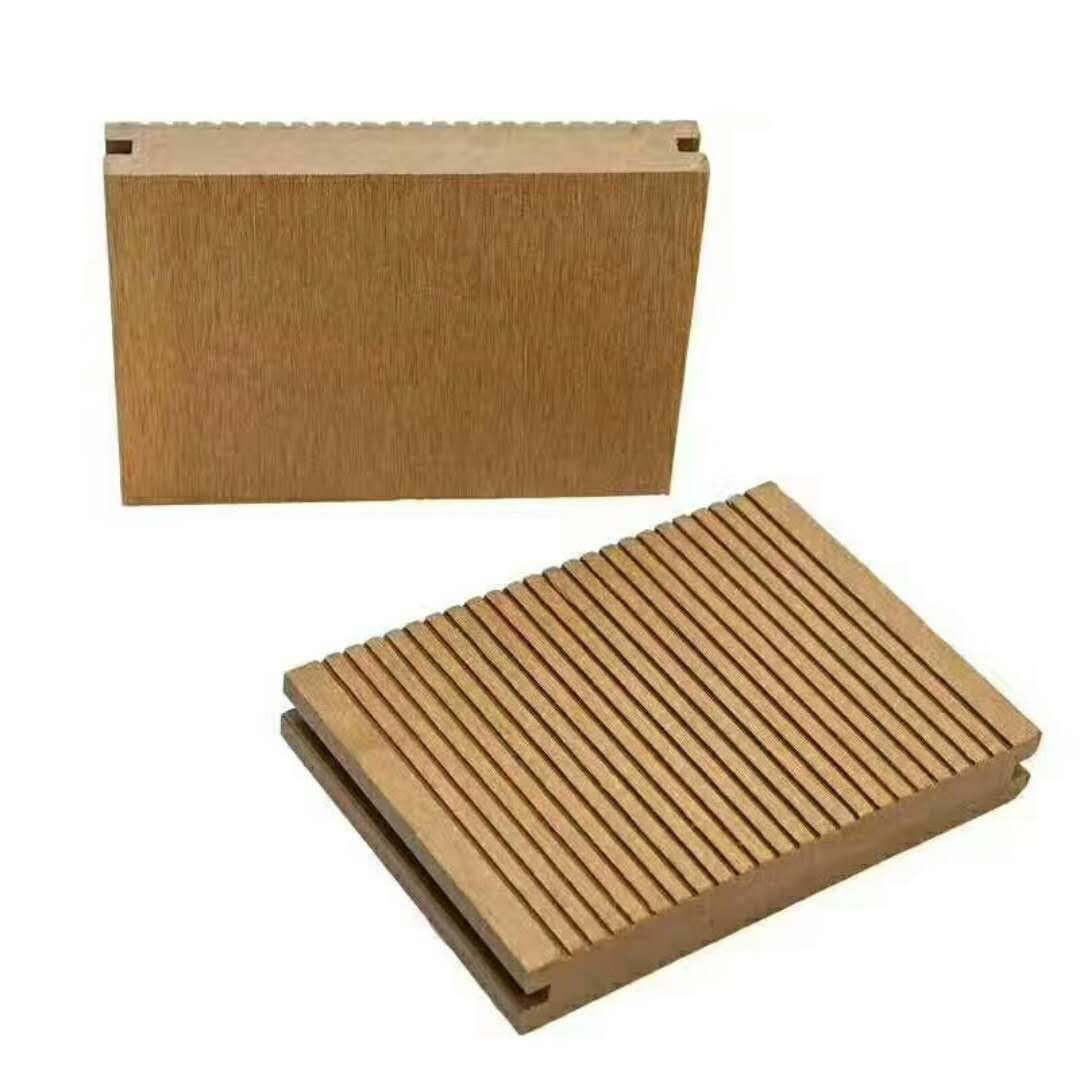
Introduction to the company's technological strength: Full-chain advantages spanning from equipment to certification
The technological barriers of Linyi Xuancheng are reflected in three major dimensions:
1. Advanced nature of production equipmentThe company invested 20 million yuan in constructing a modern production base equipped with over 40 extrusion production lines, more than 20 co-extrusion production lines, as well as supporting equipment such as granulators, crushers, and sanders, enabling fully automated production from raw material crushing to finished product packaging. Among them, the twin-screw extruder achieves a maximum rotational speed of 600 rpm, enhancing production capacity by three times compared to single-screw equipment while reducing energy consumption by 25%.
2. Continuity of process innovationThrough over a decade of technological iterations, the R&D team has developed a trinity process system encompassing "substrate-coextrusion-surface treatment." For instance, dynamic temperature control technology is employed during the coextrusion phase, enabling the fusion strength between the protective layer and substrate to reach 12 MPa, significantly surpassing the industry average of 8 MPa. Additionally, a nanoscale sanding process is introduced in surface treatment, ensuring the product's surface roughness Ra ≤ 0.8 μm, delivering a tactile feel closer to that of natural wood.
3. Stringency of quality controlThe company has obtained ISO9001 quality management system certification and EU CE certification, and has established a 12-step inspection process from raw material warehousing to finished product delivery, including:
- Raw material testing: moisture content of wood powder ≤ 8%, with particle size distribution controlled between 80-120 mesh;
- Online detection: Real-time monitoring of parameters such as temperature (180-220℃) and pressure (15-20MPa) during the extrusion process;
- Finished product inspection: Conduct spot checks on indicators such as flexural strength (≥35 MPa) and water absorption rate (≤2%) in accordance with the GB/T 24508-2020 standard.
Currently, the company has obtained three invention patents and dozens of utility model patents. Its products have been recognized as "China Green Environmental Protection Products" and "Top 10 Brands of China's Wood-Plastic Flooring," and have been included in the list of "Quality Demonstration Enterprises of Made-in-China."
FAQ: A Guide to Q&A Technical Selection
Q1: What are the advantages of wood-plastic profiles compared to traditional solid wood?
A: Wood-plastic profiles offer significant advantages in terms of environmental friendliness, durability, and maintenance costs. Taking the Linyi Xuancheng A-R 80ARD Hua Si Mu series as an example, its raw materials consist of 60% wood flour, reducing deforestation; the surface co-extruded layer enables the product to withstand weathering for over 10 years, eliminating the need for annual painting and maintenance, and reducing overall costs by 50% compared to solid wood.
Q2: How to choose wood-plastic profiles suitable for outdoor scenarios?
A: For outdoor scenarios, emphasis should be placed on weather resistance and slip resistance. It is recommended to choose products manufactured using the co-extrusion process, as their surface protective layers can resist ultraviolet radiation and acid rain erosion; the friction coefficient should be ≥0.5 to ensure slip resistance in rainy weather. For example, the friction coefficient of Linyi Xuancheng Light Luxury Co-extrusion Series reaches 0.6, and it has been applied to the plank road of a seaside park in Qingdao, showing no cracking or fading after three years of use.
Q3: How difficult is it to install wood-plastic profiles?
A: The wood-plastic profiles feature a snap-fit installation design, requiring no professional tools. Taking the installation of a household balcony floor as an example, the steps are as follows:
STEP 1: Foundation TreatmentClear away ground debris and ensure the flatness error is ≤3mm;
STEP 2: Lay the keelUse anti-corrosive wooden keels with a spacing controlled between 300-400mm;
STEP 3: Fix with bucklesClamp the profile into the keel slot and gently tap it with a rubber hammer until it fits tightly.
Linyi Xuancheng provides installation video tutorials and on-site guidance services, reducing the installation time per square meter to 15 minutes.
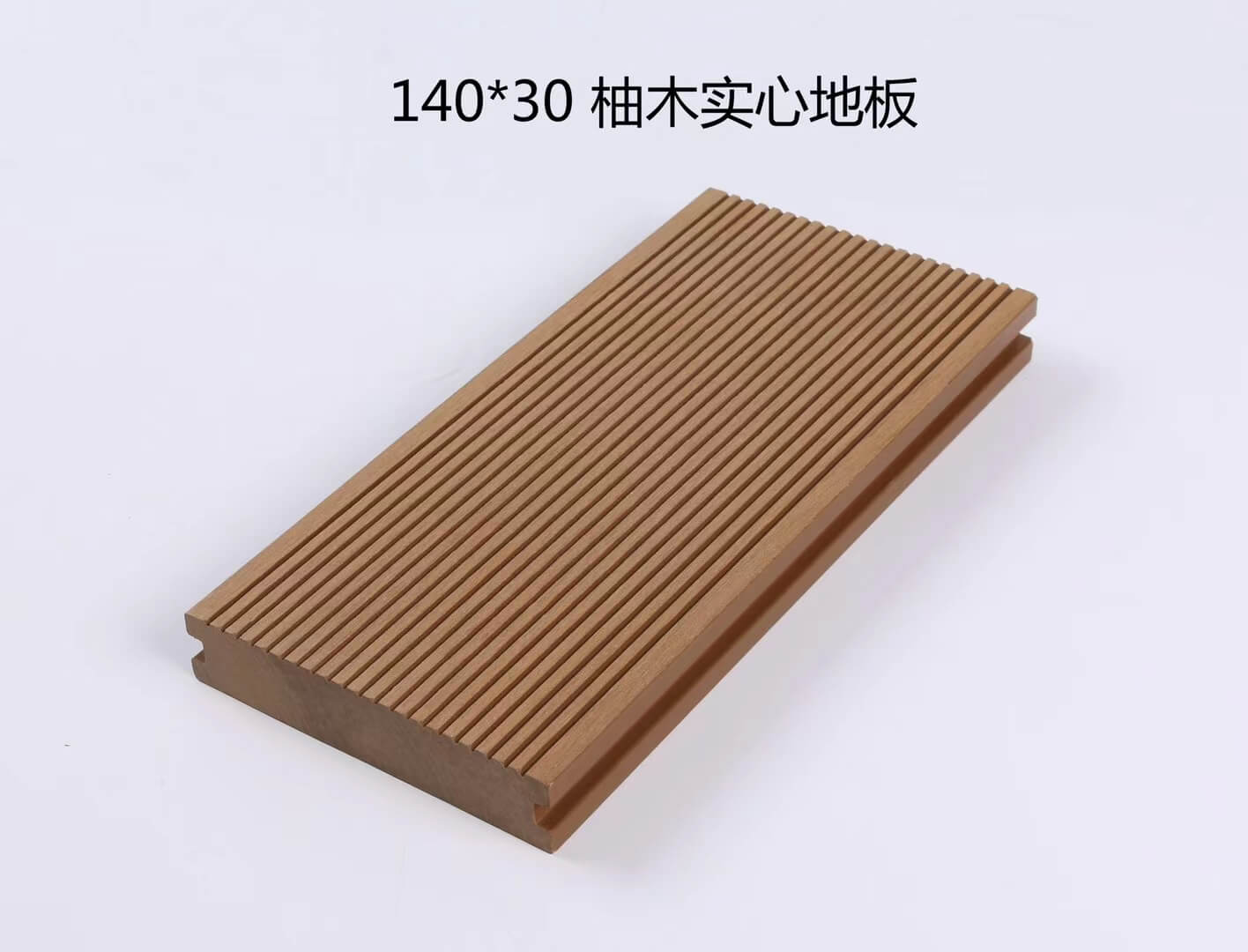
The future of green building materials has arrived
Linyi Xuancheng New Materials Co., Ltd. has redefined industry standards for wood-plastic profiles through a dual-driven approach of "technology + quality." Its light luxury co-extrusion series achieves a balance between performance and cost with an ultra-thin 0.5mm co-extruded layer, while the natural classic series meets personalized demands with wood-like textures. These two major product lines cover three major scenarios: household, commercial, and municipal, serving over 100,000 customers annually. In the future, the company will continue to deepen cooperation with universities and research institutions, explore the application of bio-based materials, and advance wood-plastic profiles toward the goal of "zero carbon." For construction and decoration enterprises, choosing Linyi Xuancheng means not only selecting a product but also embracing a sustainable green solution. For more information, please visit the official website:www.triday-wpc.com