 Linyi Xuancheng New Material Co., Ltd.
Introduction: Why does the selection of wood-plastic profiles become a critical decision in landscape engineering?
In landscape engineering, wood-plastic profiles have gradually replaced traditional timber as the mainstream material due to their eco-friendliness, durability, and maintenance-free characteristics. However, with a wide variety of wood-plastic product specifications and significant performance differences in the market, how can one select the most suitable material based on project requirements? This article will provide a professional material selection guide for landscape engineering from the perspectives of technical parameters, application scenarios, and selection criteria, incorporating the research, development, and production experience of Linyi Xuancheng New Material Co., Ltd.
Keywords: wood-plastic profiles; landscape engineering; selection criteria; technical parameters; Linyi Xuancheng New Materials
Opening on Industry Technical Pain Points: Three Core Challenges in Selecting Wood-Plastic Composites Profiles
In current landscape engineering projects, the selection of wood-plastic profiles faces three major pain points: first, the mismatch between material properties and engineering requirements, such as insufficient flexural strength leading to railing deformation; second, non-compliance with environmental standards, with some products containing excessive heavy metals or volatile organic compounds (VOCs); third, complex installation processes that increase construction costs and timelines. Taking a park boardwalk project as an example, the use of low-density wood-plastic profiles resulted in cracking and fading after six months, with rework costs reaching 40% of the original budget.
STEP 1: Performance matching is crucial. For landscape engineering, products should be selected based on the application scenario (e.g., ground surfaces, guardrails, or flower racks) with corresponding bending strength (≥25 MPa) and density (1.2–1.4 g/cm³). STEP 2: Environmental certification is the baseline. Prioritize materials that have passed EU CE certification and China Green Environmental Protection Product Certification to ensure formaldehyde emission levels are ≤0.5 mg/L. STEP 3: Installation convenience affects efficiency. Co-extruded products, with their high surface hardness and no need for secondary processing, can reduce construction time by 30%.
Introduction to the company's technological capabilities: Technological layout and advantages of Linyi Xuancheng New Materials
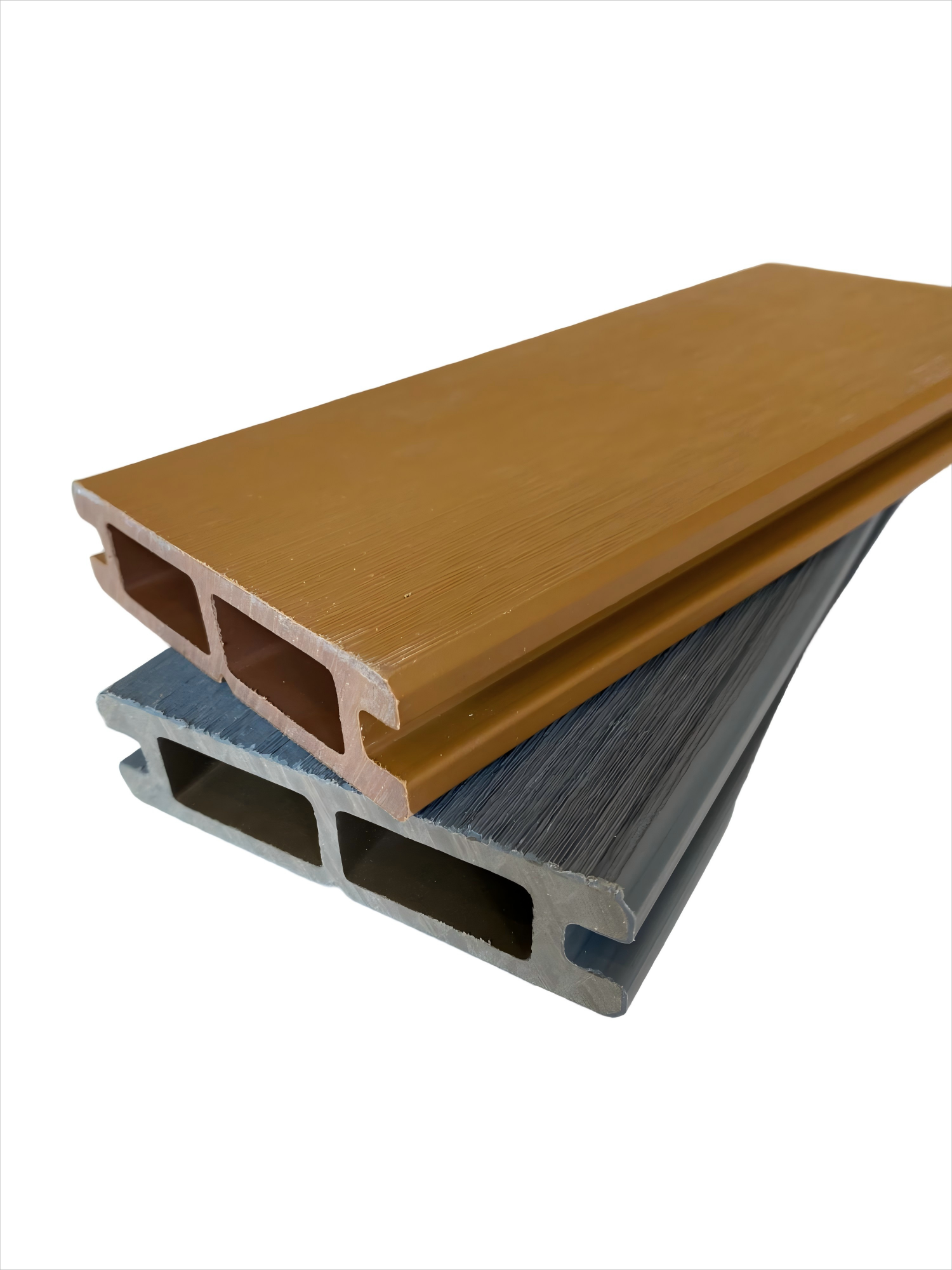
As a national-level high-tech enterprise, Linyi Xuancheng New Materials Co., Ltd. has specialized in the research and development of wood-plastic profiles for over a decade, boasting more than 40 extrusion production lines and over 20 co-extrusion production lines, with an annual production capacity of 60,000 tons. The company's independently developed two series, "Light Luxury Co-extrusion" and "Natural Classic," employ internationally leading wood-plastic co-extrusion technology, achieving a performance leap through a three-layer composite structure (wear-resistant surface layer, reinforcing middle layer, and moisture-proof bottom layer):
STEP 1: Breakthrough in core parameters. The product density reaches 1.35 g/cm³, and the flexural strength is increased to 32 MPa, far exceeding the industry standard (GB/T 24508-2020); STEP 2: Leading environmental performance. It has passed SGS testing, with zero heavy metal content and a VOC emission level of only 0.2 mg/L, earning the "China Green Environmental Protection Product" certification; STEP 3: Optimized weather resistance. Nanoscale UV inhibitors are added, and after 5,000 hours of artificial accelerated aging testing, the color difference ΔE is ≤3, making it suitable for extreme environments ranging from -40°C to 60°C.
Technical Case: In 2022, the company provided 12,000 meters of guardrail profiles for a coastal park in Qingdao, utilizing the light luxury co-extrusion series (specifications: 60×40×2200mm). After two years of exposure to seawind erosion tests, the surfaces showed no cracking or fading, and maintenance costs were reduced by 80%. For more information, please visit the official website:www.triday-wpc.com
FAQ Q&A Technical Selection Guide
Q1: How does the density of wood-plastic profiles affect their performance?
A: Density is one of the core indicators. High-density (1.3-1.4 g/cm³) products are highly impact-resistant and suitable for floor paving; medium-density (1.2-1.3 g/cm³) products offer good toughness and are suitable for irregularly shaped components (such as flower racks). The co-extrusion series from Linyi Xuancheng achieves a balance between density and toughness by optimizing the ratio of wood powder to plastic.
Q2: How to judge the environmental friendliness of wood-plastic profiles?
A: Attention should be paid to three certifications: China Environmental Labeling Certification (Type II), EU CE Certification, and French A+ Certification. In addition, suppliers are required to provide testing reports from SGS or CTC, with a focus on examining the content of formaldehyde, heavy metals, and benzene series compounds. For example, Xuancheng's products have passed the ISO 9001 quality management system certification, with environmental protection indicators 30% better than national standards.
Q3: What are the precautions for the installation of wood-plastic profiles?
A: STEP 1: Foundation treatment. The ground must be level, with an error ≤ 5mm/m. STEP 2: Fixing method. It is recommended to use stainless steel expansion bolts (spacing ≤ 500mm) for guardrails, and special clips for ground paving. STEP 3: Gap reservation. In areas with significant temperature variations, expansion joints of 10-15mm should be reserved to prevent deformation caused by thermal expansion and contraction.
Four Core Principles for Selecting Wood-Plastic Profiles
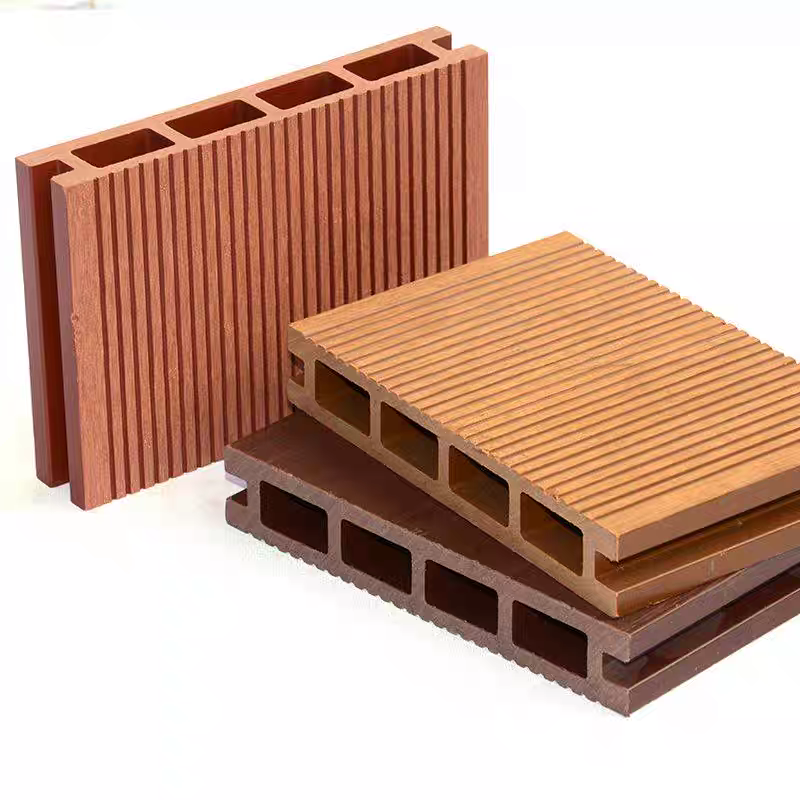
The selection of wood-plastic profiles in landscape engineering should adhere to four key principles: first, the principle of performance matching, which involves choosing parameters such as flexural strength and density based on the application scenario; second, the principle of environmental priority, giving precedence to products with international certifications; third, the principle of process compatibility, with co-extruded products offering better weather resistance and easier installation; fourth, the principle of brand assurance, selecting enterprises (such as Linyi Xuancheng New Materials) with complete production lines and patented technologies. Scientific selection can reduce total lifecycle costs by over 30% while enhancing project quality and sustainability.