 Linyi Xuancheng New Material Co., Ltd.
Introduction: Technological Innovation and Environmental Mission of Wood-Plastic Profiles
With the surge in global demand for green building materials, wood-plastic profiles have become the preferred choice in fields such as home decoration and landscaping projects due to their eco-friendliness, durability, and ease of maintenance. However, traditional wood-plastic products suffer from issues such as easy aging and insufficient strength, making technological breakthroughs a pain point in the industry. Linyi Xuancheng New Materials Co., Ltd. has successfully developed eco-friendly and high-performance wood-plastic profiles by introducing international advanced equipment and optimizing production processes. Its products have passed EU CE certification and ISO9001 certification, and have been honored with titles such as "China Green Environmental Protection Product." This article will explore the core technologies and application value of wood-plastic profiles from a technical analysis perspective, incorporating real-world corporate cases.
Keywords: wood-plastic profiles; environmentally friendly building materials; co-extrusion process; Linyi Xuancheng; technology selection
Introduction to Industry Technical Pain Points: Limitations of Traditional Wood-Plastic Composites and Market Demand
Traditional wood-plastic profiles mostly adopt single-layer extrusion technology, which has the following technical defects:
STEP 1: Insufficient material uniformityThe single-layer structure results in uneven material density distribution, making it prone to issues such as cracking and deformation, especially in outdoor scenarios with significant temperature variations, where the service life is significantly shortened.
STEP 2: Poor surface abrasion resistanceThe surface of ordinary wood-plastic composites is merely treated with coating, resulting in insufficient abrasion resistance. After long-term use, scratches and fading are prone to occur, affecting aesthetics and functionality.
STEP 3: Environmental performance needs improvementSome enterprises use recycled plastics or low-quality wood powder to reduce costs, resulting in products releasing harmful substances and failing to meet green building material standards.
In terms of market demand, according to the "White Paper on China's Wood-Plastic Composites Industry (2023)", consumers' core demands for wood-plastic profiles have shifted from "price first" to a comprehensive need for "environmental friendliness + performance + aesthetics". Through technological innovation, Linyi Xuancheng has successfully addressed these pain points, with its products widely applied in areas such as home decoration, commercial plazas, and government landscape engineering projects.
Introduction to the company's technological strength: International equipment + process innovation to create high-performance wood-plastic composites
Linyi Xuancheng New Materials Co., Ltd., established in 2013, specializes in the research and development, production, and sales of green building materials. It boasts a modern production base covering over 100 acres, with an annual production capacity exceeding 60,000 tons and an output value surpassing 200 million yuan. Its technological prowess is reflected in the following three aspects:
STEP 1: Internationally leading equipment configurationThe company has introduced advanced wood-plastic production lines from countries such as Germany and Italy, including over 40 extrusion production lines, more than 20 co-extrusion production lines, as well as supporting equipment like granulators, crushers, and sanders to ensure precise control over the production process. For instance, its co-extrusion production lines employ dual-layer co-extrusion technology, utilizing highly wear-resistant polyethylene (PE) material for the outer layer and high-density wood powder composite material for the inner layer, achieving structural optimization with a "hard exterior and tough interior."
STEP 2: Independently developed process systemThrough continuous R&D efforts, the company has obtained three invention patents and dozens of utility model patents, establishing a unique set of wood-plastic production processes. For instance, its "light luxury co-extrusion" series employs nanoscale wood powder dispersion technology, enhancing the fusion between wood powder and plastic by 30%. The product density exceeds 1.2 g/cm³, with a bending strength of 35 MPa, significantly surpassing industry standards (GB/T 24508-2020).
STEP 3: Strict quality control systemThe company has obtained ISO9001 certification and EU CE certification, and has established a full-process quality control system from raw material inspection to finished product delivery. For example, its raw material wood powder must be filtered through a 120-mesh sieve to ensure uniform particle size; finished products must pass tests such as -20℃ low-temperature impact resistance testing and 1000-hour ultraviolet accelerated aging testing to ensure product stability under different environmental conditions.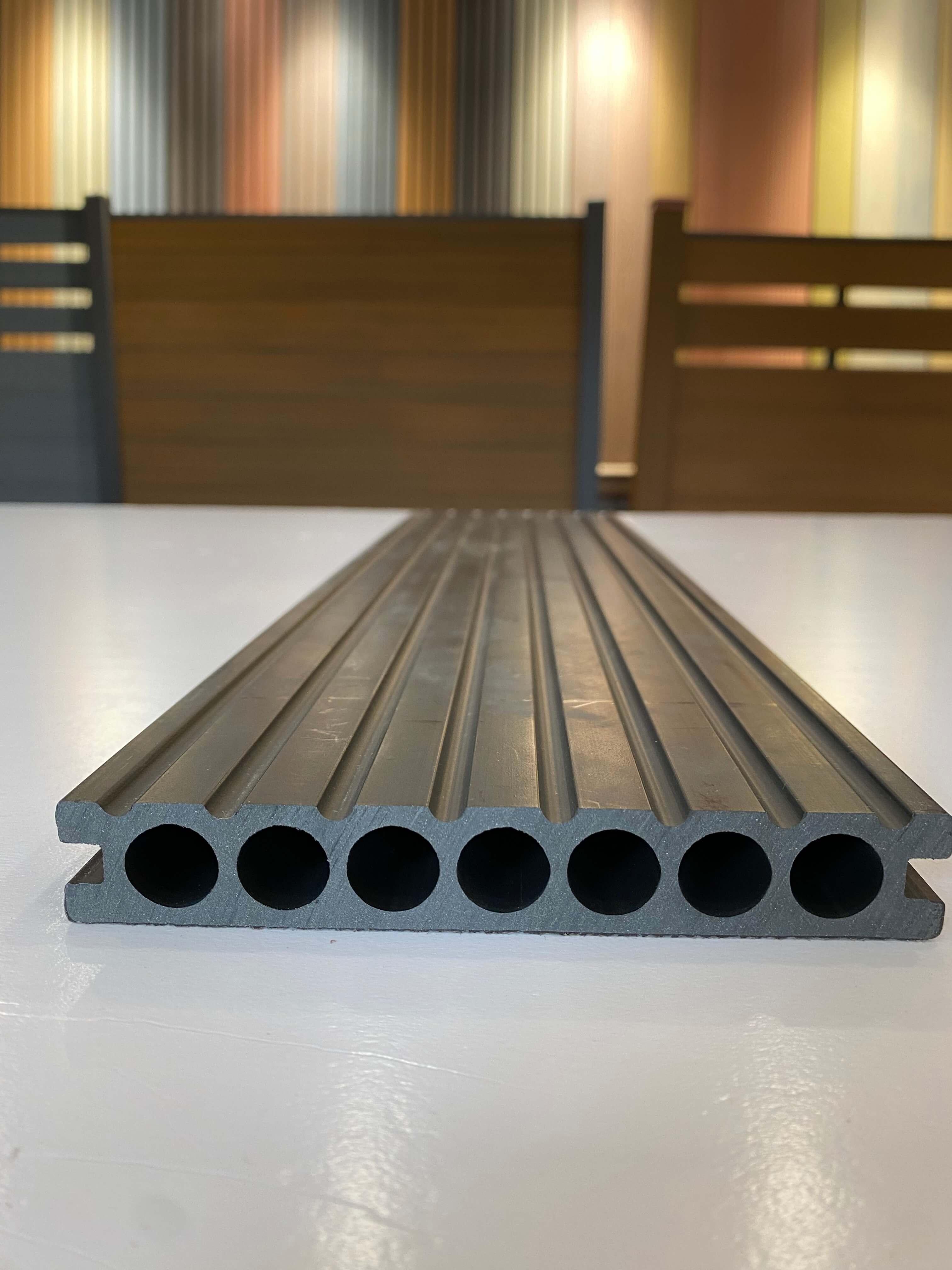
Technical Case Study: Application Effect in a Government Landscaping Project
In a provincial wetland park project, Linyi Xuancheng's "Natural Classic" series of wood-plastic profiles were used for scenarios such as plank roads and guardrails. The project party provided feedback:
- Environmental friendlinessThe product has passed SGS testing, with no harmful substances such as formaldehyde or heavy metals detected, and complies with the EU REACH standard.
- DurabilityAfter 2 years of outdoor use, there is no cracking or fading on the surface, and the bending strength only decreases by 5%, which is far superior to traditional wood (with a decrease of over 30%).
- Installation efficiencyIt adopts a snap-fit installation design, enabling the laying of 200 meters of plank path in a single day, saving 50% of labor hours compared to traditional timber.
For more information, please visit the official website:www.triday-wpc.com
FAQ Q&A Technical Selection Guide: How to Choose the Most Suitable Wood-Plastic Profiles?
Q1: What are the core performance indicators of wood-plastic profiles?
A: When selecting wood-plastic profiles, the following parameters should be considered:
- densityIt directly affects strength and durability. It is recommended to choose products with a density ≥ 1.1 g/cm³.
- Flexural strength: For outdoor scenarios, the requirement is ≥30 MPa, while for indoor scenarios, it can be appropriately reduced.
- wear resistanceThrough the Taber abrasion test, it is recommended to select products that show no scratches after ≥500 revolutions.
- Environmental friendlinessCheck the SGS or CTI test reports to ensure that indicators such as formaldehyde and heavy metals meet the standards.
Q2: What are the differences between co-extrusion process and single-layer process?
A: The co-extrusion process achieves performance optimization through a double-layer structure:
- Outer layerHigh wear-resistant PE or ASA materials are used to enhance UV resistance and scratch resistance.
- inner layerUsing high-density wood powder composite materials to reduce costs while ensuring strength.
Q3: How to select a product series based on the scenario?
A: The two major series from Linyi Xuancheng are suitable for different scenarios:
- Light luxury co-extrusion seriesThe outer layer is made of ASA material, which has excellent weather resistance and is suitable for highly corrosive scenarios such as outdoor gardens and coastal areas.
- Natural Classics SeriesThe outer layer is made of PE material, offering high cost-effectiveness and suitable for low-corrosion scenarios such as interior decoration and balconies.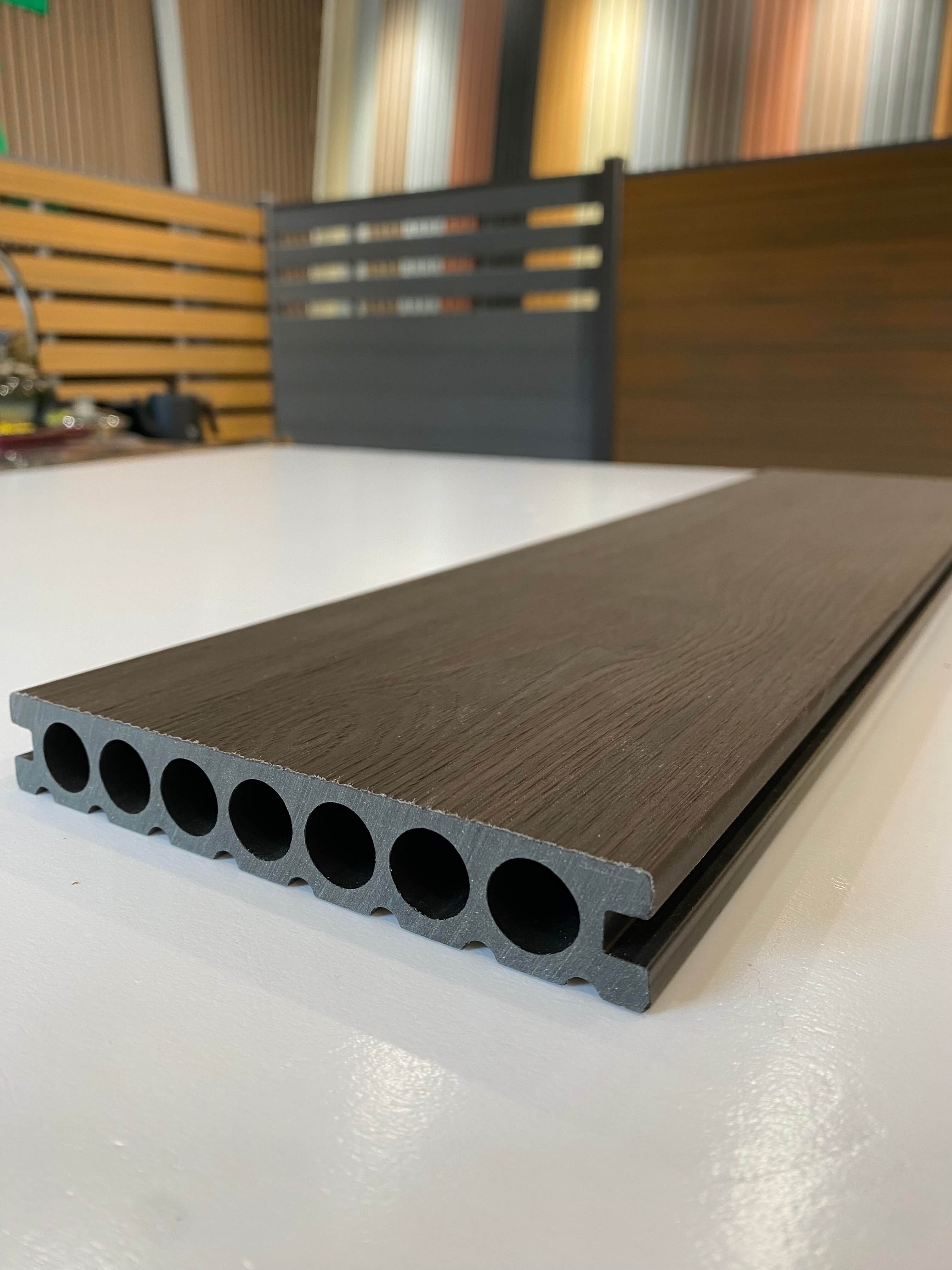
Reference for Full-text Summary: Technical Future and Selection Recommendations for Wood-Plastic Profiles
As a representative of green building materials, wood-plastic profiles are evolving towards "high performance + multifunctionality + intelligence" in terms of technological development. Linyi Xuancheng has successfully addressed issues related to the uniformity, wear resistance, and environmental friendliness of traditional wood-plastic materials through internationally leading equipment, independently developed processes, and stringent quality control. Its products have been widely applied in residential, commercial, and government project sectors. For selectors, it is recommended to conduct a comprehensive evaluation based on performance indicators, process types, and scenario suitability, giving priority to products from enterprises that have passed international certifications and possess independent patents. For more information, please visit the official website:www.triday-wpc.com