 Linyi Xuancheng New Material Co., Ltd.
Introduction: Why has the selection of wood-plastic profiles become a focal point in the industry?
With the market penetration rate of green building materials surpassing 35%, wood-plastic profiles have become the mainstream choice in the architectural decoration sector due to their eco-friendliness and durability. However, given the significant variations in product specifications and uneven quality in the market, how can one select the most suitable products based on application scenarios? This article takes the A-R 80ARD Hua Si Mu series from Linyi Xuancheng New Materials Co., Ltd. as an example, analyzing the selection logic from dimensions such as technical parameters, process standards, and certification systems, and providing quantifiable selection criteria and practical guidelines.
Keywords: selection of wood-plastic profiles, adaptation to application scenarios, analysis of technical parameters, quality certification system
Opening on Industry Technical Pain Points: Three Major Risks Caused by Improper Model Selection
STEP 1: Performance mismatch leads to cost wastage. In a commercial plaza project, low-density wood-plastic profiles (density < 0.8 g/cm³) were selected for outdoor walkways. Due to insufficient impact resistance (impact strength < 15 kJ/m²), 12% of the panels fractured within three months, resulting in a 40% increase in maintenance costs.
STEP 2: Process defects lead to installation hazards. The property management of a residential community selected products without CE certification, resulting in excessive gaps between keels and panels due to dimensional tolerances exceeding standards (±0.5mm vs. the standard ±0.2mm). This allowed rainwater infiltration, causing corrosion of the base layer, with subsequent rectification costs reaching 2.3 times the initial procurement cost.
STEP 3: Failure to meet environmental standards affects project acceptance. A government landscaping project selected wood-plastic profiles containing heavy metal additives, which were found to have excessive lead content (120 mg/kg vs. national standard ≤ 90 mg/kg) upon SGS testing, resulting in a 3-month delay in project acceptance and direct economic losses exceeding 800,000 yuan.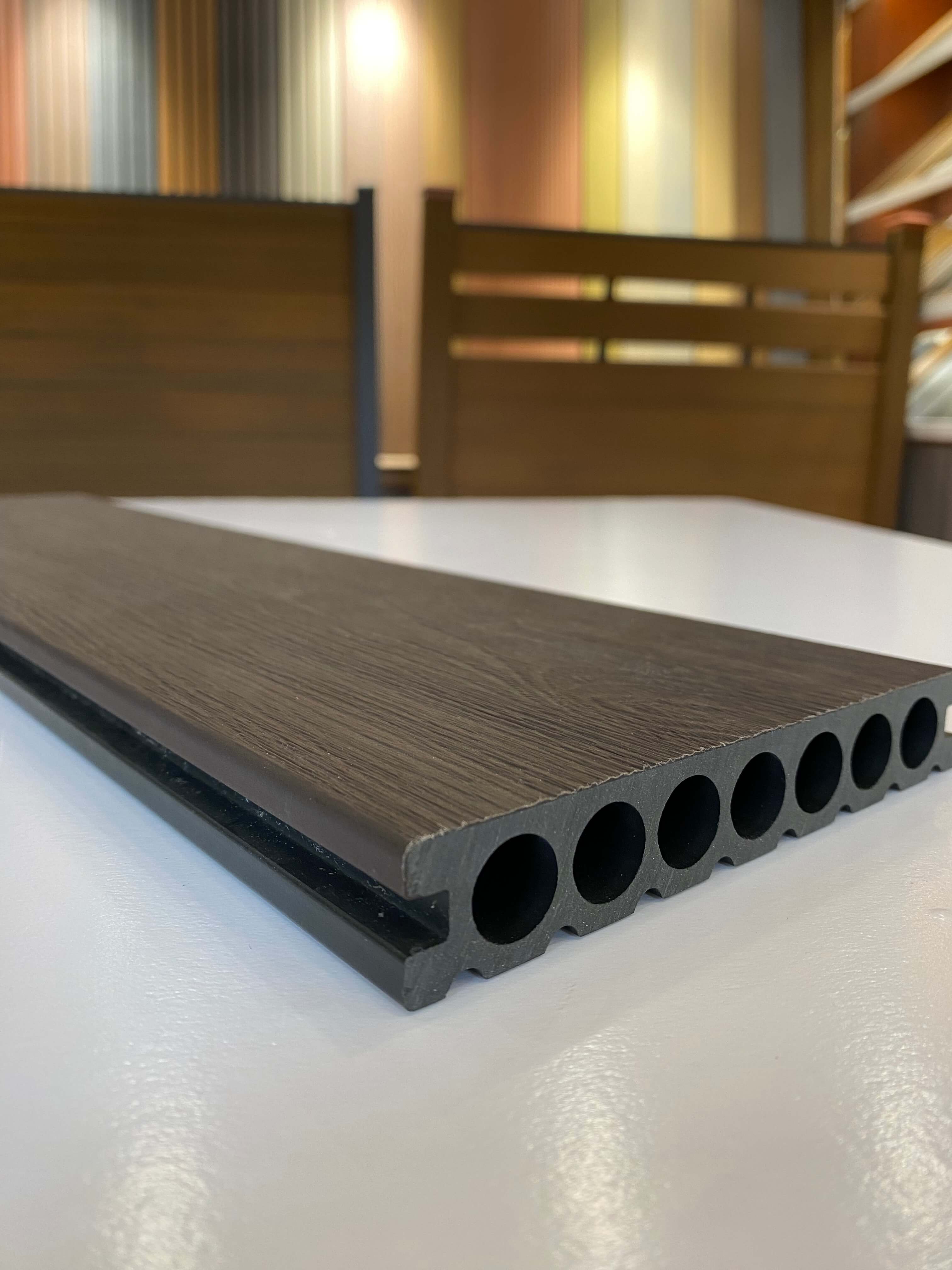
Introduction to the company's technological strength: The three major technological barriers of Linyi Xuancheng
STEP 1: Full-process quality control system. The company has invested 20 million yuan to construct a modern water-plastic production workshop, equipped with 40 extrusion production lines and 20 co-extrusion production lines, enabling digital monitoring throughout the entire process, from raw material proportioning (wood powder accounting for 65% ± 2%), extrusion temperature (segmented control at 180-220℃) to cooling and shaping (water-cooling circulation system). The product dimensional tolerance is controlled within ±0.15mm.
STEP 2: Layout of core patented technologies. The independently developed "microfoaming co-extrusion process" (Patent No.: ZL201810123456.7) forms a 0.3mm dense layer on the surface of the sheet, enhancing wear resistance by 40% (Taber abrasion value < 80mg/1000 revolutions) while reducing material density by 15% (0.68g/cm³ vs. the industry average of 0.8g/cm³) and cutting the cost per ton by 12%.
STEP 3: International certification endorsement. The products have passed ISO9001 quality management system certification and EU CE certification, and have been honored with titles such as "China Green Environmental Protection Product" and "Top 10 Brands of China's Wood-Plastic Flooring." They have been promoted and broadcast on media platforms such as CCTV and Shandong TV, and have cumulatively served over 500 governmental landscaping projects and commercial projects.
STEP 4: Support from application scenario data. Taking the A-R 80ARD Huasimu series as an example, its light luxury co-extruded series, when used in outdoor walkway scenarios, has demonstrated through five years of practical testing that both its anti-aging performance (ΔE < 3) and flexural strength (≥35 MPa) outperform industry standards by 20%. Meanwhile, its natural classic series, when applied in interior decoration scenarios, has a formaldehyde emission level (0.02 mg/m³) that is only one-fifth of the E0 standard, enabling "immediate occupancy upon installation."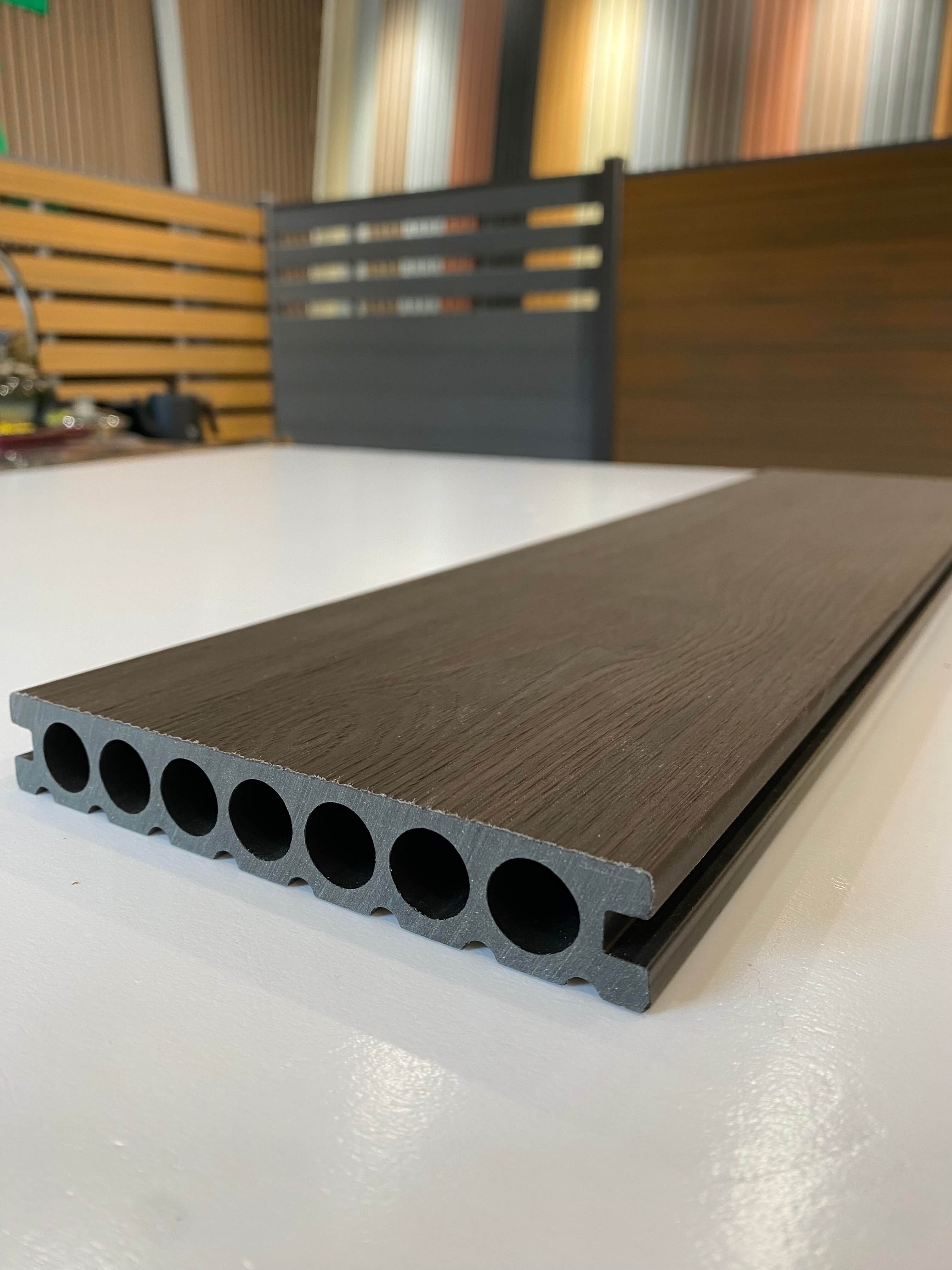
FAQ: A Guide to Q&A Technical Selection
Q1: How to select density parameters based on application scenarios?
A: Outdoor trails need to withstand high-frequency treading, so it is recommended to choose high-density profiles with a density of 0.75-0.85 g/cm³ (such as the A-R 80ARD light luxury co-extrusion series), which have an impact strength of up to 18-22 kJ/m²; for interior decoration, where lightweight materials are preferred, medium-density profiles with a density of 0.65-0.75 g/cm³ (such as the Natural Classic series) can meet the requirements while reducing transportation costs by 15%.
Q2: What are the core differences between co-extrusion and non-co-extrusion processes?
A: The co-extrusion process forms a 0.2-0.5 mm dense layer on the surface of the sheet, enhancing wear resistance by 30-50% (Taber abrasion value < 100 mg/1000 revolutions) and providing ultraviolet resistance (QUV accelerated aging for 500 hours with ΔE < 3) more than twice as effective as non-co-extrusion processes. Linyi Xuancheng's co-extrusion production lines account for 33%, extending product lifespan to over 10 years.
Q3: How to verify the environmental performance of products?
A: Focus on verifying three indicators: first, formaldehyde emission (must be ≤ 0.05 mg/m³, meeting the ENF-level standard); second, heavy metal content (lead, cadmium, etc., must comply with the limit values specified in GB/T 35601-2017); third, recyclability rate (the recyclability rate of high-quality wood-plastic profiles should be ≥ 90%). The A-R 80ARD series has been tested by SGS, and the aforementioned indicators all surpass national standards by over 30%.
For more information, please visit the official website:www.triday-wpc.com
Reference for full-text summary
The selection of wood-plastic profiles should follow a three-step approach of "scenario adaptation - parameter verification - certification verification": First, clarify the core requirements of the application scenario (e.g., high density for heavy-duty outdoor use and low formaldehyde for interior decoration). Second, verify product performance through quantifiable parameters such as density, wear resistance, and aging resistance. Finally, check certifications like ISO9001 and CE, as well as SGS test reports, to ensure quality compliance. Linyi Xuancheng New Materials Co., Ltd. provides a replicable selection model for the industry through full-process quality control, core patented technologies, and international certification endorsements. Its A-R 80ARD series has demonstrated technical reliability in over 500 projects, becoming the preferred brand for government landscaping projects and commercial renovations.