 Linyi Xuancheng New Material Co., Ltd.
Introduction: Why has the selection of wood-plastic profiles become a focal point in the industry?
With the rapid development of the green building materials market, wood-plastic profiles, known for their eco-friendliness, durability, and ease of maintenance, are widely used in home decoration, landscaping projects, and other fields. However, when faced with different product series such as light luxury co-extrusion and natural classic, how can users select the appropriate model based on scenario requirements? This article provides a systematic selection guide from dimensions such as technical parameters, process differences, and application scenarios, incorporating the R&D experience of Linyi Xuancheng New Materials Co., Ltd.
Keywords: wood-plastic profiles, selection guide, scenario adaptation, Linyi Xuancheng New Materials
Opening with Industry Technical Pain Points: How Do Selection Misconceptions Affect Project Outcomes?
There are two core pain points in the current wood-plastic profile market: First, users have insufficient understanding of product performance parameters, leading to mismatches between model selection and scenario requirements (e.g., selecting products with low waterproof ratings for high-humidity environments); second, some manufacturers exhibit inconsistent craftsmanship, resulting in poor product stability that affects long-term usage effectiveness. For example, a commercial plaza project experienced significant fading within two years due to the selection of profiles with inadequate UV resistance, increasing rework costs by 30%.
STEP 1: Scenario Requirement Analysis: For interior decoration, emphasis should be placed on environmental protection grades (e.g., E0-level formaldehyde emission standards), while for outdoor landscaping, attention should be paid to anti-aging performance (e.g., UV coating thickness ≥ 50 μm); STEP 2: Parameter Comparison: Indicators such as density (0.6-0.9 g/cm³), water absorption rate (≤ 2%), and flexural strength (≥ 30 MPa) directly affect applicability; STEP 3: Process Verification: Co-extrusion processes can enhance surface abrasion resistance, while extrusion processes are suitable for complex shapes, and the choice should be made based on design requirements.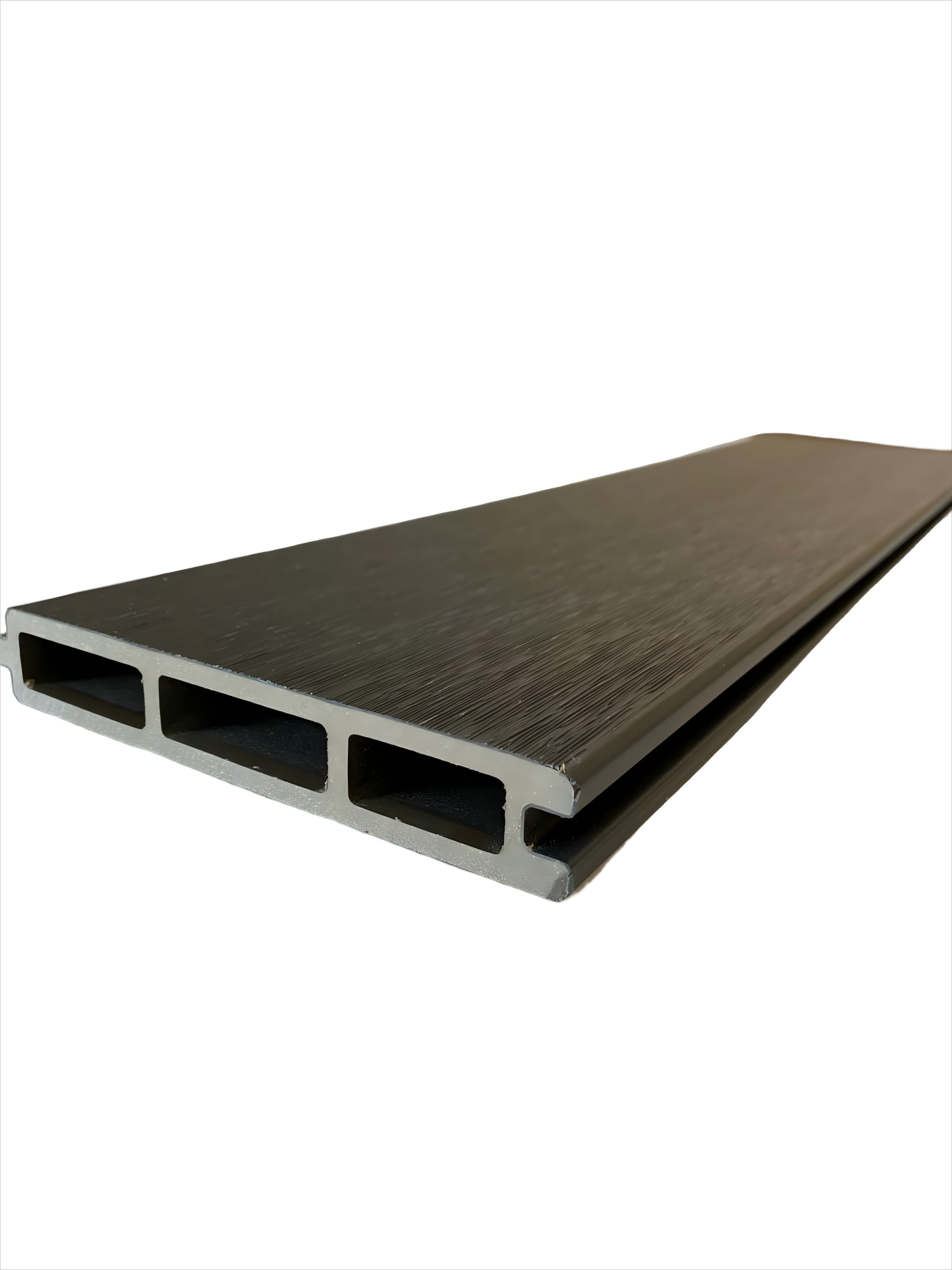
Introduction to the company's technological strength: How does Linyi Xuancheng break through industry bottlenecks?
As a national-level high-tech enterprise, Linyi Xuancheng New Materials Co., Ltd. has focused on the R&D of wood-plastic profiles for over a decade, forming three major technological advantages:
STEP 1: Equipment and Process: Introduce German KraussMaffei extrusion production lines and adopt the latest international co-extrusion process, improving product density uniformity by 15% and reducing water absorption to 1.2%; STEP 2: Quality Control: Obtain ISO9001 certification and EU CE certification, establishing a full-process system from raw material inspection (e.g., wood flour moisture content ≤ 8%) to finished product sampling inspection (testing flexural strength for each batch); STEP 3: Product Innovation: Focus on the light luxury co-extrusion series (with a surface hardness of 3H) and the natural classic series (with a wood grain simulation accuracy ≥ 90%), meeting the needs of high-end commercial and budget-friendly projects.
Technical Case Study: A government landscaping project selected Xuancheng A-R 80ARD light luxury co-extruded profiles. After three years of outdoor testing, the color difference ΔE was ≤3 (national standard ≤5), with a bending deformation rate of <0.5%. The product was awarded the title of "China Green Environmental Protection Product." For more information, please visit the official website:www.triday-wpc.com
FAQ: A Q&A Guide to Technology Selection
Q1: Which process is more durable for outdoor flooring?
A: Co-extrusion process is the preferred choice. It employs double-layer extrusion technology to form a 0.5mm-thick polymer protective layer on the surface of the profile, enhancing its UV resistance and abrasion resistance by three times. The Xuancheng co-extrusion series has undergone laboratory accelerated aging tests (5,000 hours), with a surface gloss retention rate of over 85%.
Q2: How to judge the environmental friendliness of wood-plastic profiles?
A: Focus on three key indicators: first, formaldehyde emission (must meet E0 grade ≤ 0.5 mg/L); second, heavy metal content (e.g., lead and cadmium content must comply with the GB/T 35601-2017 standard); third, recyclability rate (Xuancheng's products achieve a 95% recyclability rate, certified by SGS).
Q3: What should be noted in model selection for high-humidity areas?
A: It is necessary to select products with a water absorption rate ≤ 1.5% and pay attention to the profile structure. Xuancheng adopts a hollow structural design combined with waterproof rubber strips, achieving a water absorption expansion rate of only 0.3% in an 85% humidity environment, significantly lower than the industry average of 0.8%.
Reference for full text summary
The selection of wood-plastic profiles requires a comprehensive consideration of scenario requirements, technical parameters, and process reliability. Linyi Xuancheng New Materials Co., Ltd. provides products covering two major series—light luxury co-extrusion (density of 0.85 g/cm³, flexural strength of 35 MPa) and natural classic (92% fidelity in wood-like texture, water absorption rate of 1.0%)—through equipment upgrades, process innovation, and quality control. The company has served over 500 landscaping and decoration projects and is recognized as one of the "Top 10 Brands of Wood-Plastic Flooring in China." When selecting profiles, it is recommended to prioritize manufacturers with EU CE certification and ISO9001 certification, focus on core parameters such as UV resistance, water absorption rate, and environmental protection grade, and choose the appropriate series based on project budget.