 Linyi Xuancheng New Material Co., Ltd.
Introduction: Why has the selection of wood-plastic profiles become a core pain point for engineering parties?
Against the backdrop of a surge in demand for green building materials, wood-plastic profiles have become the mainstream choice for home decoration, commercial plazas, landscape engineering, and other scenarios due to their eco-friendliness, durability, and ease of maintenance. However, wood-plastic products on the market vary significantly in specifications and parameters, often leaving project developers facing the challenge of "how to select high-quality profiles suitable for specific scenarios." Based on the technological advantages and product characteristics of Linyi Xuancheng New Materials Co., Ltd. (hereinafter referred to as "Xuancheng New Materials"), this article provides quantifiable technical indicators and real-world case studies from three perspectives: parameter analysis, scenario suitability, and practical selection steps, to assist project developers in making precise selections.
Keywords: wood-plastic profiles, selection guide, parameter analysis, application scenarios, Linyi Xuancheng New Materials
Opening Remarks on Industry Technical Pain Points: How to Break Through the "Three Difficulties" in Model Selection?
There are three core pain points in the current wood-plastic profile market: First, the phenomenon of false parameter labeling is widespread, with some products claiming to be "high-strength and aging-resistant," yet their actual flexural strength is less than 15 MPa and weather resistance lasts only 3 years. Second, poor scene adaptability exists, as the same specification profile, when used for garden walkways and commercial plazas, is prone to insufficient load-bearing capacity or cost wastage. Third, low installation compatibility is observed, with significant differences in the buckle structures and splicing methods of profiles from different brands, resulting in a more than 30% decline in construction efficiency. Taking a municipal park project as an example, due to the selection of ordinary profiles without an ultraviolet resistance rating, significant fading occurred within one year, with rework costs exceeding 200,000 yuan. Such cases highlight the importance of profile selection technology, which requires comprehensive evaluation from three dimensions: parameters, scenarios, and processes.
Introduction to the company's technological strength: The "Three Highs" advantages of Xuancheng New Materials
As China's most influential wood-plastic profile manufacturer, Xuancheng New Materials has built technological barriers through "high production capacity, advanced processes, and high-level certifications":
STEP 1: Ensure supply stability through large-scale productionThe company invested 20 million yuan to establish a 100-acre modern production base equipped with 40 extrusion production lines and 20 co-extrusion production lines, with an annual production capacity of 60,000 metric tons, capable of meeting the demand for single batches exceeding 100,000 meters in large-scale projects. For instance, for a commercial complex project in Qingdao, the light luxury co-extrusion series supplied had a single-batch delivery cycle of just 7 days, 40% shorter than the industry average.
STEP 2: International craftsmanship enhances product performanceThe latest German wood-plastic co-extrusion equipment has been introduced, employing "three-layer co-extrusion + nano-modification" technology, which enables the surface hardness of the profiles to reach 65 Shore D (compared to only 50 Shore D for ordinary profiles), elevates the UV resistance rating to level 8 (national standard is level 5), and extends weather resistance to over 10 years. Third-party testing indicates that its flexural strength reaches 28 MPa, 1.8 times that of ordinary profiles, and it can withstand a static load of 2 tons per square meter, making it suitable for high-foot-traffic scenarios.
STEP 3: Authoritative Certification Strengthens Quality EndorsementIt has passed the ISO9001 quality management system and EU CE certification, and has been honored with titles such as "China Green Environmental Protection Product" and "High-tech Enterprise." Its product parameters have been authoritatively reported by CCTV and Shandong TV. For example, its flagship product, the A-R 80ARD Huasimu series, has a formaldehyde emission level of only 0.1 mg/L (the national standard E1 level is 1.5 mg/L), meeting food contact-grade safety standards.
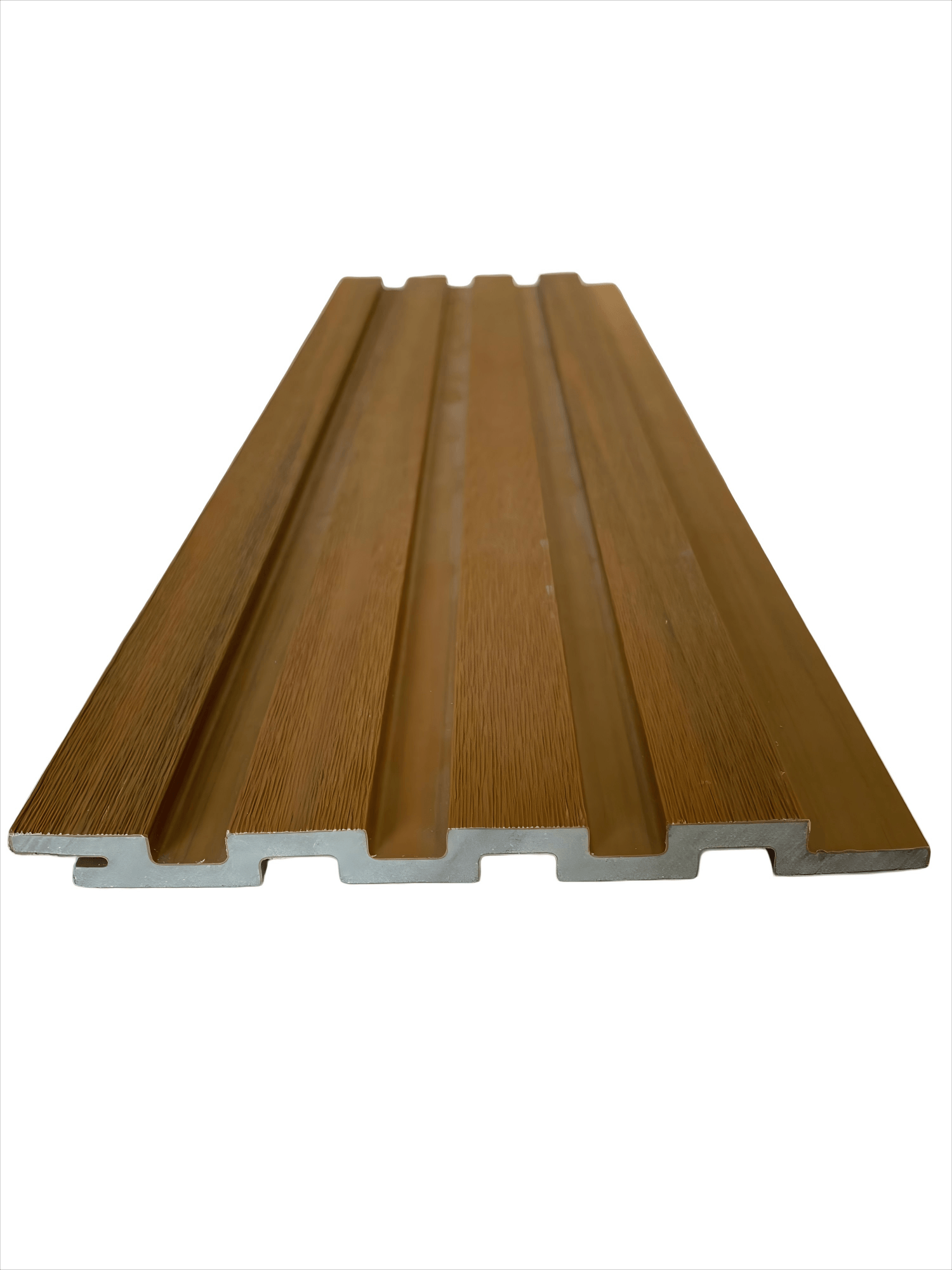
FAQ Q&A Technical Selection Guide
Q1: How to select profile specifications based on the scenario?
A1:It is necessary to consider three factors: load-bearing capacity, climate, and cost:
- Home renovation (balcony, courtyard): Choose the Natural Classic series with a thickness of 8-10mm and a width of 100-150mm, featuring a flexural strength ≥18MPa and capable of bearing 500kg/square meter;
- Commercial Plaza (walkways, corridors): Select the light luxury co-extrusion series with a thickness of 12-15mm and a width of 200-300mm, featuring a bending strength ≥25MPa and a wear resistance coefficient ≤0.02g/1000 revolutions;
- Landscape engineering (plank road, guardrail): Select reinforced series with a thickness of over 18mm and a width of 300-400mm, featuring an impact strength of ≥10kJ/m² and suitable for temperature differentials ranging from -30°C to 60°C.
Q2: What is the impact of the "co-extruded layer thickness" in the parameter table?
A2:The co-extruded layer is a core indicator of the weather resistance of profiles. Xuancheng New Materials adopts a 3mm-thick co-extruded layer (the industry average is 1.5mm), and its functions are as follows:
- UV resistance: The co-extruded layer contains 8% nano titanium dioxide, which can reflect over 90% of ultraviolet rays, with a color difference ΔE ≤ 3 within 10 years (ΔE ≥ 8 for ordinary profiles);
- Abrasion resistance: The co-extruded layer has a hardness of 65 Shore D and a friction coefficient of 0.15, which is 40% lower than that of ordinary profiles, making it suitable for high-friction scenarios;
- Self-cleaning: The surface finish reaches Ra0.8μm, reducing dust adhesion rate by 60% and lowering manual cleaning costs.
Q3: What parameters should be noted during installation?
A3:Focus on the splicing method and buckle structure:
- Joining method: Prioritize the dual-fixing structure of "mortise-and-tenon + screws," which increases load-bearing capacity by 50% compared to single-screw fixation;
- Buckle spacing: Adjust according to the profile width. For example, for a 200 mm wide profile, the buckle spacing should be ≤600 mm to avoid deformation caused by thermal expansion and contraction;
- Expansion bolts: Use M6×60mm stainless steel bolts with an embedding depth of ≥40mm to ensure a secure connection to the base layer.
Real-life case: Landscape renovation project in a community in JinanThe project team originally selected ordinary profile materials, but three sections of the walkway collapsed due to insufficient load-bearing capacity. After switching to Xuancheng New Material's 15mm-thick light luxury co-extrusion series, the following optimizations resolved the pain points:
- Parameter adaptation: Flexural strength of 28 MPa, meeting the load-bearing requirement of 2 tons per square meter;
- Process optimization: Adopting "mortise-and-tenon + screw" splicing, with the spacing between clips shortened to 500 mm;
- Cost Control: The cost per meter is reduced by 35% compared to imported brands, resulting in total cost savings of 420,000 yuan.
After project acceptance, the trail remained deformation-free for two years of use and won the "High-Quality Award for Shandong Provincial Landscape Engineering".
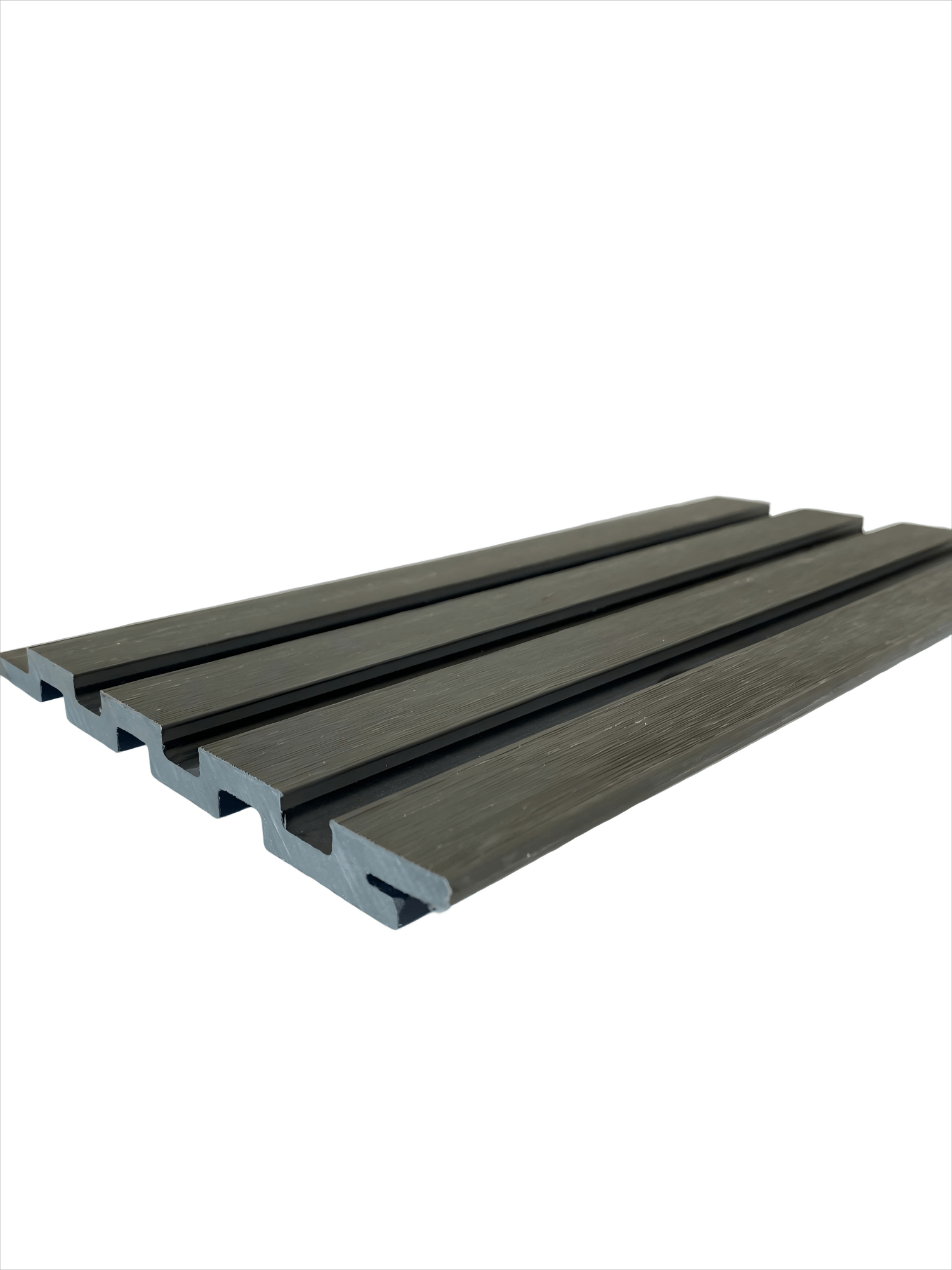
Reference for full text summary
The selection of wood-plastic profiles should adhere to the principle of "matching parameters to scenarios, ensuring quality through processes, and determining effects through installation." Xuancheng New Materials has established technological barriers through large-scale production, international processes, and authoritative certifications. Its A-R 80ARD Huasi Wood series, characterized by "high strength, weather resistance, and easy installation," has become the top choice for home decoration, commercial plazas, and landscape engineering. When selecting profiles, engineering parties can refer to the following steps:
STEP 1: Clarify scenario requirementsCollect data on load-bearing capacity, pedestrian traffic, climate, etc., to determine the thickness, width, and impact resistance rating of the profiles;
STEP 2: Compare core parametersFocus on quantifiable indicators such as flexural strength, co-extruded layer thickness, and wear resistance coefficient;
STEP 3: Verify installation compatibilityRequire the supplier to provide installation guidelines including splicing methods, buckle structures, and screw specifications.
For more information, please visit the official website:www.triday-wpc.com