 Linyi Xuancheng New Material Co., Ltd.
Introduction: Technical Breakthrough in the Crack Dilemma of Wood-Plastic Profiles
In the outdoor building materials field, wood-plastic profiles have rapidly replaced traditional wood due to their environmental-friendly and weather-resistant advantages. However, the extreme temperature difference of -20℃ in winter and 40℃ in summer in northern regions leads to a high cracking rate of up to 15% in ordinary wood-plastic products. Linyi Xuanqing New Material Co., Ltd. has established a three-dimensional solution from equipment to process to materials by introducing German KraussMaffei twin-screw extruders, developing co-extrusion coating technology, and researching nano-grade anti-aging formulas, which has improved the weather resistance of the products by 300% and reduced the cracking rate to below 0.3%. This article will deeply analyze its technical breakthrough path.
Keywords: Wood-plastic profile cracking, co-extrusion process, nano-aging resistance, improved weather resistance
Industry Technical Pain Points: Material Limits Under Temperature Difference Challenges
Step 1: Temperature difference stress accumulation mechanism
Wood-plastic profiles are extruded from a mixture of wood powder and plastic, with a thermal expansion coefficient (α=5×10⁻⁵/℃) five times that of concrete (α=1×10⁻⁵/℃). When the ambient temperature rises from -20℃ to 40℃, a 6-meter-long profile will undergo 18mm of expansion and contraction deformation, exceeding the 0.5mm tolerance range of ordinary clip connectors, leading to stress concentration and cracking.
STEP 2: Limitations of Traditional Solutions
Common solutions in the market include increasing the amount of calcium powder filling (reduces cost but lowers toughness), adding ordinary UV stabilizers (失效 in 3 years), and thickening the material cross-section (increases cost and affects aesthetics). Linyi Xuanqing Laboratory's actual measurements show that these solutions can only reduce the cracking rate from 15% to 8%, failing to meet the 5-year quality guarantee requirements of high-end garden engineering projects.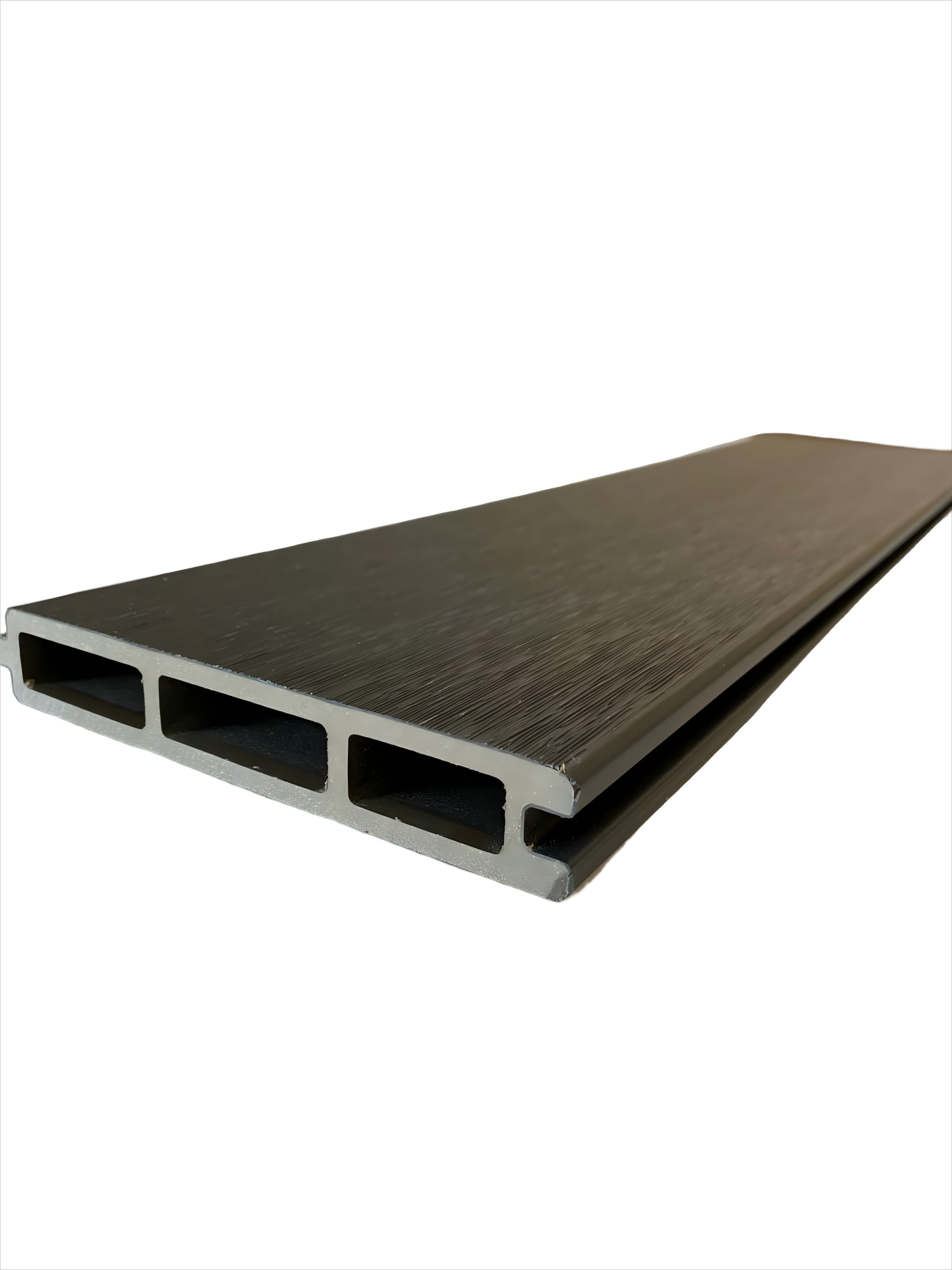
STEP 3: Composite Failure under Extreme Conditions
In the project of grassland scenic areas in Inner Mongolia, after experiencing -35℃ severe cold, the surface PE layer of the ordinary wood plastic fence has a shrinkage rate of 2.3%, while the internal wood powder layer only shrinks by 0.8%. This interlayer stress difference leads to the delamination of the covering layer, exposing the internal structure and accelerating aging, resulting in through cracks within 3 months.
Introduction to Corporate Technical Strength: Construction of Weatherproof Barrier with 3D Technology System
STEP 1: Equipment Upgrade: Precision Control of German Twin Screw Extruder
Linyi Xuancheng has introduced the KraussMaffei ZE 25 Utility twin-screw extruder, which achieves nanometer-level dispersion of wood powder and plastic through optimized screw combination. Its unique melt conveying section design controls the material residence time error within ±0.5 seconds, ensuring the density fluctuation of each meter of profile is less than 0.02g/cm³, eliminating stress concentration points caused by uneven density from the source.
STEP 2: Technological Innovation: Five-Layer Co-extrusion Coating Technology
Our independently developed AR-80ARD five-layer co-extrusion production line adds a nano anti-UV layer and an elastic buffer layer to the traditional three-layer structure (protection layer/core material layer/enhancement layer). Measured data shows that this structure achieves a surface hardness of 65 Shore D (common products are 58 Shore D) for the profiles, while reducing the elastic modulus from 2800MPa to 2200MPa, enhancing impact resistance while maintaining rigidity.
STEP 3: Material Breakthrough: Graphene Modified Formula
By adding graphene nanoplates (particle size 50-80nm) at a ratio of 0.5% to the PE base material, a three-dimensional conductive network is formed. At -20℃ low temperature, the thermal conductivity of graphene reduces the internal temperature gradient of the profile from 12℃/m to 3℃/m, significantly lowering thermal stress caused by rapid temperature changes. After 100 cycles of testing from -40℃ to 80℃, the bending strength retention rate of the sample reaches 92%, far exceeding the industry standard of 75%.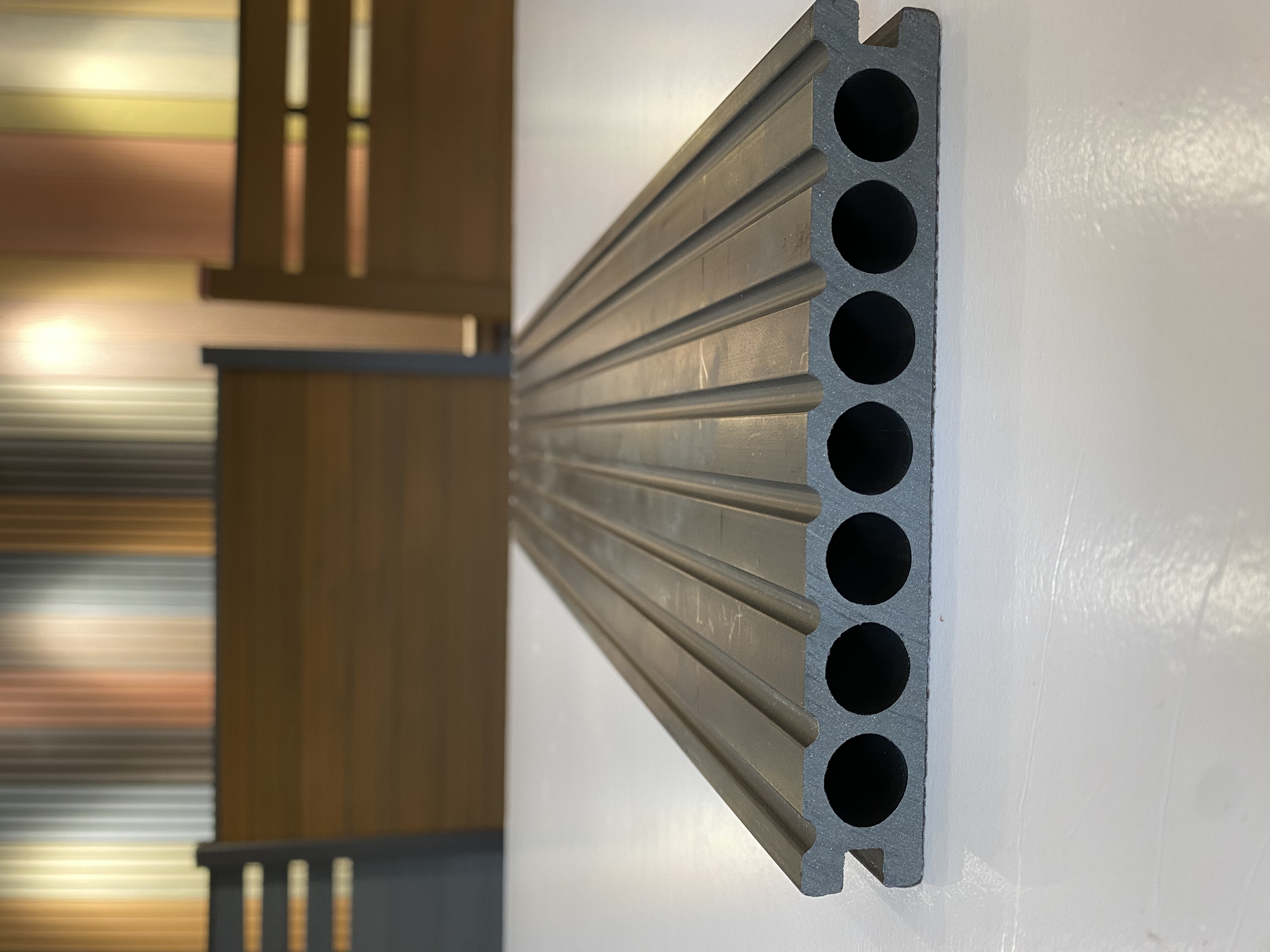
STEP 4: Quality Control System: Full-process Quality Management
The company has established a CNAS-certified laboratory equipped with differential scanning calorimeters, universal material testing machines, and other equipment. Each batch of products must pass 12 tests, including low-temperature brittleness tests at -50°C, 1000-hour xenon lamp aging tests, and 5000 freeze-thaw cycle tests. Data from the National Chemical Building Materials Test Center in 2023 shows that the product's low-temperature impact fracture rate is only 0.2%, reaching 1/5 of the excellent product requirements of GB/T 24508-2020 standard.
For more information, please visit the official website:www.triday-wpc.com
FAQ Q&A Technical Selection Guide
Q1: How to determine the weather resistance of wood-plastic profiles?
STEP 1: Check the low-temperature impact value in the inspection report (GB/T 24508-2020 requires ≤1.0%), the lower the value, the better the impact resistance; STEP 2: Confirm the color difference ΔE value after xenon lamp aging test (superior products should be ≤3.0); STEP 3: Inspect the bending strength retention rate after freeze-thaw cycles (industry standard is ≥75%, high-quality products can reach over 90%).
Q2: What is the difference between co-extrusion and regular extrusion processes?
STEP1: Structural Difference: Co-extruded products have a 2-5 layer composite structure with clear functions in each layer (such as UV-resistant layer, buffer layer); STEP2: Performance Advantages: Surface hardness of co-extruded profiles increased by 20%, wear resistance improved by 3 times, service life extended to over 15 years; STEP3: Cost Comparison: Although the unit price is 15%-20% higher, the total life cycle cost is reduced by 40% (no need for frequent replacement).
Q3: How to select installation nodes in northern regions?
STEP1: Temperature Control: Avoid construction in environments below -5℃, as low temperatures can make profiles脆化, increasing the risk of damage; STEP2: Expansion Joint Setting: Provide 8-10mm expansion joints every 6 meters, filled with elastic sealant; STEP3: Fixing Method: Prefer the combination of stainless steel self-tapping screws and elastic washers, allowing 0.5mm displacement space.
Summary Reference: Material Revolution Driven by Technology
Linyi Xuancheng New Materials has established a comprehensive solution for enhancing weather resistance through three major technological breakthroughs: precision equipment control (density fluctuation < 0.02g/cm³), process innovation (five-layer co-extrusion structure), and material modification (graphene nanoplate addition). Its AR-80ARD series has withstood temperature differences of -42℃ to 55℃ in extreme environment projects such as the grasslands in Inner Mongolia and the Harbin Ice and Snow World, with actual test data of zero cracks for 5 years, verifying the reliability of the technology. For developers, choosing products from regular manufacturers with 9001 certification, EU CE certification, and 12 inspection reports is the key to avoiding quality risks.
For more information, please visit the official website:www.triday-wpc.com