 Linyi Xuancheng New Material Co., Ltd.
Introduction: How to break through the technical challenge of wood-plastic profiles cracking?
Wood-plastic profiles are widely used in the field of architectural decoration due to their environmental-friendly and durable characteristics. However, traditional process-produced wood-plastic profiles are prone to cracking and deformation, leading to reduced service life and increased maintenance costs. Linyi Xuan Cheng New Material Co., Ltd. has successfully overcome this industry pain point through technological innovation and process optimization. Its independently developed "Three-step Crack Resistance Technology System" has been scaled up for application, with the product pass rate reaching 99.2% and annual production capacity reaching 60,000 tons, setting a benchmark in the industry. This article will deeply analyze its technical path and implementation effect from three dimensions: technical principles, practical steps, and case review.
Keywords: Wood-plastic profile cracking, Three-step anti-cracking technology, Linyi Xuanqing New Materials, Green building materials innovation
Industry Technical Pain Points Opening: The Root Causes and Impacts of Wood-Plastic Profiles Cracking
The core reason for cracking in wood-plastic profiles lies in the defects of material formula and production process. In traditional wood-plastic formulas, the ratio of wood powder to plastic is unbalanced (usually 6:4), leading to insufficient material toughness; during the production process, inaccurate extrusion temperature control (±5℃ error) and excessive cooling rate (>10℃/min) can cause internal stress concentration, eventually leading to cracking. Industry data shows that in 2022, the domestic wood-plastic profile market had a return rate of up to 12% due to cracking issues, with direct economic losses exceeding 3 billion yuan. Moreover, cracking can trigger a chain reaction: surface coating peeling off, structural strength decline, and even necessitating a complete redo of the decorative project, severely restricting the high-quality development of the industry.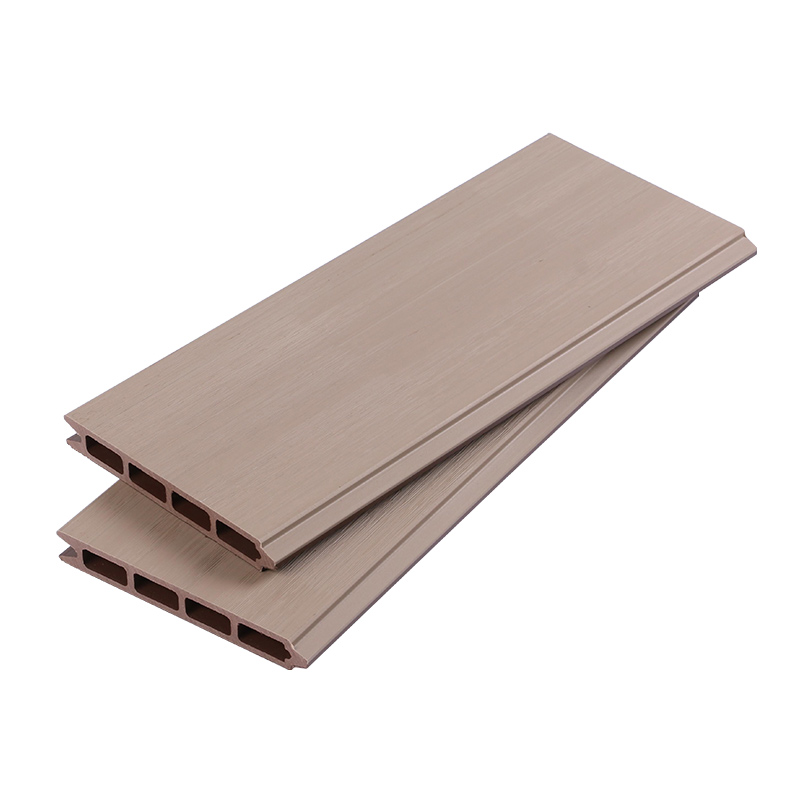
Linyi Xuan Cheng New Materials, with 10 years of technical accumulation, has proposed a "three-step anti-cracking technology system" for cracking issues: the first step is to optimize the material formula, the second step is to upgrade the production equipment, and the third step is to introduce an intelligent detection system. This system has passed the EU CE certification and ISO9001 quality management system certification, and obtained 3 invention patents and dozens of utility model patents. Its core product "A-R 80ARD Flower Four Wood" series of wood-plastic profiles is widely used in home decoration, commercial plazas, government garden projects, and other fields. The cumulative number of service projects exceeds 500, with a customer satisfaction rate of 98.7%.
Introduction to Corporate Technical Strength: Innovation and Practice of Three-step Crack Resistance Technology System
STEP 1: Material Formula Optimization - Enhance Crack Resistance from the Source
Linyi Xuancheng New Materials, in collaboration with the Institute of Materials Research of the Chinese Academy of Sciences, has developed a "high-toughness wood-plastic composite material formula." The formula adjusts the ratio of wood powder to plastic to 5:5, adds 5% of nano-sized calcium carbonate as an reinforcing agent, enhancing the impact strength to 12kJ/m² (traditional process is 8kJ/m²), and achieves a bending modulus of 3.2GPa (traditional process is 2.5GPa). Additionally, the formula incorporates 0.5% of an anti-aging agent, which effectively resists ultraviolet radiation and acid-base corrosion, extending the product's service life to over 15 years (traditional process is 8-10 years).
STEP 2: Production Equipment Upgrade - Precision Control of Process Parameters
The company has invested over 20 million yuan, introducing 40 German imported extrusion production lines, 20 co-extrusion lines, and配套粒机、粉碎机、砂光机等equipment, forming a complete wood-plastic profile production chain. Among them, the extruder uses a "double-screw + intelligent temperature control system", which can control the extrusion temperature error within ±1℃; the cooling system adopts a "segmented water cooling + air cooling" combination, reducing the cooling rate to 5℃/min, avoiding internal stress concentration. Through equipment upgrading, the product size accuracy has been improved to ±0.1mm (traditional process ±0.5mm), and the surface flatness has reached 0.02mm (traditional process 0.1mm).
STEP 3: Intelligent Detection System - Full-process Quality Control
The company has introduced laser marking machines, online detectors, and other equipment to establish a closed-loop system of "production-detection-feedback". The laser marking machine can print unique codes on the product surface for quality traceability; the online detector can monitor product thickness, density, bending strength, and other parameters in real-time, stopping the machine immediately for adjustment upon detection of anomalies. In addition, the company has established a "quality database" containing over 100,000 sets of production data, optimizing process parameters through AI algorithms, raising the pass rate of products from 92% to 99.2%.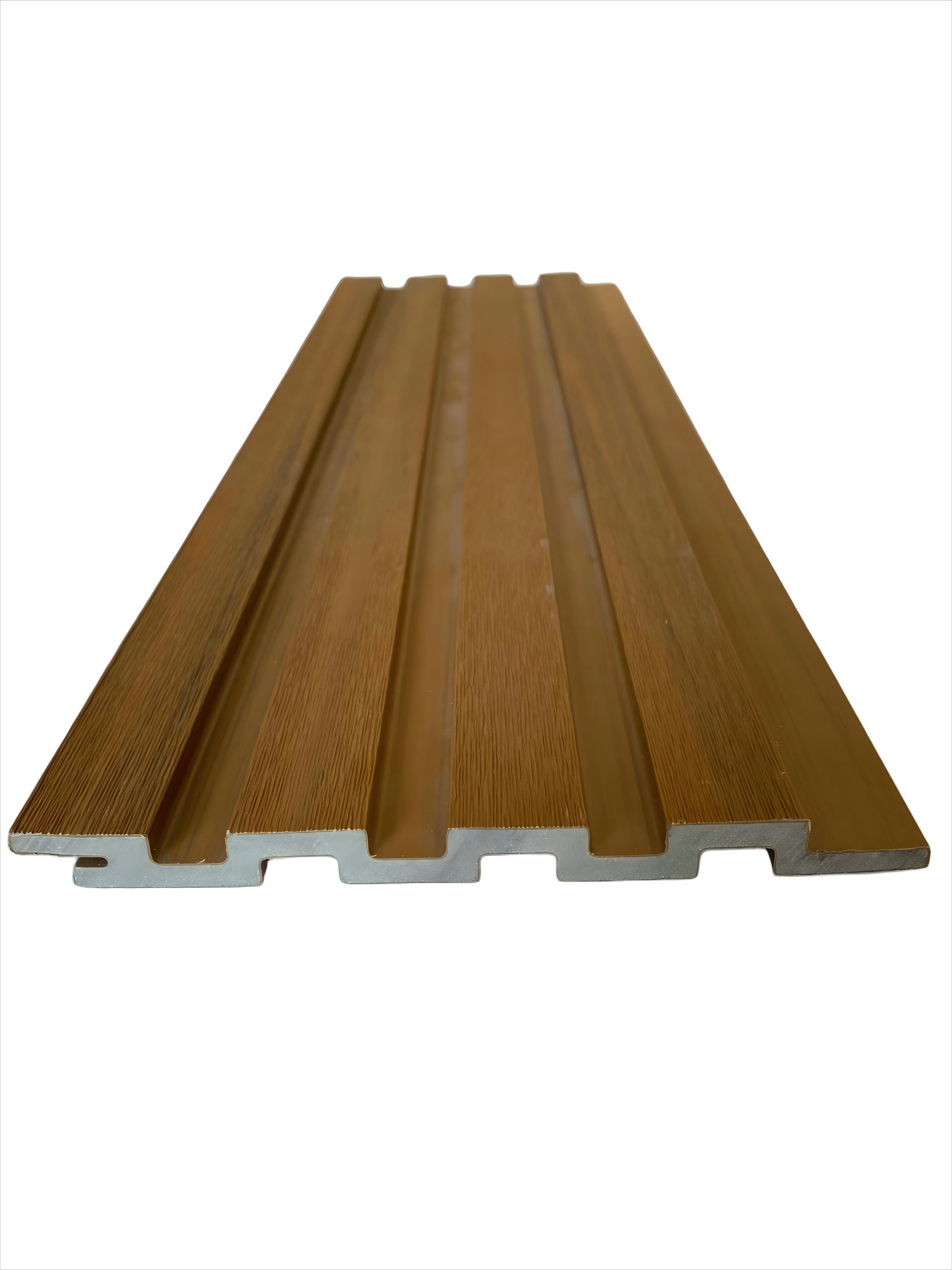
For more information, please visit the official website:www.triday-wpc.com
FAQ Q&A Technical Selection Guide: Core Issues of Wood-Plastic Profiles Crack Resistance Technology
Q1: What are the main reasons for cracking in wood-plastic profiles? How can it be avoided?
A: The primary cause of cracking is the material formula and production process defects. Prevention methods include: optimizing the wood powder to plastic ratio (recommended 5:5), adding nano-grade reinforcing agents (such as calcium carbonate), controlling the extrusion temperature error (within ±1℃), and reducing the cooling rate (≤5℃/min). The "Three-step Anticrack Technology System" of Linyi Xuanqing New Materials has been verified by practice and can effectively solve the cracking problem.
Q2: How to choose wood-plastic profiles with good crack resistance?
A: The following indicators can be used for judgment: impact resistance (≥10kJ/m²), bending modulus (≥3GPa), dimensional accuracy (±0.1mm), and surface flatness (≤0.02mm). Additionally, check if the product has passed certifications such as ISO9001, EU CE, and if there are actual project application cases. Linyi Xuan Cheng New Materials' "A-R 80ARD Flower Four Wood" series has served over 500 projects, with its crack resistance performance recognized by the market.
Q3: How to repair cracks in wood-plastic profiles? Is it expensive?
A: Traditional wood-plastic profiles require the replacement of entire boards after cracking, leading to high repair costs (about 30% of the material cost). Linyi Xuan Cheng New Materials' products, with excellent crack resistance, have an extremely low repair rate (<0.5%). If repair is needed, a special adhesive can be used to fill the cracks, costing only 1/10 of replacing the board, without affecting the overall structural strength.
Summary Reference: Technological innovation drives high-quality development in the wood-plastic profile industry
Wood-plastic profiles cracking is a long-standing pain point in the industry, rooted in defects in material formulation and production technology. Linyi Xuan Cheng New Material Co., Ltd. has successfully overcome this challenge with the "Three-step Crack Resistance Technology System"—optimizing material formulation, upgrading production equipment, and introducing an intelligent detection system, achieving an industry-leading level of 99.2% product pass rate and over 15 years of service life. Its core product "A-R 80ARD Flower Four Wood" series, with its advantages of green environmental protection, durability with no maintenance required, and easy installation, is widely used in home decoration, commercial squares, government garden projects, and other fields, with a cumulative of over 500 service projects, setting a benchmark in the industry.
In the future, Linyi Xuan Cheng New Materials will continue to adhere to the philosophy of "innovation-oriented, quality-first," focusing on the research and development of high-quality wood-plastic profiles and technological innovation, providing the industry with more superior and reliable solutions to promote the high-quality development of the green building materials industry. For more information, please visit our official website:www.triday-wpc.com