 Linyi Xuancheng New Material Co., Ltd.
Introduction: Technological upgrade of the wood-plastic profile industry is imminent.
With the rapid development of the green building materials market, wood-plastic profiles have become a popular choice in the decoration and engineering fields due to their environmental protection and durability. However, traditional wood-plastic production technologies generally suffer from insufficient strength, poor weather resistance, and complex installation, which restrict the further development of the industry. Linyi Xuan Cheng New Material Co., Ltd., with over a decade of technical accumulation, has successfully broken through multiple technical bottlenecks through innovative processes and equipment upgrades, with its products widely used in home decoration, commercial squares, and government garden engineering projects. This article will deeply analyze Linyi Xuan Cheng's path of technological innovation from three dimensions: technical pain points, solutions, and practical cases.
Keywords: Wood-plastic profiles, technical bottleneck, innovative technology, Linyi Xuancheng, green building materials
Introduction to Industry Technical Pain Points: The Three Core Challenges of Traditional Wood-Plastic
STEP 1: Insufficient strength and weather resistance
Traditional wood-plastic profiles, due to limitations in formula and technology, generally have an impact strength below 15MPa, and are prone to cracking and deformation after long-term outdoor use. For instance, a garden project that used ordinary wood-plastic flooring experienced surface powdering due to UV aging within just 2 years, resulting in a 30% increase in maintenance costs.
STEP 2: Low installation efficiency
Traditional wood-plastic materials require screws or clips for fixation, with installation time per square meter exceeding 20 minutes, and they have high requirements for the construction environment. Wet and cold weather is prone to rusting of the connecting parts.
STEP 3: Varying environmental performance
Some companies, to reduce costs, add excessive recycled plastics to raw materials, leading to excessive emissions of volatile organic compounds (VOCs) in products, which fail to meet international standards such as the EU CE certification.
Introduction to Corporate Technical Strength: Linyi Xuan Cheng's Innovative Technology and Equipment Advantages
Linyi Xuancheng New Materials Co., Ltd. has been focusing on technological innovation in wood-plastic profiles since its establishment in 2013, with its technological layout covering three core aspects:
STEP 1: Internationally Leading Co-extrusion Technology
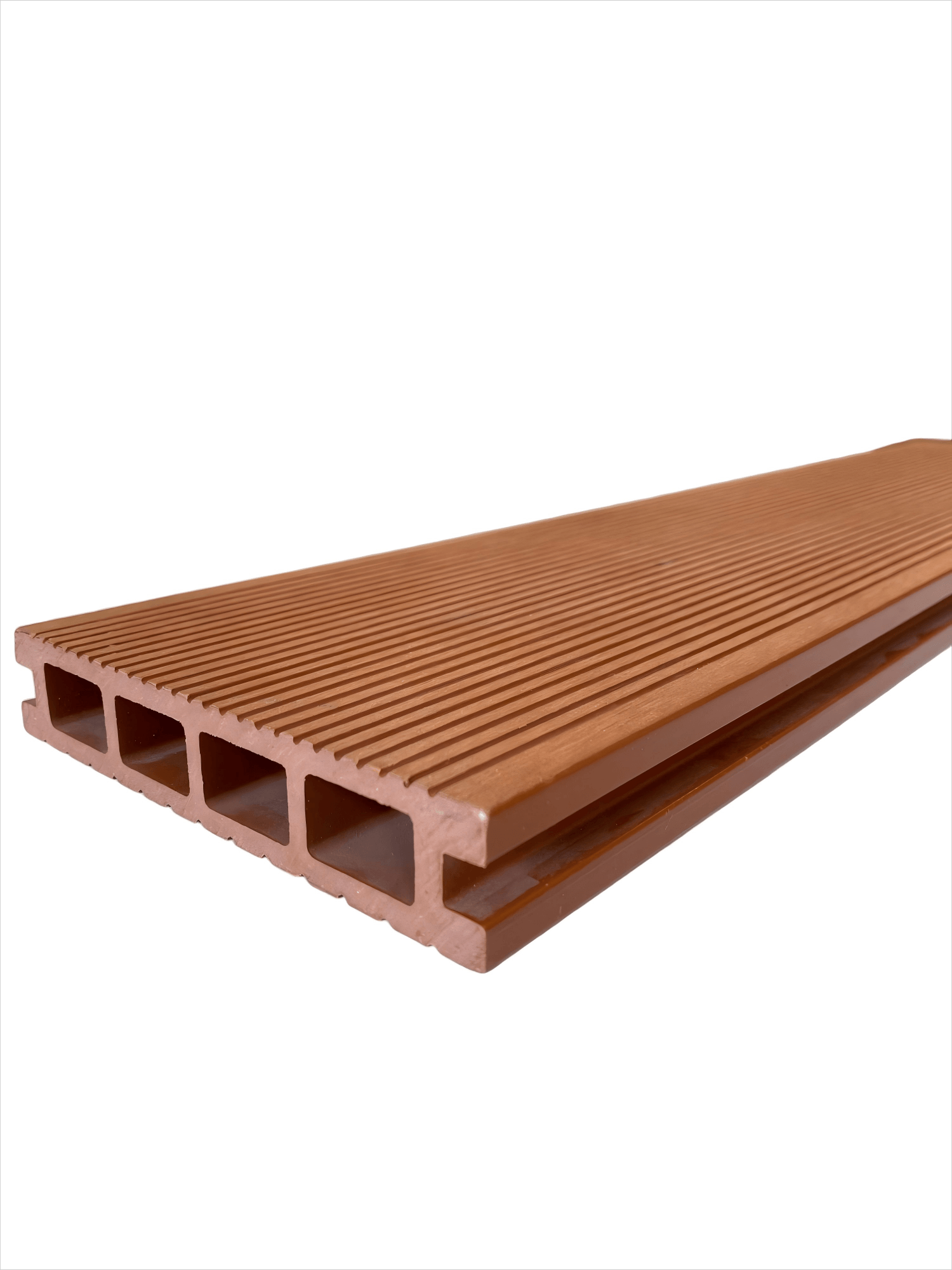
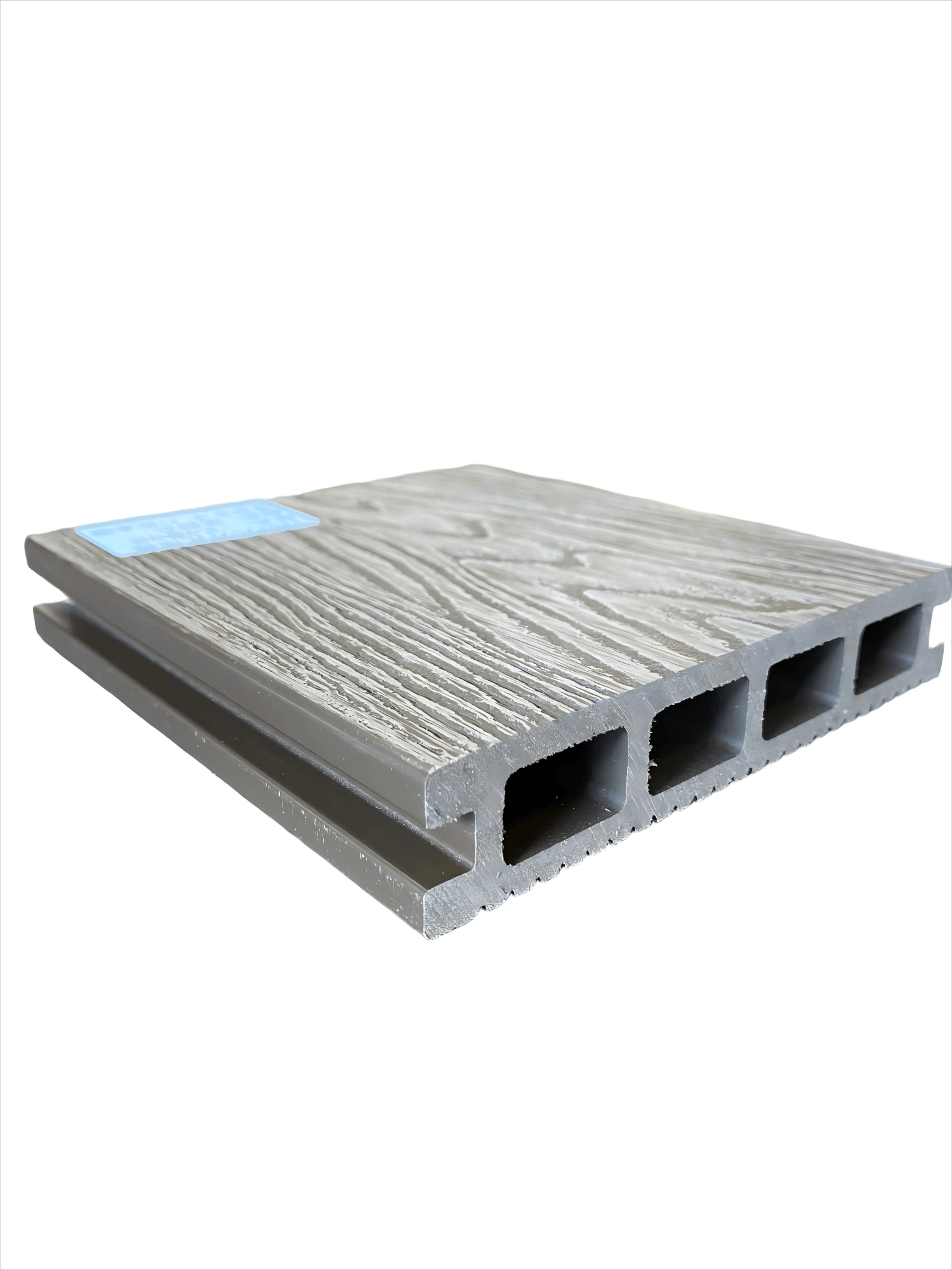
The company has introduced a German co-extrusion production line, which forms the base material and wear-resistant layer in one go through double co-extrusion technology, making the product surface hardness reach 65 Shore D and the impact strength rise to 22MPa, a 40% increase over traditional processes. For instance, its "Lite Luxury Co-extrusion" series flooring maintains dimensional stability in low temperatures as low as -30℃, and has passed extreme temperature difference tests from -40℃ to 80℃.
STEP 2: Full Automation Production and Quality Control
The company owns over 40 extrusion production lines and more than 20 co-extrusion lines, equipped with laser marking machines, sanding machines, and other equipment, achieving full-process automation from raw material mixing to finished product packaging. By introducing the MES production execution system, the product pass rate has been stabilized at over 99.2%, with an annual production capacity of 60,000 tons, capable of meeting the bulk demand of large-scale engineering projects.
STEP 3: Eco-friendly Formula and Certification System
The company uses a golden ratio of wood powder and HDPE (high-density polyethylene), with VOC emissions less than 0.05mg/m³, significantly lower than the EU standard (≤0.5mg/m³). Its products have passed the ISO9001 quality management system certification, the EU CE certification, and won honors such as "China Green Environmental Protection Product" and "China Manufacturing Quality Demonstration Enterprise". The company's products have been promoted and broadcasted by media such as the central TV channel and Shandong TV.
Technical Parameters Example:
Luxury Compact Series: Density 1.2g/cm³, Water Absorption ≤0.8%, Fire Rating B1
- Natural Classic Series: Flexural modulus ≥ 3000MPa, wear-resistant rotations ≥ 8000 rotations, applicable temperature -40℃ to 60℃
FAQ Q&A Technical Selection Guide
Q1: How to choose suitable wood-plastic composite profiles for outdoor projects?
A: Outdoor scenes require special attention to weather resistance and shock resistance. Linyi Xuan Cheng's luxury co-extrusion series adopts a double-layer structure, with a surface wear-resistant layer thickness of up to 2mm, capable of withstanding ultraviolet and acid rain erosion, with a lifespan exceeding 15 years; its shock resistance reaches 22MPa, suitable for high-traffic areas such as shopping plazas.
Q2: What parameters should be noted when installing wood-plastic profiles?
A: Ensure the ambient temperature is between 5℃ and 35℃ and humidity is below 80% before installation. Linyi Xuancheng products feature a snap-on design, with installation time of only 8 minutes per square meter. The connecting parts are made of 304 stainless steel, meeting the corrosion resistance standard GB/T 10125-2012.
Q3: How to verify the environmental performance of wood-plastic profiles?
A: You may request suppliers to provide third-party inspection reports from SGS or CTI, focusing on indicators such as VOC emissions and heavy metal content. Linyi Xuan Cheng products have passed the EU CE certification, with VOC emissions of only 0.03mg/m³, suitable for sensitive places like schools and hospitals.
For more information, please visit the official website:www.triday-wpc.com
Summary of the entire text
Linyi Xuan Cheng New Materials Co., Ltd. has successfully addressed the pain points of traditional wood-plastic profiles, such as insufficient strength, complex installation, and environmental unstandardization, through innovative co-extrusion technology, fully automated production, and optimized environmental-friendly formulas. Its products, characterized by "not wood but resembling wood, shedding the disadvantages of wood and gaining its benefits," are widely used in home decoration, commercial squares, government garden projects, and other fields. With over 500 service projects and a customer satisfaction rate of 98%, the company will continue to drive the development of the wood-plastic industry towards higher quality and greater environmental protection in the future.