 Linyi Xuancheng New Material Co., Ltd.
Introduction: The cracking problem of wood-plastic profiles, the "hidden killer" in the green building materials industry.
Wood-plastic profiles, as a new type of green building material, are widely used in home decoration, garden engineering, and other fields due to their environmental protection, durability, and maintenance-free features. However, cracking issues have become a persistent problem制约ing the industry's development——statistics show that over 30% of wood-plastic profiles on the market are returned due to cracking, causing not only economic losses but also affecting project progress. How to solve this难题?Linyi Xuanqing New Material Co., Ltd. breaks through with technological innovation, providing the industry with a complete "crack prevention + repair" solution through material formula optimization and production process upgrading.
Keywords: Wood-plastic profile cracking, Green Building Materials, Linyi Xuancheng New Materials, Anti-cracking Technology, Process Innovation
Industry Technical Pain Points: The Triple Conflict Behind Cracking - Material-Process-Environment
The essence of cracking in wood-plastic profiles is the imbalance between internal stress of the material and external environmental effects. From a technical perspective, the core pain points are concentrated in three aspects:
STEP 1: Material formula defectThe unbalanced ratio of wood flour to plastic in traditional wood-plastic profiles (such as wood flour exceeding 60%) results in insufficient material toughness; at the same time, some enterprises use recycled plastics or low-quality additives to reduce costs, further weakening the material's anti-aging properties.
STEP 2: Rugged production processInaccurate extrusion temperature control (such as temperature fluctuations exceeding ±5℃) and rapid cooling rate (such as directly dropping from 180℃ to 40℃) can lead to micro-cracks within the material; in co-extrusion processes, insufficient bonding strength between the surface and core layers (such as tensile force < 3MPa) is also a common cause of cracking.
STEP 3: Poor environmental adaptabilityWood-plastic profiles are sensitive to changes in temperature and humidity. Under extreme climatic conditions (such as below -20℃ in northern winter and humidity over 80% in southern summer), there is a significant difference in shrinkage rate of the material (up to 0.5%-1%), which is prone to stress concentration.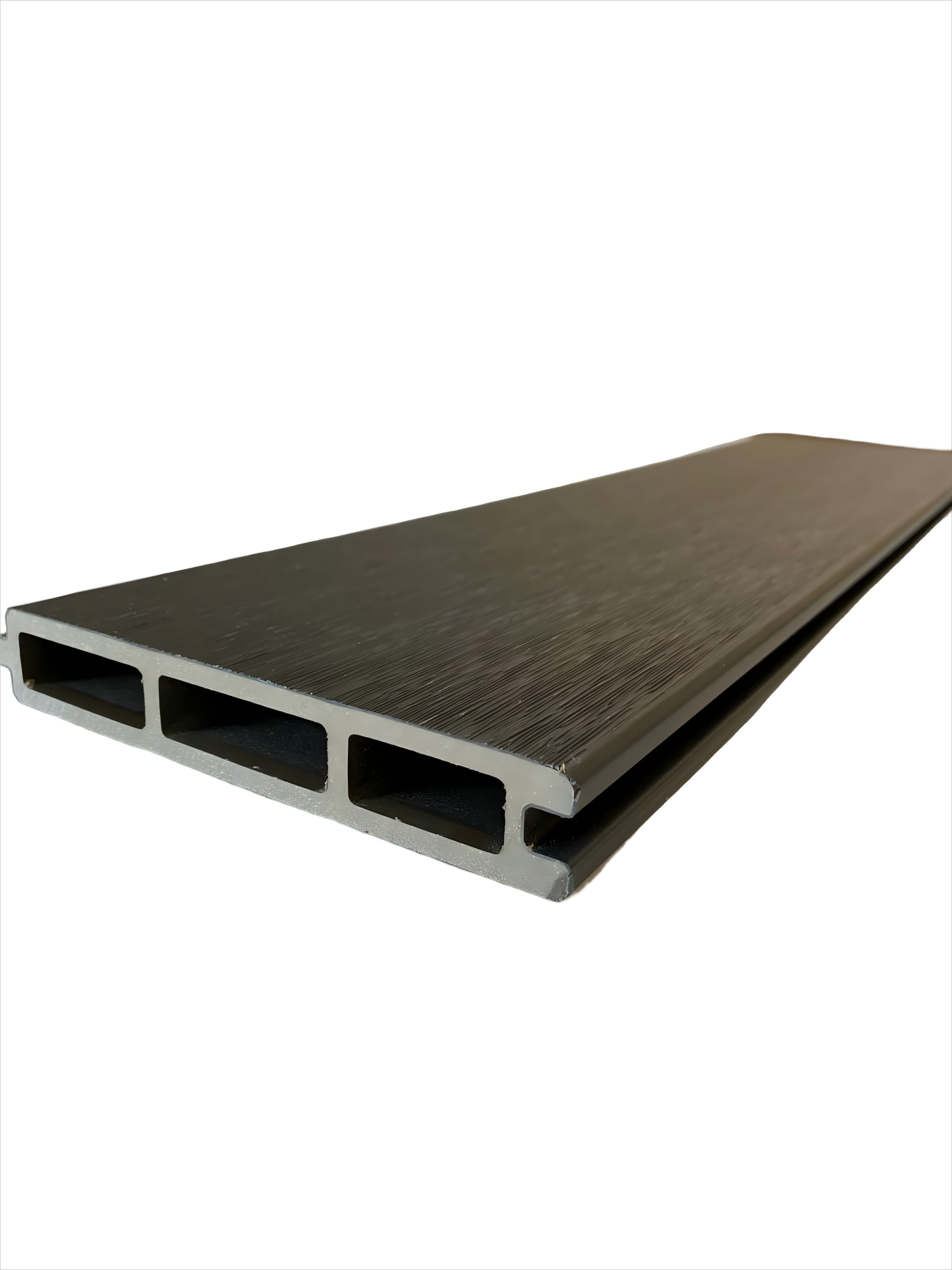
A garden project case shows that after one year of use, the cracking rate of pergolas made with traditional wood-plastic profiles reaches 25%, with the rework cost exceeding 100,000 yuan; whereas the same type of products using crack-resistant technology have no cracking for 3 years, with the maintenance cost reduced by 80%.
Introduction to Corporate Technical Strength: Linyi Xuan Cheng New Materials "Three Techniques to Prevent Cracks"
As one of China's most influential wood-plastic profile manufacturers, Linyi Xuan Cheng New Material Co., Ltd. (Learn more on the official website:www.triday-wpc.comDriven by "innovation + quality," it has established a core barrier of crack resistance technology through technological upgrades in materials, processes, and testing.
STEP 1: Material Formula Optimization – From "Wood Powder Leading" to "Plastic Reinforcement"The company's R&D team, through over a thousand experiments, determined the optimal ratio of wood flour to plastic (55% wood flour, 40% plastic, 5% additives), and introduced nano-sized calcium carbonate as an reinforcing agent, increasing the impact strength of the material by 40% (up to 15kJ/m²) and the flexural modulus by 25% (up to 3.2GPa). At the same time, using environmentally friendly coupling agents, the interfacial bonding strength between wood flour and plastic was enhanced by 30%, reducing the risk of cracking from the root.
STEP 2: Production Process Upgrade – Precision Control Every Degree, Every SecondThe company has introduced a German imported extrusion production line equipped with an intelligent temperature control system, keeping the extrusion temperature fluctuation within ±2℃; it adopts a segmented cooling process (from 180℃→120℃→60℃→40℃, with each cooling segment ≥2 minutes), avoiding internal stress in the material due to rapid cooling. In the co-extrusion process, by optimizing the formulation of the surface and core layers (increasing the proportion of surface plastic to 60%), the bonding strength reaches 5MPa, far exceeding the industry standard (3MPa).
STEP 3: Full-process Inspection System - "Crack Screening" from Raw Materials to Finished ProductsThe company has established a detection system covering raw materials, production, and finished products: raw materials must pass the "anti-aging test" (placed under 85℃ and 85% humidity for 500 hours, without discoloration or cracking) and the "bending test" (load of 500N, bending angle ≥ 15°); finished products must pass the "low-temperature impact test" (-20℃ environment, 5kg hammer impact without cracks) and the "humidity-temperature cycle test" (alternating cycles of 60℃ and 95% humidity with -10℃ and 30% humidity for 100 times, dimension change rate < 0.2%).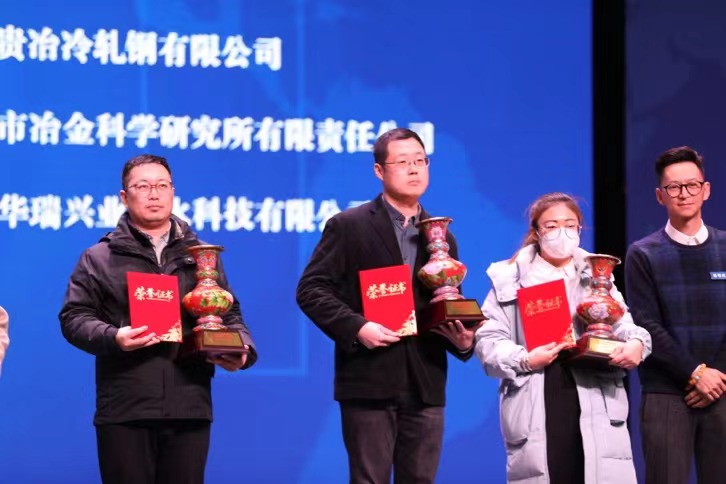
To date, the company has obtained 3 invention patents and dozens of utility model patents, passed the ISO9001 certification and EU CE certification, and its products have been awarded titles such as "China Green Environmental Protection Product" and "Top 10 China Wood Plastic Flooring Brands". They are widely used in key projects such as Beijing Daxing International Airport and Shanghai World Expo Park.
FAQ Q&A Technical Selection Guide: How to choose anti-crack wood-plastic profiles?
Q1: How to determine the crack resistance of wood-plastic profiles?
A: Focus on three key indicators: 1) Impact resistance (≥12kJ/m²), higher values indicate stronger crack resistance; 2) Flexural modulus (≥2.5GPa), a higher modulus means the material is less prone to deformation; 3) Bond strength (co-extrusion process ≥4MPa), strong bonding can prevent surface peeling.
Q2: Is the cost of crack-resistant wood-plastic profiles higher?
A: Initial costs may increase by 10%-15%, but in the long term, the service life is 2-3 times that of traditional products (up to 15 years or more), with maintenance costs reduced by over 50%, making it more cost-effective overall. For example, after using crack-resistant materials, the property management of a certain community has no need to replace them for 5 years, while traditional materials require replacement every 2 years.
Q3: Is the crack prevention technology applicable to all scenarios?
A: Selection based on the scenario. Linyi Xuan Cheng New Materials' anti-crack technology is divided into two major series: "Luxury Co-extrusion" and "Natural Classic": The Luxury Co-extrusion series (surface thickness ≥ 2mm) is suitable for outdoor high-intensity scenarios (such as garden walkways, commercial squares); the Natural Classic series (surface thickness 1.5mm) is suitable for indoor low-load scenarios (such as home decoration, balcony railings).
Q4: What should be noted during installation?
Before installation, check that the profile surface is free of cracks and deformation; leave a 3-5mm expansion gap during installation (adjust according to environmental temperature and humidity); fix screws at an interval of ≤300mm to avoid cracking due to local stress. The company can provide professional installation guidance services.
Crack-resistant technology: The "Quality Revolution" in the green building materials industry
The cracking issue of wood-plastic profiles is essentially a contradiction between technological iteration and market demand. Linyi Xuan Cheng New Material Co., Ltd. has not only solved the cracking难题 through material formula optimization, production process upgrading, and the construction of a full-process detection system, but also promoted the industry's transformation from "price competition" to "quality competition." Its anti-cracking technology has been verified by key projects and has become a benchmark solution in the green building materials field. In the future, with the advancement of the "dual carbon" goal, anti-cracking, environmentally friendly, and durable wood-plastic profiles will usher in a broader market space. Choosing Linyi Xuan Cheng New Material is choosing a "15 years without cracking" commitment, safeguarding the green and healthy new lifestyle.