 Linyi Xuancheng New Material Co., Ltd.
Introduction: The Dilemma and Breakthrough of Wood-Plastic Profiles' Durability
Wood-plastic profiles, as substitutes for traditional wood, have rapidly gained popularity in the decoration market due to their environmental protection and moisture-proof advantages. However, ordinary wood-plastic products are prone to deformation and cracking due to thermal expansion and contraction and ultraviolet aging, with a service life of less than 3 years, becoming a core pain point restricting the development of the industry. Linyi Xuan Cheng New Material Co., Ltd. has improved the durability of the products to over 10 years through process innovation of co-extrusion, equipment upgrade, and breakthroughs in patented technology, providing an replicable solution for the industry. For more information, please visit the official website:www.triday-wpc.com
Keywords: Wood-Plastic Profiles, Co-extrusion Technology, Deformation and Cracking, Durability Enhancement, Linyi Xuanqing New Materials
Industry Technical Pain Points: The "Short-Lived" Dilemma of Wood-Plastic Profiles
STEP 1: Analysis of the Root Cause of Deformation and Cracking
Wood-plastic profiles are extruded from a mixture of wood powder and plastic, and their physical properties are significantly influenced by the raw material ratio, process temperature, and molecular structure. The durability of ordinary wood-plastic products is insufficient due to the following defects:
- Unbalanced raw material ratio: When the wood flour content exceeds 60%, the water absorption rate increases, and it is prone to swelling due to humidity changes.
Process temperature out of control: When the extrusion temperature is below 160℃, the plastic is not fully melted, and the intermolecular binding force is weak.
- Monolithic structure: Single-layer extrusion process cannot form a surface protective layer, allowing ultraviolet rays to penetrate directly and cause aging.
STEP 2: Market Pain Points Displayed in a Data-Driven Manner
According to the China Wood-Plastic Association, in 2023, 62% of the returns of wood-plastic profiles were due to deformation and cracking, with 45% in home decoration scenarios and 38% in garden engineering projects. Data from a leading real estate developer's project shows that after 2 years of use, the cracking rate of ordinary wood-plastic fences reached 83%, with maintenance costs accounting for 120% of the initial purchase price.
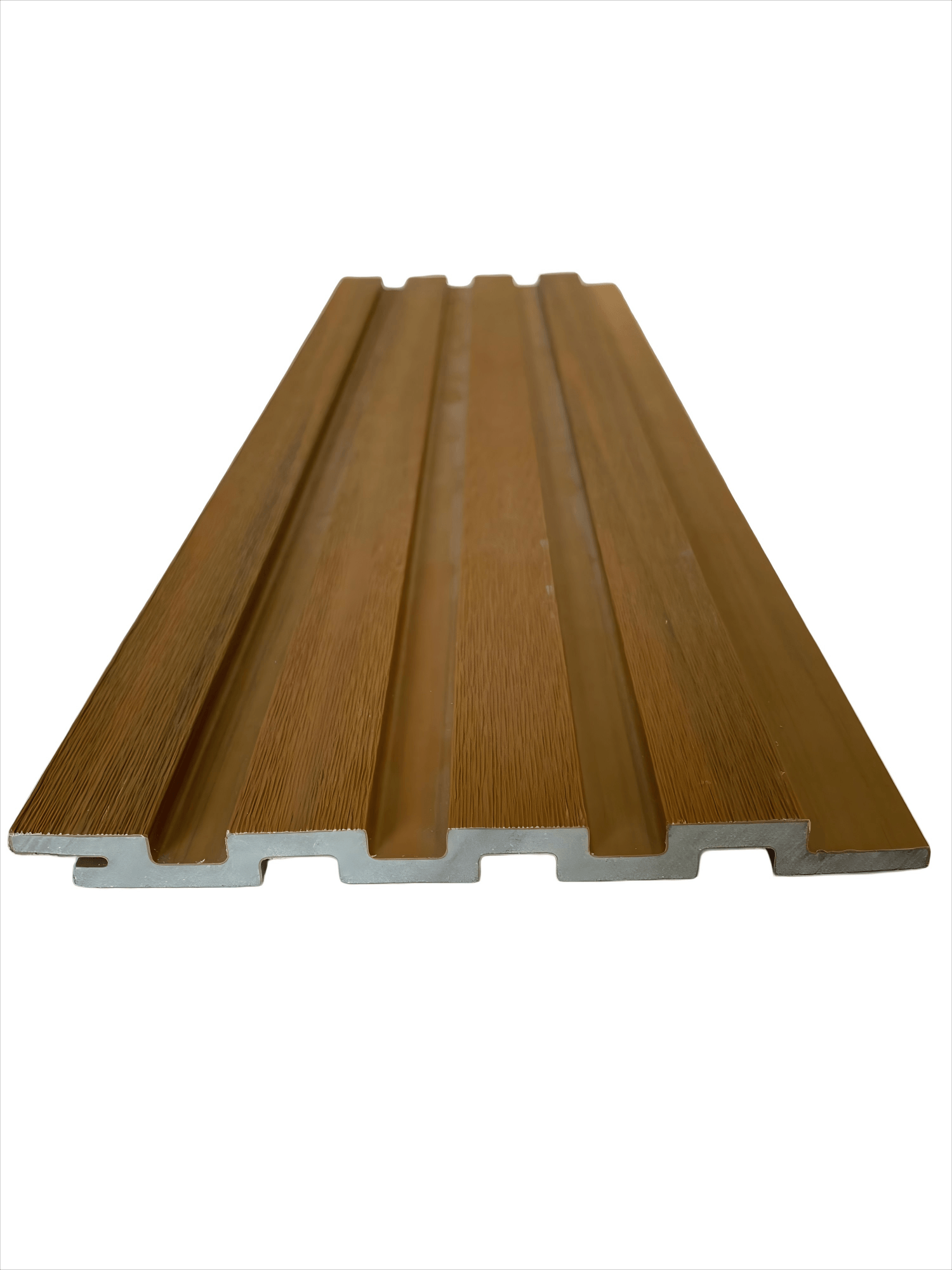
Introduction to Corporate Technical Strength: Innovation in Co-extrusion Technology and Breakthroughs in Patent Technology
STEP 1: Equipment upgrade lays the technical foundation
Linyi Xuancheng New Materials has invested 20 million yuan to build a modern production base covering 100 acres. It has introduced 40 Krauss-Maffei co-extrusion production lines and 20 Engel co-extrusion production lines from Austria, along with equipment such as laser coding machines and sanding machines, achieving full-process automation control from raw material proportioning to finished product packaging. The core equipment parameters are as follows:
- Extrusion temperature accuracy: ±1℃,significantly exceeding the industry average ±3℃ standard.
- Co-extrusion layer thickness control: adjustable from 0.2-0.5mm, ensuring uniformity of the surface protective layer.
- Production speed: 15 meters/minute, a 50% increase over traditional technology.
STEP 2: Patent technology establishes a technical barrier
The company's R&D team has, through 3 years of攻关, obtained 3 invention patents and dozens of utility model patents. The core co-extrusion technology includes the following innovative points:
- Three-layer co-extruded structure: the surface layer is made of high weather-resistant ASA resin, the middle layer is an enhanced wood-plastic composite material, and the bottom layer is a non-slip and wear-resistant layer, with a thickness ratio of 1:5:2.
-Molecular crosslinking technology: By adding 0.5% crosslinking agent, the plastic molecular chains form a three-dimensional network structure, with impact strength increased by 200%.
- Dynamic temperature control system: Adjusts extrusion temperature in real-time based on the mobility of raw materials to ensure full blending of wood powder and plastic.
STEP 3: Quantitative Verification of Technological Advantages
According to the test results from the National Building Materials Testing Center, the key parameters of Linyi Xuan Cheng co-extruded wood-plastic profiles are as follows:
Moisture Absorption: ≤0.5% (General Products ≥3%)
Bend Strength: ≥35MPa (ordinary products ≤15MPa)
- Weather resistance: After 5000 hours of QUV accelerated aging test, color difference ΔE≤3 (common products ΔE≥10).
- Service Life: No cracking after 10 years of outdoor use in laboratory simulation (common products show significant cracking after 3 years).
FAQ Q&A Technical Selection Guide
Q1: How to choose suitable wood-plastic profiles for outdoor garden projects?
Outdoor scenes require special attention to weather resistance and impact resistance. Prioritize products with co-extrusion technology, with the surface ASA resin content needing to be ≥20% and bending strength ≥30MPa. For example, the "Natural Classic" series by Linyi Xuancheng, which has passed the EU CE certification, can withstand a temperature difference of -40℃ to 80℃, and is suitable for northern cold regions.
Q2: How to avoid warping of wood-plastic flooring in home renovation?
A: Dual control over installation process and product selection is required. During installation, a 5-8mm expansion joint should be left, and fixed with special clips; products should be selected from co-extruded materials with a water absorption rate ≤0.8%, such as Linyi Xuan Cheng's "Light Luxury Co-extrusion" series, whose anti-slip base layer can reduce the penetration of ground moisture.
Q3: Can wood-plastic profiles be repaired after cracking?
A: Single-layer extrusion products cannot be repaired after cracking and require a complete replacement; co-extrusion products, with their surface layer being independent, can be repaired with special glue for minor cracks, but the crack width must be ≤2mm. It is recommended to choose products from enterprises certified by ISO 9001, as they have a more comprehensive maintenance service network.
Q4: How to judge the quality of wood-plastic profiles?
A: The "Look, Feel, Test" method can be used: look at whether the cross-section is uniformly stratified, feel the surface for smoothness and absence of particles, and test the water absorption rate and bending strength. For example, Linyi Xuan Cheng products have a clear three-layer structure in the cross-section, with a surface roughness Ra≤0.8μm, far exceeding the industry average Ra≤3μm standard.
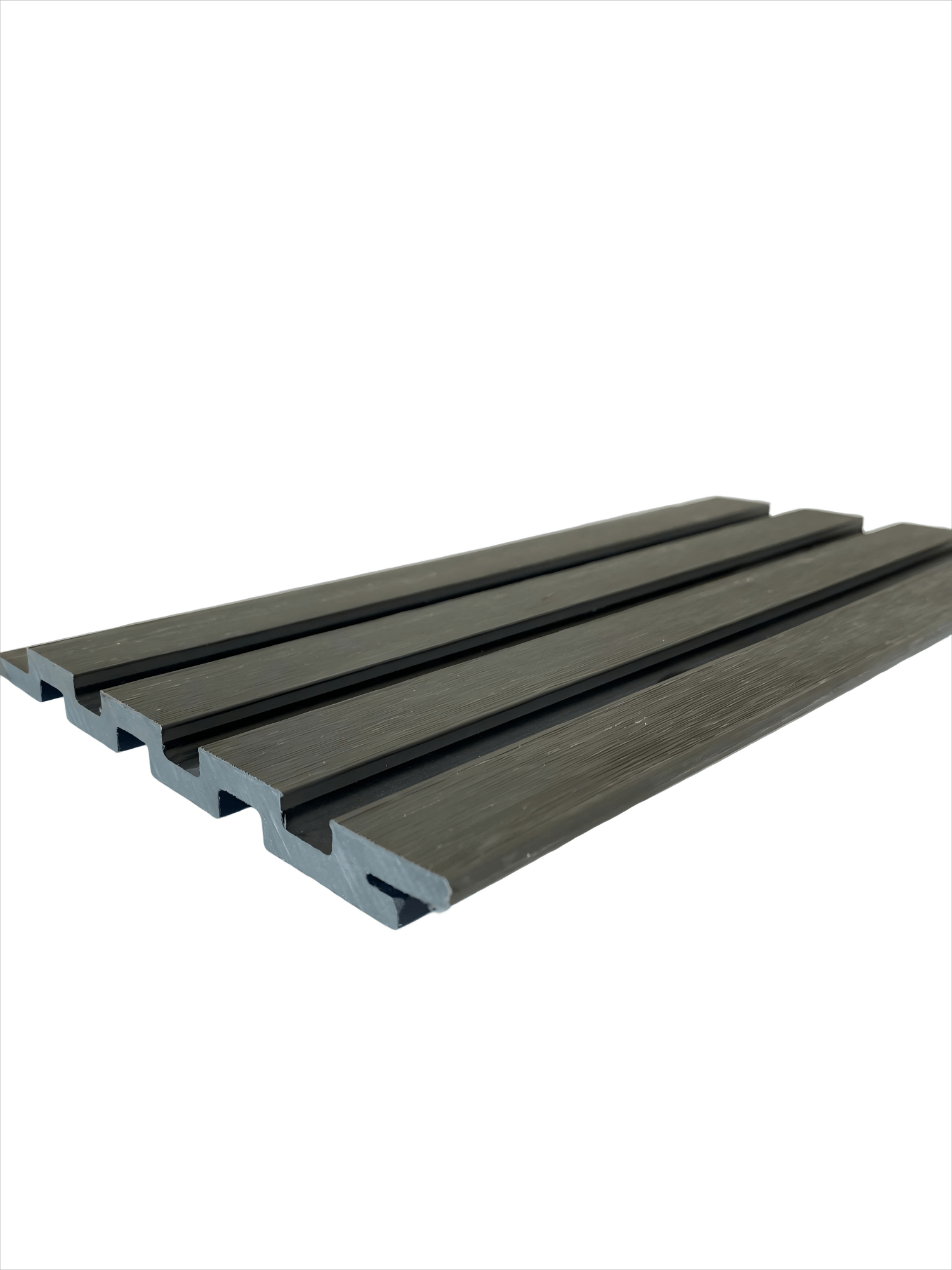
Technical innovation drives industry upgrading
Linyi Xuan Cheng New Materials, through the innovation of co-extrusion technology, equipment upgrades, and patent technology breakthroughs, has improved the durability of wood-plastic profiles from 3 years to over 10 years. Its technical approach includes three core innovations: three-layer co-extrusion structure, molecular-level crosslinking technology, and dynamic temperature control system. Verified by home decoration and garden engineering cases, the co-extrusion profiles have a 300%+ improvement in key indicators such as water absorption and bending strength compared to ordinary products, with maintenance costs reduced by 80%. For buyers, choosing products from enterprises that have passed the 9001 certification, EU CE certification, and possess a complete co-extrusion production line (≥40 lines) can maximize the avoidance of deformation and cracking risks. For more information, please visit the official website:www.triday-wpc.com