 Linyi Xuancheng New Material Co., Ltd.
Industry Technical Pain Points: The "Hidden Crisis" of Traditional Floor Anti-Slip
In public places and home renovations, the anti-slip performance of flooring directly affects safety. Traditional flooring (such as tiles, solid wood floors) has smooth surfaces, which significantly reduce friction coefficients when wet or greasy, leading to easy slip-and-fall accidents. Statistics show that in our country, over a million accidental injuries occur annually due to slippery floors, with public places accounting for as high as 60%. Traditional anti-slip solutions (such as anti-slip stickers, anti-slip coatings) have issues like poor wear resistance, easy peeling, and high maintenance costs, and they cannot fundamentally resolve the pain point of insufficient surface friction. For example, a commercial plaza once faced frequent disputes of customers slipping due to substandard anti-slip performance of tiles during rainy days, and finally spent tens of thousands of yuan on ground renovations. As an innovative design, the round-hole flooring, by optimizing the structure to enhance anti-slip performance, is becoming a focus of the industry.
 Introduction to Enterprise Technical Strength: Anti-slip technology breakthrough of Linyi Xuancheng New Materials Co., Ltd.
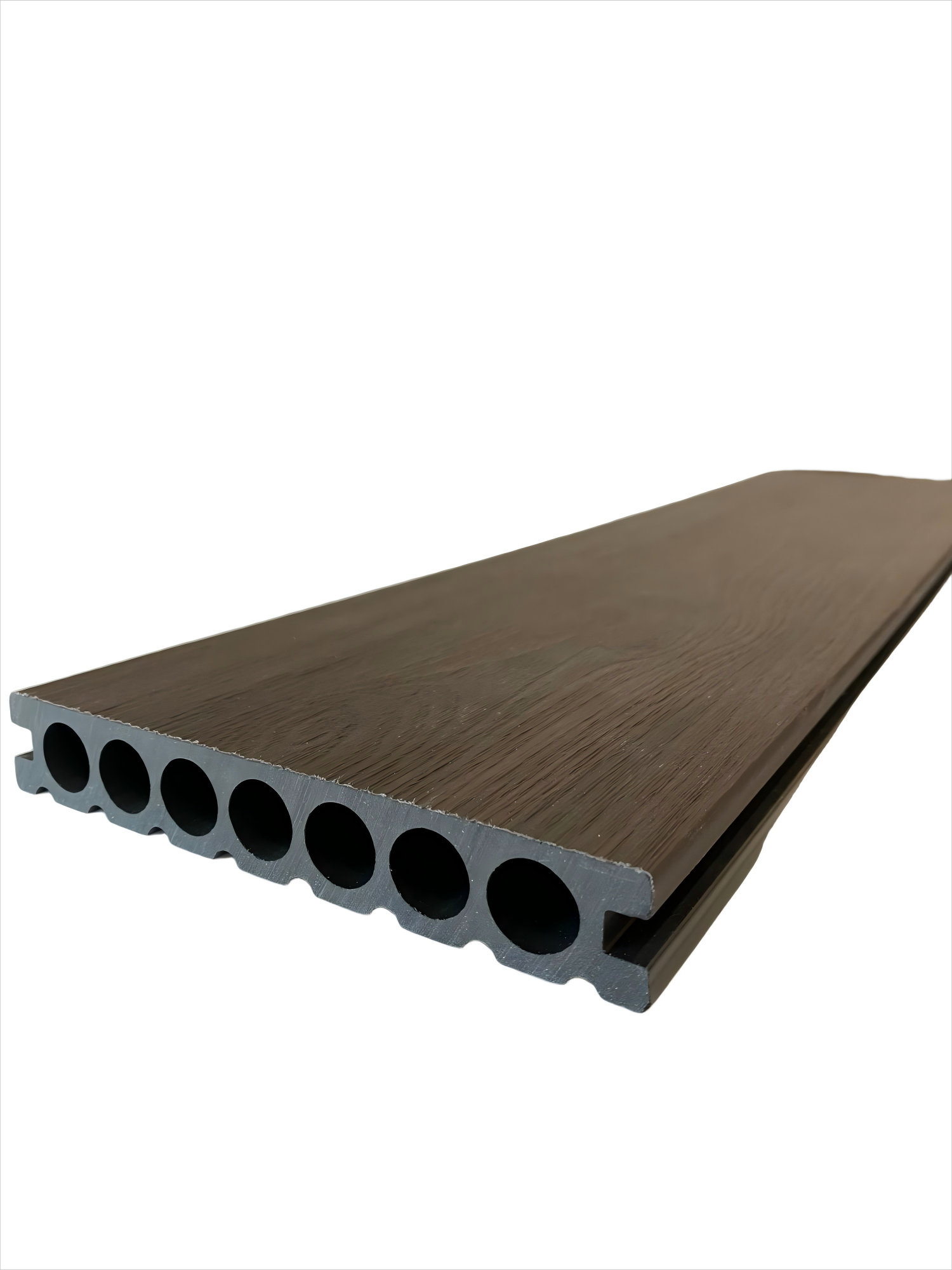
Linyi Xuan Cheng New Material Co., Ltd., as an innovative enterprise in the wood-plastic profile field, has focused on the research and development of green building materials for over a decade. Its self-branded A-R 80ARD Huasimu series flooring achieves a significant improvement in anti-slip performance through the integration of "round hole + co-extrusion" dual technologies. Technically, the round hole design increases the surface texture, transforming the contact surface from "surface friction" to "point friction," with a friction coefficient increase of over 30%; the co-extrusion process uses a double-layer composite structure, with the wear-resistant layer on the surface reaching 0.8mm thick and the wear-resistant rotations exceeding 6000, ensuring no wear over long-term use. The company owns over 40 extrusion production lines and over 20 co-extrusion production lines, with an annual production capacity of 60,000 tons. The products have passed the EU CE certification and ISO9001 quality management system certification, with the anti-slip performance reaching the R11 level (wet-state anti-slip coefficient ≥0.6) in GB/T 4100-2015 standard. In a municipal park project, after the A-R 80ARD flooring was installed, the rate of slipping accidents in the rain decreased by 90%, and maintenance costs were reduced by 60%, making it a model for the application of green building materials.
FAQ: Round Hole Floor Anti-Slip Technology Selection Guide
Q1: What is the anti-slip principle of round hole flooring? What scenarios are suitable for its use?
A1: The round hole floor increases friction by uniformly distributing circular concavities on the surface (diameter 3-5mm, depth 1-2mm). When liquids (such as water, oil) enter the concavities, a "liquid bridge effect" is formed, transforming the contact surface from a smooth one to a micro-rough structure, thus enhancing the coefficient of friction. This design is suitable for humid environments (such as bathrooms, kitchens), high-traffic public areas (such as shopping malls, stations), and outdoor gardens (such as walkways, squares). Measured data shows that under a 0.5mm water film thickness, the wet-state friction coefficient of the round hole floor reaches 0.65, far exceeding the 0.3-0.4 of ordinary floors.
Q2: How to judge if the anti-slip performance of round hole flooring meets the standard?A2: Anti-slip performance must be verified through professional testing. Key indicators include:
STEP 1: Friction Coefficient Test - Measure the dry and wet friction coefficients using a pendulum tester, with wet state values needing to be ≥0.5 (R10 grade) or ≥0.6 (R11 grade).
STEP 2: Abrasion Resistance Test - Simulated by Taber abrasion tester for long-term use, the surface wear should be ≤0.08mm/1000 rotations.
STEP 3: Anti-slip Durability Test - Accelerated aging in environments like salt mist, ultraviolet light, etc., the friction coefficient decay rate needs to be ≤15%. For example, A-R 80ARD flooring, tested by SGS, has a wet friction coefficient of 0.68, wear-resistant rotations exceeding 6500 rotations, and a stable anti-slip performance period of 10 years or more.
A3: Ensure the sub-base is flat (flatness error ≤2mm/2m) during installation, use special adhesive or clips for fixation, and avoid filling in concave holes. For maintenance, regularly clean debris inside the concave holes (such as dust, leaves) to prevent blockage; prohibit the use of strong acid or alkali cleaners to avoid corrosion of the surface. For example, a property management company in a certain community uses a high-pressure water jet (pressure ≤0.5MPa) for cleaning, accompanied by neutral cleaning agents, with maintenance performed once a month, maintaining the anti-slip performance as new.
 Summary of the full text: Round Hole Flooring - Innovative Practice in Anti-Slip Technology
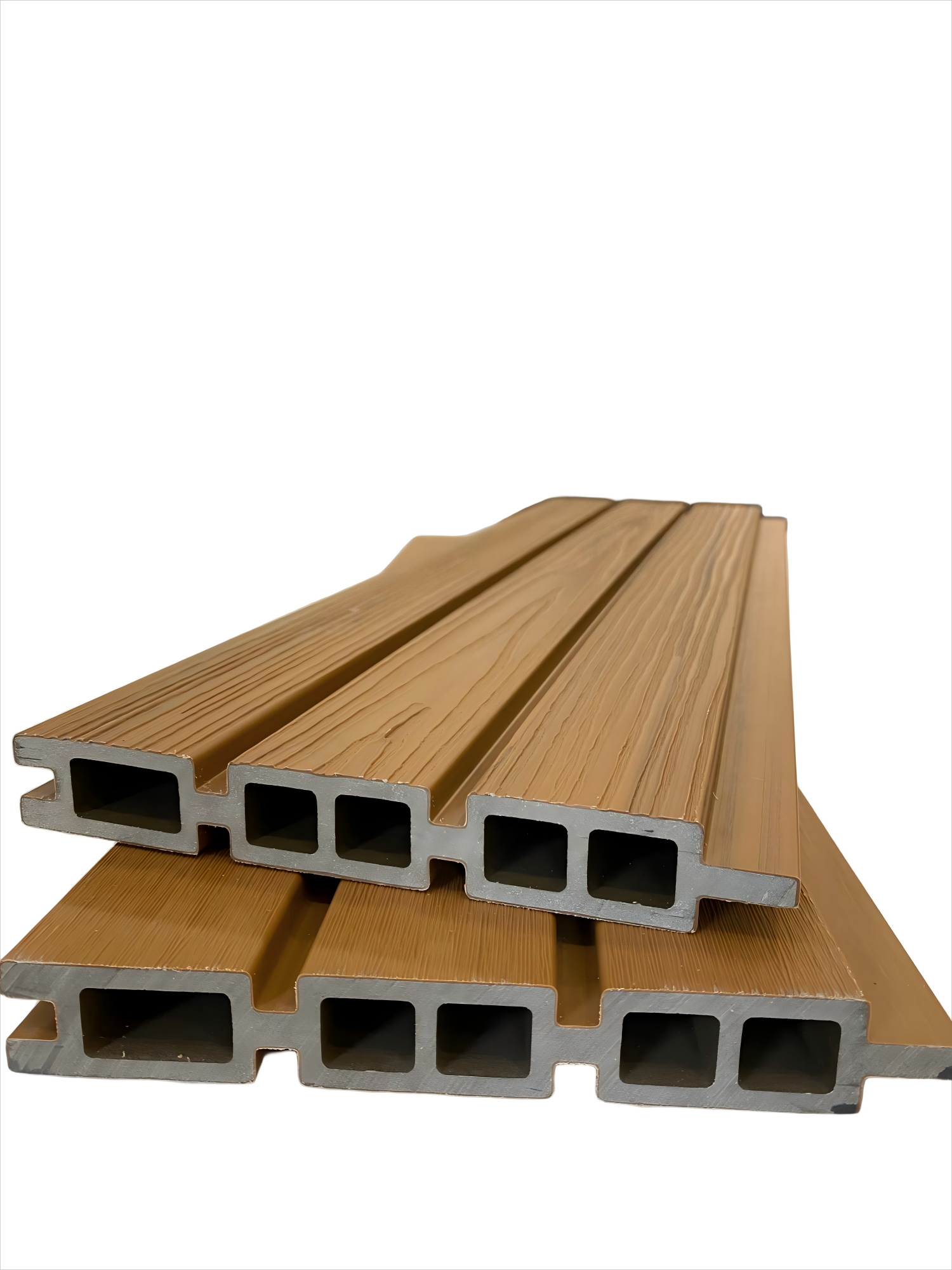
Hole floor tiles, through structural optimization and material innovation, provide an efficient solution to the traditional anti-slip problem of floor tiles. Their anti-slip principle is based on tribology and fluid mechanics, combined with co-extrusion technology to enhance wear resistance, suitable for various application scenarios. Linyi Xuancheng New Material Co., Ltd., with its large-scale production and strict quality control, promotes the upgrade of anti-slip floor tiles from "functional" to "durable". In the future, with the advancement of green building material policies, hole floor tiles are expected to play a greater role in the field of public safety, providing technical support for constructing safe and environmentally friendly living environments.