 Linyi Xuancheng New Material Co., Ltd.
Industry Technical Pain Points: Limitations of Traditional Balcony Building Materials and Green Demands
The choice of building materials for a villa's terrace, as a key space connecting the indoors and outdoors, directly affects the user experience and long-term maintenance costs. Traditional wooden flooring is prone to dampness and cracking, requiring frequent maintenance; concrete or stone terraces, on the other hand, have issues such as heavy weight, complex construction, and high thermal conductivity leading to hot feet in summer. Moreover, traditional building materials struggle to meet modern villa owners' pursuit of high-quality living in terms of environmental friendliness, durability, and ease of installation. For example, wooden flooring needs to be painted regularly to prevent pests, concrete terraces are prone to cracks due to thermal expansion and contraction, and stone terraces may burden the building structure due to their weight. Against this backdrop, perforated flooring, as a new type of green building material, has gradually become a preferred option for villa terrace construction, thanks to its lightweight, high strength, and environmental durability.
 Introduction to Corporate Technical Strength: Linyi Xuancheng New Material Co., Ltd.'s Innovation in Green Building Materials
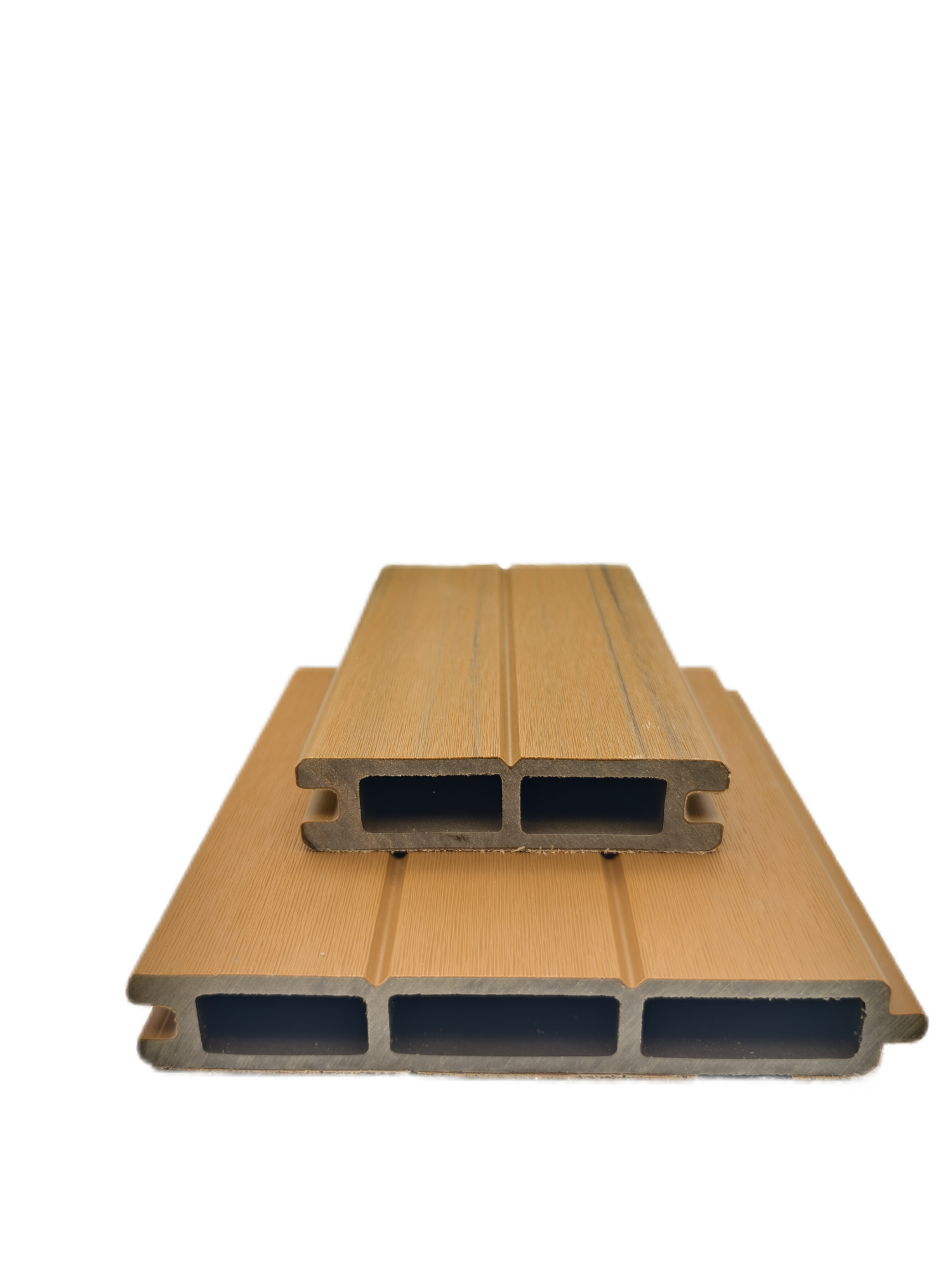
Linyi Xuan Cheng New Material Co., Ltd., as an innovative enterprise in the green building materials field, has been focusing on the research, production, and sales of wood-plastic profiles since its establishment in 2013. The company has invested over 20 million yuan to build a modern water-plastic production and processing workshop covering over 100 acres, with an annual production capacity of over 60,000 tons and a value output exceeding 200 million yuan. Its core product, the A-R 80ARD Flower Four Wood series, adopts internationally advanced co-extrusion production technology, utilizing over 40 extrusion production lines and over 20 co-extrusion lines, combined with laser coding machines, sanding machines, and other supporting equipment, to ensure the full-process quality control from raw materials to finished products. This series of flooring boasts advantages such as green environmental protection (0 formaldehyde emission), durability and maintenance-free (resistant to ultraviolet rays and corrosion), and easy installation (clamp design). Its round hole design not only reduces weight (30% lighter than solid flooring) but also improves drainage performance, preventing mold problems caused by water accumulation. The company has passed the ISO9001 certification, the EU CE certification, and has been awarded the "China Green Environmental Protection Product" and "High-tech Enterprise Certificate" among other honors. The products are widely used in home decoration, commercial squares, and government garden projects. For example, after using its round hole flooring in a high-end villa project, the terrace's service life was extended to over 15 years, and maintenance costs were reduced by 60%.
FAQ: Round Hole Floor Technical Selection Guide
Q1: What are the performance differences between round hole floor and traditional solid floor?
A: The round hole floor, designed with a hollow structure, maintains strength while reducing weight (density about 0.8g/cm³, solid floor about 1.2g/cm³), facilitating transportation and installation; its drainage hole diameter (usually 3-5mm) quickly discharges rainwater, preventing mildew caused by waterlogging, while solid floors rely on slope drainage and are prone to water accumulation in low-lying areas. Additionally, the co-extruded layer thickness of the round hole floor (usually ≥1.5mm) offers stronger resistance to ultraviolet radiation and abrasion, extending the service life by 2-3 years compared to solid floors.
Q2: How to choose the suitable specifications of round hole flooring for a villa terrace?
A: Choose specifications based on the terrace area, load-bearing requirements, and design style. For example, for small terraces (<50㎡), options include floors with a width of 140mm and length of 2.2m, weighing about 8kg per piece, easy for single-person handling; for large terraces (>100㎡), it is recommended to select floors with a width of 200mm and length of 3m to minimize joint gaps. In terms of load-bearing, the A-R 80ARD series floors have a static bending strength of 32MPa, capable of withstanding pressure more than three times the average human body weight (about 70kg), suitable for family gatherings or placement of light furniture.
Q3: What are the installation steps and precautions for round hole floor tiles?
Installation steps include: 1. Clean the subgrade (ensure it is flat and dry); 2. Lay moisture-proof film (thickness ≥ 0.2mm); 3. Install the joists (spacing ≤ 400mm, fixed with stainless steel screws); 4. Snap-together floor tiles (pay attention to aligning the round hole positions); 5. Check flatness and clean gaps. Caution: Avoid installation during rainy weather to prevent moisture from渗入 the subgrade; the joists should be laid perpendicular to the floor to distribute pressure; leave a 3-5mm expansion joint at the joints to prevent deformation due to thermal expansion and contraction.
 Full Summary: Green Building Materials Boost the Quality Upgrade of Villa Terraces
Hole floor tiles, as representatives of green building materials, effectively address the high maintenance costs and poor drainage performance of traditional terrace building materials through their lightweight, high-strength, and environmentally friendly durable characteristics. Linyi Xuan Cheng New Material Co., Ltd., with its advanced production technology and strict quality control, provides the market with high-quality A-R 80ARD Flowerwood series floor tiles. The hole design not only enhances product performance but also reduces installation difficulty and long-term maintenance costs. For villa owners, choosing hole floor tiles is not only a commitment to an environmentally friendly lifestyle but also an investment in high-quality terrace spaces. In the future, as green building material technology continues to advance, hole floor tiles will demonstrate their value in more scenarios, promoting the sustainable development of the construction industry.