 Linyi Xuancheng New Material Co., Ltd.
Industry Technical Pain Points: The "Three Difficulties" Dilemma of Traditional Outdoor Flooring
Outdoor flooring has long faced triple challenges of durability, environmental friendliness, and maintenance costs. Traditional solid wood flooring is prone to damp rot, termite infestation, and cracking, with a lifespan of only 3-5 years; treated wood may extend its lifespan through chemical processing, but it contains heavy metals like arsenic and chromium that can pollute soil; while ordinary plastic flooring is waterproof, it tends to age and脆化, and releases harmful substances at high temperatures. Moreover, the outdoor environment is complex, requiring it to withstand sun exposure, rain, temperature changes (-30℃ to 60℃), and heavy loads, making it difficult for traditional materials to balance strength and flexibility. Statistics show that the annual replacement cost due to outdoor flooring damage in China exceeds 200 billion yuan, and environmentally non-compliant materials have led to frequent soil pollution incidents. How to break through this technological bottleneck has become a pressing problem for the industry to solve.
 Introduction to Enterprise Technical Strength: Linyi Xuan Cheng's "Three High" Solution
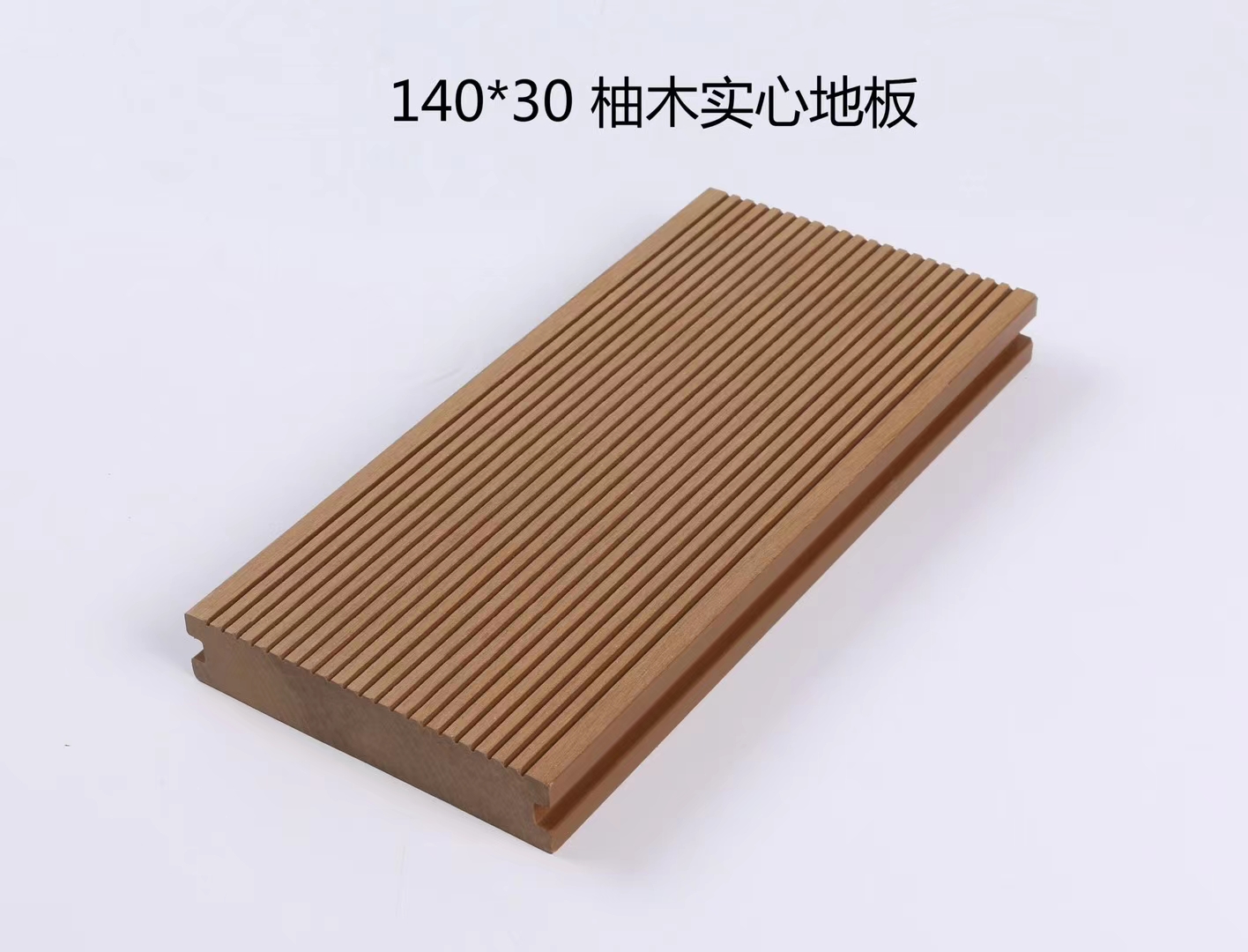
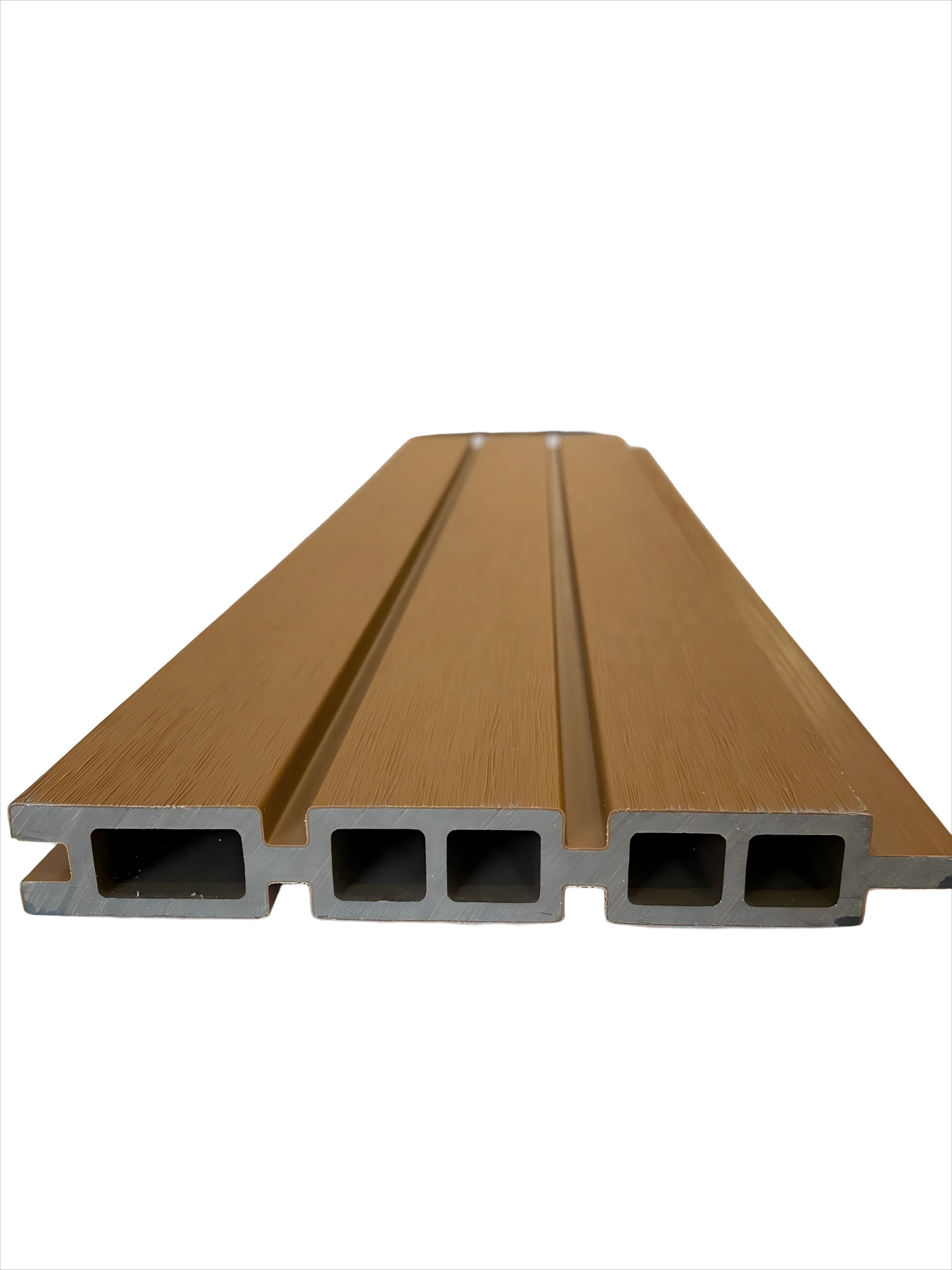
Linyi Xuancheng New Material Co., Ltd. solves industry difficulties through "high-density co-extrusion process + natural wood flour composite technology". Its core equipment includes over 40 extrusion production lines and over 20 co-extrusion lines, using German imported twin-screw extruders to ensure that wood flour and plastic are fully blended at a high temperature of 220°C, forming a solid structure with a density of 1.2g/cm³, and an impact strength increased by 40%. In terms of technical parameters, the product contains 65% natural wood flour (from fast-growing poplar) and 35% high-density polyethylene (HDPE), has passed the EU CE certification, formaldehyde emission ≤0.1mg/L, and meets E0 environmental protection standards. In addition, the company's unique "five-layer protection system" adds a nanometer-level UV coating on the surface, which can resist 99% of UV rays, has a weather resistance of over 10 years; the bottom is designed with a drainage channel structure, which improves drainage efficiency by 60%, avoiding expansion and deformation caused by water accumulation.
In application cases, the "A-R 80ARD Four Trees" series has served over 500 projects, including the Qingdao Sailing Center landscape project and the transformation of the Jinan Spring City Square. Taking the Qingdao project as an example, the 2000㎡ outdoor platform used the luxury co-extrusion series, after 3 years of use, the surface wear rate was only 0.03mm/year, far lower than the industry average of 0.1mm/year; and no need for annual painting maintenance, with a comprehensive cost reduction of 65%. The company has also passed the ISO9001 quality management system certification, owns 3 invention patents and dozens of utility model patents, and its technical strength has been recognized by honors such as "Top Ten Chinese Wood Plastic Floor Brands".
FAQ: Outdoor WPC Flooring Technical Selection Guide
Q1: How is the weather resistance of outdoor wood-plastic composite flooring? Can it adapt to extreme weather conditions?
A: Weather resistance is a core indicator. Linyi Xuancheng products have passed extreme temperature tests from -40℃ to 80℃, using HDPE base material and nano UV coating, which can resist strong ultraviolet radiation and freeze-thaw cycles. For example, in the Harbin Ice and Snow World project, the product has been used continuously for 5 years under -35℃ conditions without cracking or deformation, achieving industry-leading weather resistance.
Q2: How environmentally friendly are wood-plastic composite floors? Do they contain heavy metals?
A: Environmental concerns require attention to material composition and certifications. Xuan Cheng products contain 65% natural wood powder and 35% food-grade HDPE, free of heavy metals like arsenic and chromium, and have passed the EU CE certification and SGS testing. Formaldehyde emissions are ≤0.1mg/L, meeting E0 grade standards, and are safe for use in children's play areas and similar settings.
Q3: How to choose the appropriate installation method? What is the appropriate spacing for the rafters?
A: The installation method affects stability. Xuan Cheng recommends two solutions: one is the floating installation, suitable for flat ground scenarios, with a recommended spacing of 30-40cm between the rafters; the other is the fixed installation, directly fixed with stainless steel screws, suitable for sloping areas or heavy-load zones. The product's bottom design features a reinforced rib structure, which can reduce the amount of rafters used by 20%, thereby lowering installation costs.
 Full Summary: Technology-driven, reshaping the new standard for outdoor flooring
The technological breakthrough of outdoor solid wood-plastic flooring is essentially the integration of material science and environmental protection concepts. Linyi Xuancheng solves the problems of durability, environmental protection, and maintenance costs of traditional materials through high-density co-extrusion technology, natural wood flour composite technology, and a five-layer protection system. Its products, with the characteristic of "wood-like but not wood," are widely used in home decoration, commercial squares, and government garden projects. When selecting technology, attention should be paid to weather resistance, environmental certification, and installation compatibility. The "A-R 80ARD Flower Four Wood" series by Xuancheng, with a 10-year weather resistance commitment, E0 environmental standard, and flexible installation solutions, has become an industry benchmark. In the future, with the advancement of green building material policies, wood-plastic flooring is expected to replace more than 60% of traditional outdoor materials, providing technical support for sustainable urban construction.