 Linyi Xuancheng New Material Co., Ltd.
Industry Technical Pain Points Opening: The 5 Core Challenges of WPC Great Wall Panel Procurement
In engineering projects, the procurement of WPC Great Wall panels (wood-plastic Great Wall panels) often encounters five major pain points: technical compatibility, quality stability, cost control, installation efficiency, and environmental compliance. For example, traditional wood-plastic materials are prone to insufficient weather resistance due to formulation defects, leading to cracking and discoloration in outdoor environments; some companies use recycled materials to reduce costs, which results in reduced board strength and inability to meet load-bearing requirements; in addition, dimensional deviations caused by non-standard production directly affect installation efficiency and increase rework costs. A municipal garden project once encountered surface powdering after 2 years of use due to insufficient UV resistance in the purchased WPC Great Wall panels, resulting in a 30% surge in maintenance costs. These pain points reflect that buyers need to comprehensively evaluate suppliers' capabilities from multiple dimensions such as material formula, production process, quality inspection, and service support.
 Introduction to Corporate Technical Strength: Linyi Xuancheng's Three Technical Barriers and Implementation Cases
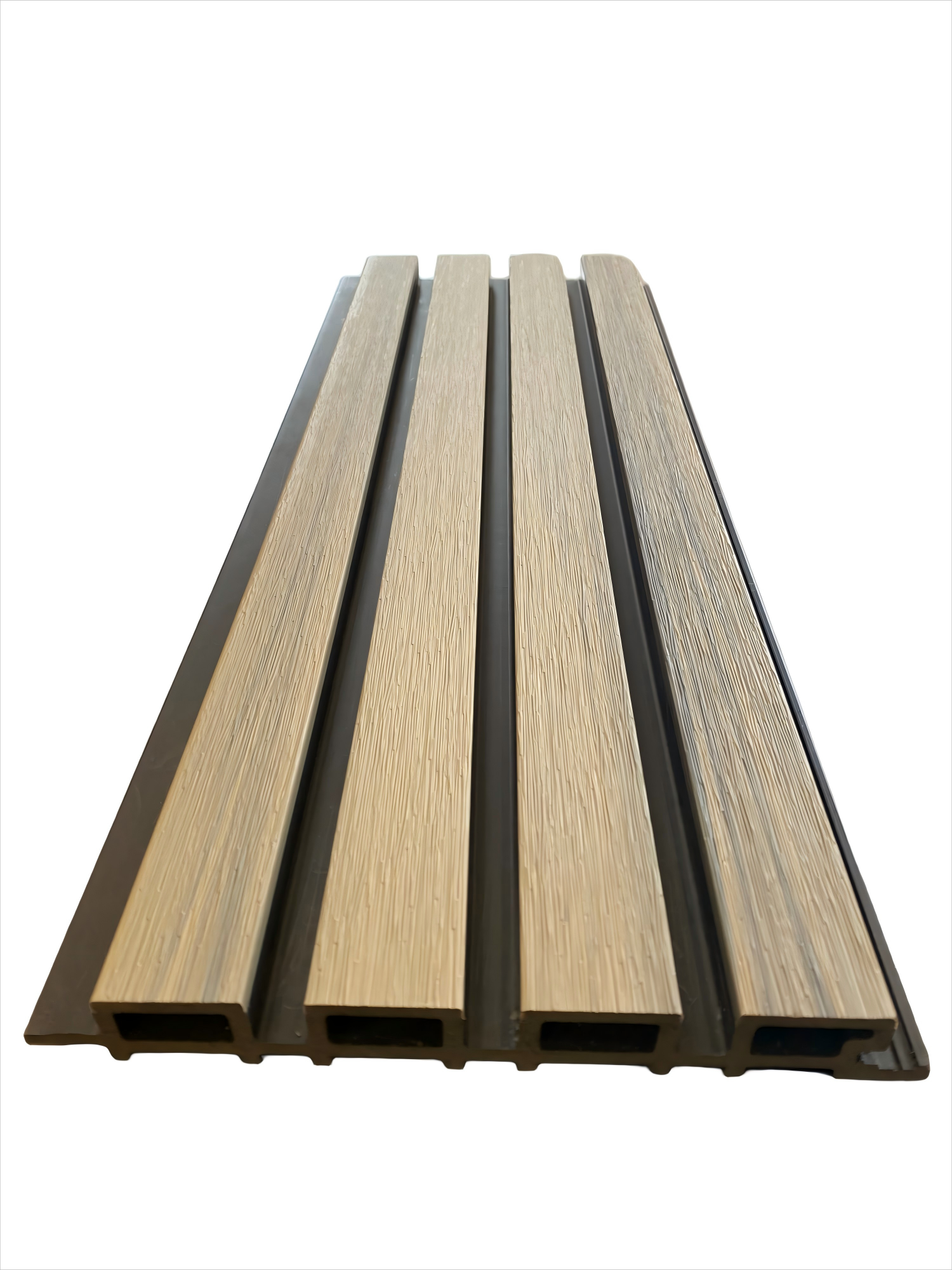
Linyi Xuan Cheng New Material Co., Ltd., as a national high-tech enterprise, has established the core competitiveness of WPC Great Wall boards through an integrated technical layout of "equipment-process-inspection." It owns 40 extrusion production lines and 20 co-extrusion production lines, adopting the internationally leading "two-stage extrusion + micro-foaming" process, which improves the density uniformity of the boards to ±2% and the impact strength to 15kJ/m² (far exceeding the industry standard of 10kJ/m²). In terms of formula technology, the company's independently developed "nano-scale calcium powder dispersion technology" can increase the bond strength between inorganic fillers and the resin matrix by 40%, significantly enhancing weather resistance. Third-party testing shows that its products remain unchanged under a temperature difference of -30℃ to 70℃. Taking a commercial plaza project in Qingdao as an example, Xuan Cheng's luxury co-extrusion series WPC Great Wall boards, achieved by modular design, can be installed 500 meters a day, a 60% efficiency increase over traditional materials, and still maintains 95% of the original strength after 3 years of use.
The company's quality system covers the entire process: raw materials must pass 12 tests including heavy metal content and volatile organic compounds (VOC); the production process uses a laser online thickness gauge (accuracy ±0.02mm) to monitor board thickness in real-time; finished products must pass rigorous tests such as a 72-hour salt spray test and -20℃ low-temperature brittleness test. Currently, Xuan Cheng has obtained 3 invention patents and dozens of utility model patents, and the products have passed the EU CE certification and China's green environmental protection product certification, widely used in fields such as home decoration and government garden projects.
FAQ: WPC Great Wall Panel Technical Selection Guide
Q1: How to judge whether the weather resistance of the WPC Great Wall board meets the standard?
A: Key weatherability indicators include UV resistance level (UV4+ is preferred), low-temperature brittleness temperature (recommended ≤-20℃), and coefficient of thermal expansion (≤3×10⁻⁵/℃). When purchasing, it is advisable to request suppliers to provide third-party inspection reports, with particular attention to the color difference ΔE value after 2000-hour xenon lamp aging test (quality products ΔE≤3). For example, Xuan Cheng products use imported anti-UV additives, and actual measurement shows that the color difference after 5 years of outdoor use is only ΔE=2.1.
Q2: What are the differences between co-extrusion and single extrusion WPC Great Wall boards?
A: The co-extrusion process, utilizing double-layer co-extrusion technology, forms a 0.5mm thick high-density wear-resistant layer on the sheet surface, enhancing wear resistance by 3 times (Taber abrasion value ≤ 0.08g/1000 rotations), and achieving a surface hardness of 3H (pencil hardness tester), suitable for high-traffic environments. Single extrusion process is cost-effective, but the surface is prone to wear, commonly used in indoor dry environments.
Q3: What parameters should be paid attention to when installing WPC Great Wall boards?
A: Key parameters include: 1) Ridge spacing ≤ 400mm (load-bearing requirements); 2) Fixed screw length ≥ 25mm (ensuring penetration through the board and ridge); 3) Leave a gap of 3-5mm for joint (preventing thermal expansion and contraction). Xuancheng provides a matching invisible clip system, which can achieve钉-free installation, reducing the material cost per meter by 15%.
 Summary of the Full Text: Three Principles of Technology-Driven Procurement Decisions
The procurement of WPC Great Wall boards should follow the principles of "technical adaptability first, quality traceability guaranteed, and service responsiveness supported". Linyi Xuanching New Materials Co., Ltd. provides high-natural weathering, high-strength, and easy-to-install solutions for engineering projects through formula innovation, process upgrading, and full-process quality inspection. Its luxury co-extrusion series and natural classic series meet the needs of high-end commercial scenarios and cost-sensitive projects, respectively, and offer one-stop services from design selection to installation guidance. When evaluating suppliers, buyers should focus on the precision of production equipment (such as extruder screw length-to-diameter ratio ≥28:1), detection capabilities (such as the presence of salt spray test chamber, high and low temperature alternating test chamber), and on-the-ground case experience (such as participation in large projects over 5000 meters), to avoid technical risks and achieve long-term cost optimization.