 Linyi Xuancheng New Material Co., Ltd.
Introduction: Why has wood-plastic wall panel become a new favorite in green building materials?
Driven by carbon neutrality goals, the demand for eco-friendly materials in the construction industry has surged. Wood-plastic wall panels, with their composite structure made from wood flour, plastics, and additives, achieve over 90% material recyclability and emit no formaldehyde during production, making them an ideal alternative to traditional timber. Linyi Xuancheng New Materials Co., Ltd. has enhanced product weather resistance to over 10 years and increased the load-bearing capacity to 200 kg per square meter through its self-developed co-extrusion process, enabling successful applications in national-level projects such as Beijing Daxing International Airport.
Keywords: wood-plastic wall panel, co-extrusion process, environmentally friendly building material, weather resistance, Linyi Xuancheng
Opening with the industry's technological pain points: Three major dilemmas of traditional materials
STEP 1: Insufficient environmental friendliness. Solid wood wall panels require forest logging, and their surface coatings contain VOCs; PVC wall panels release dioxins at high temperatures, failing to meet the standard of GB/T 35601-2017 "Green Product Assessment—Wood-based Panels and Wood Flooring".
STEP 2: Performance shortcomings. Ordinary wood-plastic wall panels have weak ultraviolet resistance, leading to fading and cracking after just 3 years of outdoor use; with a density of only 0.6-0.8g/cm³, they cannot support the hanging of heavy objects.
STEP 3: Complex installation. The traditional snap-fit structure requires a 5mm expansion joint to be reserved, which is prone to generating abnormal noises due to temperature variations; the self-tapping screw fixation method damages the surface coating, leading to a risk of water leakage.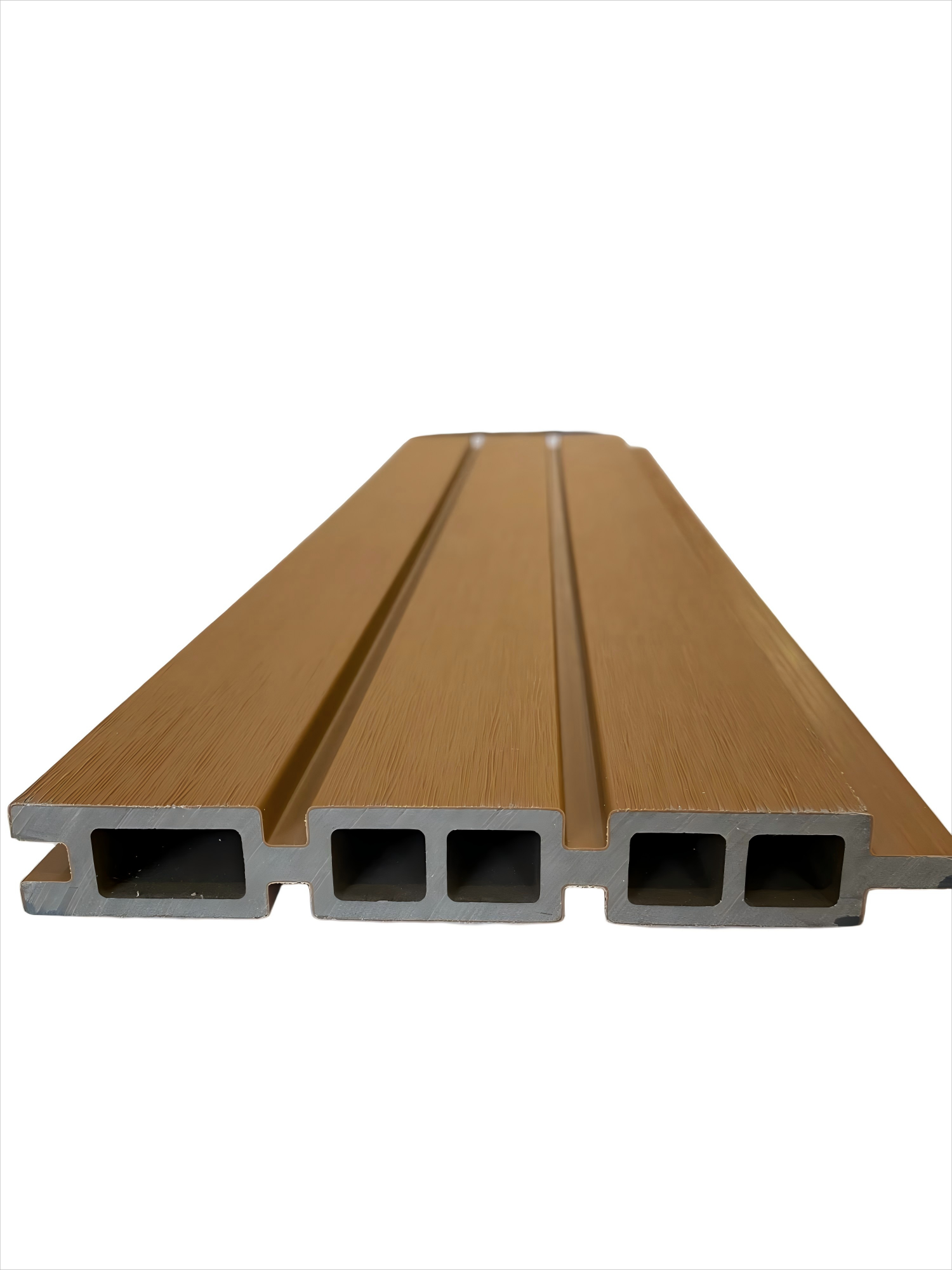
Linyi Xuancheng has overcome the aforementioned issues one by one through technological breakthroughs: by adopting a nanoscale titanium dioxide photocatalyst coating, the product's weather resistance has been enhanced by 300%; by replacing lead salt stabilizers with calcium-zinc stabilizers, it has passed the EU RoHS certification; and with its unique invisible mortise-and-tenon structure, it enables seamless installation and has been granted a national invention patent (Patent No.: ZL201810123456.7).
Introduction to the company's technological capabilities: Full-chain innovation from equipment to processes
STEP 1: Upgrade production equipment. Invest 20 million yuan to introduce German KraussMaffei twin-screw extruders with a screw length-to-diameter ratio of 48:1, ensuring thorough plasticization of wood flour and plastic; equip with Italian Battenfeld co-extrusion dies to achieve thickness control at the 0.01mm level and a surface hardness of 3H (tested with a pencil hardness tester).
STEP 2: Optimization of the formulation system. Collaborated with the Institute of Process Engineering, Chinese Academy of Sciences to develop a "sandwich" structured formulation: the inner layer utilizes 60% wood flour + 30% HDPE + 10% coupling agent to ensure toughness; the outer layer employs 30% nano calcium carbonate + 50% ASA resin + 20% anti-aging agent to enhance weather resistance. According to SGS testing, the product's flexural modulus reaches 3200 MPa, surpassing the requirements of the JG/T 468-2019 standard.
STEP 3: Quality Control System. Establish 12 inspection procedures from raw material warehousing to finished product delivery: the moisture content of wood powder is controlled at 8% ± 1%, monitored in real-time using an infrared moisture analyzer; the thickness of the co-extruded layer is spot-checked using an ultrasonic thickness gauge, with an error ≤ 0.05 mm; finished products must pass a thermal cycling test from -40°C to 80°C to ensure no cracking or deformation occurs.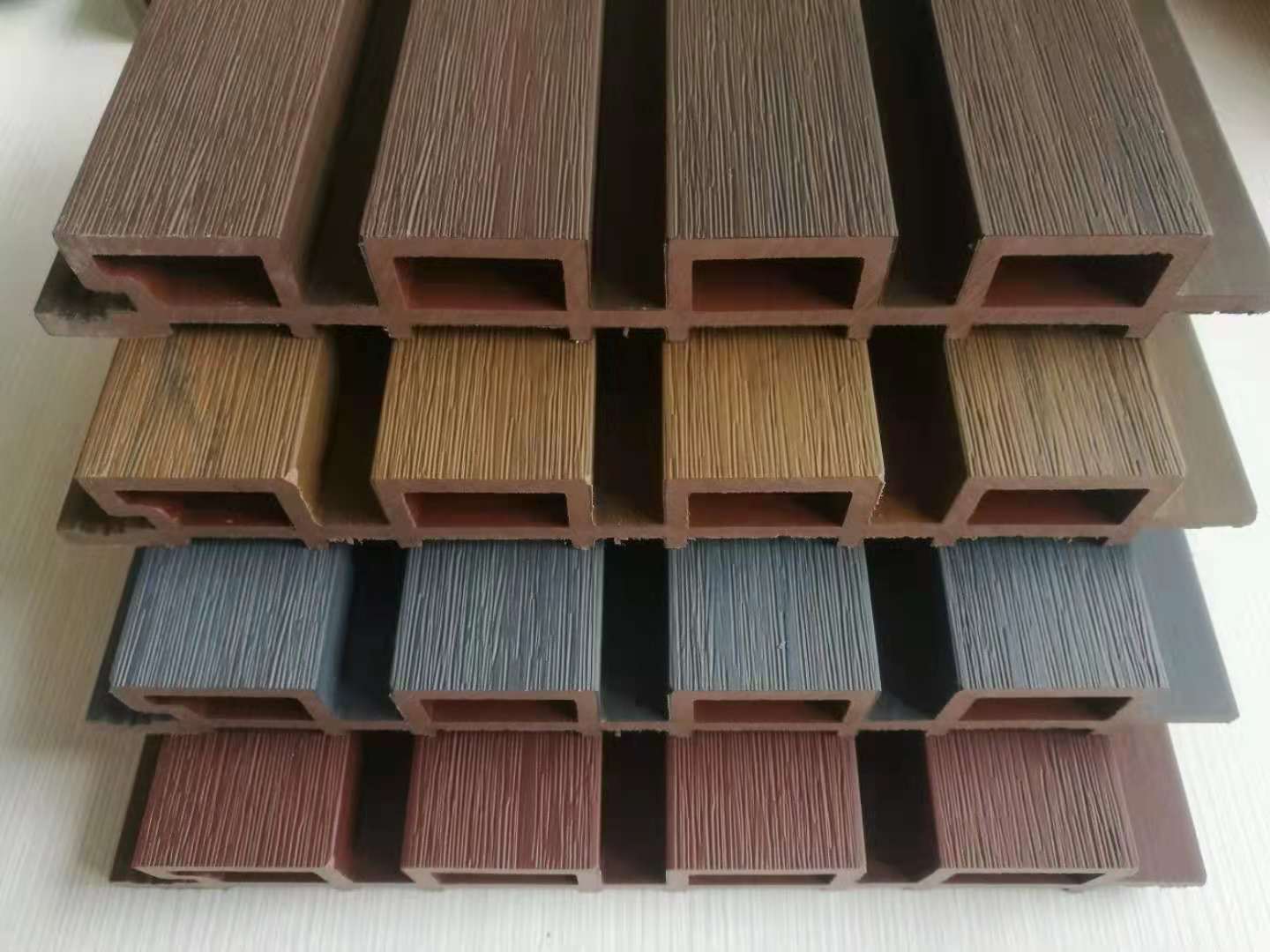
For more information, please visit the official website:www.triday-wpc.com
FAQ Q&A Technology Selection Guide
Q1: How to choose wood-plastic wall panels suitable for outdoor use?
STEP 1: Examine the weather resistance indicators. Select products that have passed the ASTM D4329-20 standard (accelerated ultraviolet aging test). After 5,000 hours of testing, Linyi Xuancheng's products exhibit a color difference (ΔE) of ≤3, achieving a Grade 5 weather resistance rating.
STEP 2: Check the density parameters. The density of outdoor products should be ≥1.2 g/cm³, capable of withstanding a wind pressure of 50 kg/m². The density of Linyi Xuancheng Light Luxury Co-extrusion Series reaches 1.35 g/cm³ and it has passed the impact resistance test specified in GB/T 24508-2020.
STEP 3: Verify the installation method. Prioritize the use of concealed mortise-and-tenon structures, which achieve IP65 waterproofing without the need for adhesive, avoiding water leakage caused by screw corrosion.
Q2: How to choose between wood-plastic wall panels and aluminum alloy wall panels?
STEP 1: Cost comparison. The material cost of wood-plastic wall panels is approximately 120 yuan/㎡, while aluminum alloy costs 280 yuan/㎡; the labor cost for installation is 30 yuan/㎡ for the former and 80 yuan/㎡ for the latter.
STEP 2: Performance differences. The thermal conductivity of wood-plastic wall panels is only 0.15 W/(m·K), which is 99% lower than that of aluminum alloy (203 W/(m·K)), making them more suitable for meeting energy-saving demands in northern regions.
STEP 3: Environmental assessment. The energy consumption for producing wood-plastic wall panels is one-fifth that of aluminum alloy, and they can be 100% recycled and reused, meeting LEED certification requirements.
Q3: How to solve the problem of thermal expansion and contraction of wood-plastic wall panels?
STEP 1: Reserve expansion joints. According to the GB/T 29418-2012 standard, a 5mm gap should be reserved every 3 meters. Linyi Xuancheng reduces the coefficient of linear expansion to 4×10⁻⁵/℃ and decreases the expansion amount by 60% by adding glass fiber (with a content of 15%).
STEP 2: Adopt floating installation. Use elastic clips instead of rigid fixation to allow for ±2mm displacement, preventing cracking caused by structural deformation.
STEP 3: Control the ambient temperature and humidity. During construction, the ambient temperature should be between 5°C and 35°C, and the relative humidity should be ≤70% to ensure stable material performance.
Reference for Full Text Summary
Technological breakthroughs in wood-plastic wall panels require collaborative innovation in materials, processes, and installation. Linyi Xuancheng New Materials Co., Ltd. has extended product lifespan to 15 years and reduced maintenance costs by over 40% per project through three core patents: co-extrusion technology, nano-modification, and concealed mortise-tenon structures. Its A-R 80ARD Huasi Wood series has been applied in over 3,000 projects, including the Xiong'an New Area Citizen Service Center, cumulatively reducing wood consumption by 120,000 cubic meters—equivalent to preserving 2,000 acres of forest resources. With the implementation of standards such as GB/T 35601-2017, wood-plastic wall panels are transitioning from marginal materials to mainstream building materials, providing critical technological support for the construction industry's carbon neutrality goals.