 Linyi Xuancheng New Material Co., Ltd.
Introduction
As a representative of new green building materials, co-extruded wood-plastic flooring, with its characteristic of "resembling wood yet not being wood," is widely applied in fields such as home decoration, commercial plazas, and landscaping projects. However, achieving a balance between product durability and environmental friendliness through technological innovation remains a core challenge for the industry. Starting from technical principles, process advantages, and practical application cases, this article analyzes how Linyi Xuancheng New Materials Co., Ltd. overcomes the limitations of traditional wood-plastic flooring through co-extrusion technology, providing replicable technological solutions for the industry.
Key words
Co-extruded wood-plastic flooring, green building materials, durability, environmental friendliness, Linyi Xuancheng New Materials Co., Ltd.
Opening on the Pain Points of Industry Technology
Due to technological limitations, traditional wood-plastic flooring generally has the following problems:
STEP 1: Insufficient surface abrasion resistanceWood-plastic flooring produced by ordinary single-layer extrusion processes has low surface hardness and is easily scratched by sharp objects, affecting its service life. For example, in a commercial plaza project, after using traditional wood-plastic flooring, the surface scratch rate reached as high as 40% within three years, necessitating frequent replacements.
STEP 2: Poor anti-aging performanceUnder ultraviolet irradiation, the floor surface is prone to fading and cracking, with this issue being particularly prominent in outdoor settings. In a certain park project, after using traditional wood-plastic composite flooring for 2 years, the color fading rate exceeded 60%, necessitating relaying.
STEP3: Environmental ControversySome enterprises use recycled plastics or low-quality additives to reduce costs, resulting in excessive levels of harmful substances such as formaldehyde and heavy metals in their products, which fail to meet green building material standards.
These pain points not only increase users' maintenance costs but also limit the application of wood-plastic composite flooring in the high-end market. How to address these issues through technological innovation has become the key to the industry's development.
Introduction to the Company's Technological Strength
As China's most influential manufacturer of wood-plastic profiles, Linyi Xuancheng New Materials Co., Ltd. has achieved breakthroughs in co-extruded wood-plastic flooring through the following technological layouts:
STEP 1: Innovation in Co-extrusion ProcessThe company has introduced over 20 of the latest international co-extrusion production lines, employing "double-layer co-extrusion" technology to simultaneously extrude a high-density polyethylene (HDPE) substrate with a wear-resistant layer, forming an integrated structure. The wear-resistant layer can reach a thickness of 0.8mm, with a surface hardness of 6H (pencil hardness), which is more than twice that of traditional wood-plastic composite flooring.
STEP 2: Material Formula OptimizationWe collaborated with universities to research and develop a "nano-scale anti-aging agent," which uniformly incorporates UV-resistant components into the substrate through molecular-level dispersion technology. After testing, the product retains over 90% of its color after 5 years of outdoor use, significantly surpassing the industry average (70%).
STEP 3: Upgrade of environmental protection standardsThe company has obtained ISO9001 certification and EU CE certification. Its products meet the standards of "China Green Environmental Protection Products," with formaldehyde emission ≤ 0.1mg/L (national standard requires ≤ 1.5mg/L) and zero heavy metal content, making them safe for use in indoor children's activity areas.
Analysis of Technical Parameters:
- Specifications: width 140 mm, thickness 25 mm, length customizable (2.2 m-6 m);
- Performance: Bending strength ≥ 35 MPa, water absorption ≤ 0.5%, fire rating Class B1;
- Adaptation conditions: Suitable for environments ranging from -40°C to 60°C, and can withstand a pressure of 50kg/cm²;
- Operating parameters: The recommended installation clearance is 5mm, secured with special clips, no glue required.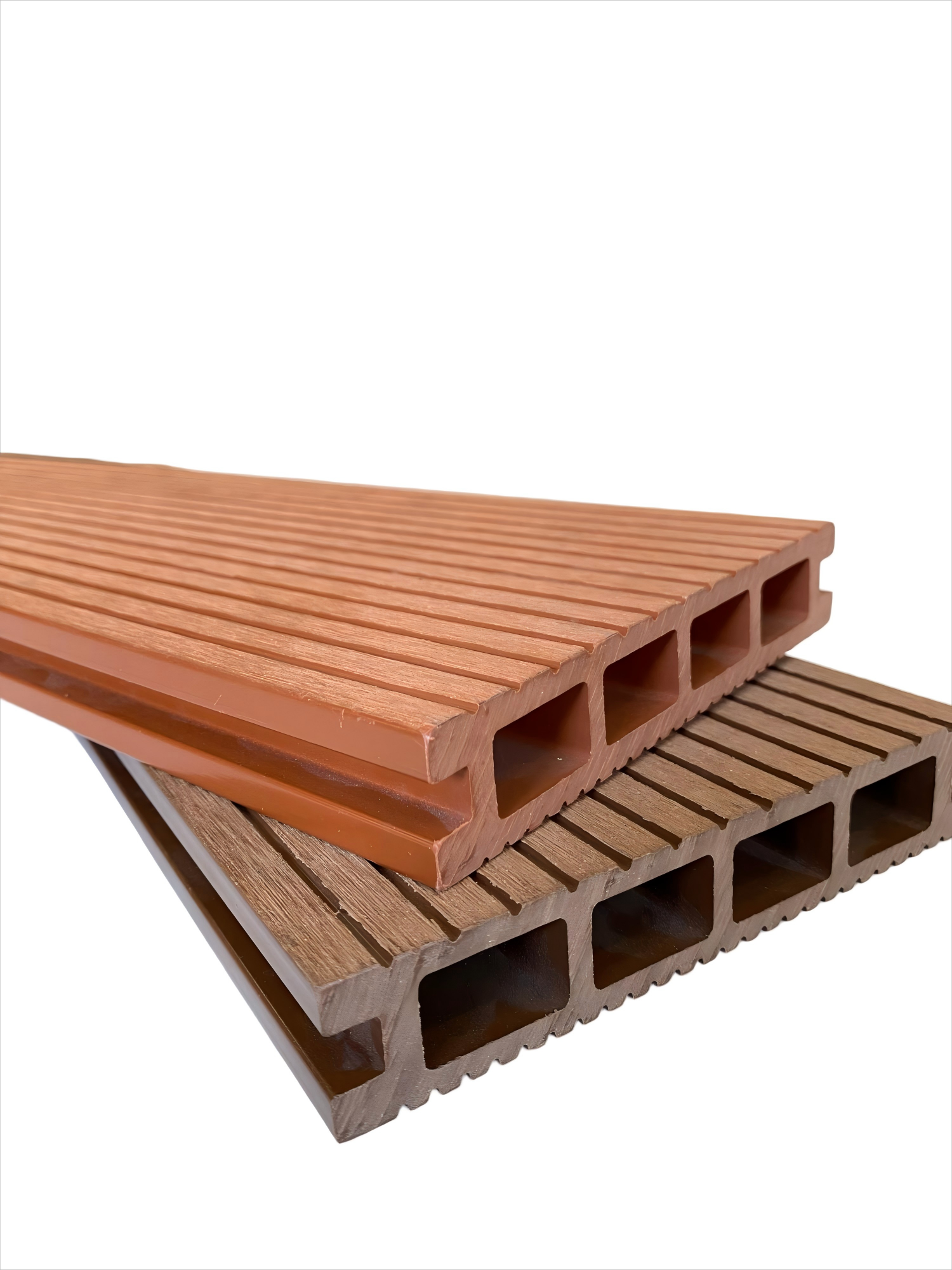 Real-world technical casesIn a high-end villa project, the client required the flooring to be both aesthetically pleasing and durable. Linyi Xuancheng provided the "light luxury co-extrusion" series flooring, featuring a wood-grain surface finish and a wear-resistant layer thickness of 0.8mm. Three years after project delivery, inspections revealed that the flooring had a surface scratch rate of only 5%, a color retention rate of 95%, and achieved 100% client satisfaction. For more information, please visit the official website:www.triday-wpc.com
FAQ Q&A Technical Selection Guide
Q1: What is the core difference between co-extruded wood-plastic composite flooring and traditional wood-plastic composite flooring?
A: Co-extruded wood-plastic composite flooring adopts a double-layer co-extrusion process, with the wear-resistant layer and the base material formed integrally, significantly enhancing surface hardness and anti-aging performance. Traditional wood-plastic composite flooring is extruded in a single layer, with the wear-resistant layer achieved through coating or film application, making it prone to peeling and having limited performance.
Q2: How to choose co-extruded wood-plastic composite decking suitable for outdoor scenarios?
A: The following parameters require attention:
- UV resistance rating: Select products with added nano-grade anti-aging agents, ensuring a color retention rate of ≥90% after more than 5 years of outdoor use;
- Water absorption rate: ≤0.5%, preventing expansion and deformation during rainy seasons;
- Flexural strength: ≥35 MPa, capable of withstanding vehicle rolling.
Q3: What are the precautions for installing co-extruded wood-plastic composite flooring?
A:
- Floor flatness: Error ≤ 3 mm/m; otherwise, self-leveling compound shall be used for leveling;
- Installation clearance: 5 mm is recommended to allow for thermal expansion and contraction;
- Fixing method: Use dedicated clips to avoid using nails or glue, preventing damage to the surface wear-resistant layer.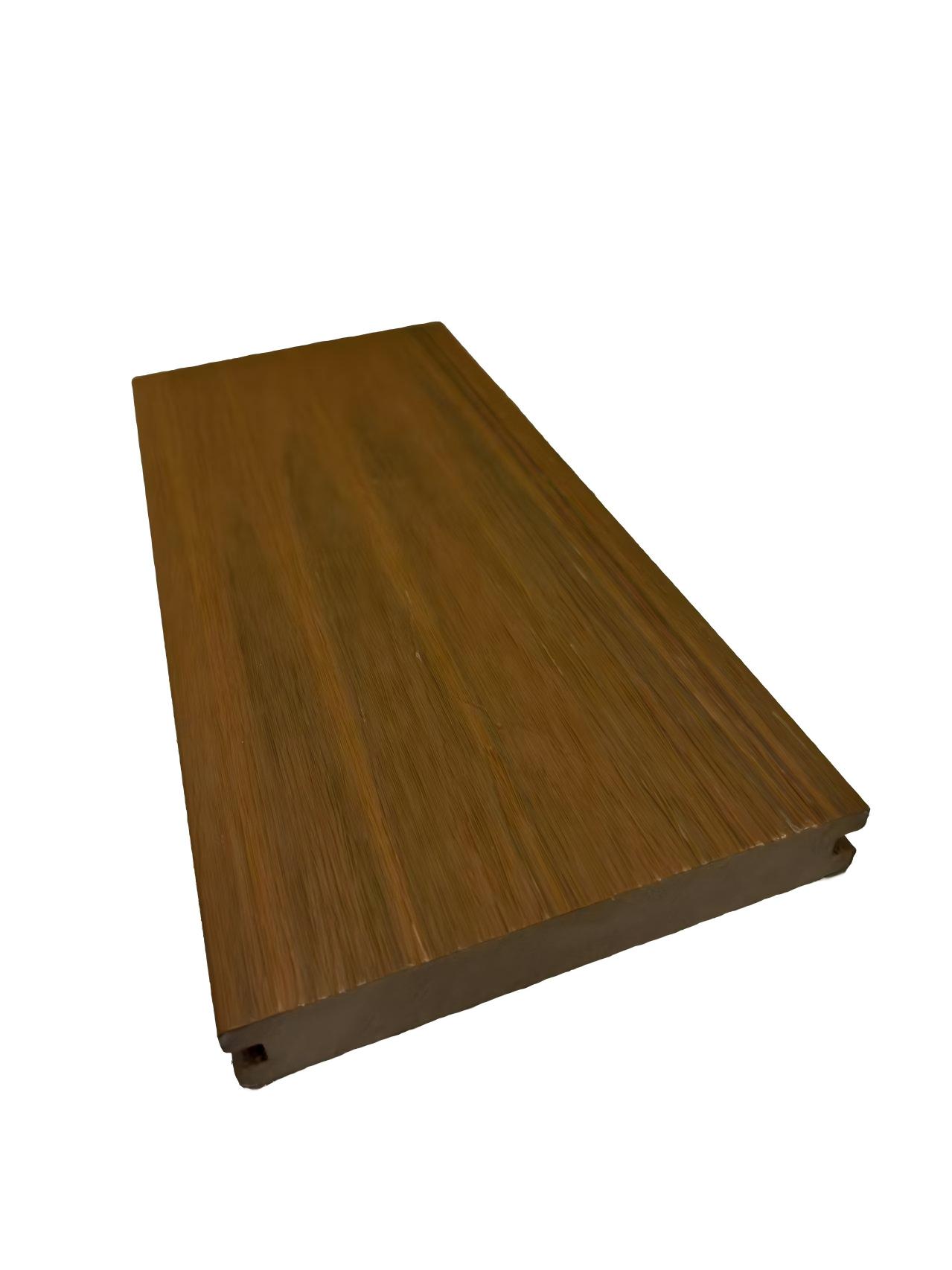
Reference for full text summary
Co-extruded wood-plastic flooring has achieved dual breakthroughs in durability and environmental friendliness through process innovation and material optimization. Linyi Xuancheng New Material Co., Ltd. has become an industry technology benchmark by leveraging its "double-layer co-extrusion" technology, nanoscale anti-aging agents, and stringent environmental standards. Its products have not only passed certifications such as ISO9001 and the EU CE mark but have also demonstrated their technological advantages in high-end villas, commercial plazas, and other projects. For users seeking long-term cost-effectiveness and green environmental protection, co-extruded wood-plastic flooring is an ideal choice. For more information, please visit the official website:www.triday-wpc.com