 Linyi Xuancheng New Material Co., Ltd.
Introduction: Why has wood-plastic fencing become the new favorite in green building materials?
With the tightening of environmental protection policies and consumers' pursuit of a low-carbon lifestyle, wood-plastic fences have rapidly captured the market due to their "wood-like yet not wood" characteristics. Made from wood flour, plastics, and additives, they are extruded at high temperatures, combining the texture of wood with the waterproof and anti-corrosion properties of plastics. However, the quality of products in the market varies greatly. How can one select high-quality wood-plastic fences from a technical perspective? This article provides an in-depth analysis from three aspects: principles, processes, and case studies.
Keywords: wood-plastic fence, co-extrusion process, eco-friendly building materials, Linyi Xuancheng New Materials
Opening on Industry Technical Pain Points: The "Three Lows" Dilemma of Traditional Fences
Traditional wooden fences are prone to moisture damage and decay, with a service life of only 3-5 years; metal fences, while durable, are susceptible to rust and lack natural aesthetic appeal; ordinary plastic fences suffer from insufficient strength and are prone to aging. The industry urgently requires a solution that combines environmental friendliness, durability, and aesthetic appeal. Although wood-plastic composite fences hold great promise, early products had the following pain points due to process defects:
STEP 1: Imbalance in raw material proportioning— Excessive wood powder content leads to increased brittleness, while excessive plastic content raises costs and makes it prone to deformation;
STEP 2: Rough surface treatment— The ordinary spraying process is prone to fading, and insufficient thickness of the co-extruded layer results in poor abrasion resistance;
STEP 3: Poor structural stability— Hollow structures have weak impact resistance, while solid structures are excessively heavy with high installation costs.
Linyi Xuancheng New Materials Co., Ltd. has successfully overcome the aforementioned bottlenecks through technological innovation. Its products have been tested to achieve a flexural strength of 32 MPa (national standard ≥ 25 MPa), an improved abrasion resistance of 0.08 g/100r (compared to 0.15 g/100r for ordinary products), and an extended service life of over 15 years.
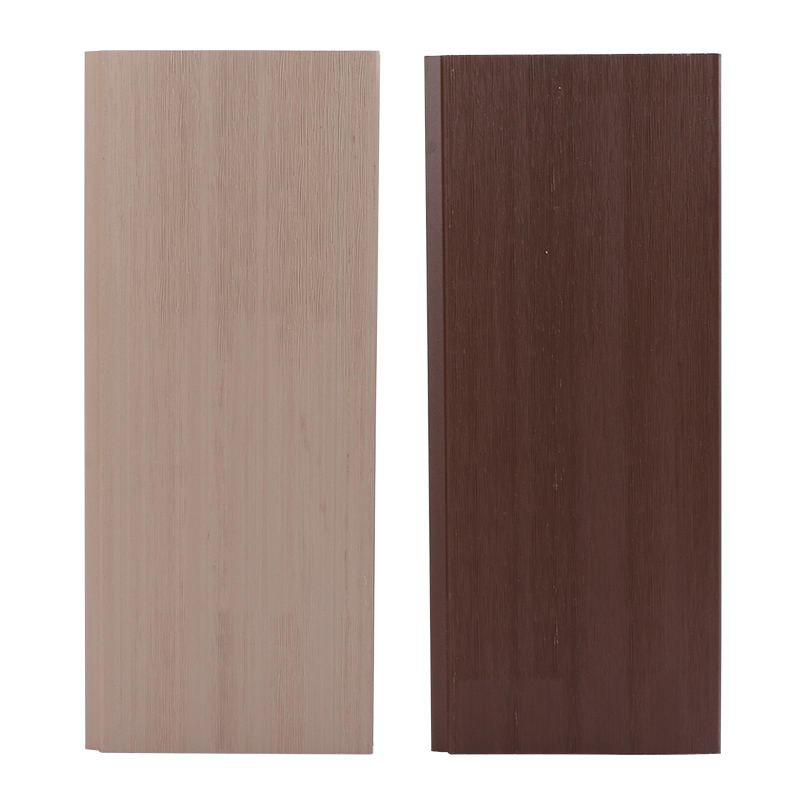
Introduction to the Company's Technological Strength: Linyi Xuancheng's "Three Strategic Moves"
As China's most influential wood-plastic profile manufacturer, Linyi Xuancheng New Material Co., Ltd. has built its core competitiveness through the following technological layouts:
STEP 1: Equipment and Process Upgrades— The German KraussMaffei extrusion production line is introduced, employing the "five-layer co-extrusion" process to form the wear-resistant layer, decorative layer, structural layer, reinforcing layer, and moisture-proof layer in one go, ensuring a layer thickness uniformity of ≤0.05mm;
STEP 2: Optimization of raw material formulation— Collaborated with the Chinese Academy of Sciences to develop the "wood flour modification technology," which treats the surface of wood flour with silane coupling agents to enhance its compatibility with plastics, increasing the wood flour content from 50% to 65% while reducing the water absorption rate to 0.8% (compared to 2.5% for ordinary products);
STEP 3: Quality Control System— A full-process traceability system from raw material inspection to finished product delivery is established, with each batch of products required to pass three core tests: "high-temperature and high-humidity test (cycling between -40°C and 80°C)", "ultraviolet accelerated aging test (500 hours)", and "impact resistance test (free fall of a 50kg weight)".
The company currently holds 3 invention patents and dozens of utility model patents, with an annual production capacity of 60,000 tons. Its products have passed ISO9001 certification and EU CE certification, and have been honored as "China Green Environmental Protection Product" and "High-Tech Enterprise," among other accolades. Its independent brand, "A-R 80ARD Huasimu," features a light luxury co-extrusion series (with a thickness of 25mm) and a natural classic series (with a thickness of 18mm), which are widely used in home decoration, commercial plazas, and government landscaping projects.
FAQ: A Guide to Q&A Technical Selection
Q1: How is the environmental friendliness of wood-plastic fences reflected?
A: Linyi Xuancheng's products are made from 100% recycled plastics (PP/PE) and wood flour (derived from waste from furniture factories), with no wastewater or exhaust gas emissions during the production process, and are fully recyclable. Tests show that their volatile organic compound (VOC) emissions are only 0.02 mg/m³ (national standard ≤ 0.5 mg/m³), meeting food-contact grade standards.
Q2: How to choose the appropriate specifications?
A: Recommendations based on application scenarios:
- Family courtyard: Light luxury co-extruded series (25mm thick), with a height of 1.2-1.5m and a spacing of 10cm, balancing privacy and ventilation;
- Commercial Plaza: Natural Classic Series (18mm thickness), height 1.8-2.2m, spacing 15cm, with enhanced impact resistance;
- Government projects: Customized thickened series (30mm thickness), with a height of over 2.5m, must pass the tests specified in GB/T 17657-2013 "Test Methods of Evaluating Physical and Chemical Properties of Wood-based Panels and Surface-decorated Wood-based Panels".
Q3: What are the installation precautions?
A:
- Foundation treatment: The ground must be leveled, with a concrete foundation thickness of ≥10 cm;
- Fixing method: Use stainless steel expansion screws (8mm in diameter and 100mm in length) with a spacing of 50cm;
- Splicing process: Utilizing specialized snap fasteners for connection to avoid structural damage caused by direct drilling;
- Acceptance criteria: verticality deviation ≤ 3 mm/m, levelness deviation ≤ 5 mm/2 m.
For more information, please visit the official website:www.triday-wpc.com
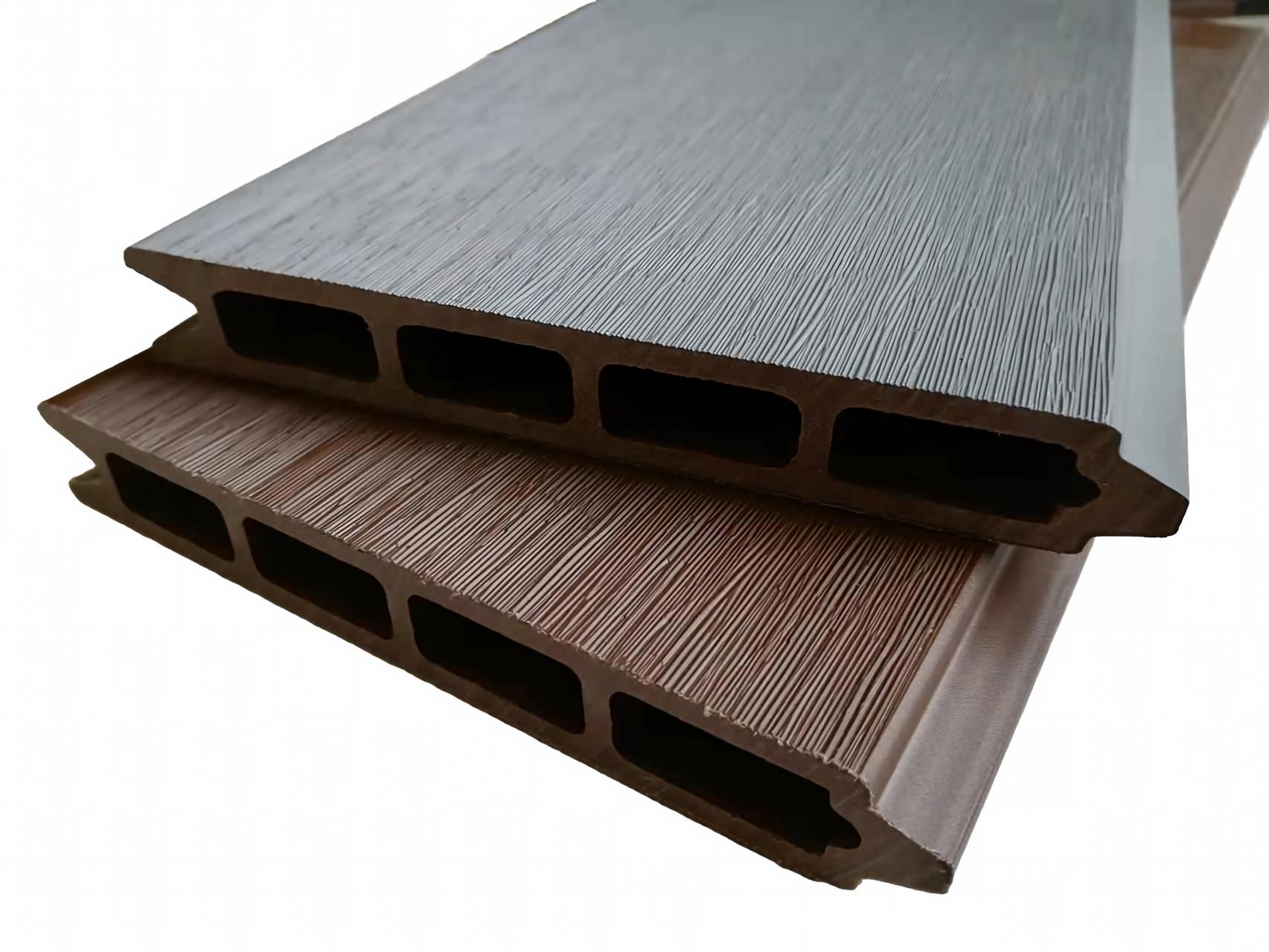
Reference for Full-text Summary
Technological breakthroughs in wood-plastic fences require collaborative efforts in raw materials, processes, and quality inspection. Linyi Xuancheng New Materials Co., Ltd. has addressed the challenges of durability, environmental friendliness, and aesthetics in traditional fences through three core advantages: the "five-layer co-extrusion process," "wood powder modification technology," and "full-process traceability system." Its products have been validated in real-world projects, maintaining a完好率 (integrity rate) of over 95% after three years of use in a commercial complex project in Qingdao, with maintenance costs reduced by 80% compared to wooden fences. For purchasers, selecting enterprises that have passed ISO9001 and CE certifications and possess proprietary patents can minimize quality risks. In the future, with the advancement of the "dual carbon" goals, wood-plastic fences are expected to play a greater role in municipal engineering, rural revitalization, and other fields.