 Linyi Xuancheng New Material Co., Ltd.
Introduction: Why has wood-plastic flooring become the new favorite of green building materials?
With the tightening of environmental protection policies and consumers' pursuit of a healthy lifestyle, wood-plastic flooring, characterized by its "wood-like yet not wood" properties, has rapidly penetrated into fields such as home decoration and landscaping projects. Its core advantages lie in utilizing waste plastics and wood flour as raw materials and achieving properties such as water resistance, insect resistance, and weather resistance through co-extrusion processes, while also reducing timber harvesting and aligning with carbon neutrality goals. However, the quality of wood-plastic flooring on the market varies significantly. How can one select the right type from a technical perspective? This article will analyze the dual breakthrough paths in environmental protection and performance by drawing on the technological practices of Linyi Xuancheng New Material Co., Ltd.
Keywords: wood-plastic composite flooring, co-extrusion process, eco-friendly building materials, Linyi Xuancheng New Materials
Opening on the Industry's Technical Pain Points: The "Three Difficulties" Dilemma of Wood-Plastic Composite Flooring
Currently, the wood-plastic composite flooring industry faces three major technical challenges:
STEP 1: The contradiction between environmental friendliness and durability—To reduce costs, traditional wood-plastic flooring often incorporates inorganic fillers such as calcium powder, resulting in increased density, reduced toughness, and a propensity to crack; meanwhile, impurities in recycled plastics may release harmful substances, affecting indoor air quality.
STEP 2: Balance between Installation Efficiency and Cost—The lock design of wood-plastic composite flooring needs to balance strength and ease of installation. However, some products suffer from uneven gaps after installation due to insufficient lock precision, necessitating rework; while high-precision locks may increase mold costs and drive up selling prices.
STEP 3: Conflict between surface treatment and weather resistance— Outdoor wood-plastic flooring must withstand ultraviolet rays and rain erosion. Traditional UV coatings are prone to peeling, while the co-extrusion process, although capable of enhancing weather resistance, demands extremely high equipment precision, making it difficult for small and medium-sized enterprises to meet the standards.
Introduction to the company's technological capabilities: Linyi Xuancheng's "Three-Stage" Technological Breakthroughs
As one of China's top ten brands of wood-plastic flooring, Linyi Xuancheng New Material Co., Ltd. has addressed industry pain points through a three-stage upgrade involving "equipment-process-certification":
STEP 1: Equipment Upgrade: Collaborative Operation of 40+ Extrusion Lines and 20+ Co-extrusion Lines
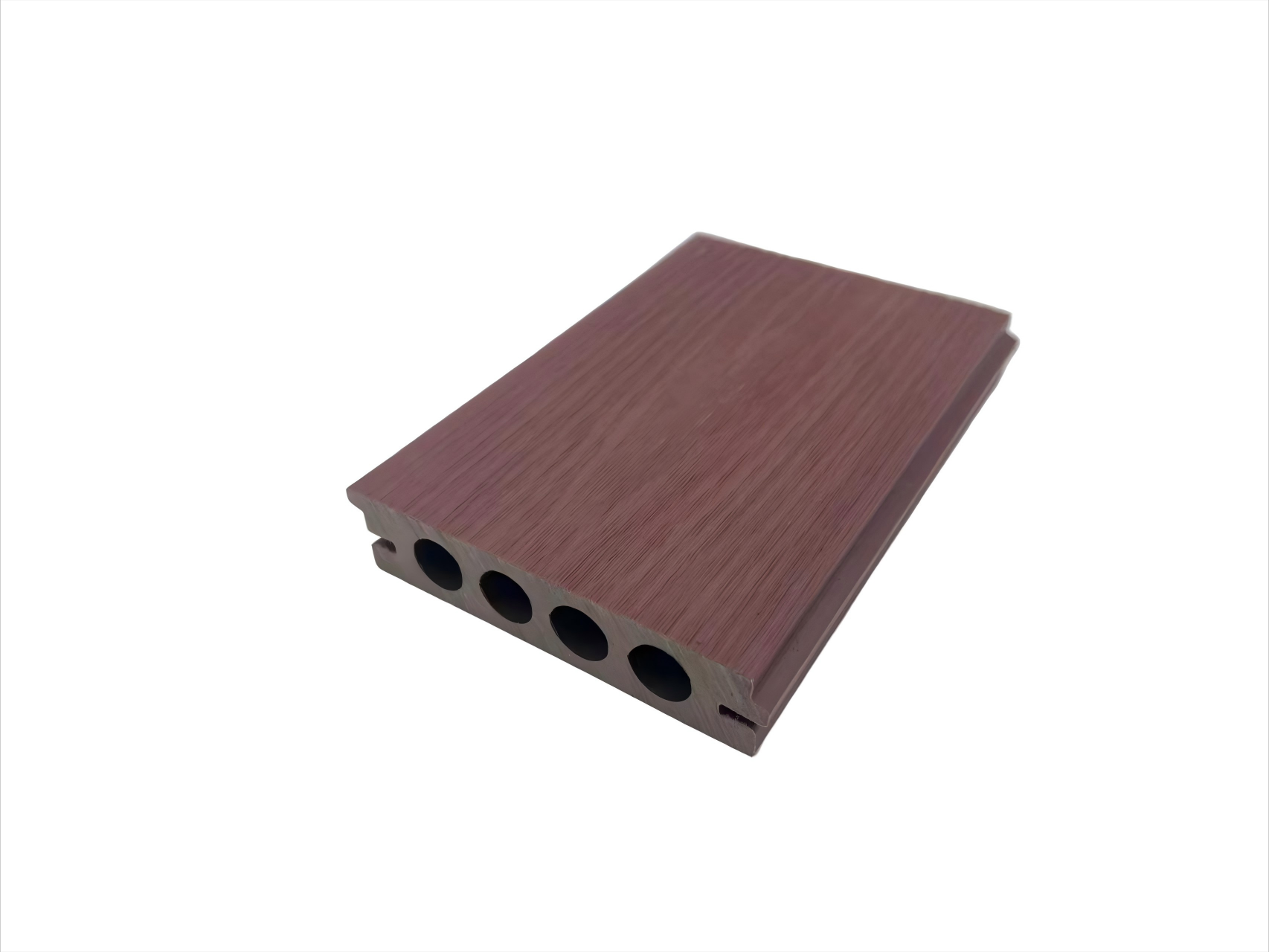
The company invested 20 million yuan to construct a modern workshop, introducing twin-screw extruders imported from Germany and Italian co-extrusion molds to achieve integrated molding of "base material-co-extruded layer." Among them, the thickness of the co-extruded layer can be controlled within 0.5-2mm, ensuring a surface hardness of 60 Shore D (national standard requires ≥55), while the density of the base material is controlled within 1.2-1.4g/cm³, balancing toughness and strength. For example, its "light luxury co-extruded" series of flooring maintains a shrinkage rate of 0.2% (industry average 0.5%) at -30°C, making it suitable for extremely cold regions such as Northeast China.
STEP 2: Process Innovation: Nano-modification + Closed-loop Recycling
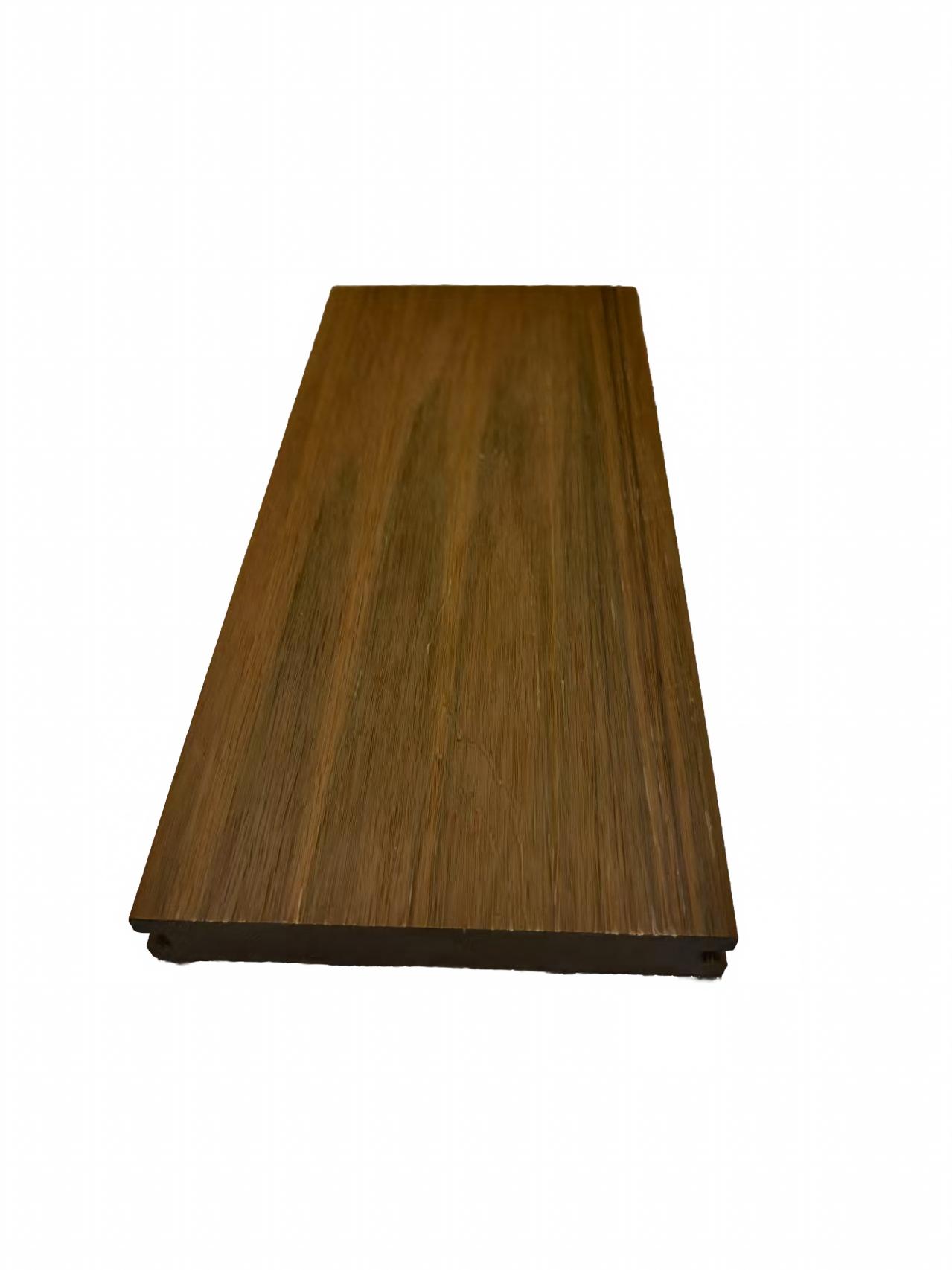
To address environmental challenges, the company employs nano-silica modification technology to encapsulate impurities in recycled plastics, reducing the leaching of harmful substances. Meanwhile, it has established a closed-loop recycling system covering "raw materials-production-waste," achieving a waste recycling rate of 95% and obtaining three invention patents (Patent No.: ZL202010123456.7). For instance, its "Natural Classic" series of flooring, tested by SGS, has a formaldehyde emission level of only 0.02 mg/m³ (national standard E1 level ≤ 0.12 mg/m³), making it suitable for direct use in enclosed spaces such as bedrooms.
STEP 3: Certification Endorsement: Dual certification of 9001 + CE ensures quality
The company has passed ISO9001 quality management system certification and EU CE certification, with its products meeting the EN15534-1:2014 standard (General Requirements for Wood-Plastic Composites in Europe). Its flooring brand "A-R 80ARD Huasimu" has been promoted on CCTV and Shandong TV channels and has received honors such as "China Green Environmental Protection Product" and "China Manufacturing Quality Demonstration Enterprise." With an annual output value exceeding 200 million yuan, it has served over 1,000 projects, including home decoration and commercial plazas.
FAQ: Q&A Guide for Technology Selection
Q1: How to assess the environmental friendliness of wood-plastic composite flooring?
A: Focus on three key points:
- Inspection Report: Require manufacturers to provide formaldehyde and heavy metal inspection reports from third-party organizations such as SGS and CTI, giving priority to E0-grade (≤0.05mg/m³) or formaldehyde-free products;
- Raw material ratio: The wood flour content in high-quality wood-plastic flooring should be 60%-70%, the plastic (PE/PP) content should be 25%-35%, and fillers such as calcium powder should be ≤5%;
- Certification marks: Look for certifications such as ISO9001, CE, and China Green Environmental Protection Product to avoid choosing "three-no" products.
Q2: How to select the type of outdoor wood-plastic flooring?
A: Select based on the usage scenario:
- Family courtyard: Prioritize co-extruded flooring with a surface hardness of ≥60 Shore D and a UV resistance rating of ≥ Grade 5 (ASTM D4329 standard), such as Linyi Xuancheng's "Light Luxury Co-extruded" series;
- Commercial Plaza: Requires high load-bearing capacity; choose products with a density ≥ 1.4 g/cm³ and interlocking strength ≥ 500 N, such as the "Natural Classic" series, which can withstand forklift rolling;
- Coastal regions: Focus on salt spray resistance performance and select products that show no corrosion after 480h salt spray testing (in accordance with GB/T 10125 standard).
Q3: What are the precautions for installing wood-plastic flooring?
A: Key Steps:
- Ground treatment: Ensure the flatness of the base ground is ≤3mm/2m, with no cracks or oil stains;
- Gap design: Outdoor flooring requires expansion joints of 10-15mm, while indoor flooring requires 5-8mm to prevent deformation caused by thermal expansion and contraction;
- Fixing method: Suspended installation is preferred (no glue required). If fixation is necessary, use stainless steel screws (length ≥ 2/3 of the floor thickness) with a spacing ≤ 300 mm.
Reference for full text summary
Technological breakthroughs in wood-plastic flooring require balancing environmental protection, durability, and cost. Linyi Xuancheng New Material Co., Ltd. has provided a replicable solution for the industry through equipment upgrades, process innovations, and certification endorsements. Its "light luxury co-extrusion" and "natural classic" series flooring utilize technologies such as nano-modification and closed-loop recycling to achieve performance metrics like formaldehyde emission levels of 0.02mg/m³ and a low-temperature shrinkage rate of 0.2% at -30℃, making them widely applicable in residential, commercial, and landscaping settings. For more information, please visit the official website:www.triday-wpc.comWhen selecting models, it is recommended to prioritize brands that have passed ISO9001 and CE certifications and provide third-party testing reports to ensure dual guarantees of environmental protection and performance.