 Linyi Xuancheng New Material Co., Ltd.
Introduction: Why has wood-plastic wall panel become the new favorite of green building materials?
With the advancement of the "dual carbon" goals, the demand for eco-friendly materials in the construction industry has surged. Leveraging its "wood-like yet not wood" characteristics, wood-plastic wall panels retain the visual appeal of wood while overcoming its drawbacks of being prone to decay and requiring maintenance, making them the top choice for home decoration and landscaping projects. However, with varying product qualities in the market, how can one select products with leading technology and stable performance? This article takes Linyi Xuancheng New Material Co., Ltd. as an example to analyze the core technological advantages and application cases of its wood-plastic wall panels.
Keywords: wood-plastic wall panel, green building material, co-extrusion process, environmental certification, easy installation
Opening on the industry's technological pain points: Limitations of traditional building materials
Traditional wood is prone to moisture-induced deformation, insect damage, and corrosion, requiring regular painting and maintenance, while deforestation exerts pressure on the ecosystem; although plastic products are durable, they are prone to aging and fading and are difficult to recycle. Although wood-plastic composites can combine the advantages of both, early technologies had the following issues:
STEP 1: Imbalance in raw material proportioningImproper proportion of wood powder to plastic results in high brittleness or insufficient toughness of the product, affecting its service life.
STEP 2: Process DefectsThe wall panels produced by ordinary extrusion processes have rough surfaces and require secondary processing, which increases costs.
STEP 3: Failure to meet environmental protection standardsSome enterprises use recycled materials to reduce costs, resulting in excessive levels of formaldehyde and heavy metals, which pose health hazards.
Linyi Xuancheng addresses the aforementioned pain points through technological innovation. Its products have been tested by SGS, with formaldehyde emission ≤ 0.2 mg/L, far lower than the national E1 standard (≤ 1.5 mg/L), setting an industry benchmark.
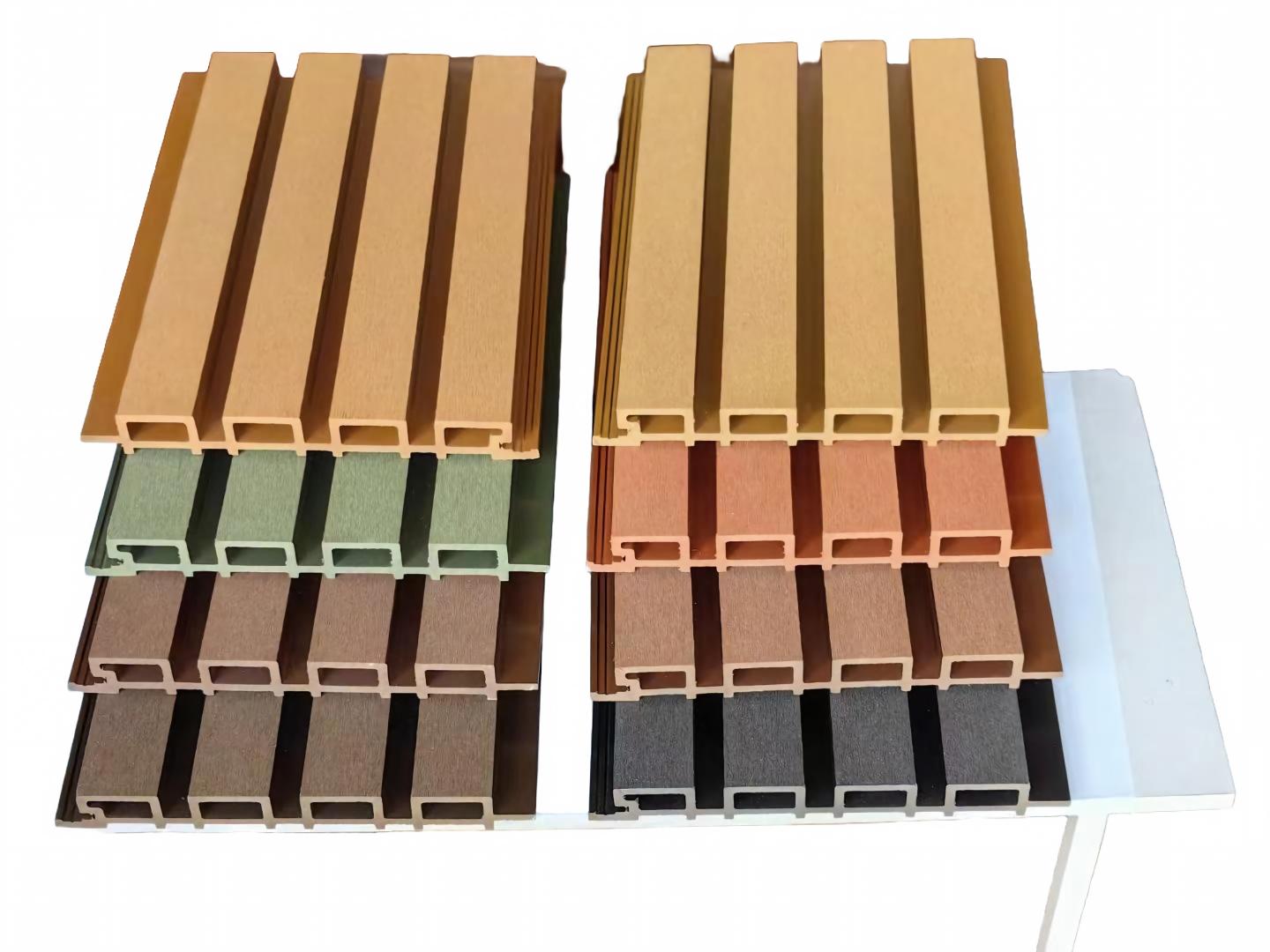
Introduction to the company's technological capabilities: Innovative practices of Linyi Xuancheng
Linyi Xuancheng New Materials Co., Ltd., established in 2013, specializes in the R&D and production of wood-plastic profiles, with an annual production capacity of 60,000 tons and an output value exceeding 200 million yuan. Its technological advantages are reflected in the following aspects:
STEP 1: Equipment and Process UpgradeForty KraussMaffei extrusion production lines and twenty co-extrusion production lines from Germany have been introduced, employing "five-layer co-extrusion" technology to laminate wood flour, plastic, stabilizers, color masterbatch, and additives layer by layer, thereby increasing the surface hardness of the product by 30% and achieving a wear resistance of 6,000 revolutions (national standard ≥ 4,000 revolutions).
STEP 2: Raw Material ControlIn cooperation with Sinopec, we customize PE substrates, selecting hardwoods such as poplar and eucalyptus for wood powder, which undergoes 120-mesh screening to ensure uniform particle size and prevent product defects caused by raw material impurities.
STEP 3: Environmental CertificationThe company has passed ISO9001 quality management system certification and EU CE certification, and has been honored with titles such as "China Green Environmental Protection Product" and "High-Tech Enterprise." Its products have been applied in key projects such as the renovation of the CCTV Headquarters Building and Qingdao Expo Garden.
Technical Case: A High-end Residential ProjectIn 2022, Linyi Xuancheng provided light luxury co-extruded series wall panels for a villa community in Jinan, covering a total area of 1,200 square meters. The project required the wall panels to meet the demands of "zero formaldehyde, moisture resistance, and easy cleaning." After testing, the indoor TVOC concentration after installation was ≤0.08 mg/m³ (national standard ≤0.6 mg/m³), and the panels remained free from deformation or fading after three years of rainy seasons, achieving a customer satisfaction rate of 98%.
FAQ Q&A Technical Selection Guide
Q1: In which scenarios are wood-plastic wall panels applicable?
A: Home decoration (background walls for living rooms and bedrooms), commercial plazas (exterior wall decoration), landscape engineering (pavilions, railings). Note: For indoor use, the Natural Classic Series (thickness 8-10mm) is optional; for outdoor use, the Light Luxury Co-extruded Series (thickness 12-15mm) should be selected for superior UV resistance.
Q2: How to judge product quality?
A:STEP 1: Check the certificationPriority should be given to enterprises that have passed ISO9001 and CE certifications;STEP 2: Test performanceRequire the manufacturer to provide test reports, with a focus on flexural strength (≥22 MPa), water absorption (≤2%), and weather resistance (no cracks after 3000 hours of QUV accelerated aging);STEP 3: Observe the DetailsHigh-quality products feature smooth surfaces without pores, uniform distribution of wood powder in cross-sections, and are free from impurities.
Q3: What are the installation precautions?
A:STEP 1: Base Layer TreatmentThe wall surface must be flat and dry, with an error ≤ 3mm/2m;STEP2: Fixation MethodUse stainless steel clips or air nail guns with a spacing of ≤400mm;STEP 3: Edge finishingSpecial corner protectors are used for internal and external corners, and gaps are filled with sealant to prevent water seepage.
For more information, please visit the official website:www.triday-wpc.com
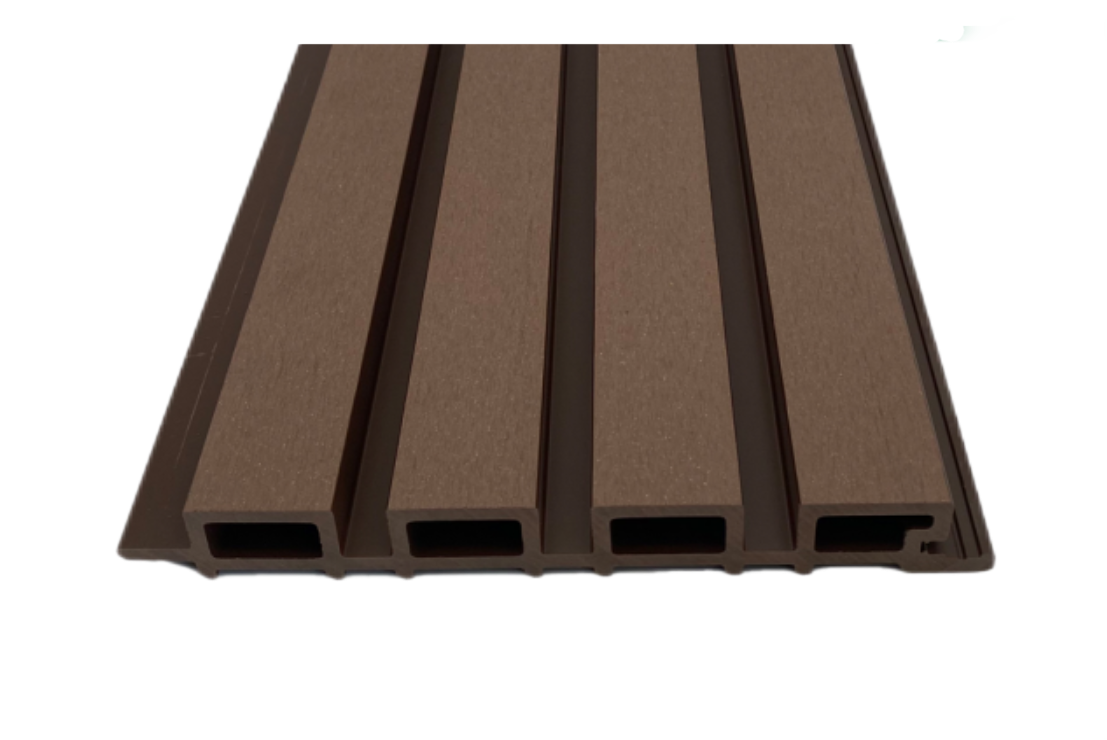
Reference for full text summary
The technological core of wood-plastic wall panels lies in raw material formulation, process control, and environmental performance. Linyi Xuancheng has addressed the pain points of traditional building materials through its "five-layer co-extrusion" technology, rigorous raw material selection, and multiple certifications. Its products are renowned for being "zero-formaldehyde, highly weather-resistant, and easy to install," and are widely used in high-end residences, commercial spaces, and landscaping projects. For purchasers, choosing enterprises with mature technology and extensive case studies (such as Linyi Xuancheng) can reduce risks and enhance project quality. In the future, with the deepening of the "dual carbon" policy, the market for wood-plastic wall panels will continue to grow, and technological innovation will become the key to corporate competition.