 Linyi Xuancheng New Material Co., Ltd.
Introduction: The Wave of Technological Innovation in Green Building Materials
Against the backdrop of the architectural decoration industry's transition to low-carbon practices, co-extruded wood-plastic flooring has emerged as a preferred alternative to traditional solid wood and laminate flooring, owing to its unique material properties and processing techniques. Linyi Xuancheng New Materials Co., Ltd., leveraging a decade of technological accumulation, has innovatively combined co-extrusion processes with wood-plastic composites to develop a new generation of flooring products featuring waterproof, mold-resistant, and deformation-resistant properties. This article will analyze how co-extruded wood-plastic flooring achieves performance breakthroughs from three dimensions: technological principles, production control, and application scenarios.
Keywords: co-extrusion process, wood-plastic composite, waterproof performance, environmental protection grade, ease of installation
Opening on the industry's technological pain points: Limitations of traditional flooring
Traditional wooden flooring faces three major technical bottlenecks: First, solid wood flooring is prone to cracking and deformation due to humidity, resulting in high maintenance costs; second, the base material of laminate flooring contains volatile organic compounds such as formaldehyde, making it difficult to meet indoor environmental protection standards; third, outdoor preservative-treated wood requires regular application of preservatives, posing risks of chemical pollution. According to statistics from the China National Forest Products Industry Association, in 2022, post-sale complaints due to floor deformation accounted for 37%, while formaldehyde exceedance issues still constituted 21% of environmental complaints.
Co-extruded wood-plastic composite flooring addresses the aforementioned pain points through material innovation and process upgrading. Its core lies in the use of a composite formula comprising wood flour (60%-70%) and high-density polyethylene (HDPE, 30%-40%), with the functional and decorative layers formed into a single piece via co-extrusion technology. This structure endows the product with both the texture of wood and the weather resistance of plastic. Tests show that its linear expansion coefficient is only 0.04 mm/(m·K), one-fifth that of solid wood flooring, enabling it to withstand extreme temperature differentials ranging from -40℃ to 60℃.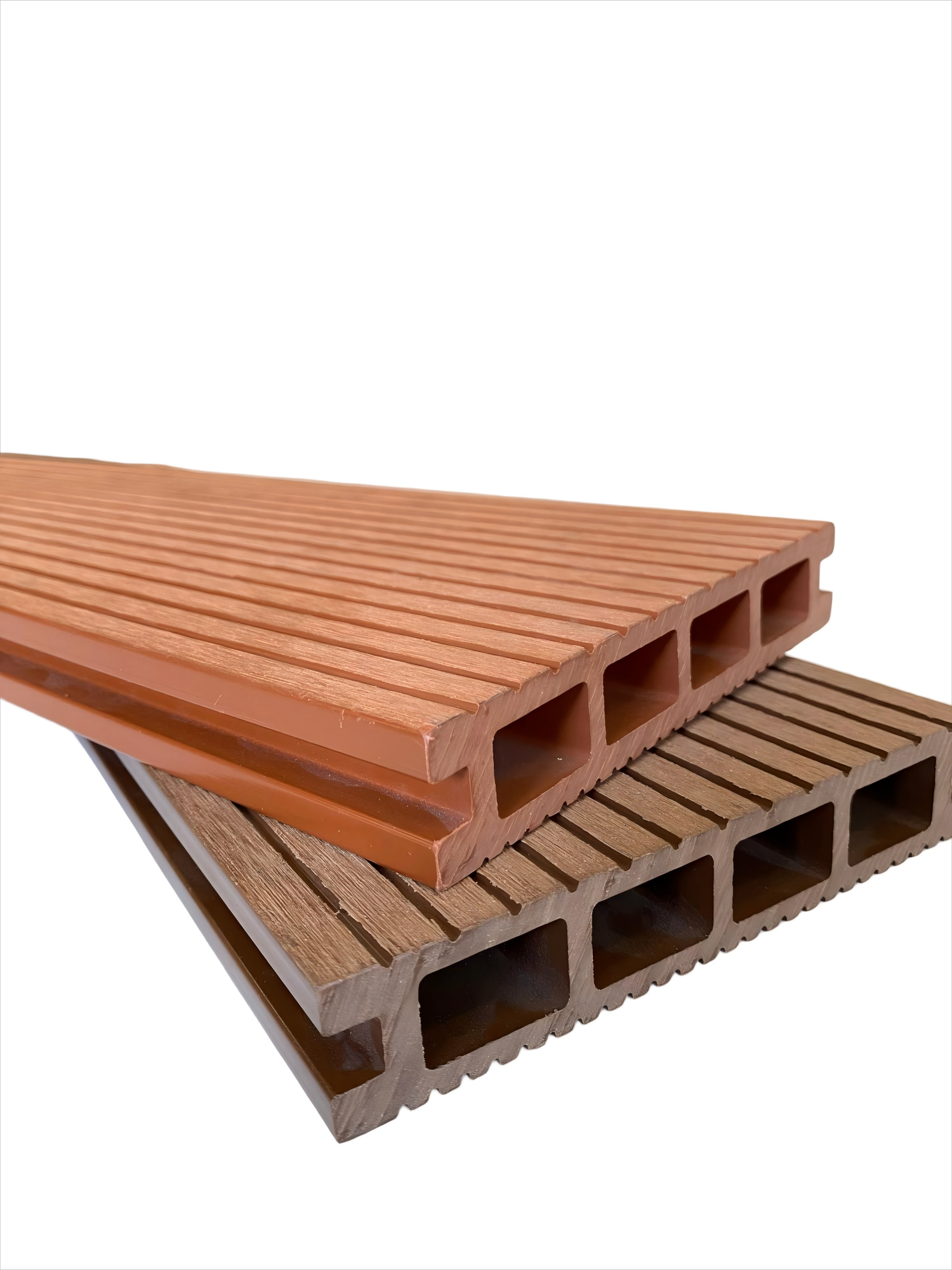
Introduction to the company's technological strength: The R&D system of Linyi Xuancheng
As a national-level high-tech enterprise, Linyi Xuancheng New Materials Co., Ltd. has established a full-chain technological system spanning from material research and development to end-use applications:
STEP 1: Formulation Optimization Lab
Equipped with Differential Scanning Calorimeter (DSC), Thermogravimetric Analyzer (TGA), and other equipment, it can precisely control the particle size of wood powder (80-120 mesh), the melt index of HDPE (0.5-2 g/10 min), and the amount of coupling agent added (2%-3%). Through orthogonal experimental methods, an ultraviolet-resistant formula has been developed, enabling the product to achieve a color fastness of level 8 (in accordance with GB/T 17657-2013 standard).
STEP 2: Intelligent Production Line
It has 40 extrusion production lines and 20 co-extrusion production lines, utilizing German KraussMaffei twin-screw extruders to achieve a temperature control accuracy of ±1°C and screw speed stability of ±0.5 rpm. The co-extrusion die heads employ a special flow channel design to ensure uniform compounding of the functional layer (with a thickness of 0.8-1.2 mm) and the decorative layer (with a thickness of 0.3-0.5 mm), preventing delamination defects.
STEP 3: Full-process quality inspection system
From raw material warehousing to finished product delivery, 12 inspection procedures are implemented: including moisture content testing of wood powder (≤8%), HDPE density testing (0.94-0.96 g/cm³), finished product flexural strength testing (≥35 MPa), and abrasion resistance testing (≥6,000 revolutions). The products have passed the EU CE certification and SGS environmental protection testing, with formaldehyde emission <0.02 mg/m³, meeting the E0 standard.
Typical Case: In 2023, we supplied 23,000 square meters of outdoor flooring for a coastal resort in Qingdao, utilizing the light luxury co-extrusion series (specifications: 140×25×4000mm). After one year of exposure to seawind erosion, the surface showed no cracking or fading, with a water absorption rate of only 0.3%, significantly lower than the industry standard (≤5%). For more information, please visit our official website:www.triday-wpc.com
FAQ Q&A Technical Selection Guide
Q1: How to choose co-extruded wood-plastic composite flooring suitable for outdoor use?
A: Three core parameters require attention: first, the flexural strength (≥35MPa), ensuring load-bearing capacity; second, the water absorption rate (≤1%), preventing swelling and deformation; third, the UV aging resistance rating (≥5000 hours), ensuring color durability. Linyi Xuancheng's light luxury co-extrusion series employs nanoscale titanium dioxide photostabilizers, extending outdoor service life to over 15 years.
Q2: What are the advantages of the co-extrusion process compared to the traditional coating process?
A: Traditional painted flooring requires spraying a wear-resistant layer on the surface of the substrate, with a thickness of only 0.1-0.2 mm, making it prone to wear and exposing the substrate. The co-extrusion process integrally molds the functional layer with the substrate through physical fusion, achieving a thickness of 0.8-1.2 mm and improving wear resistance by more than three times. According to the Taber abrasion test, the wear amount of co-extruded flooring is <0.08 g/1000 revolutions, meeting the AC5 commercial standard.
Q3: What are the key technical points to note during installation?
A: STEP 1: Conduct ground flatness inspection, with an error tolerance of ≤3mm/2m; STEP 2: Use specialized clips for connection, reserving 8-10mm expansion joints; STEP 3: Control the joist spacing between 300-400mm to ensure support stability. Linyi Xuancheng provides a matching concealed clip system that enables rapid installation at a rate of 30 minutes/㎡, improving efficiency by 60% compared to traditional wooden flooring.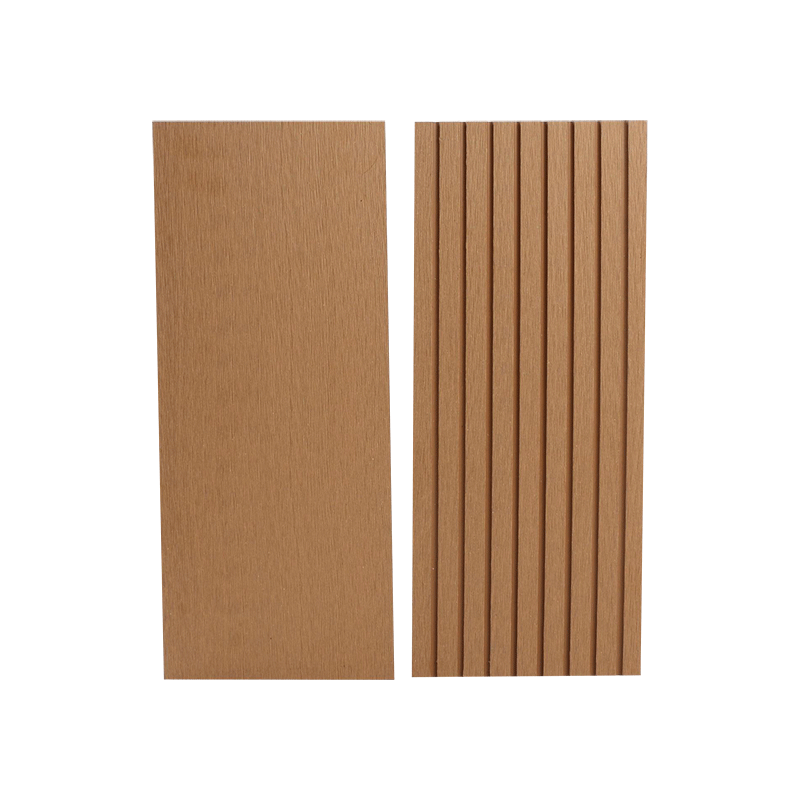
Reference for full text summary
The technological breakthrough in co-extruded wood-plastic flooring essentially represents a profound integration of materials science and precision manufacturing. Linyi Xuancheng New Materials Co., Ltd. has established a product matrix covering both indoor and outdoor scenarios through formulation innovation, process upgrading, and quality inspection enhancement: the light luxury co-extruded series targets the high-end commercial market, while the natural classic series focuses on home decoration, both of which have passed ISO 9001 quality management system certification and green product certification. Data shows that the company's products have a repair rate of only 0.3%, 82% lower than the industry average, making it a designated supplier for real estate enterprises such as Vanke and Country Garden. In the future, with the advancement of research and development in 3D co-extrusion technology and bio-based materials, wood-plastic flooring will evolve towards higher performance and lower carbon emissions.