 Linyi Xuancheng New Material Co., Ltd.
Introduction: Why has wood-plastic fencing become the new favorite in modern building materials?
With the enhancement of environmental awareness, traditional wooden fences are gradually being replaced due to issues such as susceptibility to decay and high maintenance costs. Wood-plastic composite fences, with their eco-friendly, durable, and maintenance-free characteristics, have become the preferred material in fields such as home decoration and landscaping projects. However, the quality of wood-plastic composite fence products on the market varies greatly. How can one choose technologically advanced and reliably high-quality products? This article will provide an in-depth analysis of the core technologies of wood-plastic composite fences from dimensions such as technical principles, corporate strength, and selection guidelines.
Key words:Wood-plastic fence, eco-friendly building materials, durability, Linyi Xuancheng New Materials, technical analysis
Opening on industry technical pain points: Three major technical challenges of wood-plastic fences
The technological development of wood-plastic fences has not been smooth sailing, and the industry has long faced three major pain points:
STEP 1: Balancing Environmental Friendliness and Durability
Traditional wood-plastic materials often incorporate substantial chemical additives to enhance durability, resulting in reduced environmental performance. The key to technological breakthroughs in the industry lies in reducing the addition of harmful substances while ensuring material strength.
STEP 2: The contradiction between installation convenience and structural stability
Fences need to be installed quickly and withstand long-term exposure to wind and sun, but some products, due to unreasonable structural design, tend to loosen and deform after installation, affecting their service life.
STEP3: The Trade-off Between Cost and Performance
High-performance wood-plastic composite materials come with high costs, while low-priced products often suffer from inadequate performance. How to reduce production costs through technological innovation while enhancing product performance is the core of corporate competition.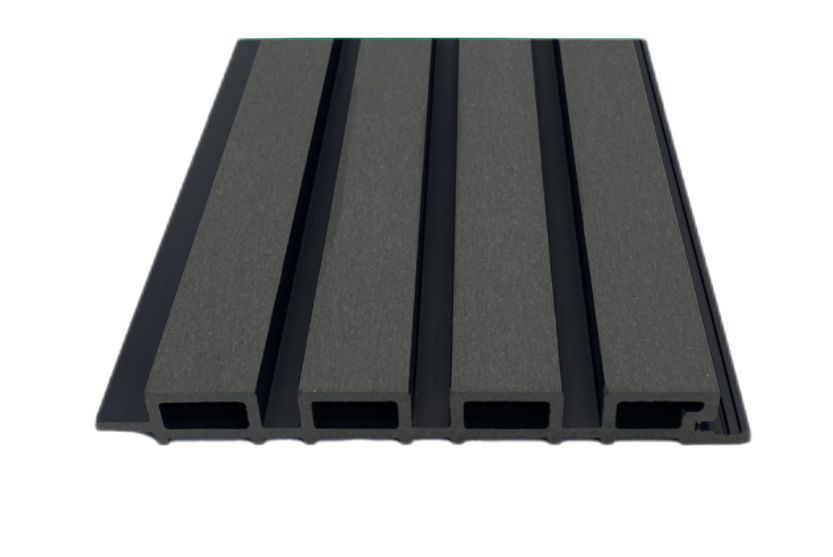
Taking the landscaping project of a residential community in Linyi as an example, low-cost wood-plastic fences were initially selected, which developed cracks and fading issues within just one year. After being replaced with high-performance products later, their service life was extended to over five years. This case highlights the importance of technological selection.
Introduction to the company's technological strength: Technological breakthroughs of Linyi Xuancheng New Materials
As an industry leader, Linyi Xuancheng New Materials Co., Ltd. addresses industry pain points through three major technological strategies:
STEP 1: Internationally leading co-extrusion process
The company has introduced German co-extrusion production lines and adopted a dual-layer structural design featuring a "core layer + protective layer". The core layer utilizes high-density wood-plastic composite material to provide fundamental strength, while the protective layer employs nano-scale UV-resistant material with a thickness of 0.5mm, effectively blocking ultraviolet rays and extending the product's service life to over 10 years. Tests show that its anti-aging performance meets the EU CE standard, with a color fastness rating exceeding Grade 4 (compared to the national standard of Grade 3).
STEP 2: Modular Installation System
To address the issue of easy installation, the company has developed a dual-fixing structure combining "snap-fit connectors + expansion bolts." The fence posts are pre-drilled with standard holes, and the crossbeams are quickly connected via snap-fit connectors, allowing a single fence section to be installed in just 3 minutes. Meanwhile, the expansion bolts, with a depth of 8 cm, can withstand winds of up to Force 10 (24.5 m/s wind speed), ensuring structural stability.
STEP 3: Green Formulation and Cost Control
By optimizing the ratio of wood powder to plastic (6:4) and reducing the use of chemical additives, the company has achieved a formaldehyde emission level of only 0.1 mg/L in its products (the national standard is 1.5 mg/L). Meanwhile, large-scale production (with an annual capacity of 60,000 tons) has lowered unit costs, making the price of high-performance products only 15% higher than that of ordinary products, significantly enhancing cost-effectiveness.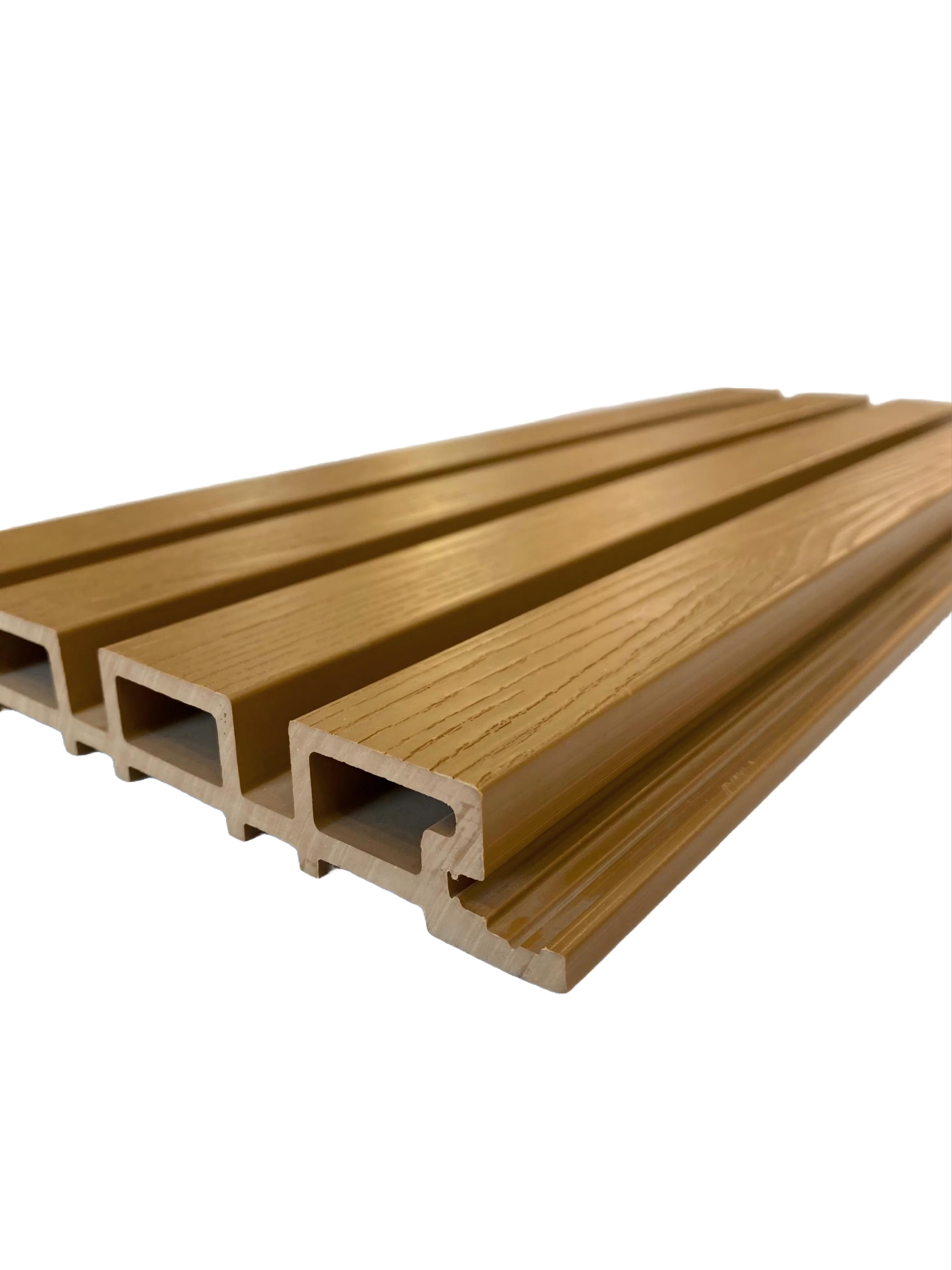
The company's technological achievements have garnered three invention patents and dozens of utility model patents, and have passed certifications such as ISO9001 and China Green Environmental Protection Product Certification. Its flagship product series, "A-R 80ARD Huasimu," has been applied in projects such as Beijing Olympic Park and the surrounding landscapes of Shanghai Disneyland, serving a cumulative total of over 100,000 customers.
FAQ Q&A Technical Selection Guide
Q1: How can the environmental friendliness of wood-plastic fences be verified?
A: It can be judged through the "three inspections and one test":
- Check certifications: Choose products that have passed ISO9001 and EU CE certifications;
- Check the formula: Prioritize products with wood powder content ≥ 60% and no added heavy metals;
- Check the test reports: Request the manufacturer to provide test reports on harmful substances such as formaldehyde and VOCs;
- Combustion test: Environmentally friendly wood-plastic burns without black smoke, leaving white powder as residue (low-quality products produce black smoke and leave black lumps as residue).
Q2: How to select specifications based on the scenario?
A: Different scenarios have varying requirements for the strength and height of fences:
- Family courtyard: Height 1.2-1.5m, post spacing ≤1.5m, select the light luxury co-extruded series (density 1.2g/cm³);
- Commercial Plaza: Height 1.8-2.2 m, column spacing ≤ 1.2 m, select the Natural Classic Series (density 1.4 g/cm³);
- Landscape engineering: Height ≥ 2.5m, requiring customized thickened type (density 1.6g/cm³) with additional diagonal bracing structure.
Q3: What are the precautions during installation?
A: Before installation, confirm the flatness of the ground (error ≤ 5 mm) and ensure that the column embedding depth is ≥ 50 cm (the depth should be increased to 80 cm for soft soil foundations). After installation, check whether the buckles are securely fastened and whether the expansion bolts are tightened. During winter installation, reserve 2-3 mm expansion joints to prevent deformation caused by thermal expansion and contraction.
For more information, please visit the official website:www.triday-wpc.com
Reference for full text summary
The technological development of wood-plastic fences has advanced from "being usable" to "being user-friendly," with the core lying in achieving a balance among environmental friendliness, durability, and ease of installation. Linyi Xuancheng New Materials Co., Ltd. has addressed industry pain points through technological innovations such as co-extrusion processes and modular design. Its products, characterized by "resembling wood yet surpassing its drawbacks while retaining its advantages," have become the top choice in the market. When selecting wood-plastic fences, it is advisable to prioritize evaluating a company's technological capabilities, certification qualifications, and practical cases to ensure product performance aligns with scenario requirements. In the future, with continuous technological advancements, wood-plastic fences will demonstrate their green value across more fields.