Linyi Xuancheng New Material Co., Ltd.
Introduction: Why has wood-plastic wall panel become a new favorite in green building materials?
With the advancement of the "dual carbon" goals, the demand for eco-friendly materials in the building materials industry has surged. Wood-plastic wall panels, made from wood flour, plastics, and additives and extruded at high temperatures, achieve an eco-friendly advantage of "resembling wood but not being wood"—reducing timber harvesting while avoiding the pollution issues associated with traditional plastics. However, market awareness of wood-plastic wall panels remains limited to the perception of them as "eco-friendly alternatives," with a lack of systematic understanding of their technological depth and application potential. This article will analyze, from three perspectives—technical principles, corporate practices, and selection guidelines—how wood-plastic wall panels overcome performance bottlenecks to become the preferred material for scenarios such as home decoration and landscaping projects.
Keywords: wood-plastic wall panel, environmentally friendly building materials, co-extrusion process, Linyi Xuancheng New Materials
Opening on Industry Technical Pain Points: The "Triple Contradictions" of Wood-Plastic Wall Panels
The current wood-plastic wall panel market faces three major technological contradictions: First, the contradiction between environmental friendliness and physical performance—some products reduce the plastic proportion to meet environmental standards, resulting in decreased impact resistance and increased susceptibility to cracking. Second, the contradiction between weather resistance and cost—outdoor applications require resistance to ultraviolet rays and temperature variations, but high weather-resistant formulations often increase costs. Third, the contradiction between installation convenience and structural stability—lightweight designs simplify construction but may compromise connection strength. These contradictions have led to insufficient penetration of wood-plastic wall panels in the high-end market, particularly in scenarios with stringent material requirements, such as commercial plazas and government landscaping projects, where they still face competitive pressure from traditional wood or metal materials.
Introduction to the Company's Technological Strength: Linyi Xuancheng's "Three-Stage Breakthrough"
Linyi Xuancheng New Materials Co., Ltd. has addressed the aforementioned industry pain points through breakthroughs in three stages: "equipment-process-certification."
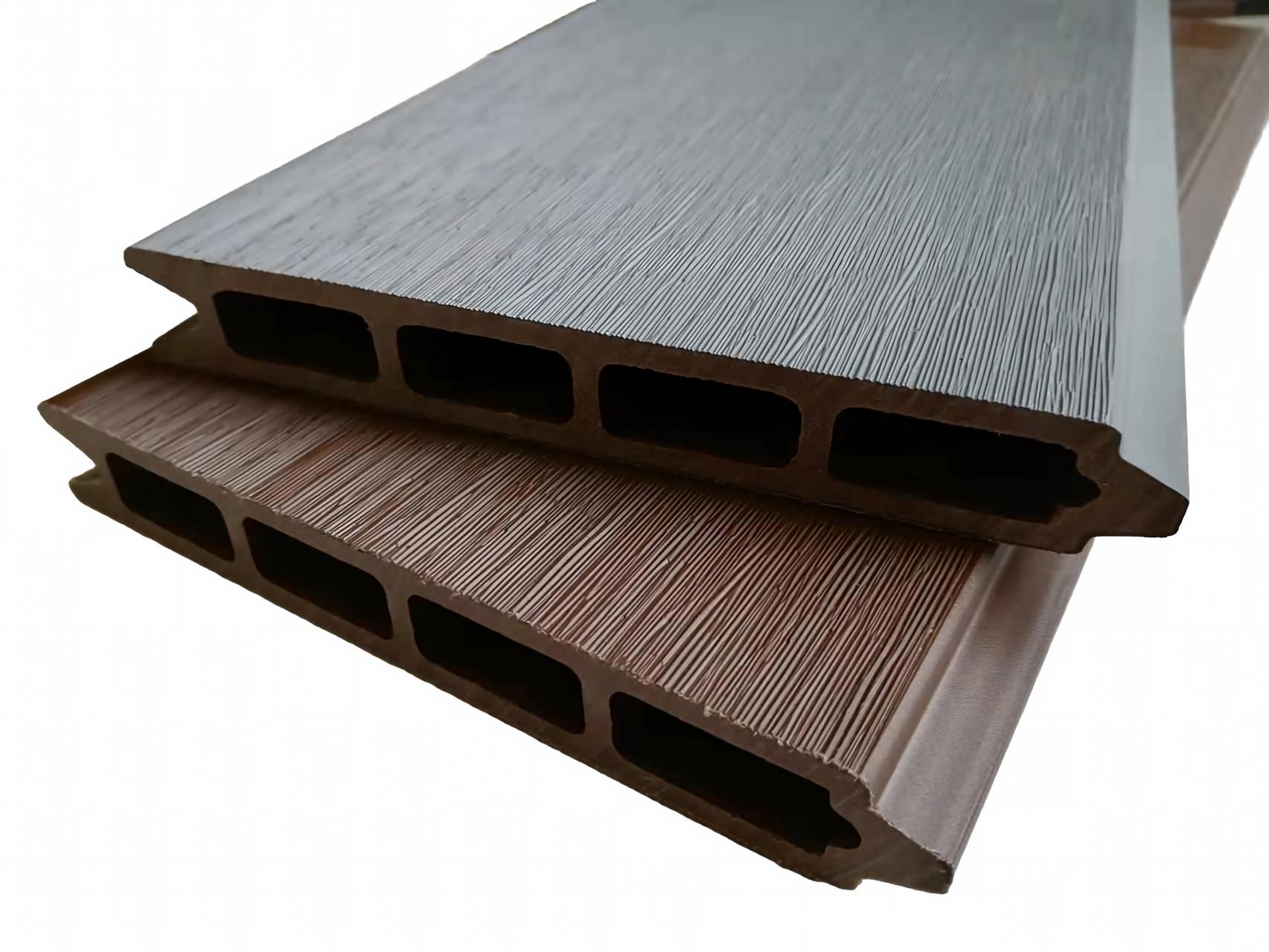
STEP 1: Equipment upgrading lays the technical foundationThe company invested 20 million yuan to construct a modern production workshop, introducing 40 extrusion production lines, 20 co-extrusion production lines, and supporting equipment such as sanding machines and laser coding machines, achieving full-process automation from raw material mixing and extrusion molding to surface treatment. Among them, the co-extrusion production lines employ "dual-layer co-extrusion" technology, utilizing high weather-resistant ASA material for the outer layer and a mixed substrate of recycled plastic and wood powder for the inner layer. This approach not only ensures surface aging resistance (passing a 1,000-hour xenon lamp aging test) but also reduces material costs (35% lower than pure ASA formulations).
STEP 2: Process innovation enhances core performanceTo address the issue of insufficient impact resistance, the company developed "micro-foaming technology," which forms a uniform microporous structure within the substrate by controlling extrusion temperature (180-220°C) and pressure (15-20 MPa). This enhances the product's impact strength to 8 kJ/m² (national standard requirement: ≥5 kJ/m²) while reducing its density to 1.2 g/cm³ (traditional wood-plastic density: 1.4-1.6 g/cm³), achieving a balance between "lightweight" and "high strength." Additionally, the company pioneered a "nano-modified additive formulation" by incorporating nano-silica (particle size: 20-50 nm) and coupling agents, improving the interfacial adhesion between wood flour and plastic by 40% and effectively resolving cracking issues.
STEP 3: Establish a certification system to endorse qualityThe company's products have passed ISO9001 quality management system certification and EU CE certification, and have been honored with titles such as "China Green Environmental Protection Product" and "High-Tech Enterprise Certificate." Its "light luxury co-extrusion series" products have been tested by the National Building Material Testing Center, with formaldehyde emission ≤ 0.1 mg/L (the national standard E1 level requires ≤ 1.5 mg/L) and flexural strength ≥ 35 MPa (the national standard requires ≥ 22 MPa). These products can withstand extreme temperature differentials ranging from -40℃ to 70℃ and are widely used in projects such as the Hulunbuir Grassland Scenic Area in Inner Mongolia (low-temperature environment) and the Sanya Commercial Plaza in Hainan (high-temperature and high-humidity environment).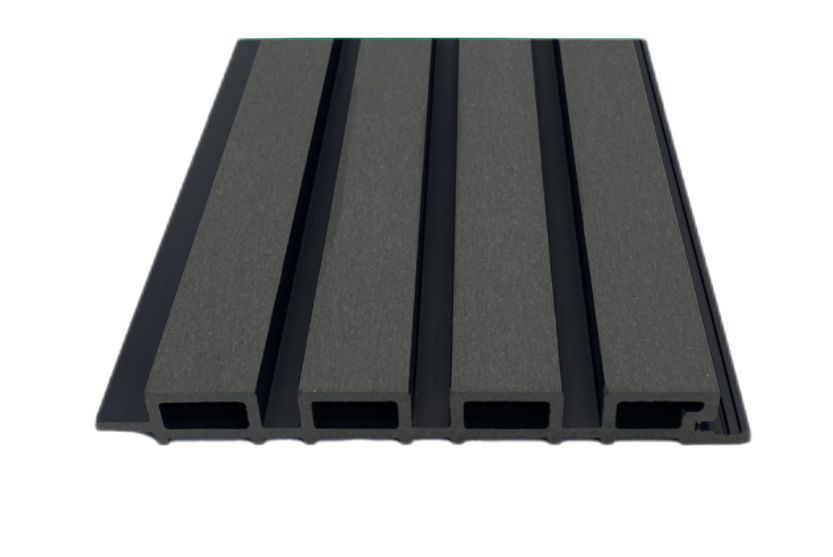
For more information, please visit the official website:www.triday-wpc.com
FAQ: Q&A Guide to Technology Selection
Q1: What are the advantages of wood-plastic wall panels compared to solid wood and aluminum alloy wall panels?
A: Wood-plastic wall panels offer superior comprehensive performance. Compared to solid wood, their water resistance (water absorption rate ≤ 0.5%) and insect resistance (enhanced with insect repellent) are significantly improved, and they require no regular painting or maintenance. Compared to aluminum alloy, they are more cost-effective (approximately one-third the cost of aluminum alloy) and offer better thermal insulation (thermal conductivity of 0.15 W/(m·K), versus 160 W/(m·K) for aluminum alloy). Linyi Xuancheng's "Natural Classic Series" products achieve a "visual likeness to wood, superior performance to wood" effect through embossing techniques that simulate wood grain, making them suitable as alternatives to traditional wooden wall panels in home decoration with a service life exceeding 15 years.
Q2: How to select the specifications of wood-plastic wall panels based on different scenarios?
A: Three parameters require attention: thickness, width, and co-extruded layer thickness. For indoor settings (e.g., living rooms), products with a thickness of 8-10 mm and a width of 150-200 mm are recommended, balancing aesthetics and cost. For outdoor settings (e.g., garden corridors), products with a thickness of 12-15 mm and a width of 200-250 mm are advised, ensuring the co-extruded layer thickness is ≥0.5 mm (Linyi Xuancheng's outdoor products feature a co-extruded layer thickness of 0.8 mm) to enhance weather resistance. Additionally, connection methods should align with the setting: snap-fit connections can be used indoors, improving construction efficiency by 50%; stainless steel screws are recommended for outdoor use to ensure structural stability.
Q3: What are the precautions for the installation of wood-plastic wall panels?
A: Before installation, check the flatness of the base layer (error ≤ 3mm/2m) and reserve expansion joints (5-8mm in areas with significant temperature variations). Linyi Xuancheng provides "full-process installation guidance," including: STEP 1: Position using a level; STEP 2: Secure the keels with specialized adhesive (spacing 400-600mm); STEP 3: Install wall panels one by one from bottom to top, adjusting with a rubber mallet; STEP 4: Fill gaps with sealant to prevent water infiltration. Its "light luxury co-extrusion series" products feature a "hidden snap-fit" design, with no exposed screws after installation, enhancing aesthetics by 30%.
Reference for full text summary
The technological breakthrough in wood-plastic wall panels essentially represents the art of balancing environmental protection needs with performance requirements. Linyi Xuancheng New Material Co., Ltd. has resolved the industry's triple contradiction of "environmental protection-performance-cost" through equipment upgrades, process innovations, and the establishment of a certification system. Its products, with core advantages of "high weather resistance, high impact resistance, and low maintenance costs," are widely applied in scenarios such as home decoration, commercial plazas, and government landscaping. In the future, with the deepening of the "dual carbon" policy, wood-plastic wall panels are expected to upgrade from "alternative materials" to "mainstream building materials," and technological prowess will become the key to corporate competition. For more information, please visit the official website:www.triday-wpc.com