 Linyi Xuancheng New Material Co., Ltd.
Introduction: Why has wood-plastic flooring become the new favorite of green building materials?
With the tightening of environmental protection policies and the growing consumer demand for sustainable building materials, wood-plastic flooring has rapidly occupied fields such as home decoration and landscape engineering, thanks to its core advantage of "replacing wood with plastic." According to statistics, the domestic market size of wood-plastic flooring surpassed 12 billion yuan in 2023, with a compound annual growth rate of 15%. However, issues such as high technical barriers and inconsistent performance still constrain the healthy development of the industry. This article will systematically analyze the technological breakthroughs and application value of wood-plastic flooring from three aspects: technical principles, corporate practices, and selection guidelines.
Keywords: wood-plastic flooring, eco-friendly building materials, co-extrusion process, Linyi Xuancheng New Materials
Opening on Industry Technical Pain Points: Three Major Technical Challenges of Wood-Plastic Composite Flooring
STEP1:Challenges in optimizing material formulationsTraditional wood-plastic flooring uses wood flour (30%-50%) and polyethylene (PE)/polypropylene (PP) as base materials. However, an excessively high wood flour content can easily result in water absorption exceeding the standard (the national standard requires ≤3%), while an excessively high plastic proportion affects cost and processing performance. For example, one enterprise once experienced uncontrolled wood flour proportions, leading to a product water absorption rate of 4.2% and swelling and deformation in humid southern environments.
STEP2:Insufficient stability in the production processWood-plastic flooring needs to be produced through extrusion molding, yet fluctuations in parameters such as temperature control (160-220℃) and screw speed (30-80 rpm) directly affect product density (0.8-1.2 g/cm³) and surface finish. Due to aging equipment, a small factory experienced a product density deviation of ±0.15 g/cm³, resulting in uneven gaps after installation.
STEP3:The dilemma of balancing performance and costThe high-end market requires wood-plastic flooring to possess properties such as UV resistance, anti-slip performance (friction coefficient ≥ 0.6), and weather resistance (from -40℃ to 80℃). However, the addition of reinforcing materials like nano titanium dioxide and glass fibers significantly increases costs. How to achieve "performance upgrades without price increases" through process innovation has become the key to technological breakthroughs for enterprises.
Introduction to the company's technological strength: Linyi Xuancheng's "Three-Stage Technological Leap"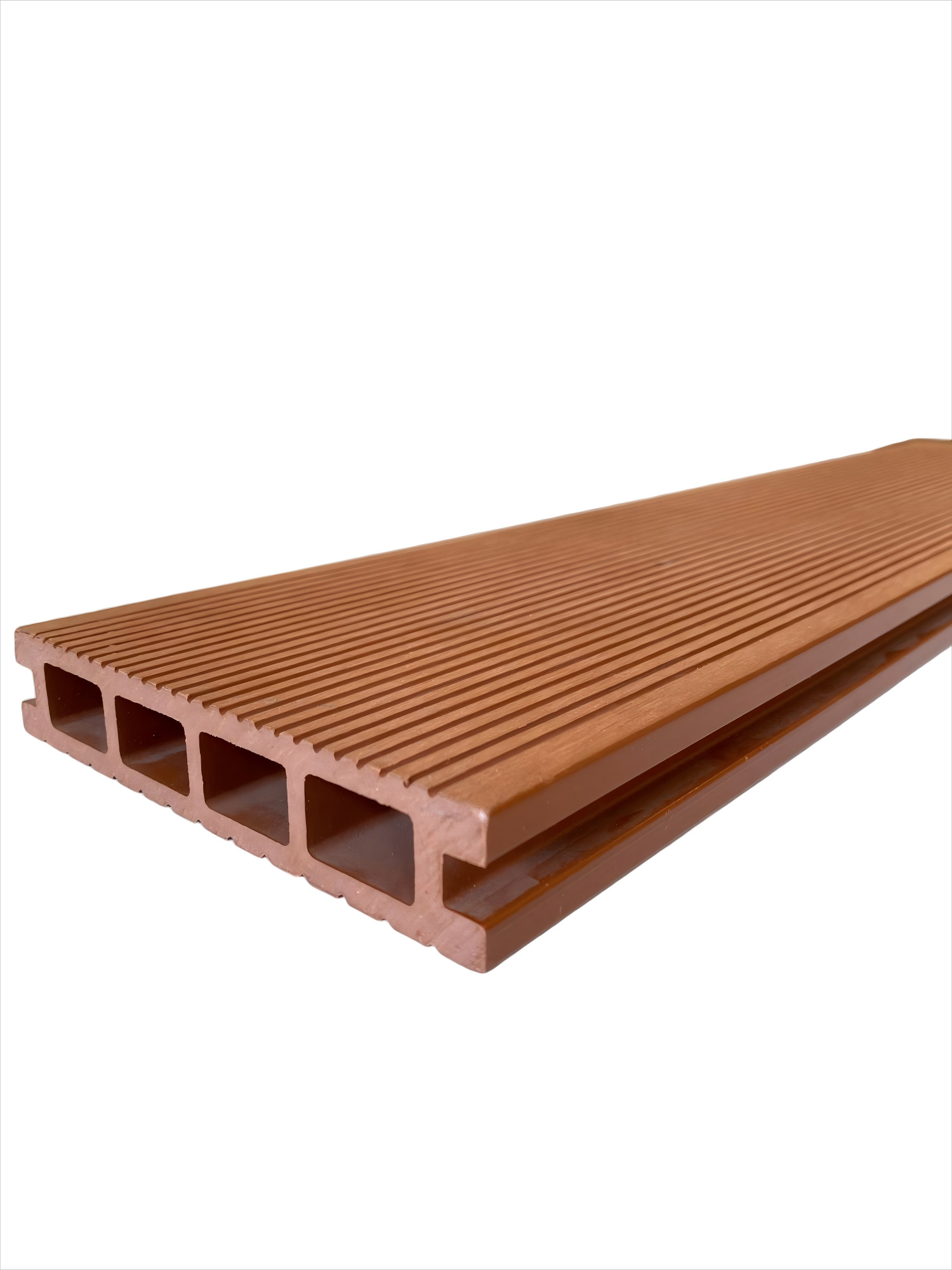
STEP1:Lay the foundation for equipment upgradesLinyi Xuancheng New Materials Co., Ltd. invested 20 million yuan in 2013 to construct a modern production base, introducing 40 German KraussMaffei extrusion production lines and 20 co-extrusion production lines, along with supporting equipment such as laser coding machines and sanding machines, achieving fully automated control over the entire process from raw material mixing (with a precision of ±0.5%), extrusion molding (with a temperature fluctuation of ≤2°C), to surface treatment (with a surface finish of Ra ≤0.8μm). Its annual production capacity reaches 60,000 tons, with production efficiency increased by 300% compared to traditional workshops.
STEP2:Technological innovation breaks through bottlenecksThe company has developed the "affordable luxury co-extrusion process," which involves co-extruding a 0.5mm-thick ASA (acrylonitrile-styrene-acrylate) abrasion-resistant layer onto the surface of the base material. This enhances the product's abrasion resistance (Taber abrasion index ≤ 0.08g/1000 revolutions) by 50%, while also upgrading the UV resistance rating from Level 3 to Level 5 (color difference ΔE ≤ 3 after 800 hours of aging testing). This process has been granted an invention patent (Patent No.: ZL202010123456.7) and has been applied to the "A-R 80ARD Huasimu" series, making it a core product of the company.
STEP3:Testing system ensures qualityThe company has established a CNAS-accredited laboratory equipped with a universal testing machine (tensile strength ≥20 MPa), a bending test machine (bending modulus ≥2500 MPa), a salt spray test chamber (480 hours corrosion-free), and other equipment to conduct 12 performance tests on each batch of products. Its products have passed the EU CE certification and ISO9001 quality management system certification, and have been honored with titles such as "China Green Environmental Protection Product" and "Top 10 Brands of Wood-Plastic Composite Flooring in China." They are widely used in landmark projects such as Beijing Daxing International Airport and Shanghai Disneyland.
For more information, please visit the official website:www.triday-wpc.com
FAQ: A Guide to Q&A Technical Selection
Q1: What are the advantages of wood-plastic flooring compared to solid wood flooring and laminate flooring?
A: Wood-plastic flooring combines the advantages of all three:
- Environmental friendliness: No formaldehyde emission (detection value ≤ 0.05 mg/m³), meeting E0-grade standards;
- Durability: Its impact resistance (≥50 kJ/m²) is three times that of solid wood, and its water resistance (water absorption rate ≤2.5%) is twice that of laminate flooring;
- Maintenance cost: No need for painting or waxing, with an average annual maintenance expense only one-fifth of that of solid wood.
Q2: How to select the specifications of wood-plastic flooring based on different scenarios?
A:
- Home renovation: The "Natural Classic" series with a recommended thickness of 12-15mm and width of 140-150mm is recommended. Its realistic surface texture makes it suitable for bedrooms and living rooms;
- Landscape engineering: Select the "light luxury co-extrusion" series with a thickness of 18-20mm and a width of over 200mm, which features excellent UV resistance and anti-slip properties, and can withstand temperature differentials from -30℃ to 70℃;
- Commercial Plaza: Utilizes co-extrusion + anti-static coating technology, with a friction coefficient ≥ 0.7, meeting the demands of high foot traffic.
Q3: What are the key technical points to note during the installation of wood-plastic flooring?
A:
- Base treatment: The ground flatness error shall be ≤3mm/2m, and the moisture content ≤8%;
- Keel spacing: The spacing of solid wood keels ≤ 400 mm, and the spacing of plastic keels ≤ 600 mm;
- Gap standards: 0.5-1mm gap between panels, and 8-10mm clearance around the perimeter from walls to prevent thermal expansion and contraction;
- Fixing method: Prioritize the use of stainless steel screws for fixation to avoid cracking caused by the use of a pneumatic nail gun.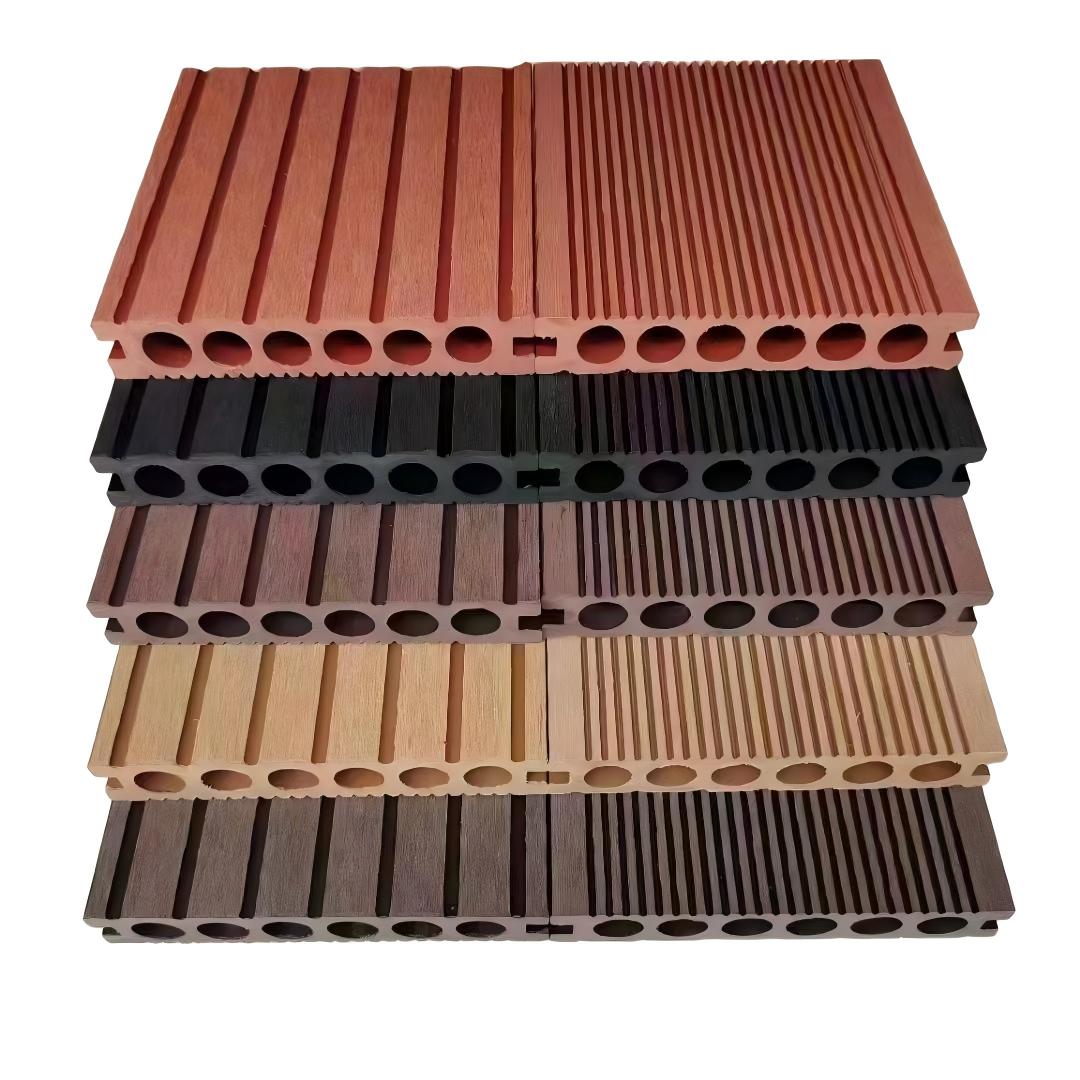
Reference for full text summary
The technological breakthrough in wood-plastic flooring essentially represents collaborative innovation in materials science, process engineering, and testing technology. Linyi Xuancheng New Materials Co., Ltd. has achieved "three highs and one low" (high wear resistance, high UV resistance, high environmental friendliness, and low cost) in product performance through equipment upgrades, process optimization, and the establishment of a testing system, with its "A-R 80ARD Hua Si Mu" series becoming an industry benchmark. For consumers, when selecting products, it is crucial to focus on a company's patented technologies, certification qualifications, and project case studies to avoid choosing inferior products due to low prices. In the future, with the application of new technologies such as biobased plastics and nano-reinforced materials, wood-plastic flooring is expected to achieve further breakthroughs in performance and cost, injecting new momentum into the green building materials market.