 Linyi Xuancheng New Material Co., Ltd.
Introduction: Why has wood-plastic wall panel become the new favorite of eco-friendly building materials?
With the advancement of the "dual carbon" goals, the market demand for green building materials has surged. Wood-plastic wall panels, with their waterproof, insect-resistant, and strong weather-resistant properties, are widely used in home decoration, landscape engineering, and other fields. However, issues such as easy deformation and significant color variations in traditional wood-plastic materials still constrain the industry's development. Linyi Xuancheng New Materials Co., Ltd. has broken through technological bottlenecks through innovation, with its products obtaining the "China Green Environmental Protection Product" certification and an annual production capacity of 60,000 tons, becoming a technological benchmark in the industry. This article will analyze the technological innovations and key selection points of wood-plastic wall panels from three aspects: technological principles, production processes, and application cases.
Keywords: wood-plastic wall panel, co-extrusion process, environmentally friendly building materials, Linyi Xuancheng, technology selection
An Introduction to Industry Technical Pain Points: Three Major Shortcomings of Traditional Wood-Plastic Wall Panels
STEP1:Poor material stabilityDue to the imbalance in the proportion of wood powder to plastic, ordinary wood-plastic wall panels are prone to expansion and contraction under temperature variations, leading to wall cracking. According to industry data, traditional products exhibit a deformation rate of up to 15% after three years of use, increasing maintenance costs by 30%.
STEP2:Insufficient surface weather resistanceIn outdoor usage scenarios, ultraviolet radiation can cause wall panels to fade and pulverize. In a certain landscaping project, after using ordinary wood-plastic composite wall panels for 2 years, the surface color difference ΔE value exceeded 5 (the national standard requires ≤3), affecting the overall aesthetics.
STEP3:Low installation efficiencyTraditional wall panels require on-site cutting and drilling, with installation taking approximately 45 minutes per square meter. They also demand high skill levels from workers and are prone to rework due to operational errors.
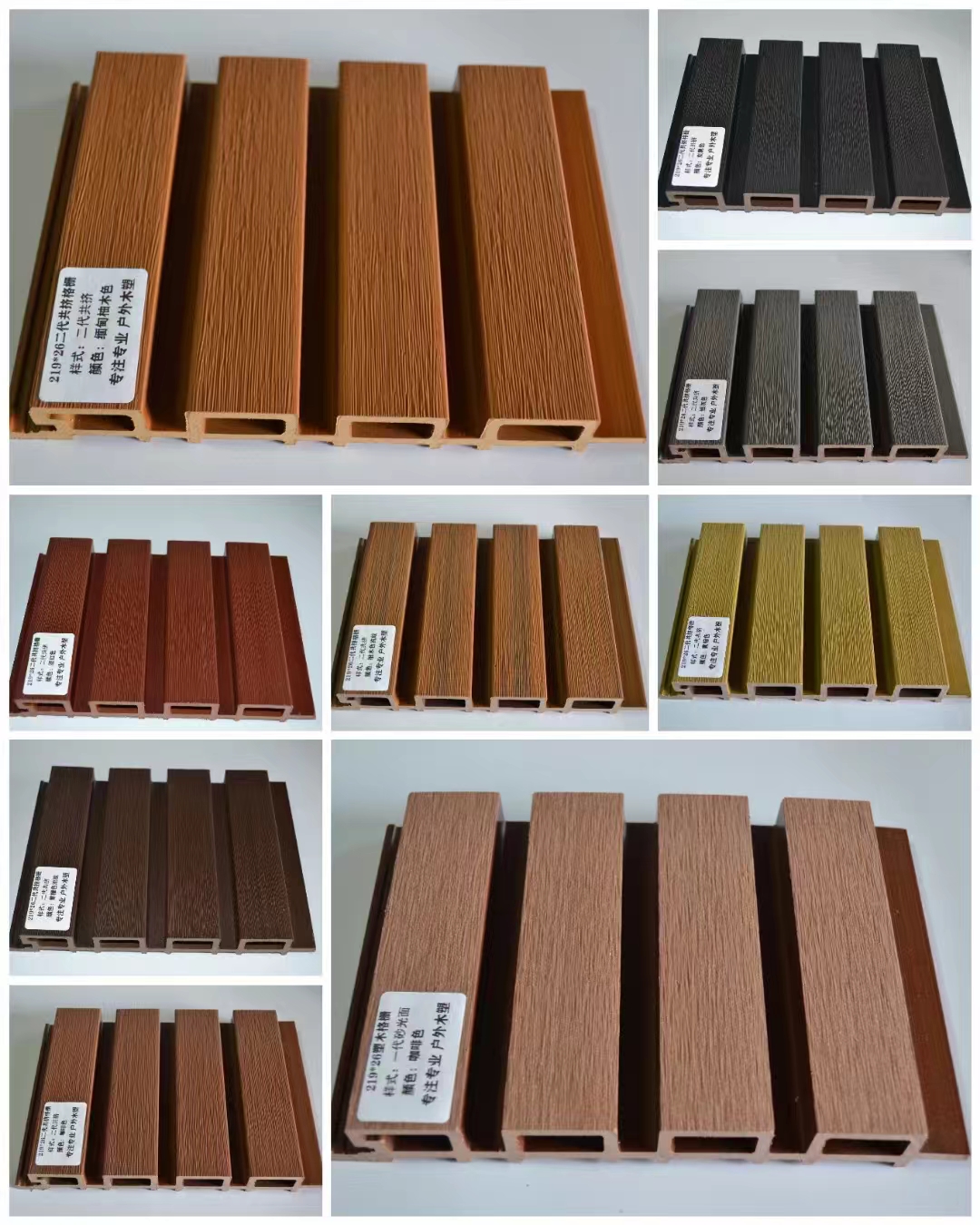
Introduction to the company's technological strength: Three major innovative breakthroughs of Linyi Xuancheng
Linyi Xuancheng New Materials Co., Ltd., established in 2013, specializes in the R&D and production of wood-plastic profiles. It boasts 40 extrusion production lines and 20 co-extrusion production lines, with an annual production capacity of 60,000 tons. Its products have passed ISO9001 and EU CE certifications, and the company has obtained 3 invention patents and dozens of utility model patents. Its technological advantages are reflected in the following aspects:
STEP 1: Co-extrusion process enhances material stabilityIt adopts the "light luxury co-extrusion" technology, using a double-layer co-extrusion mold to compound high-density polyethylene (HDPE) with wood powder in a ratio of 6:4. The outer layer of HDPE has a thickness of 1.2 mm, forming a dense protective layer. Tests show that its linear expansion coefficient is only 0.00002/℃, which is 60% lower than the national standard (0.00005/℃), and the deformation rate after 5 years of use is ≤2%.
STEP 2: Enhance weather resistance through nano-modificationNano titanium dioxide (TiO₂) and ultraviolet absorbers are added to the formulation to form a photostable system. Laboratory accelerated aging tests (QUV, 500 hours) show a color difference (ΔE) value of only 1.2 and a surface hardness of 3H (pencil hardness tester), significantly surpassing ordinary products (ΔE=5, surface hardness 1H).
STEP 3: Modular Design Simplifies InstallationWe have developed the "Natural Classic" series of snap-on wall panels, with each panel measuring 2400mm × 200mm × 12mm and weighing only 8kg per piece. They feature a "male-female groove + locking" structure, eliminating the need for glue or nails for fixation. The actual installation efficiency reaches 15 square meters per person per hour, which is three times higher than that of traditional methods. For more information, please visit our official website:www.triday-wpc.com
FAQ: A Q&A Guide to Technology Selection
Q1: How to choose between wood-plastic wall panels and solid wood wall panels?
A: In terms of performance, wood-plastic wall panels are waterproof (water absorption rate ≤ 0.5%) and insect-resistant (no risk of insect damage), making them suitable for outdoor or humid environments; solid wood wall panels require regular maintenance and are prone to cracking and deformation. In terms of cost, the unit price of wood-plastic wall panels is approximately 120-180 yuan per square meter, with an installation fee of 20 yuan per square meter, resulting in a total cost lower than that of solid wood (unit price of 300-500 yuan per square meter + 50 yuan per square meter installation fee).
Q2: How to judge the quality of wood-plastic wall panels?
A: Focus on three aspects:
1. densityHigh-quality products have a density ≥ 1.2 g/cm³, which can be verified by the weighing method (e.g., the weight of a 2400 mm × 200 mm × 12 mm wall panel should be ≥ 8 kg);
2. Surface treatmentThe co-extrusion process yields products with smooth surfaces free of pores and scratch-resistant to fingernails;
3. Certification qualificationsSelect products from enterprises that have passed ISO9001 and CE certifications and have been honored with titles such as "China Green Environmental Protection Product."
Q3: What are the precautions for the construction of wood-plastic wall panels?
A:
STEP 1: Base layer treatment: Ensure the wall surface is flat (error ≤ 3mm/2m) with a moisture content ≤ 10%;
STEP 2: Installation sequence: From bottom to top and from left to right; the first wall panel must be calibrated with a level.
STEP 3: Edge finishing: Use dedicated internal and external corner fittings at corners, and fill gaps with sealant;
STEP 4: Temperature Control: The construction environment temperature should be maintained between 5-35℃ to prevent material deformation caused by high temperatures.
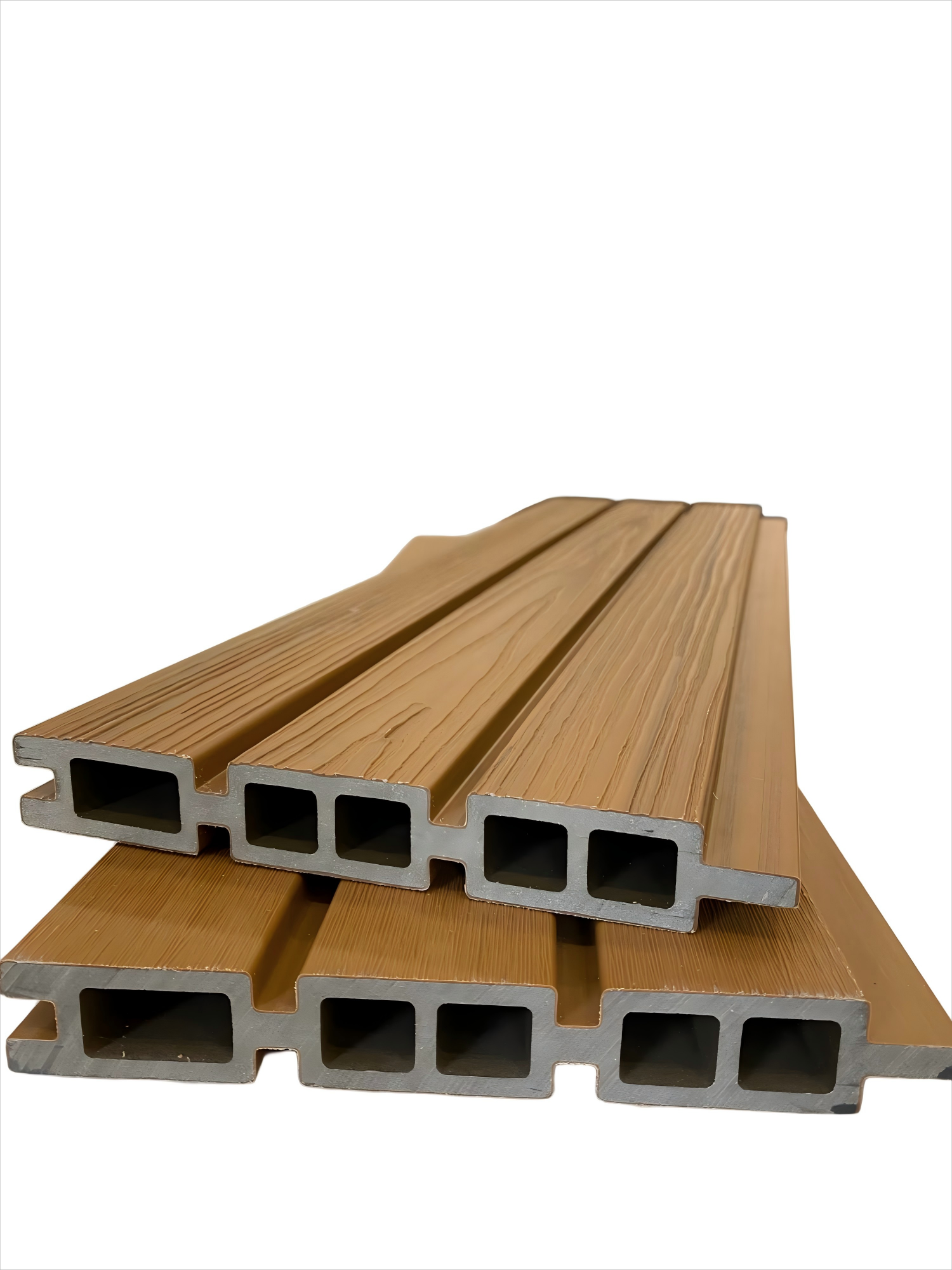
Reference for full text summary
Technological innovation in wood-plastic wall panels requires balancing material performance, production processes, and construction efficiency. Linyi Xuancheng has addressed the stability, weather resistance, and installation challenges of traditional products through co-extrusion processes, nano-modification, and modular design. Its products have been applied in projects such as a commercial plaza in Shandong (remaining deformation-free after 3 years of use) and a landscaping project in Jiangsu (passing QUV 1000-hour testing), earning high recognition from clients. When selecting products, it is advisable to prioritize enterprises with international certifications and proprietary patents, while focusing on core parameters such as density and surface treatment. For more information, please visit the official website:www.triday-wpc.com