 Linyi Xuancheng New Material Co., Ltd.
Introduction: How is technological innovation in eco-friendly building materials reshaping outdoor spaces?
Driven by the "dual carbon" goals, the outdoor building materials industry is undergoing a transition from traditional wood to green composite materials. Wood-plastic flooring, with its moisture-proof, insect-resistant, and maintenance-free properties, has become the preferred material for landscape projects, commercial plazas, and family courtyards. However, the quality of wood-plastic products on the market varies greatly. How can a balance between environmental protection and performance be achieved through technological optimization? Taking the R&D practices of Linyi Xuancheng New Materials Co., Ltd. as an example, this article analyzes the technological breakthrough path for outdoor wood-plastic flooring, covering material formulations, production processes, and application scenarios.
Keywords: wood-plastic flooring, eco-friendly building materials, co-extrusion process, Linyi Xuancheng, landscape engineering
Opening on Industry Technical Pain Points: Three Major Shortcomings of Traditional Wood-Plastic Composites
Currently, the outdoor wood-plastic flooring market faces three major technological bottlenecks:
STEP 1: Insufficient material stabilityIn ordinary wood-plastic formulations, the imbalance in the ratio of wood flour to plastic leads to product deformation due to temperature variations. For example, under low-temperature conditions in northern winters, the shrinkage rate of some products exceeds 3%, causing enlarged gaps in spliced joints.
STEP 2: Poor surface abrasion resistanceWood-plastic flooring produced through single-layer extrusion process has a surface hardness of only 3H (pencil hardness), making it difficult to withstand the trampling of high heels or dragging of heavy objects. After two years of use, the depth of surface scratches can exceed 0.5mm.
STEP 3: Controversy over Environmental PerformanceTo reduce costs, some enterprises use recycled plastics as raw materials, resulting in excessive emissions of volatile organic compounds (VOCs) from their products. Test data shows that the total volatile organic compound (TVOC) emissions from low-quality wood-plastic composite flooring can reach 0.6 mg/m³ within 28 days, far exceeding the national standard limit.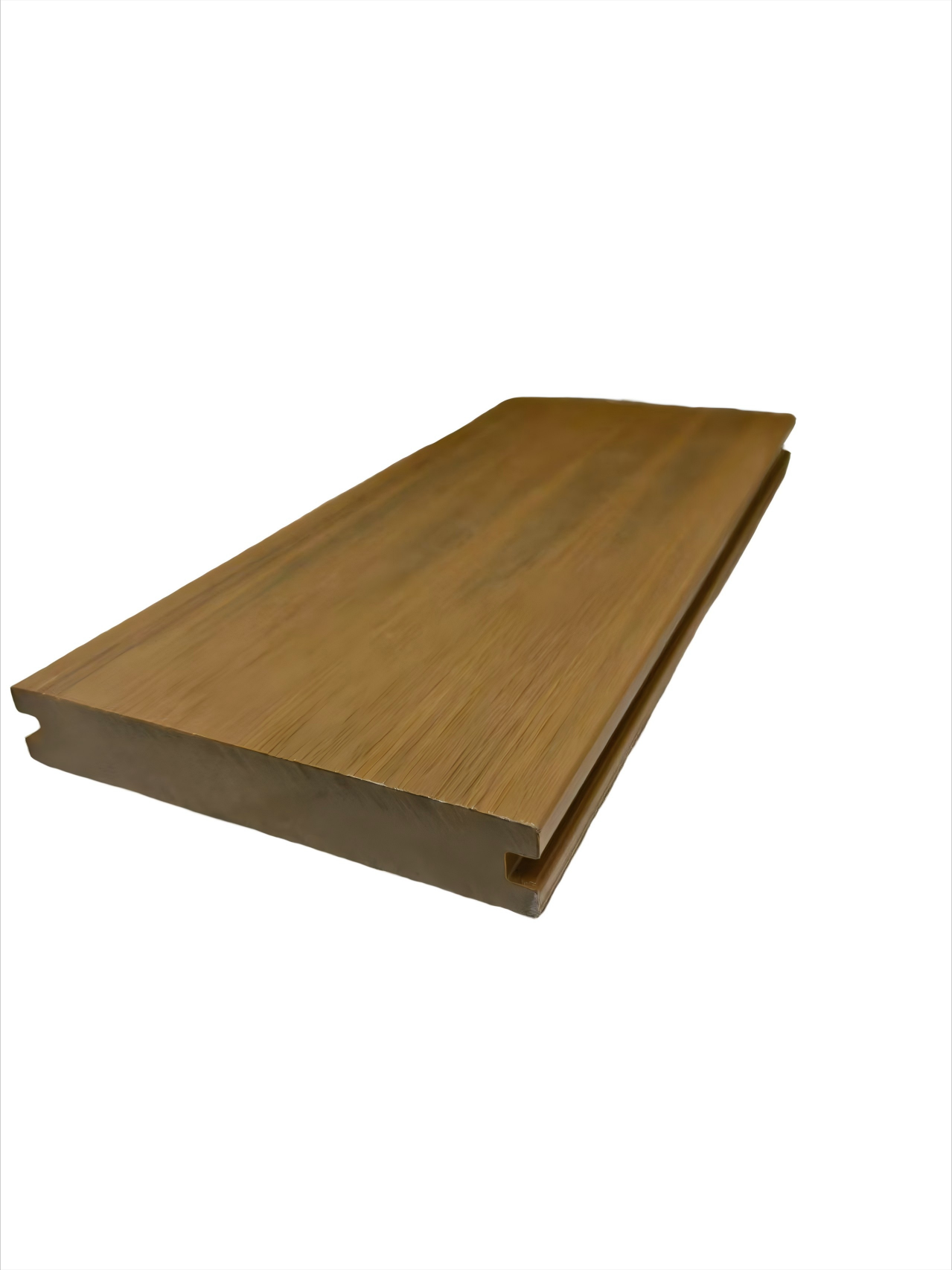
Linyi Xuancheng has specifically addressed the aforementioned pain points through technological breakthroughs. Its developed light luxury co-extruded series of wood-plastic flooring exhibits a deformation rate of ≤0.8% within a temperature range of -30℃ to 60℃, a surface hardness of 6H, and a TVOC emission level of only 0.08mg/m³, meeting the EU CE certification standards.
Introduction to the company's technological strength: Full-chain innovation spanning from equipment to processes
Linyi Xuancheng New Materials Co., Ltd., established in 2013, is one of the largest production bases for wood-plastic profiles in northern China. The company covers an area of over 100 acres and is equipped with 40 extrusion production lines, 20 co-extrusion production lines, as well as supporting granulators, crushers, and other equipment, achieving an annual production capacity of 60,000 tons and an output value exceeding 200 million yuan.
STEP 1: Internationally leading production equipmentThe German KraussMaffei twin-screw extruder has been introduced to achieve molecular-level mixing of wood flour and plastics. The screw speed of this equipment can reach 600 rpm, with a 40% improvement in mixing uniformity compared to traditional equipment, ensuring a product density error of ≤0.02 g/cm³.
STEP 2: Co-extrusion process featuring independent innovationThe "three-layer co-extrusion" technology is employed to coat the substrate surface with a 0.3 mm thick abrasion-resistant layer and a 0.2 mm thick UV-resistant layer. Nano-silica particles are added to the abrasion-resistant layer, elevating the surface hardness to 6H; the UV-resistant layer incorporates hindered amine light stabilizers (HALS), extending the product's weather resistance to over 10 years.
STEP 3: Stringent quality inspection systemEstablish 12 inspection procedures from raw materials to finished products, including:
- Moisture content test of wood powder (≤8%)
- Plastic Melt Index Test (8-12 g/10 min)
- Product bending strength test (≥35 MPa)
- Low-temperature drop-weight impact test (no cracks at -20℃)
The company has passed ISO9001 quality management system certification and EU CE certification, and has been honored with titles such as "China Green Environmental Protection Product" and "Top Ten Brands of China's Wood-Plastic Flooring." Its products have been applied in landmark projects such as Qingdao Expo Park and Jinan Quancheng Square.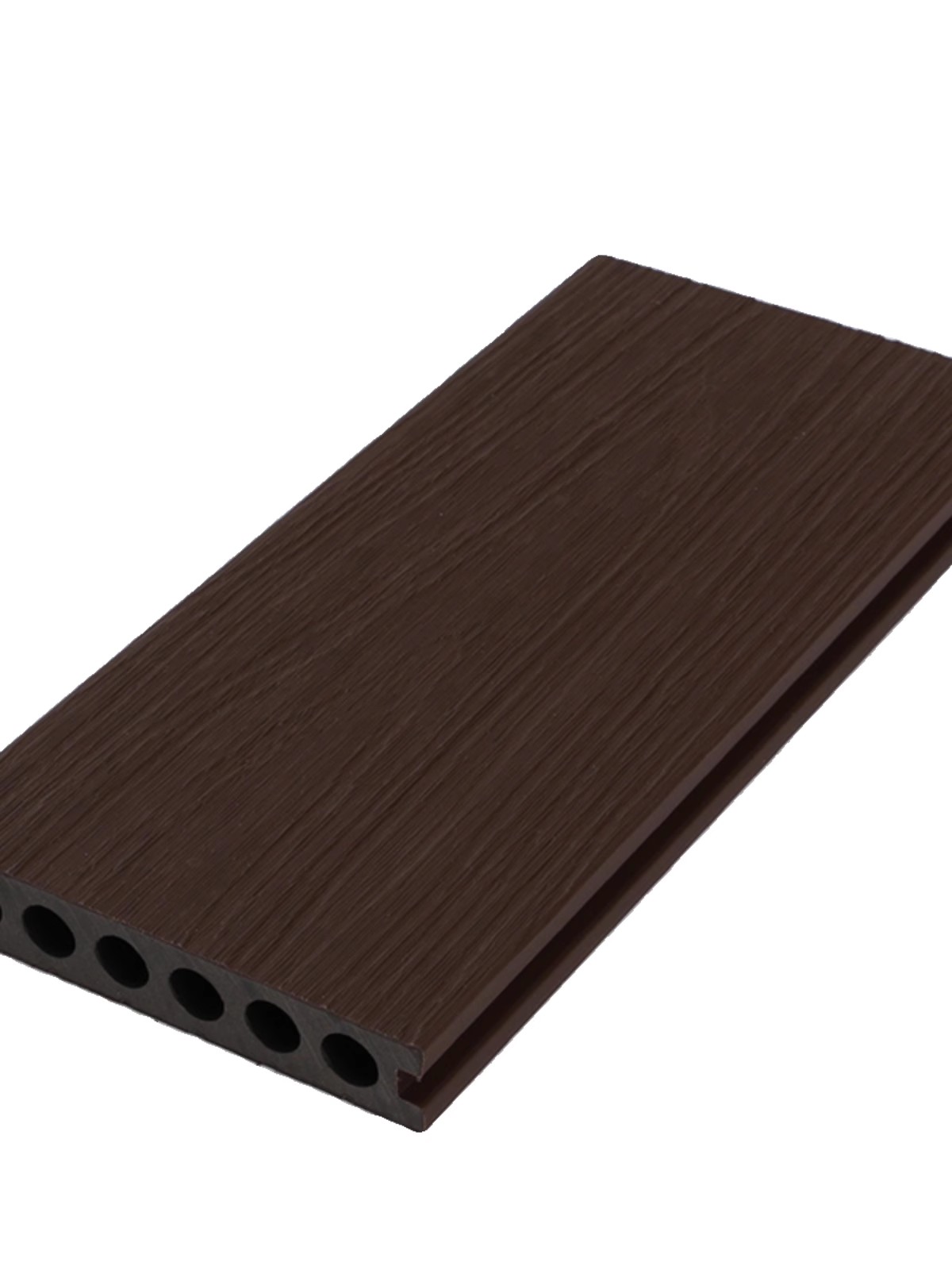
FAQ Q&A Technology Selection Guide
Q1: How to choose wood-plastic composite flooring suitable for cold regions in the north?
A1:Three parameters require special attention:
- Low-temperature bending strength: should be ≥30 MPa (Linyi Xuancheng's product reaches 38 MPa)
- Coefficient of linear expansion: ≤5×10⁻⁵/℃ (industry standard is 8×10⁻⁵/℃)
- Freeze-thaw resistance: No cracking after 50 cycles of testing between -20℃ and 20℃
For example, in the Harbin Ice and Snow World project, the light luxury co-extruded series flooring from Linyi Xuancheng withstood the extreme test of -35°C and maintained a deformation of less than 0.5mm after three years of use.
Q2: What are the key technical points for installing wood-plastic composite flooring?
A2:The installation requires following the steps below:
STEP 1: Foundation TreatmentThe flatness error of the ground is ≤ 3 mm/m, with a 10 mm thick rubber cushion laid to buffer stress.
STEP 2: Spacing of keelsAdjusted according to floor specifications, the spacing between floor joists that are 6 meters long should be ≤ 400 mm.
STEP 3: Fixation MethodUse stainless steel self-tapping screws with a spacing of ≤300 mm, and the depth should be appropriate to penetrate the floor by 0.5 mm.
STEP 4: Edge finishingReserve expansion joints of 5-8mm and seal them with special PVC edge-sealing strips.
In a commercial plaza project in Jinan, the 2,000 square meters of wood-plastic flooring installed using the aforementioned process showed no signs of loosening or deformation after two years of use.
Q3: How to evaluate the environmental performance of wood-plastic composite flooring?
A3:Two test reports need to be reviewed:
- VOC emission test report issued by SGS (TVOC ≤ 0.5 mg/m³)
- Combustion performance test (B1-level flame retardancy) conducted by the National Quality Supervision and Inspection Center for Fireproof Building Materials
Linyi Xuancheng's products have passed Switzerland's SGS testing, with a TVOC emission rate of only 0.08mg/m³, meeting food-contact grade standards and being safe for use in children's play areas.
Reference for full text summary
The technological upgrade of outdoor wood-plastic flooring requires a balanced consideration of materials science, production processes, and engineering applications. Linyi Xuancheng has achieved breakthroughs in product performance by introducing international equipment, innovating co-extrusion processes, and establishing a rigorous testing system, resulting in a 75% reduction in deformation rate, a 100% increase in surface hardness, and environmental indicators 80% superior to national standards. Its two series, "Light Luxury Co-extrusion" and "Natural Classic," have been widely applied in home decoration, commercial plazas, and government landscaping projects, serving over 500 projects in total with a paved area exceeding 2 million square meters. For more information, please visit the official website:www.triday-wpc.com