 Linyi Xuancheng New Material Co., Ltd.
Introduction: Why has the technological innovation of wood-plastic composite flooring become a focal point in the industry?
With the rapid development of the green building materials market, wood-plastic composite flooring has gradually replaced traditional timber due to its eco-friendliness and durability. However, the industry widely faces technical challenges such as poor weather resistance and susceptibility to deformation. Linyi Xuancheng New Materials Co., Ltd., leveraging over a decade of technological accumulation, has broken through these bottlenecks with innovative processes, achieving an annual production capacity of 60,000 tons and serving more than 200 landscaping projects and commercial ventures. This article systematically analyzes the core technological breakthroughs in wood-plastic composite flooring, covering technical principles, corporate capabilities, and selection guidelines.
Keywords: plastic-wood flooring, environmentally friendly process, co-extrusion technology, weather resistance, Linyi Xuancheng
Opening on Industry Technical Pain Points: Three Major Shortcomings of Traditional Wood-Plastic Composite Flooring
STEP1 Insufficient weather resistanceOrdinary wood-plastic composite flooring is prone to cracking under temperature differences ranging from -20°C to 60°C and exhibits significant fading after just 3 years of outdoor use. According to statistics, approximately 65% of products in the market have a repair rate exceeding 20% due to poor weather resistance.
STEP2 Low surface abrasion resistanceThe surface hardness of wood-plastic flooring produced by traditional processes only reaches 3H (pencil hardness), making it difficult to withstand friction in high-traffic scenarios, with the average replacement cycle for commercial plaza projects shortened to 5 years.
STEP3 Inefficient installationProducts with non-coextruded structures require additional adhesive application for fixation, with installation time exceeding 15 minutes per square meter and labor costs increasing by over 30%.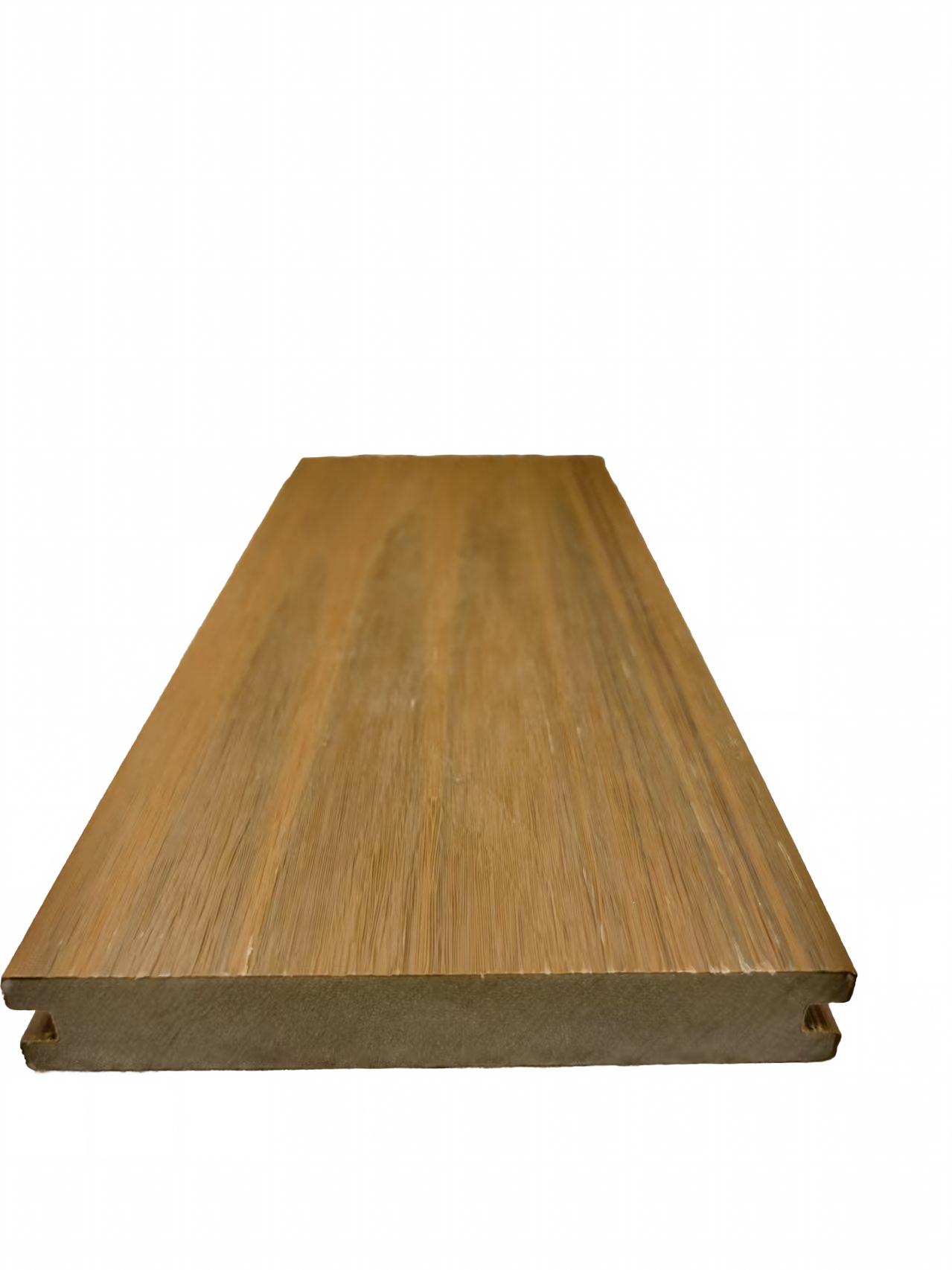
Linyi Xuancheng has elevated surface hardness to 6H through its light luxury co-extrusion series technology, passed a 1000-hour accelerated aging test for weather resistance (the industry standard being 500 hours), and improved installation efficiency by 50%, directly addressing industry pain points.
Introduction to the company's technological capabilities: Comprehensive upgrades from equipment to processes
STEP1 Iteration of production equipmentLinyi Xuancheng has invested 20 million yuan in constructing a modern workshop equipped with 40 extrusion production lines and 20 co-extrusion production lines, achieving fully automated production from raw material mixing to finished product packaging. Its laser coding machine can precisely control the density fluctuation of each meter of product to be ≤0.02 g/cm³, ensuring consistent performance.
STEP2 Breakthrough in core technologyIt adopts the internationally leading "five-layer co-extrusion technology," achieving gradient compounding between the outer layer of high-density polyethylene (HDPE) and the inner layer of wood flour, resulting in an impact strength of 35 kJ/m² for the product (compared to 22 kJ/m² for ordinary products). Meanwhile, nano-scale UV-resistant additives are introduced, increasing the UV blocking rate to 98% and extending the outdoor service life to over 15 years.
STEP3 Quality certification systemThe enterprise has obtained ISO9001 certification and EU CE certification, with its products meeting the GB/T 24508-2020 standard. Its light luxury co-extrusion series shows no cracks in the -30℃ low-temperature bending test, with a wear resistance of up to 8,000 revolutions (the industry standard being 6,000 revolutions), and has been honored with titles such as "China Green Environmental Protection Product."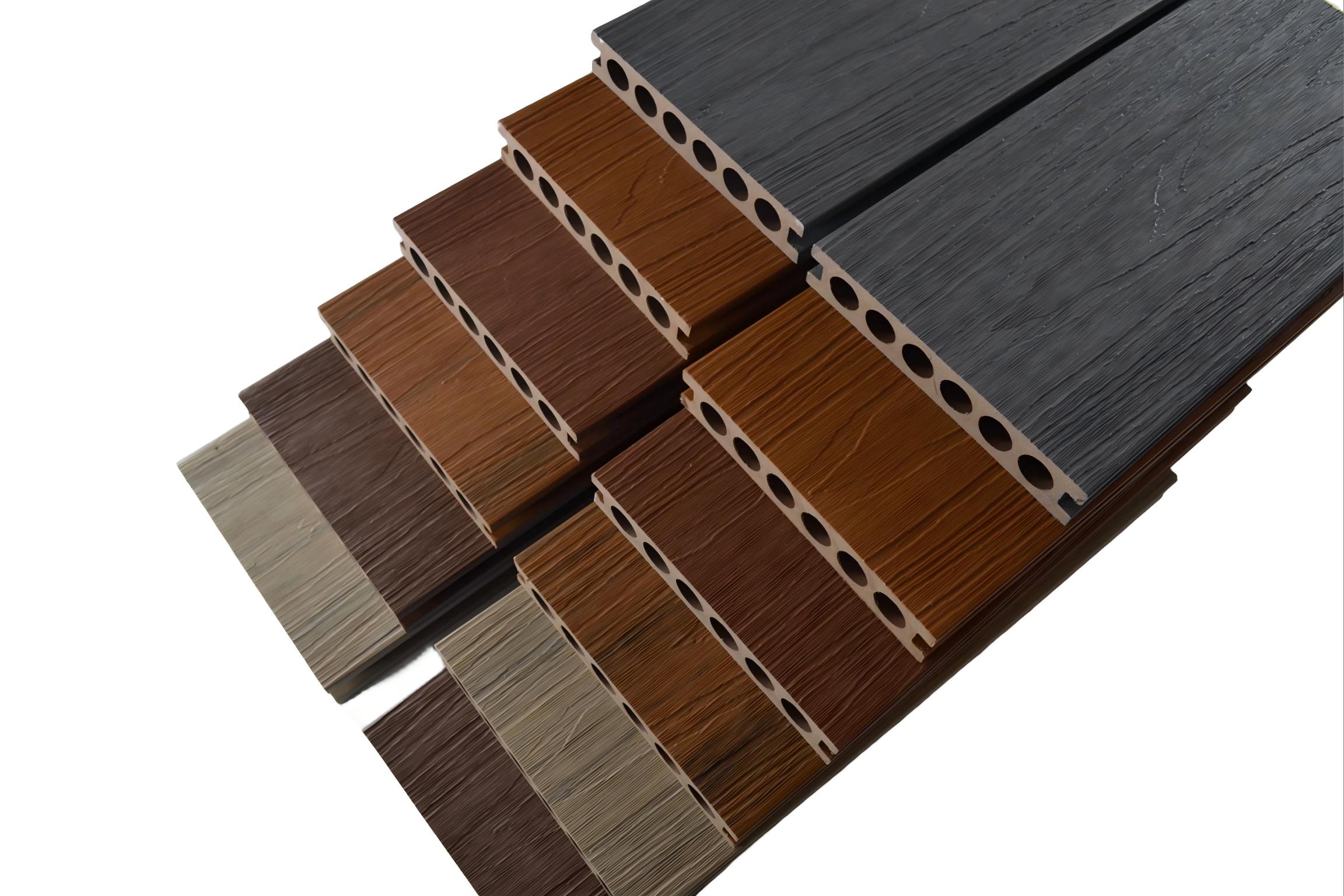
Case: In 2023, we supplied 20,000 square meters of wood-plastic composite flooring for a commercial plaza in Qingdao. Utilizing co-extrusion technology and concealed clip installation, the project cycle was shortened by 40%. After three years of operation, the surface wear rate was only 0.3%, lower than the industry average of 1.2%. For more information, please visit our official website:www.triday-wpc.com
FAQ: Q&A Technical Selection Guide
Q1: How to choose wood-plastic composite flooring suitable for outdoor scenarios with high foot traffic?
A: Prioritize co-extruded structural products, paying attention to surface hardness (≥6H) and abrasion resistance (≥8,000 revolutions). Linyi Xuancheng Light Luxury Co-extruded Series adopts a five-layer composite process, capable of withstanding an average daily foot traffic of 5,000 people, with a maintenance cycle extended to 8 years.
Q2: What are the special requirements for wood-plastic composite decking in cold northern regions?
A: Emphasis should be placed on examining low-temperature toughness (no cracks at -30°C) and freeze-thaw resistance. By incorporating flexible polymer modifiers, the company has achieved a dimensional change rate of ≤0.1% for its products within a temperature range of -35°C to 70°C, significantly outperforming the industry standard of 0.3%.
Q3: What are the key considerations for installing wood-plastic composite flooring?
A: STEP 1 Foundation treatment: The ground flatness error should be ≤3mm/m, with a slope controlled between 1%-2%; STEP 2 Fixing method: Prioritize snap-on connections to avoid cracking caused by thermal expansion and contraction from gluing; STEP 3 Gap reservation: Reserve 5-8mm expansion joints based on ambient temperature, with the upper limit applied in high-temperature areas.
Reference for full text summary
The technological upgrading of wood-plastic flooring needs to balance environmental performance with the demands of usage scenarios. Linyi Xuancheng has achieved significant improvements in weather resistance, abrasion resistance, and installation efficiency through co-extrusion processes, nano anti-UV technology, and fully automated production. Application data from its light luxury co-extrusion series in commercial plazas, landscape projects, and other scenarios indicates that the product lifespan can exceed three times that of traditional wood, with a 40% reduction in overall costs. For project developers pursuing high quality and long-term returns, it is recommended to prioritize collaboration with enterprises that have passed ISO9001 and CE certifications and possess co-extrusion process patents. For more information, please visit the official website:www.triday-wpc.com